Extremely Large Telescope
A 39-metre mirror being assembled on a Chilean mountaintop from 798 hexagons — larger than every other optical telescope on Earth combined.
What these numbers mean
One hundred and ninety times the diameter of an 8-inch Dobsonian, and roughly 37,000 times its light-gathering area. Put differently: the ELT's mirror has more collecting area than every other 8-metre-class optical telescope in the world added together.
Each is about 1.4 m across — a size an amateur mirror-maker would recognise — and the whole surface must be held to tens of nanometres across 39 metres. That is the same trick Keck proved at 36 segments, scaled up by a factor of twenty.
The instrument
- Aperture
- 39000
- Optical design
- Five-mirror anastigmat; 798 hexagonal primary segments
- Mount
- Altazimuth
The observatory
- Status
- Under construction
- Operator
- European Southern Observatory
- Site
- Cerro Armazones, Atacama Desert, Chile
- Altitude
- 3046
- Instruments
- 798-segment primary; integrated adaptive optics (M4 deformable mirror)
Against your telescope
Aperture is aperture. The same measurement that describes this instrument describes the telescope in your garage — which is the only honest way to feel the difference.
What changes at thirty-nine metres
Aperture buys two things: light, and resolution. The ELT gets an unreasonable amount of both, and that changes the kind of question it can be pointed at rather than merely doing existing work faster.
The headline case is planets around other stars. Imaging a planet directly means separating it from a star that is millions of times brighter and, from here, almost exactly in the same direction. Resolution scales with aperture, so 39 metres separates what 10 metres cannot. Rocky planets in the habitable zones of nearby stars move from impossible to plausible.
The second case is faintness. Light that has travelled since the first galaxies formed arrives in quantities a smaller mirror cannot usefully collect — the photons are there, but too few per hour to measure. Collecting area is the entire answer, and the ELT has more of it than the rest of the world's large optical telescopes put together.
It is worth noticing that these are jobs a space telescope cannot simply take over. Webb's mirror is 6.5 metres because that is what fit in a rocket. Nothing on the ground has to fold.
Not finished, and what that means
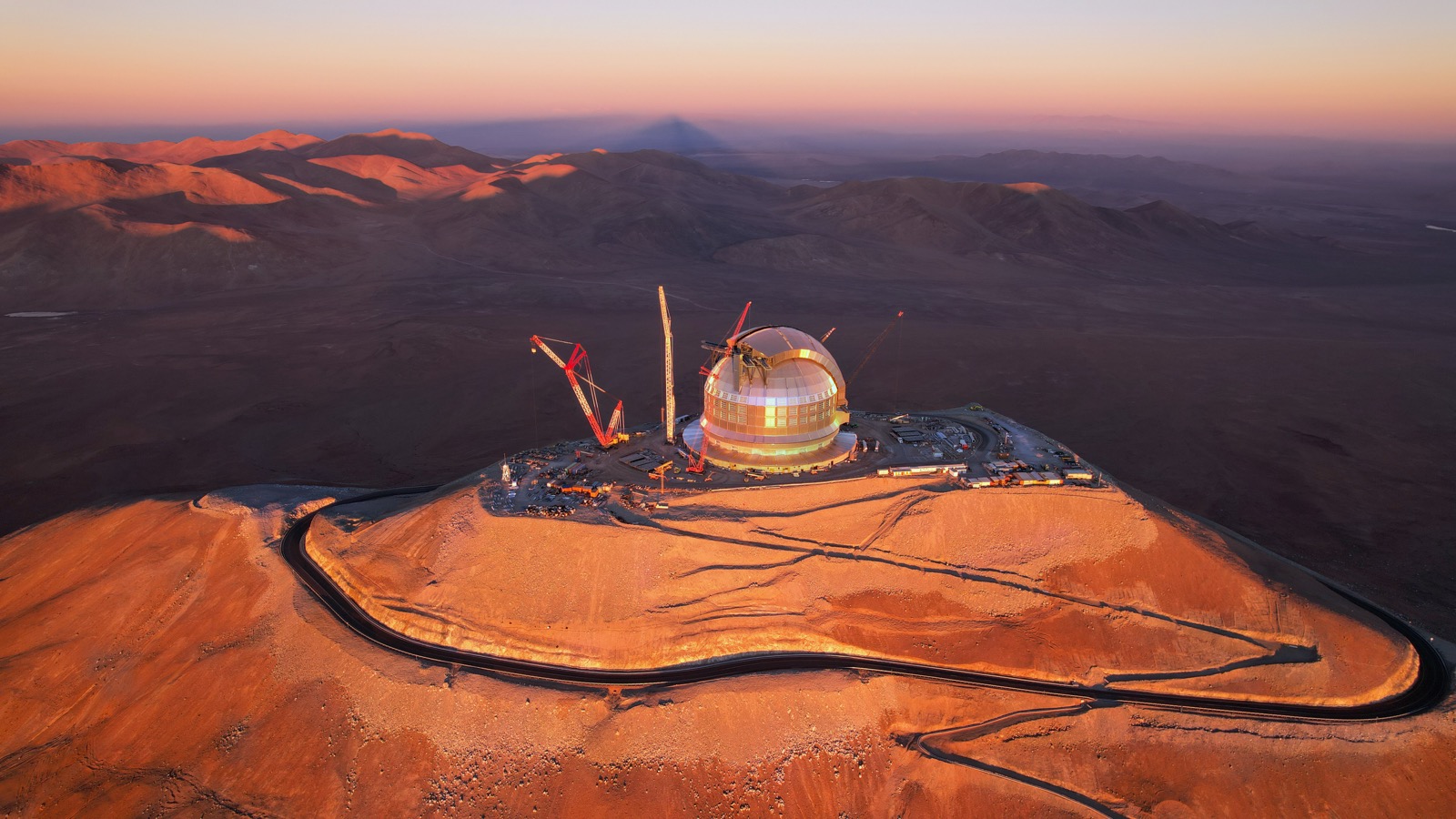
The ELT does not yet work. It is under construction on Cerro Armazones, and this page will say so until it does.
ESO's published plan is about twelve years of construction with a technical first light targeted for 2029. That is a schedule rather than a fact, and schedules for instruments of this size have moved before, so it is recorded here as ESO's stated intention and nothing more. When the telescope achieves first light, that date will appear in the specifications above; until then the field is deliberately empty.
What exists today is substantial: the dome structure, the main telescope structure, and segment production running at a steady rate. The primary mirror's 798 hexagons are being cast, polished and delivered over years, because there is no other way to make a mirror of this size.
The stated cost is €1.45 billion. It is quoted here in euros, as ESO publishes it — converting it to dollars would mean choosing an exchange rate and a date, and inventing a precision that the figure does not have.