Gran Telescopio Canarias
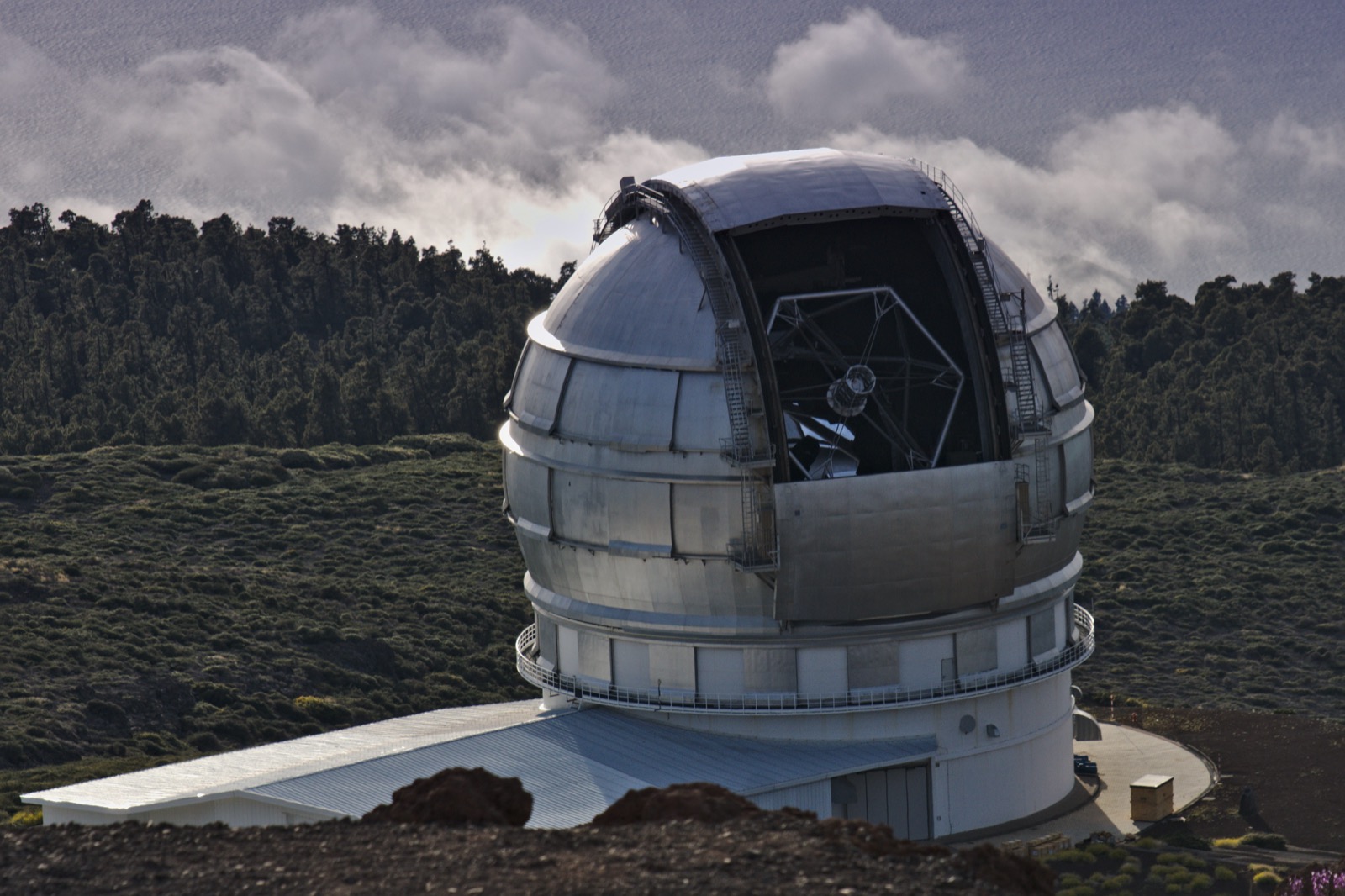
The largest single optical aperture working anywhere on Earth — 10.4 metres of mirror on a volcanic ridge above the Atlantic.
What these numbers mean
Fifty-one times the diameter of an 8-inch Dobsonian, and about 2,600 times its light-gathering area. The word doing the work here is single: the ELT will be far larger, but it is not finished, and the VLT's four mirrors are four mirrors. Today no other working telescope brings this much glass to one focus.
The instrument
- Aperture
- 10400
- Optical design
- Segmented Ritchey-Chrétien (36 hexagonal segments)
- Mount
- Altazimuth
The observatory
- First light
- July 2007
- Status
- Operational
- Operator
- Instituto de Astrofísica de Canarias (Spain), with Mexico and the University of Florida
- Site
- Roque de los Muchachos Observatory, La Palma, Canary Islands
- Altitude
- 2267
- Instruments
- OSIRIS, EMIR, CanariCam, HiPERCAM and others
Against your telescope
Aperture is aperture. The same measurement that describes this instrument describes the telescope in your garage — which is the only honest way to feel the difference.
What "largest single aperture" is actually claiming
Superlatives about telescopes need reading carefully, because there are several ways to be the biggest. The VLT has four 8.2-metre mirrors and can combine them; the Large Binocular Telescope has two 8.4-metre mirrors on one mount. Neither brings all that glass to a single focus in the ordinary way.
The GTC does. Its 10.4-metre primary is 36 hexagonal segments held to work as one continuous surface — the Keck approach, slightly larger — and everything it collects arrives at one place. That is the sense in which it is currently the largest optical telescope in the world.
The qualifier matters because it will expire. When the ELT sees light, this record ends by a wide margin. Until then, this is the biggest single eye anyone has built.
Why a Spanish island in the Atlantic
The Roque de los Muchachos sits at 2,267 metres on La Palma, and the reason a great many telescopes are gathered there is a quirk of local weather rather than politics.
A persistent temperature inversion traps a sea of cloud below the summit for much of the year. Observatories above that layer sit in dry, steady air, with the cloud acting as a lid on the humidity and the light of the towns beneath it. The islands' skies are also protected by law — Spain's 1988 Sky Law restricts lighting, air traffic and radio interference around the site.
It is worth noticing how much of a modern telescope's performance is decided before any glass is cast. Site selection is an optical component.