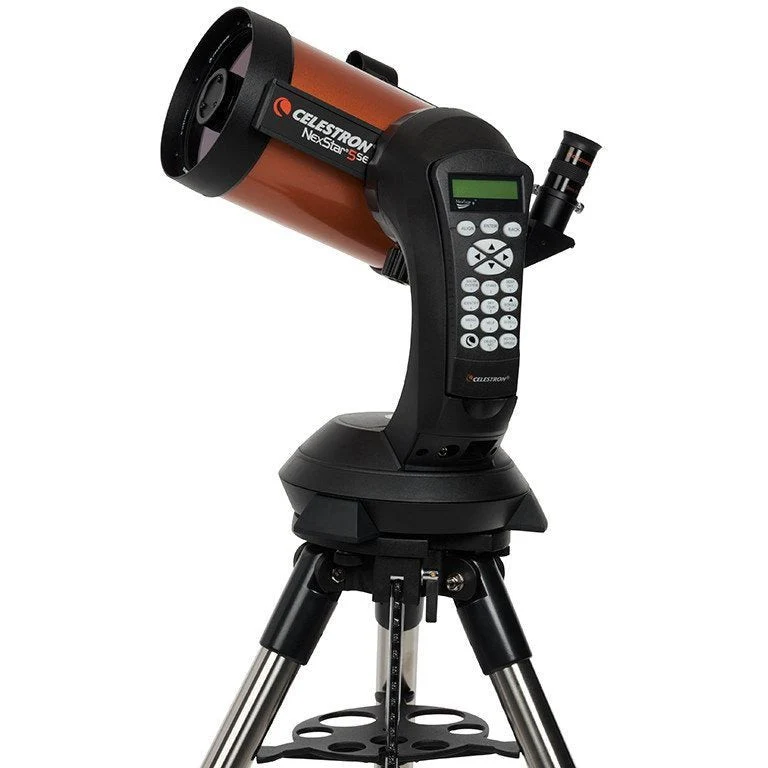
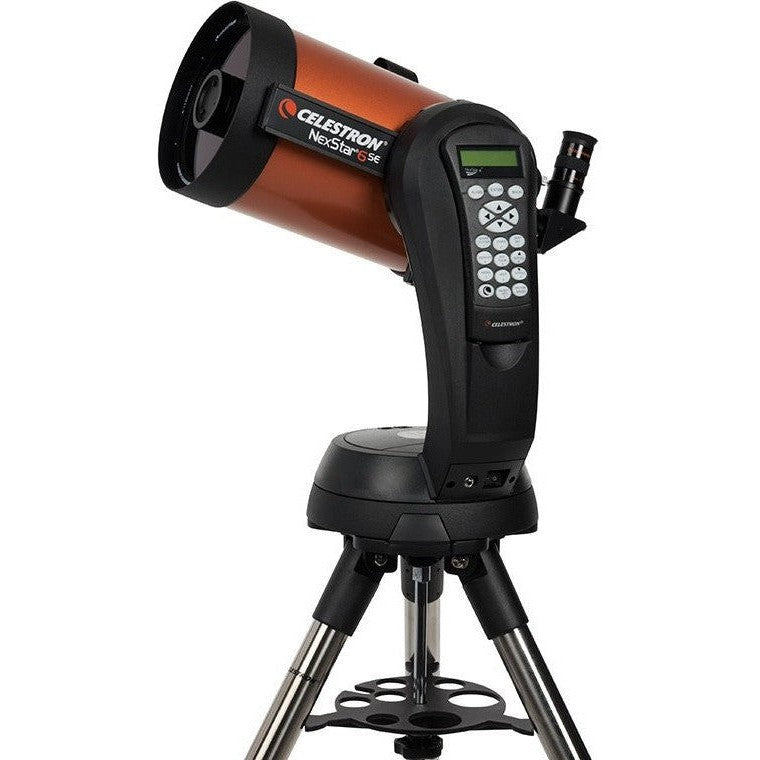
Celestron NexStar 5SE — image 1
Celestron

Celestron NexStar 5SE

A compact 5-inch computerized SCT that finds 40,000 objects for you, the smallest, most portable NexStar and the easiest way into GoTo observing without a big scope to haul.

84/ 100
Polaris Score
#2 of 5 beginner GoTo SCTs
See the breakdown ↓
Aperture
125mm
Focal Length
1250mm
Focal Ratio
f/10
Mount Type
Motorized Alt-Azimuth GoTo
Optical Design
Schmidt-Cassegrain
Weight
10.4 kg
From$1,029

$130 above 90-day lowLast $899 in Jul 2026

Price tracked by PolarisObserved 100 timesTracking since Jul 2026

Try in simulator →
What it's built forOpen these in the simulator →

This telescope lives for the planets.

An f/10 focal length built to magnify. Where fast scopes sweep wide, this one holds a single planet rock-steady at high power — a telescope for the patient observer on a steady night.

Sweet spot 90–160×Loves steady seeing
The view people remember

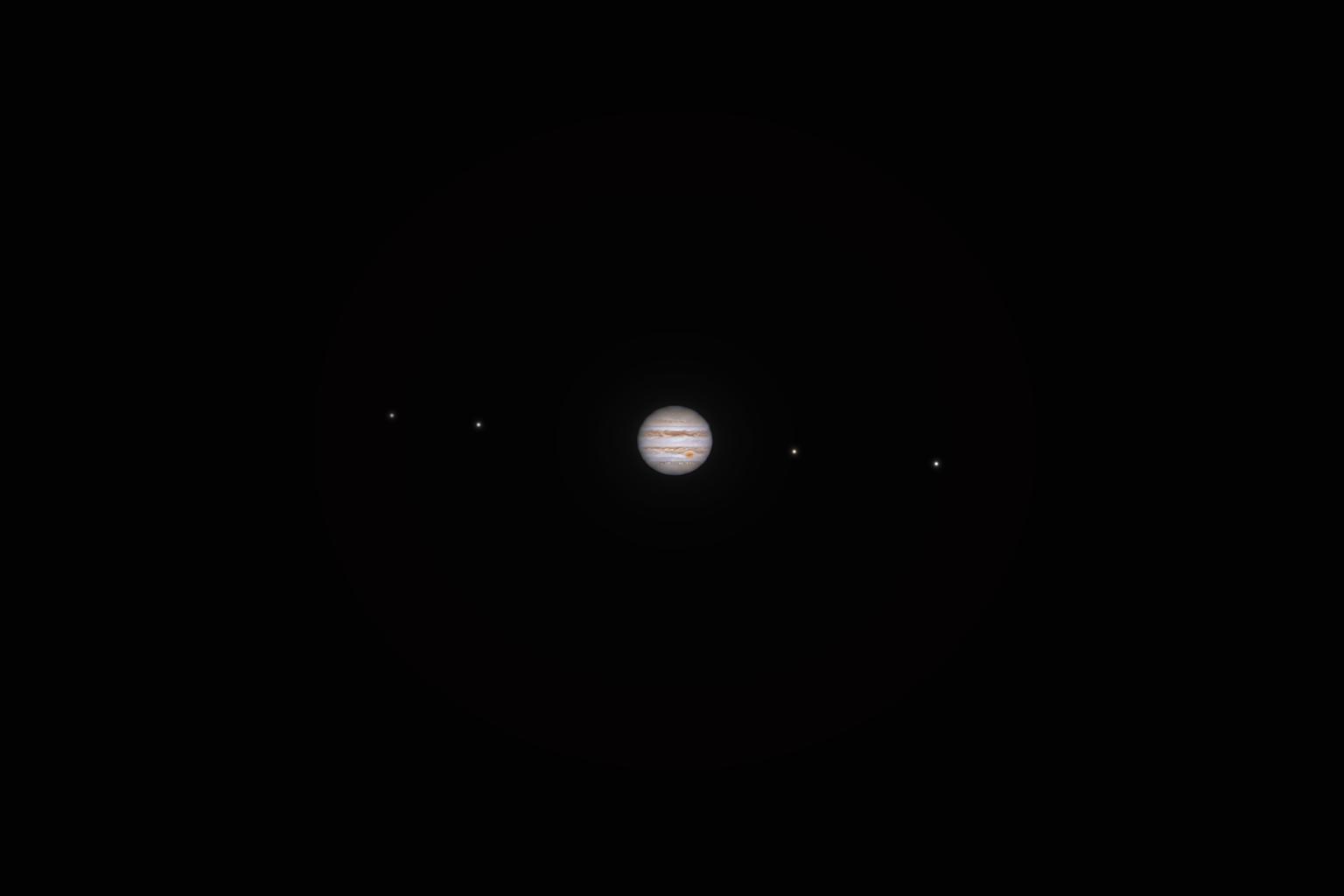
Jupiter and its four moons.

Cloud belts stripe the disk and the Galilean moons shift positions night to night — on a steady evening the Great Red Spot rotates into view.

See Jupiter through this telescope →
01What it's good at

What it's best at — and the trade-offs.

125mm of aperture in a folded SCT tube barely a foot long, real reach that still packs into a backpack.
Best at
✓125mm of aperture in a folded SCT tube barely a foot long, real reach that still packs into a backpack.
✓The single-arm GoTo mount aligns in minutes and slews to any of 40,000+ objects on the hand controller.
✓f/10 gives sharp, high-contrast views of the Moon, planets and double stars, and reaches brighter deep-sky objects.
✓A genuine ecosystem: the same fork takes a wedge, focus motor and camera as you grow.
Trade-offs
!Runs through batteries fast; a dedicated power supply is close to essential.
!Alt-az GoTo is great for visual but needs an equatorial wedge for real imaging.
!Only one included eyepiece, you will want a second, wider one early.
!The tube needs time to cool for its sharpest planetary views.
02In plain English

What These Numbers Mean

125mm · f/10 · 1250mm FL · Motorized Alt-Azimuth GoTo
Aperture
125 mm (5 inch)
Five inches gathers about 320 times the light of your eye, roughly 50 percent more than the 4SE. That is enough for the brighter Messier objects, good lunar and planetary detail, and globular clusters that start to show granularity rather than resolving fully.
Focal length
1250 mm
Long enough for comfortable planetary magnification with a mid-range eyepiece, short enough that a 32 mm eyepiece still gives a usable 39x for star fields. A practical single-telescope compromise.
Focal ratio
f/10
Slow optics mean easy high power and forgiving eyepieces, but a narrow field and dimmer deep-sky views than a fast reflector of the same aperture. Deep-sky imaging is not what this system is for.
Optical design
Schmidt-Cassegrain
The folded light path packs 1250 mm into a very short tube, which is why the whole telescope stays compact. The sealed tube needs cooling time and the central obstruction slightly softens contrast compared with a refractor.
Weight
12 kg complete
Around 26 lb in total, and it breaks into tube, fork and tripod for easy carrying. One person sets it up in a few minutes without strain.
Mount
Single-fork alt-azimuth GoTo
Align on three bright stars and the mount slews to and tracks any of 40,000 objects, which removes the hardest part of learning the sky. The single fork arm is convenient but adds vibration, and alt-azimuth tracking rules out long exposures.
03The Polaris Score

How it scores, and why.

84/100 · #2 of 5 beginner GoTo SCTs
84/ 100
Celestron NexStar 5SE
#2 of 5 beginner GoTo SCTs
Performance
80
Ease of use
88
Portability
76
Upgrade potential
75

Polaris weighs optical capability, how easy the scope is to live with, how portable it is, and how far it takes you before you outgrow it — not list price or brand.

04Who it's for

An honest fit check.

Beginners who want the scope to find objects for them.
Buy it if you
✓Beginners who want the scope to find objects for them.
✓Observers short on space or who travel to darker skies.
✓People who want one versatile scope for Moon, planets and deep-sky.
Look elsewhere if you
!Deep-sky imagers, the alt-az fork needs a wedge, and 5 inches is modest for long exposures.
!Buyers chasing maximum aperture per dollar; a Dobsonian gives far more light for the money.
!Anyone wanting the widest fields, f/10 is a narrow, high-power view.
05Build your rig

What to buy next — and where it leads.

7 pieces of gear, ordered by what changes the view most
Recommended upgrades
A sharper everyday view★ Top pickExplore Scientific 68deg 24mm
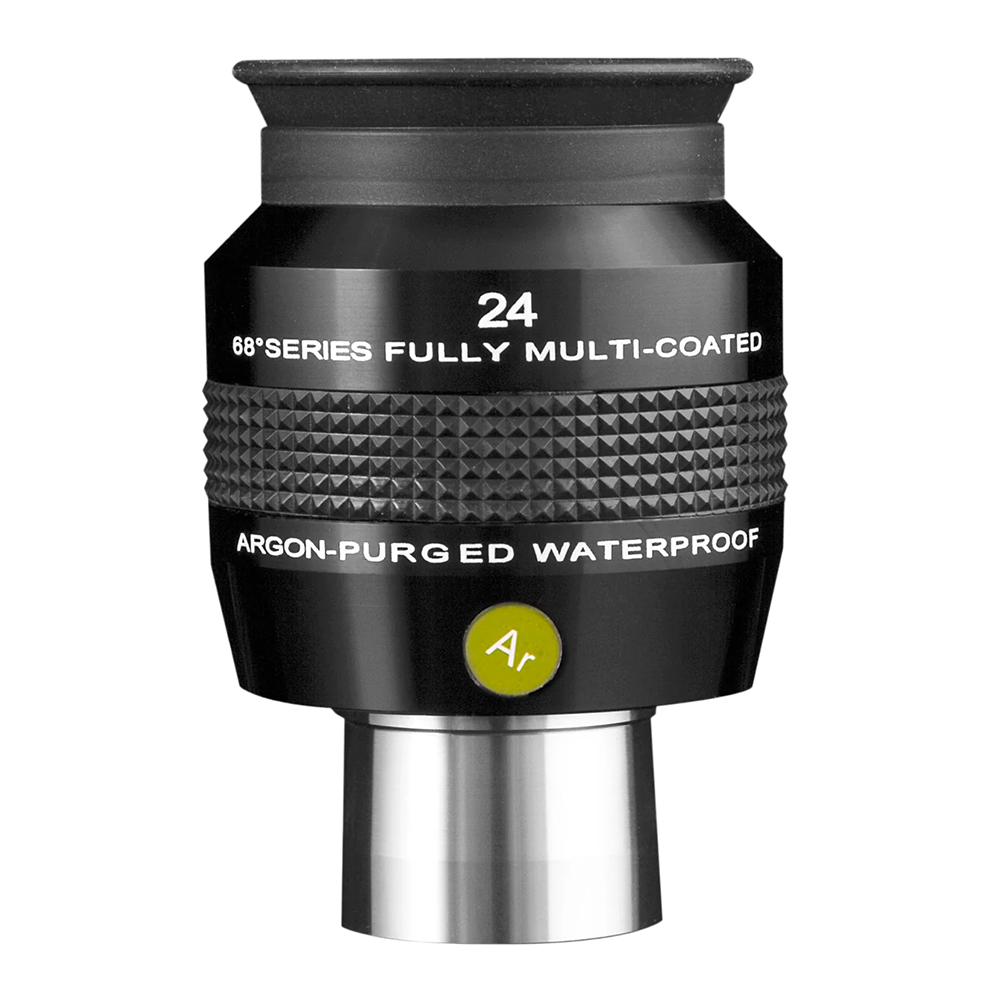
Wide, comfortable low-power views.

Double your magnificationTele Vue 2x Barlow 1.25-inch
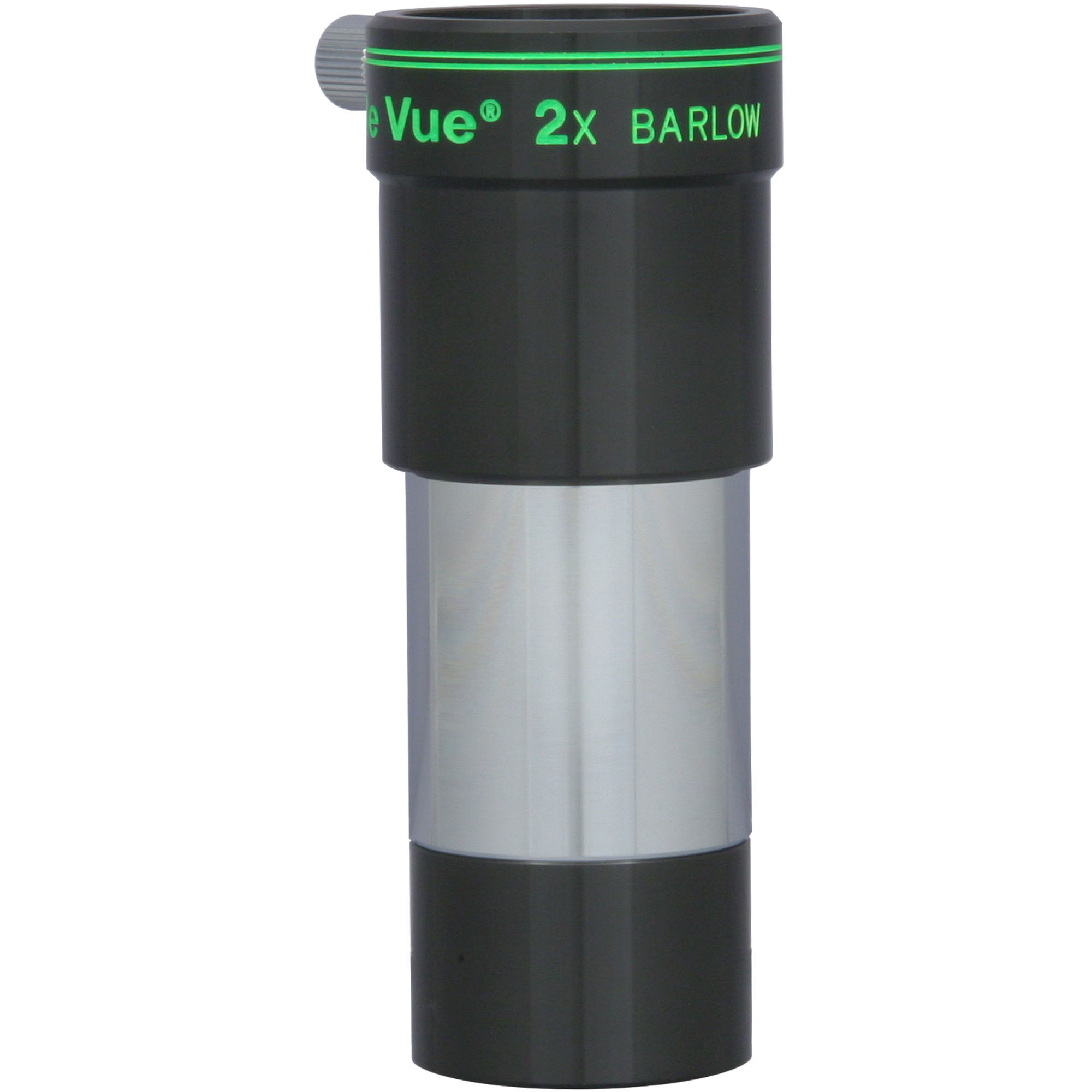
Doubles magnification with no image loss.

Observe all night, no AA batteriesCelestron PowerTank Lithium
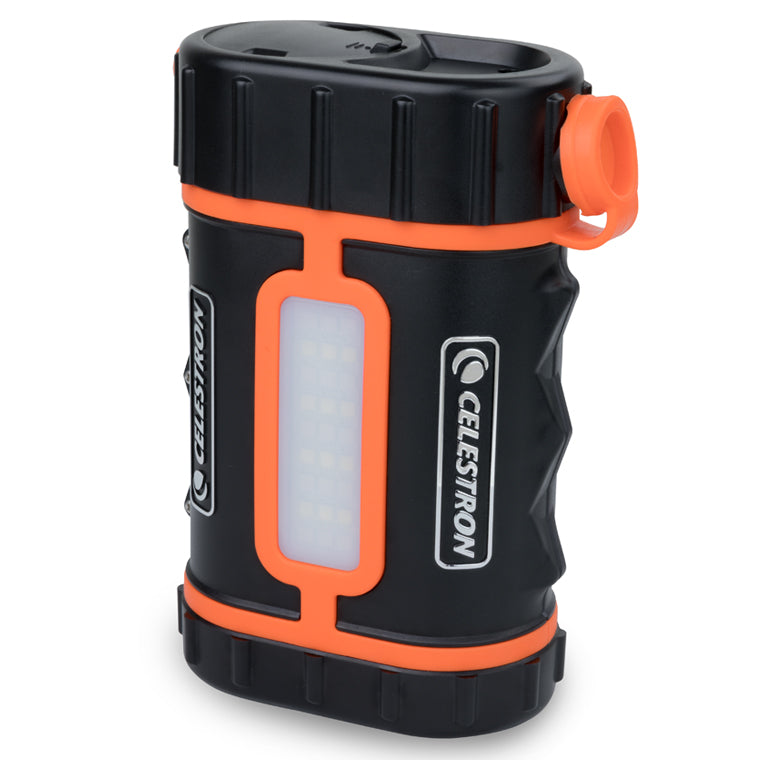
Runs the mount (and heaters) all night off one pack.

Imaging path
Visual observing tonightMotorized Alt-Azimuth GoTo✓ Included

Ships with this telescope — point-and-track for visual sessions, no extra setup.

Better tracking & light imagingCelestron Advanced VX (AVX) Equatorial Mount✓ Compatible
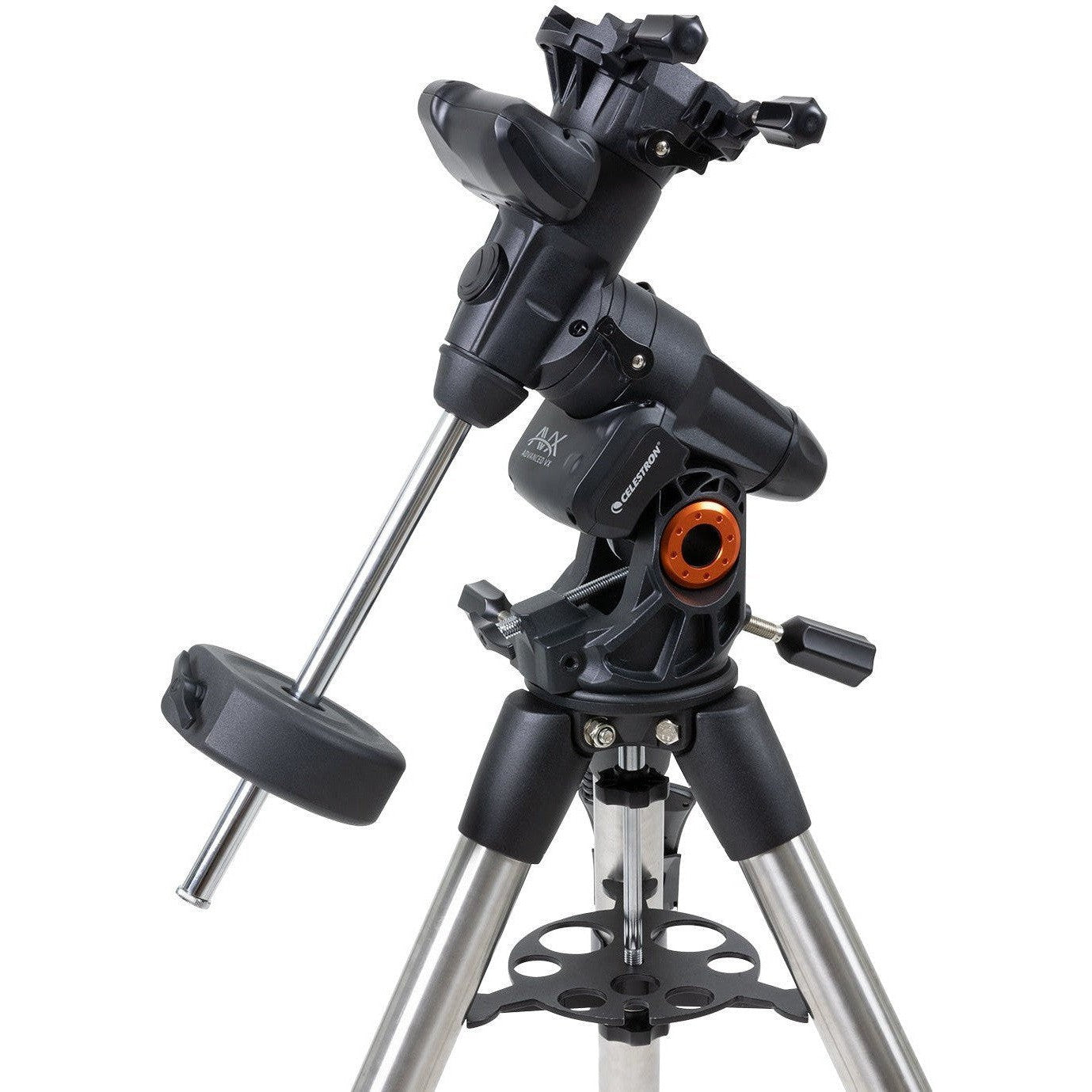
Commonly paired with this telescope

Portable astrophotographyZWO AM5N Harmonic Equatorial Mount✓ Compatible

Start capturing images of the Moon and planets

Start imagingZWO ASI662MC
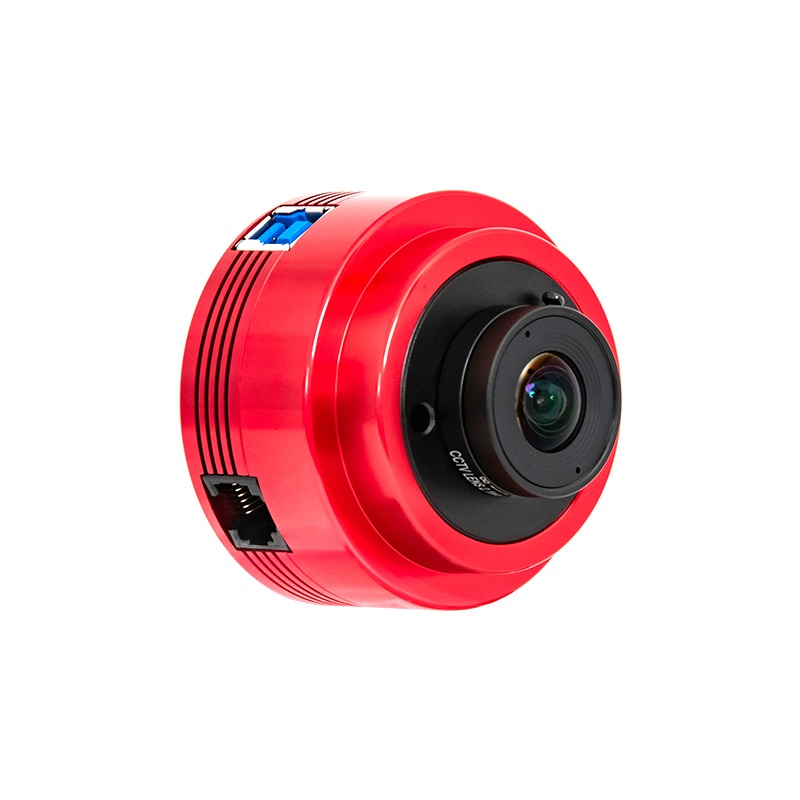
Start capturing images of the Moon and planets
Lunar & planetary
Excellent
Deep-sky imaging
Add a wedge or reducer
Visual observing
Strong all-rounder
06The numbers

Full specifications.

6 measured and stated values
Optics
Optical DesignSchmidt-Cassegrain
Aperture125mm
Focal Length1250mm
Focal Ratiof/10
Mount & drive
Mount TypeMotorized Alt-Azimuth GoTo
Physical
Weight10.4 kg