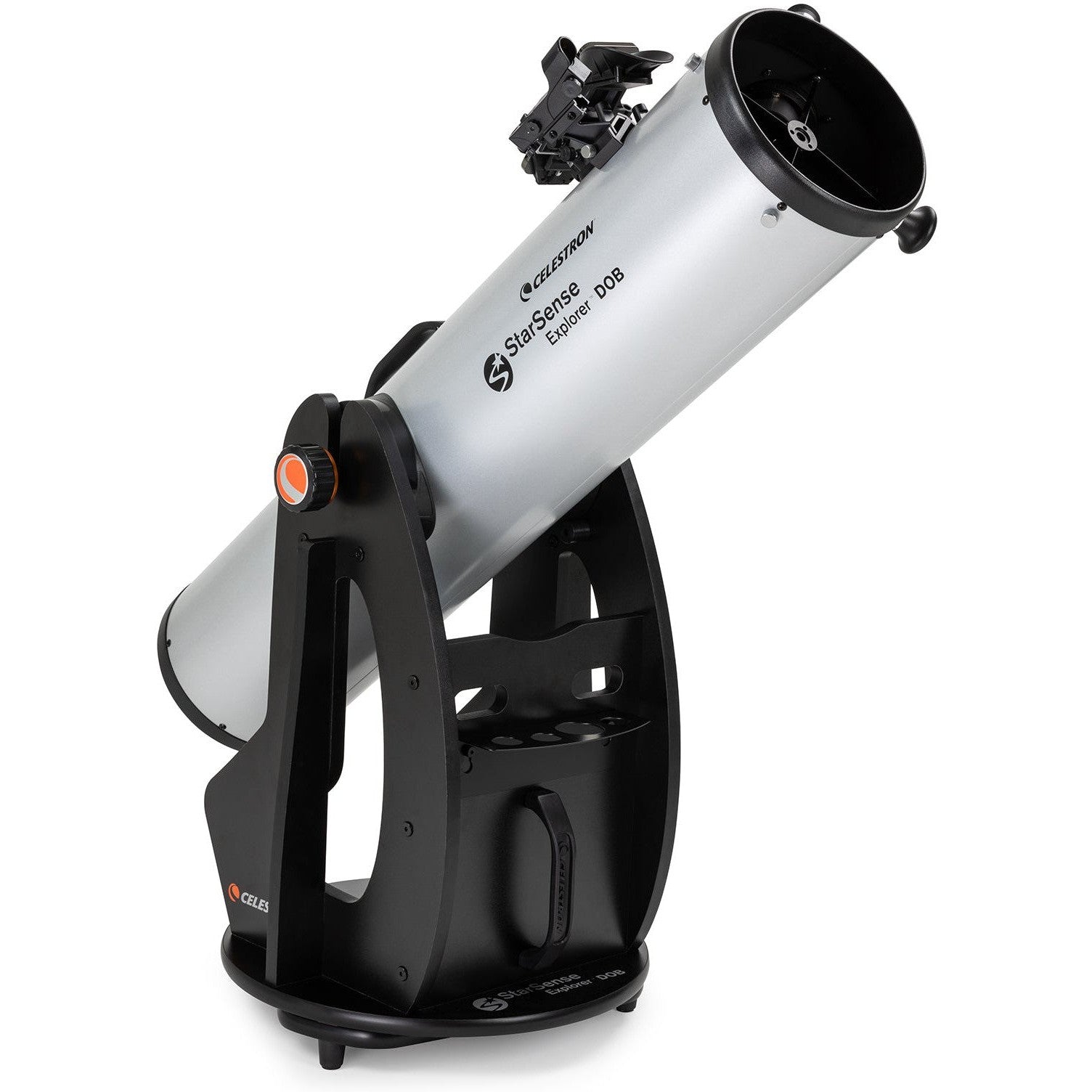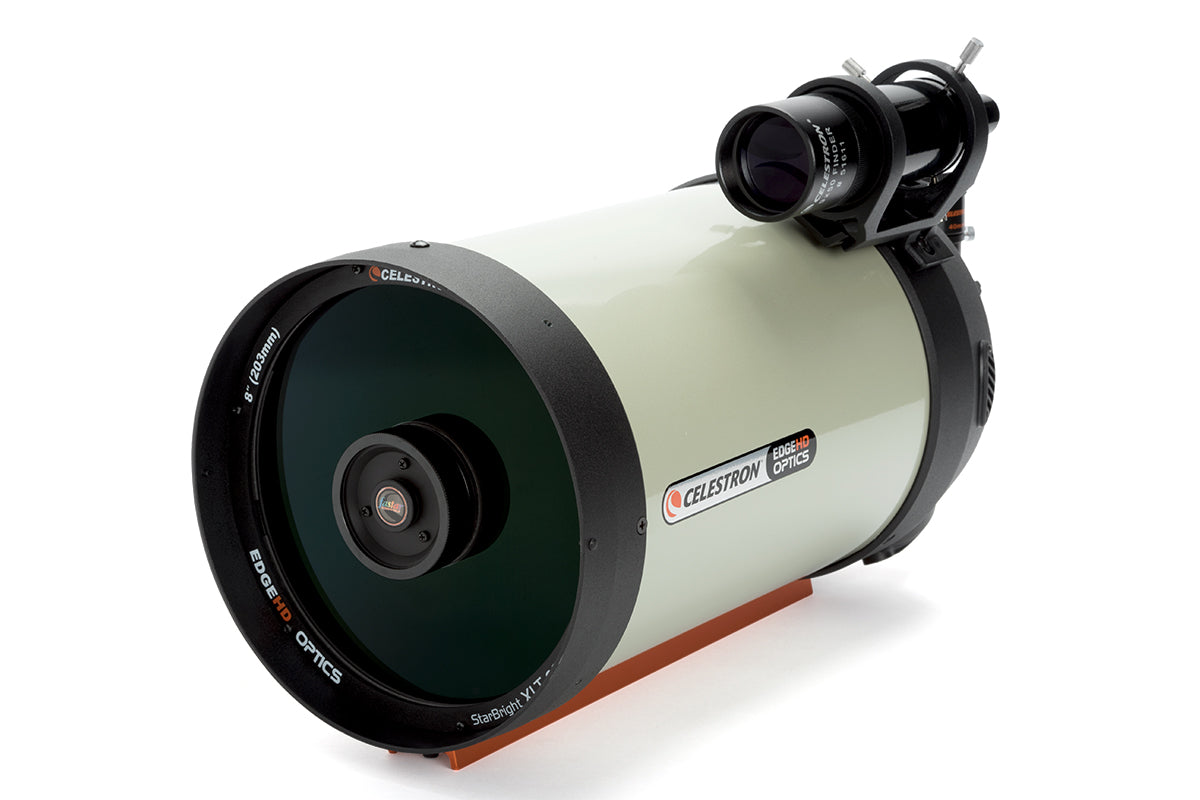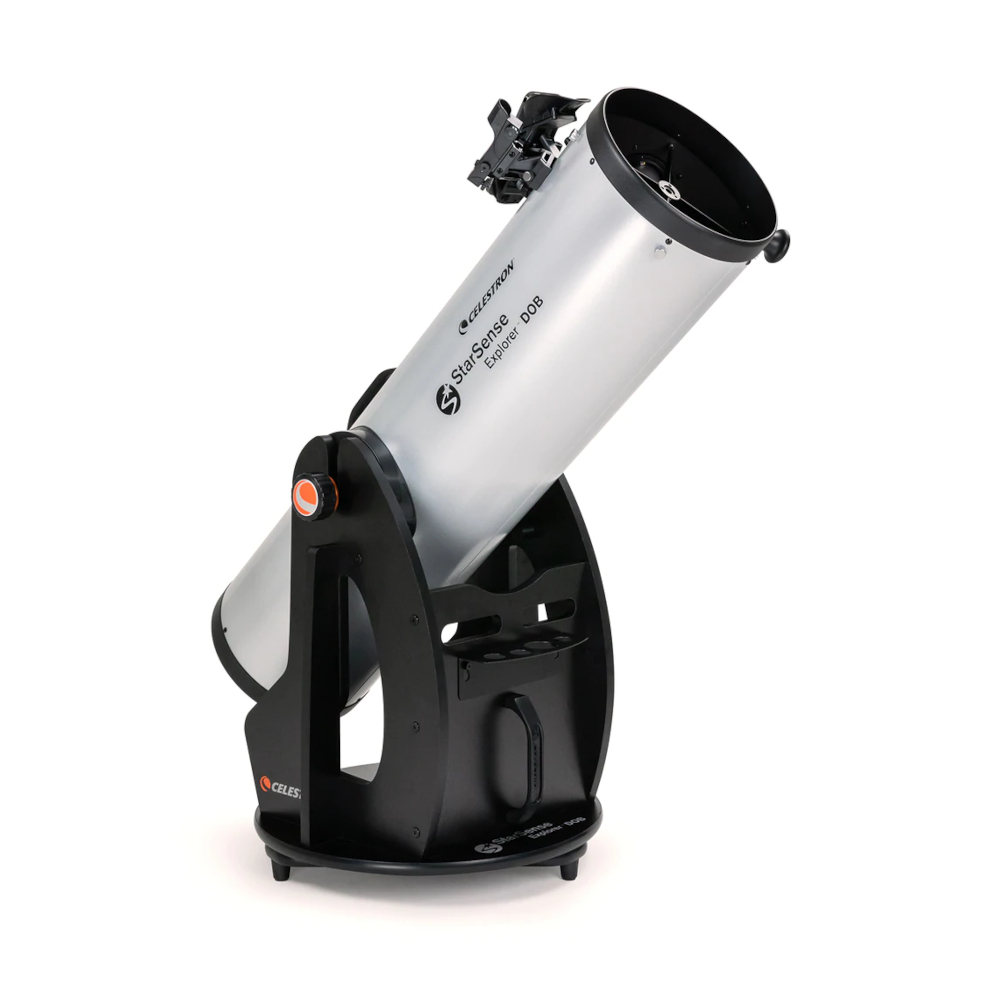
Celestron StarSense Explorer 10" Dobsonian — image 1
Celestron

Celestron StarSense Explorer 10" Dobsonian

A 10-inch Dobsonian that uses your phone to find things: point where the app tells you and big, faint deep-sky objects land in the eyepiece, no star charts, no GoTo motors.

90/ 100
Polaris Score
#1 of 2 app-guided Dobsonians
See the breakdown ↓
Aperture
254mm
Focal Length
1200mm
Focal Ratio
f/4.7
Mount Type
Dobsonian
Optical Design
Newtonian Reflector
Weight
24.9 kg
From$1,199

Lowest in 90 days

Price tracked by PolarisObserved 55 timesTracking since Aug 2026

Try in simulator →
What it's built forOpen these in the simulator →

This telescope was built to gather light.

254 mm of aperture pulls in the faint light that galaxies and clusters live or die on. Point it up under a dark sky and objects that are rumors in smaller scopes resolve into real structure.

Sweet spot 190–320×Rewards dark skies
The view people remember

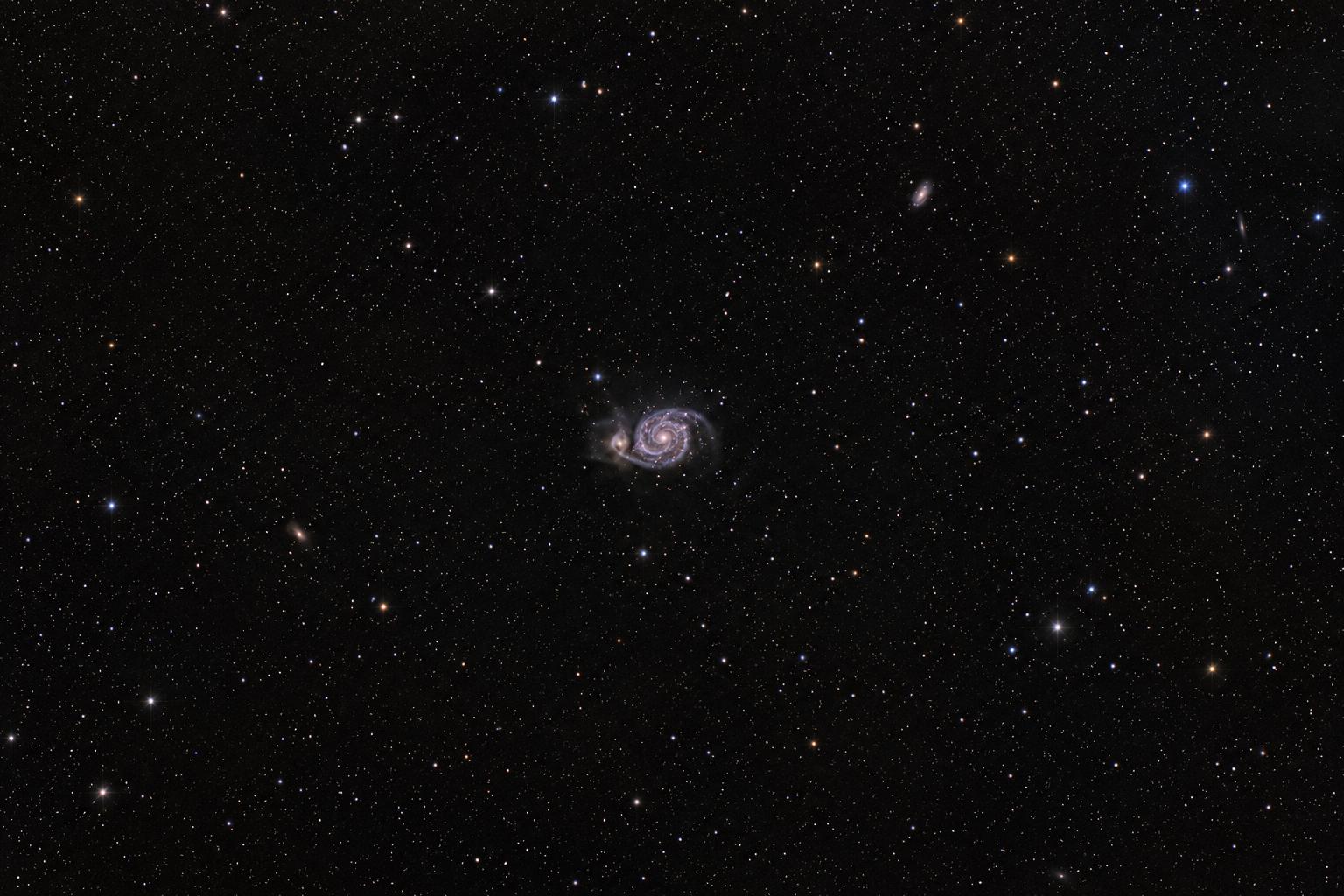
Andromeda, wider than the Moon.

A vast soft oval with a blazing core — two and a half million light-years of galaxy, spilling well past the field of view under a genuinely dark sky.

See Andromeda Galaxy through this telescope →
01What it's good at

What it's best at — and the trade-offs.

StarSense uses your phone camera to plate-solve the sky and guides you to targets with on-screen arrows.
Best at
✓StarSense uses your phone camera to plate-solve the sky and guides you to targets with on-screen arrows.
✓10 inches of aperture shows real structure in galaxies, nebulae and globular clusters.
✓It removes the single hardest part of a manual Dob for beginners: actually finding things.
✓No motors or alignment routine, set the phone in the dock and observe.
Trade-offs
!Large and heavy, like every 10-inch Dobsonian, a two-piece carry.
!StarSense pushes you to targets but does not track; objects still drift.
!Accuracy depends on your phone and a good initial alignment.
!Kit eyepieces are a starting point, not the scope’s ceiling.
02In plain English

What These Numbers Mean

254mm · f/4.7 · 1200mm FL · Dobsonian
Aperture
254 mm (10 inch)
Ten inches collects about 1,300 times the light of your eye. Galaxies begin to show shape rather than being faint smudges, globular clusters resolve into individual stars, and the brighter planetary nebulae reveal internal structure from a reasonably dark site.
Focal length
1200 mm
Enough reach for 240x planetary views with a 5 mm eyepiece, while a 30 mm eyepiece gives 40x and a wide sweeping field. That range covers nearly everything a visual observer wants from one telescope.
Focal ratio
f/4.7
Fast optics reach wide, low-power views easily but demand well corrected eyepieces and regular collimation. Budget wide-angle eyepieces show noticeably soft stars at the field edge here; a coma corrector is a worthwhile later purchase.
Optical design
Newtonian reflector
A parabolic mirror delivers the most aperture per dollar with no colour error. In exchange you align the mirrors occasionally and let the tube cool to outside temperature before the sharpest views arrive.
Weight
23 kg total
About 51 lb, carried as a separate tube and base. One person can move it in two trips from a garage to a driveway, but it is not a telescope you take on a hike.
Finding system
StarSense smartphone dock
Your phone photographs the real star field, works out where the telescope is pointing, and arrows you onto the target. It gives you the object-finding benefit of GoTo on a manual Dobsonian with no motors, no power and no alignment routine.
03The Polaris Score

How it scores, and why.

90/100 · #1 of 2 app-guided Dobsonians
90/ 100
Celestron StarSense Explorer 10" Dobsonian
#1 of 2 app-guided Dobsonians
Performance
94
Ease of use
89
Portability
48
Upgrade potential
84

Polaris weighs optical capability, how easy the scope is to live with, how portable it is, and how far it takes you before you outgrow it — not list price or brand.

04Who it's for

An honest fit check.

Beginners who want big aperture but do not yet know the sky.
Buy it if you
✓Beginners who want big aperture but do not yet know the sky.
✓Observers who want fast target-finding without the cost and fuss of GoTo.
✓Families and casual users who value getting to an object in seconds.
Look elsewhere if you
!Purists who enjoy learning to star-hop with charts and a finder.
!Anyone needing tracking for long high-power sessions or imaging.
!People without room to store and move a large 10-inch Dob.
05Build your rig

What to buy next — and where it leads.

9 pieces of gear, ordered by what changes the view most
Recommended upgrades
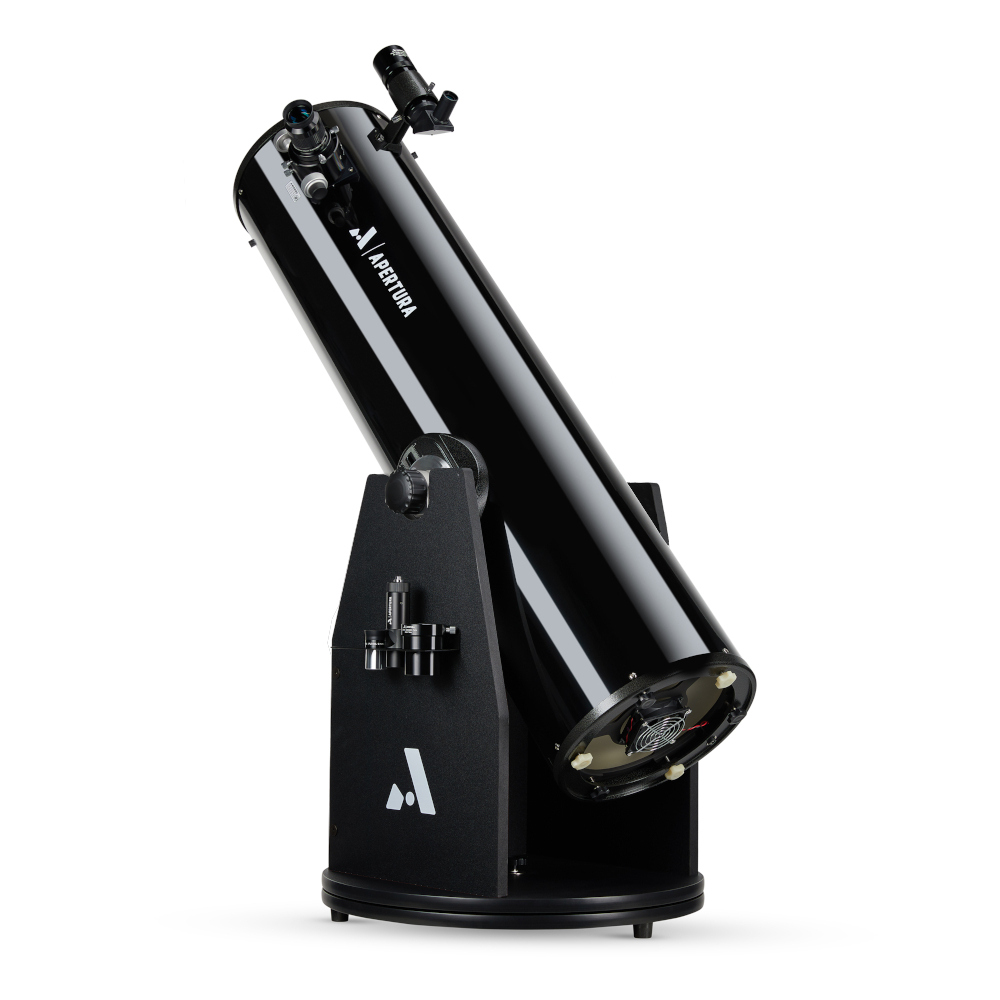
A worthwhile upgrade★ Top pickApertura Laser Collimator
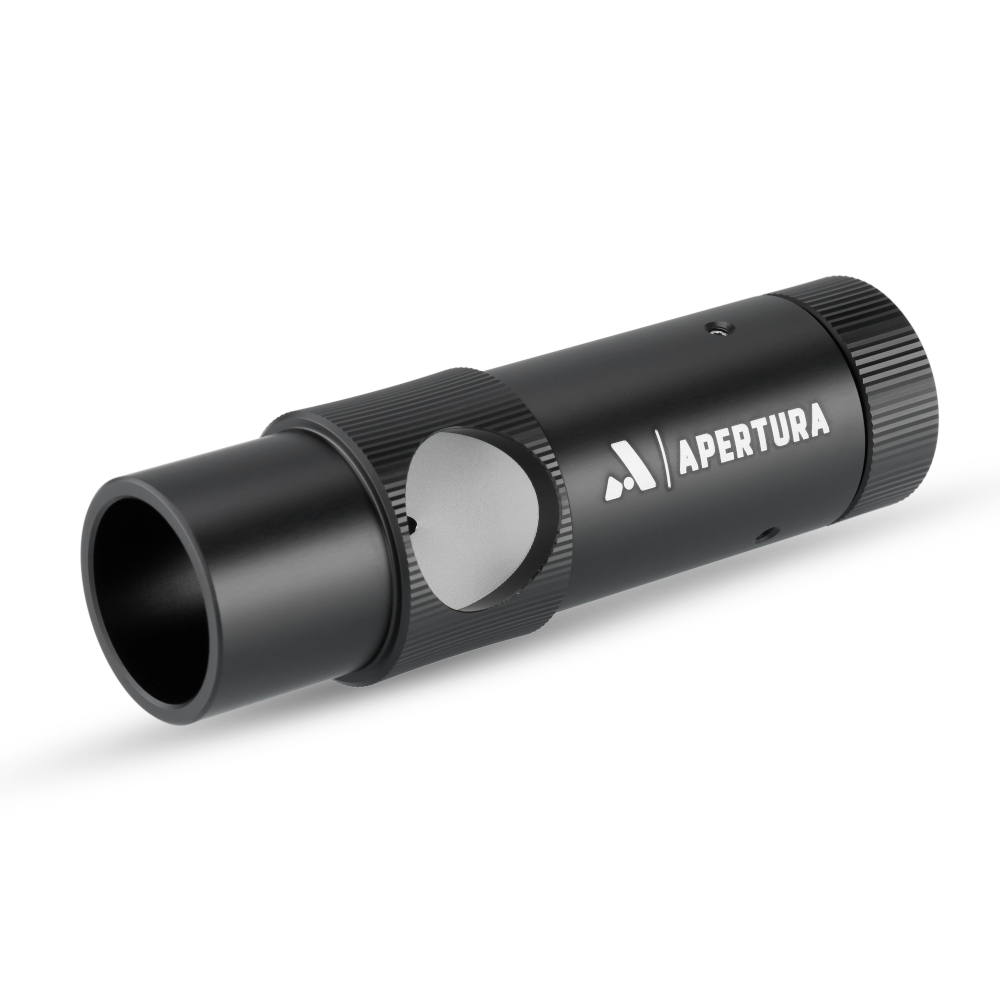
Commonly paired with Celestron StarSense Explorer 10" Dobsonian

See wider, brighter deep-sky viewsGSO SuperView 30mm 2-inch
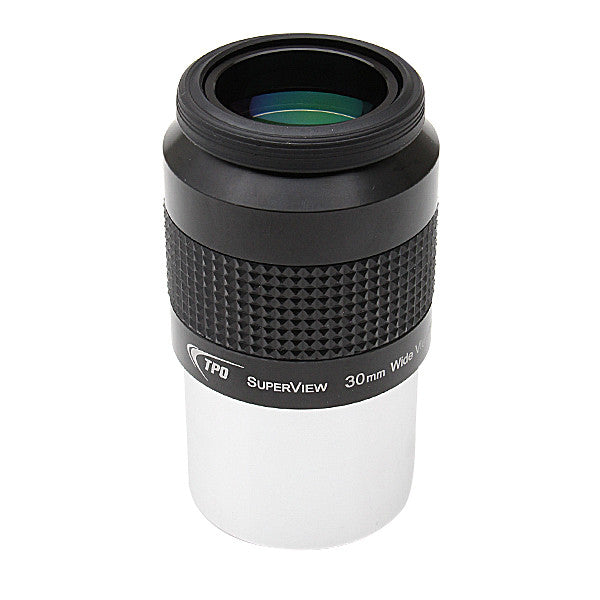
Commonly paired with Celestron StarSense Explorer 10" Dobsonian

Make nebulae popOptolong UHC Filter 2″
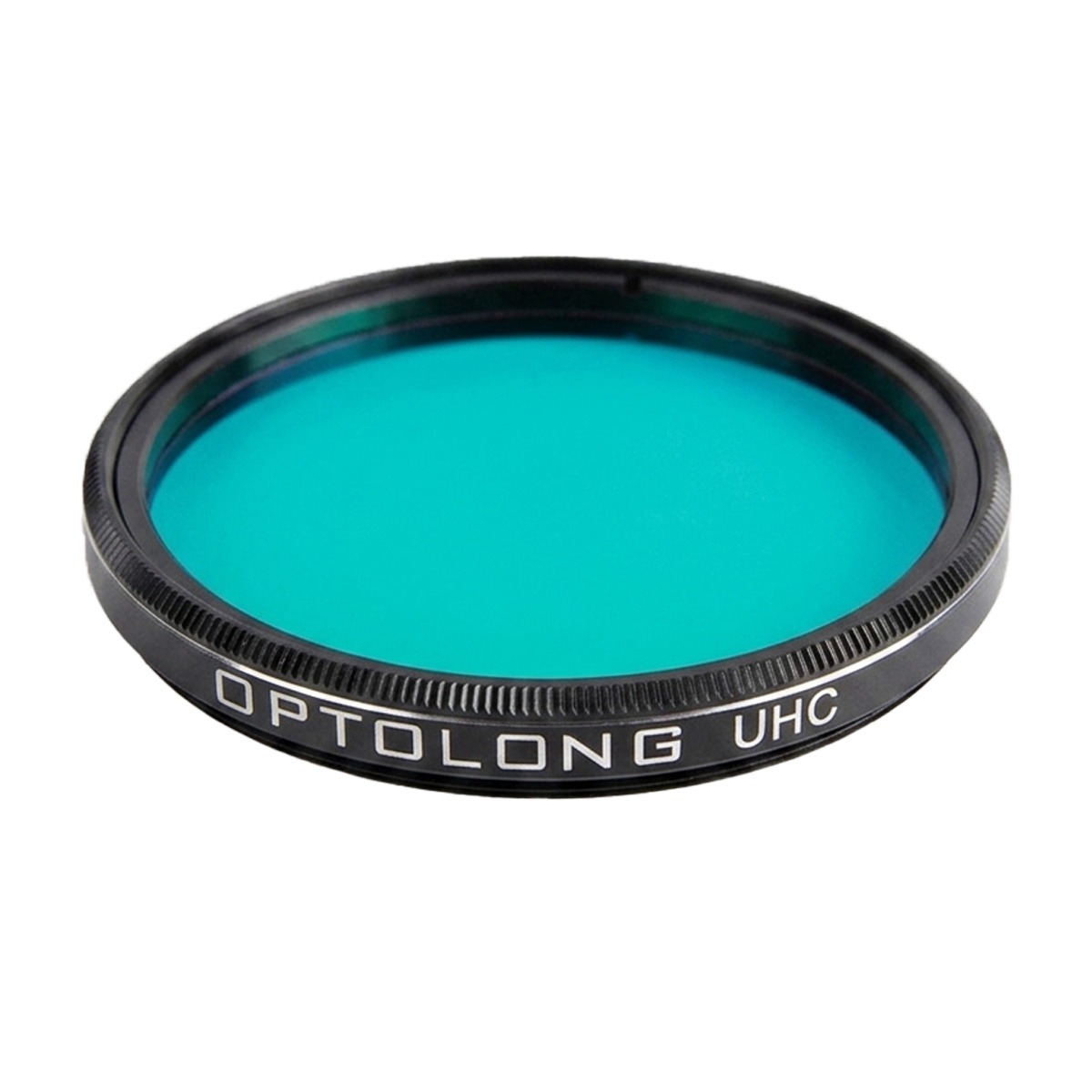
Improves contrast on nebulae and planets with this setup

Observe better
Tame lunar glareGSO Moon Filter 13pct 1.25-inch

Improves contrast on nebulae and planets with this setup

Make nebulae popSVBony UHC 1.25-inch

Commonly paired with this telescope

Sharper planets & lunar detailCelestron X-Cel LX 7mm
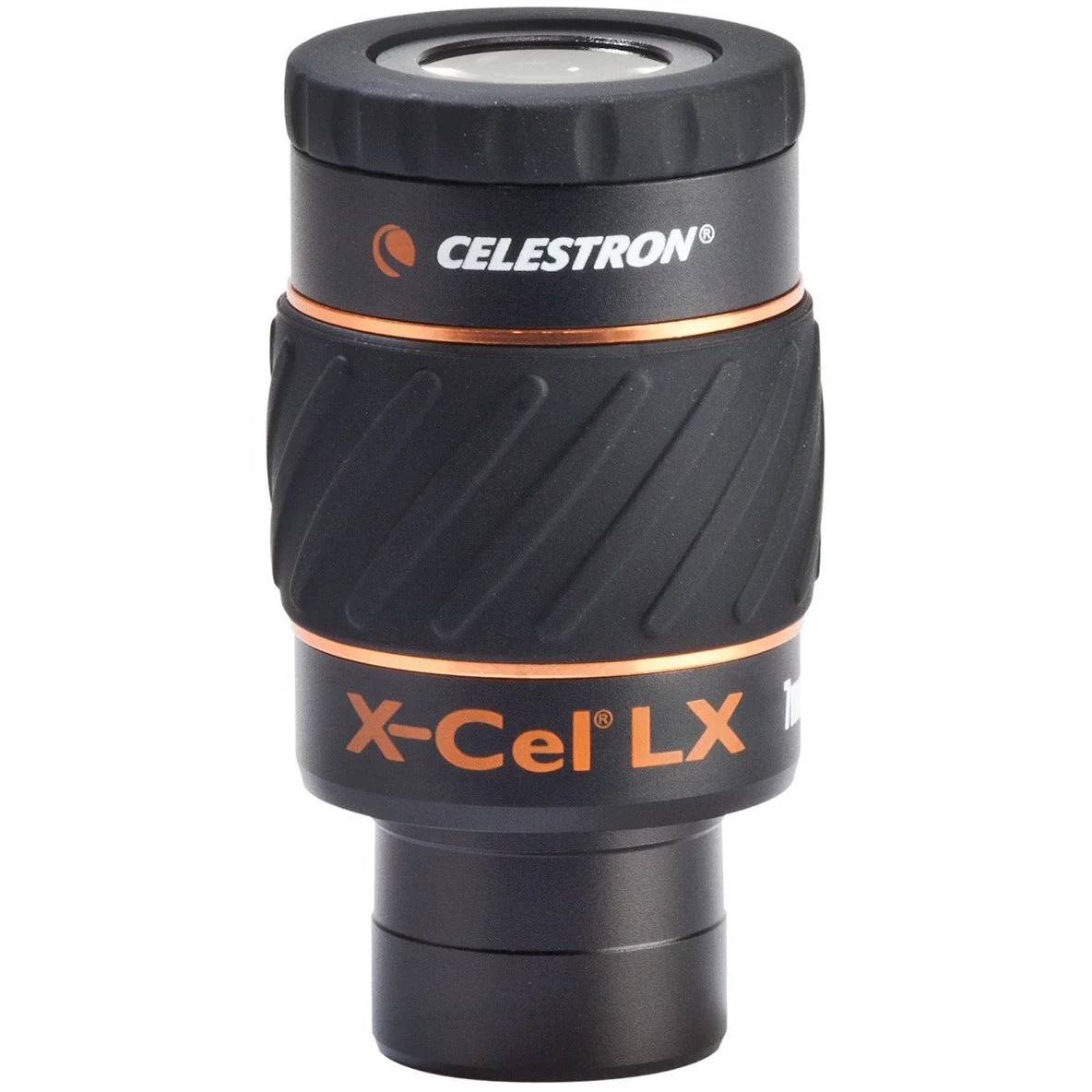
Commonly paired with this telescope

A sharper everyday viewCelestron X-Cel LX 18mm
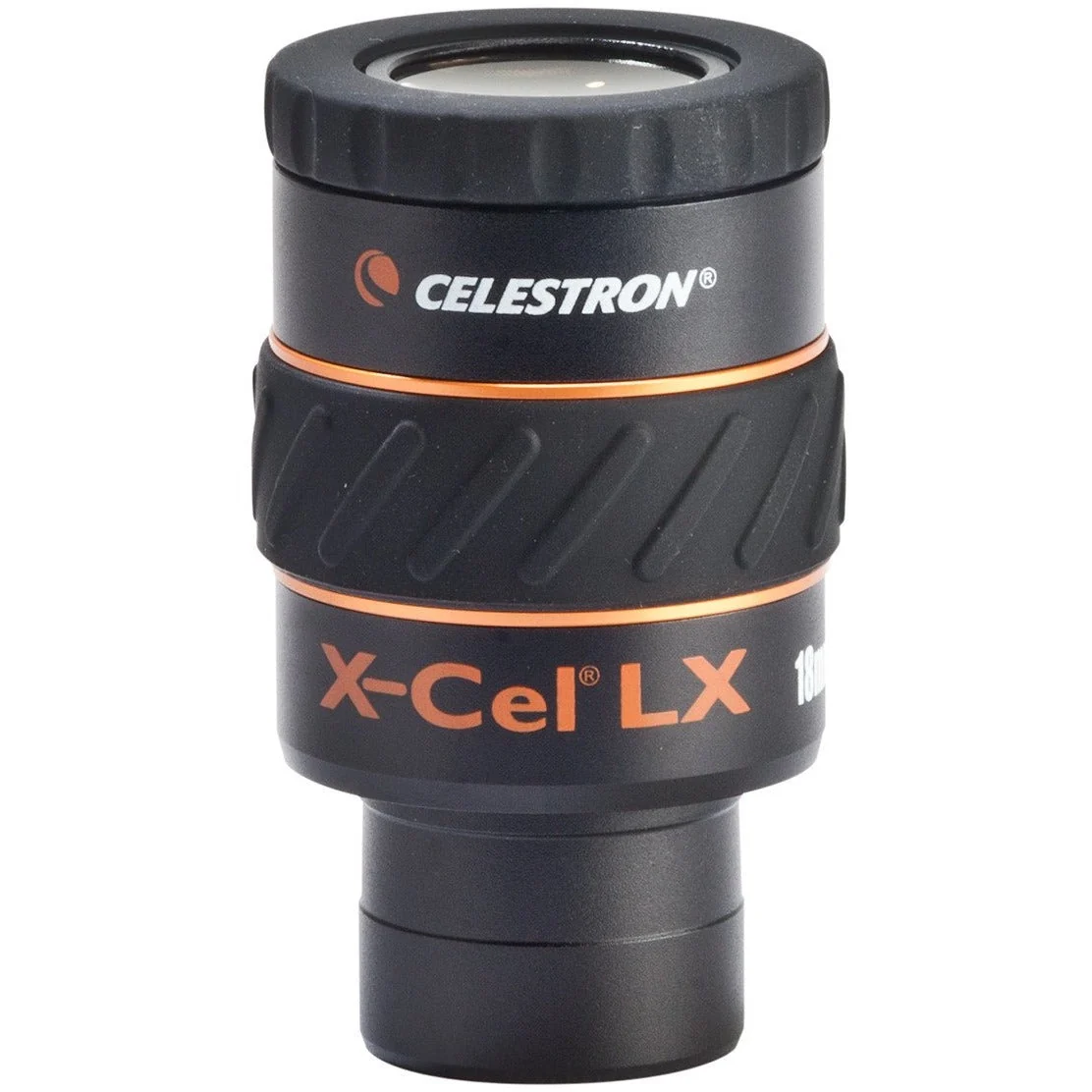
Commonly paired with this telescope

Show all compatible gear (6) →
Accessories
Double your magnificationTele Vue 2x Barlow 1.25-inch
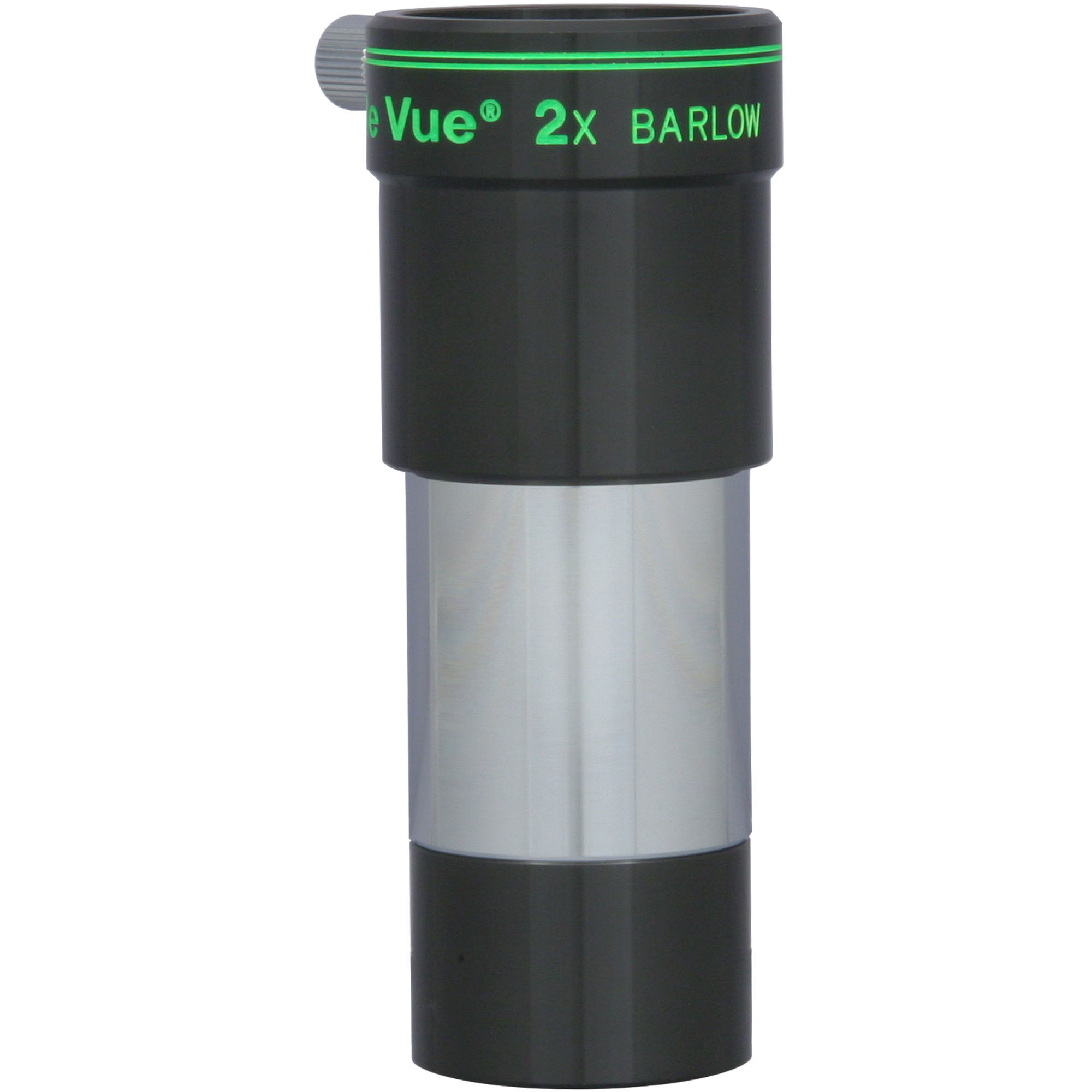
Doubles magnification for closer planetary detail with this telescope

See wider, brighter deep-sky viewsExplore Scientific 68deg 28mm 2-inch
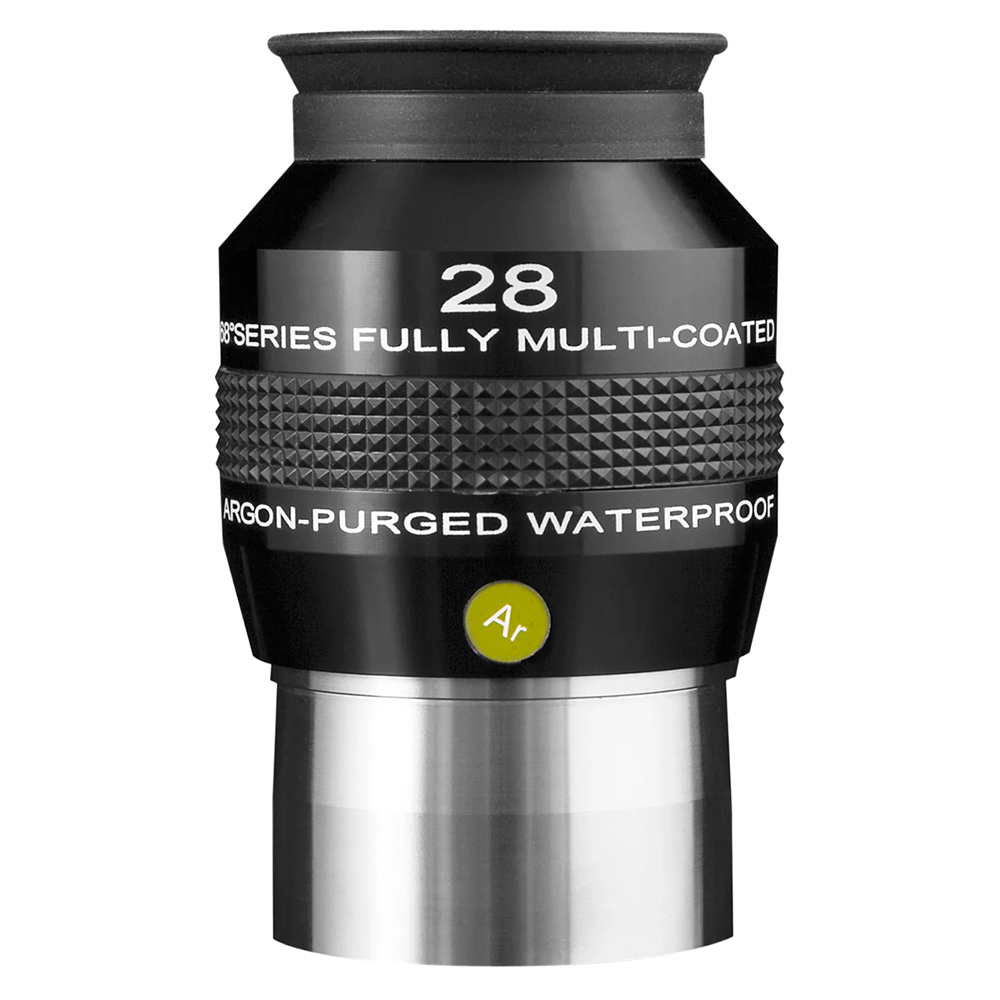
Commonly paired with this telescope

Lunar & planetary
Excellent
Deep-sky visual
Excellent
Astrophotography
Not its purpose, a visual scope
06The numbers

Full specifications.

6 measured and stated values
Optics
Optical DesignNewtonian Reflector
Aperture254mm
Focal Length1200mm
Focal Ratiof/4.7
Mount & drive
Mount TypeDobsonian
Physical
Weight24.9 kg