Apertura
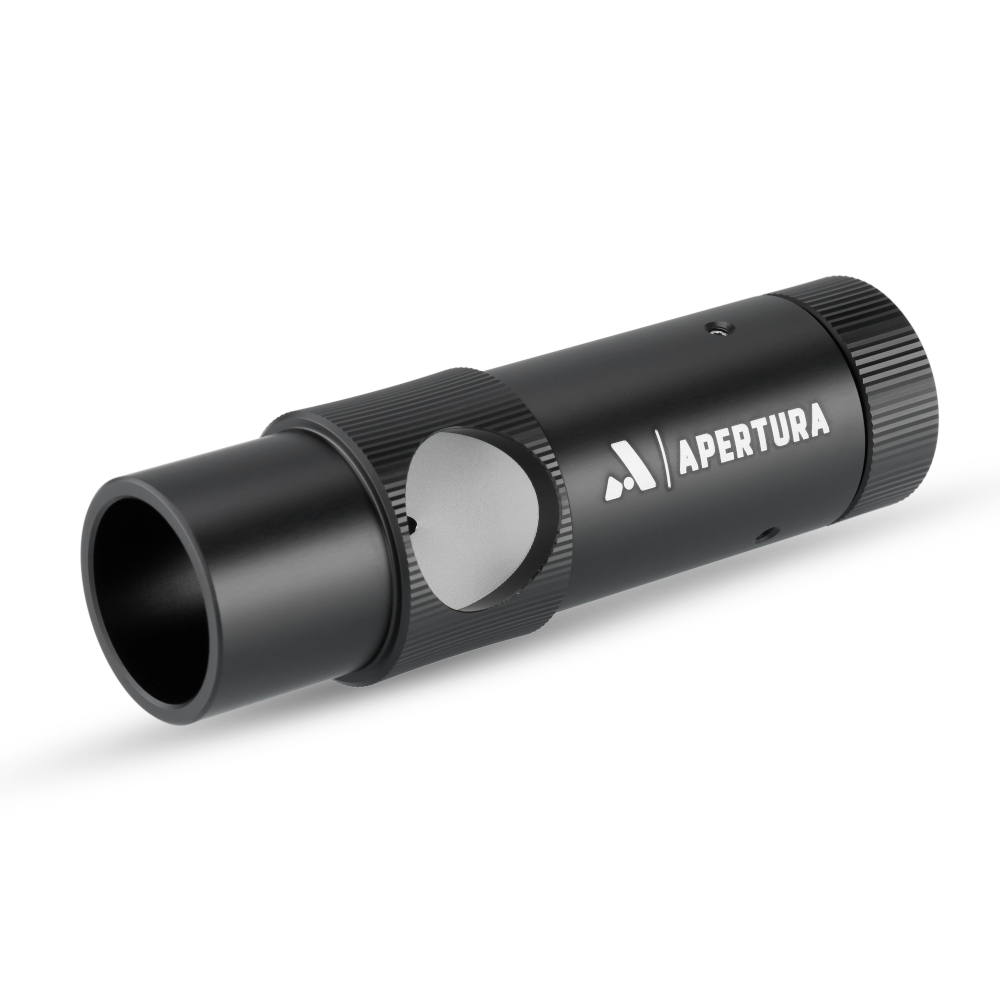
Apertura Laser Collimator
1.25" · with 45° window
Aligns the mirrors in a Newtonian or Dob in under a minute, so every star snaps to a tight point instead of a soft blur.
84/ 100
Polaris Score
#2 of 7 collimation tools we recommend
From$59.95
Where to buy
Affiliate link — we earn a commission, you pay the same. We rank on fit, not payout.
01Will it fit my setupCompatibility.
What this accessory works with — check the fit before you check the price.
01Will it fit my setup
Compatibility.
What this accessory works with — check the fit before you check the price.
What this accessory works with — check the fit before you check the price.
NewtonianDobsonian1.25" focuser2" via adapterFast & slow mirrors
Note✕Not for refractors✕Needs its own collimation check
02The numbersWhat These Numbers Mean
4 numbers in plain English · full specifications
02The numbers
What These Numbers Mean
4 numbers in plain English · full specifications
4 numbers in plain English · full specifications
What it doesMaintenance
Aligns Newtonian mirrors
It projects a beam down the tube so you can see exactly where the optical axis falls, and adjust the secondary and primary until the beam returns on itself. A misaligned reflector shows soft, flared stars that no eyepiece upgrade will fix.
Barrel sizeStandard
1.25 inch
Drops into any standard focuser, including 2 inch focusers with the usual adapter. Focuser slop matters here: a loose fit lets the collimator tilt and gives you a false reading.
How oftenDepends on f-ratio
Fast scopes, every session
At f/4 to f/5 collimation drifts enough to matter after transport, so a two-minute check before observing is normal. At f/8 a reflector can hold alignment for months.
The catchVerify
It must be collimated itself
A laser whose own beam is off-axis will confidently align your telescope incorrectly. Roll it in a V block and check the dot does not circle before trusting it, or cross-check against a Cheshire eyepiece.
Optical
TypeCollimation laser
Wavelength650 nm (red)
Fit1.25" barrel
45° windowYes, read from the side
ClassClass 2 / 3R
Physical
BodyMachined aluminium
PowerButton cells
Grub screwsFor self-alignment
Weight~90 g
03Before you buyGood to know.
The honest caveats — the things that save you a return, a bad first night, or a second purchase you didn't need.
03Before you buy
Good to know.
The honest caveats — the things that save you a return, a bad first night, or a second purchase you didn't need.
The honest caveats — the things that save you a return, a bad first night, or a second purchase you didn't need.
Collimate the collimator first.
A laser that is itself out of true will send you chasing your tail. Roll it in a V-block and adjust its grub screws until the dot does not wander.
Do a star test to confirm.
The laser gets you very close; a quick defocused-star check on a real night confirms the last fraction. They agree when both are done right.
Never look into the beam.
It is a laser, treat it like one. Aim it down the tube, not across the field where someone could catch it in the eye.
84/ 100
Apertura Laser Collimator
1.25" · with 45° window · $59.95
Aligns the mirrors in a Newtonian or Dob in under a minute, so every star snaps to a tight point instead of a soft blur.