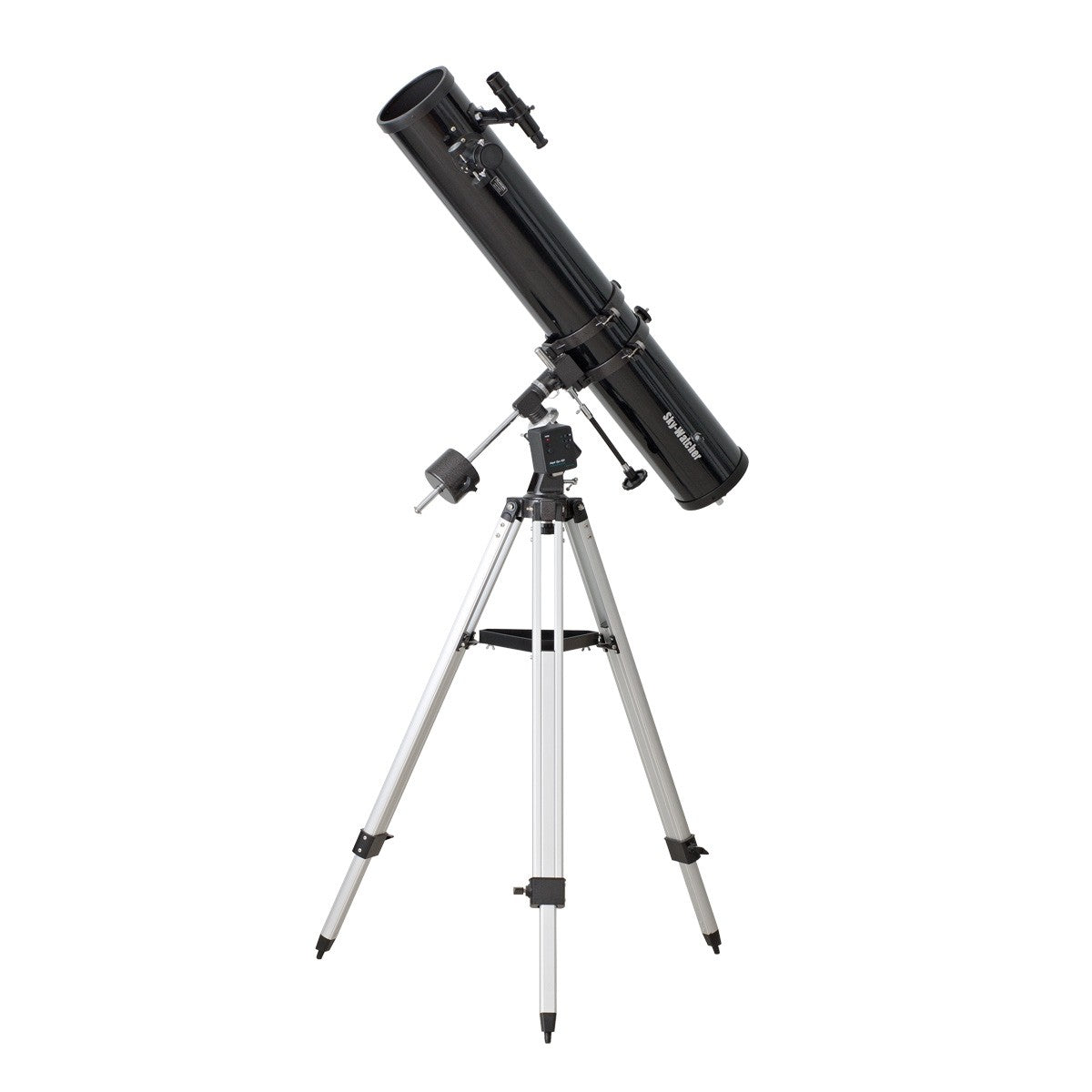
Sky-Watcher 114/900 EQ — image 1
Sky-Watcher

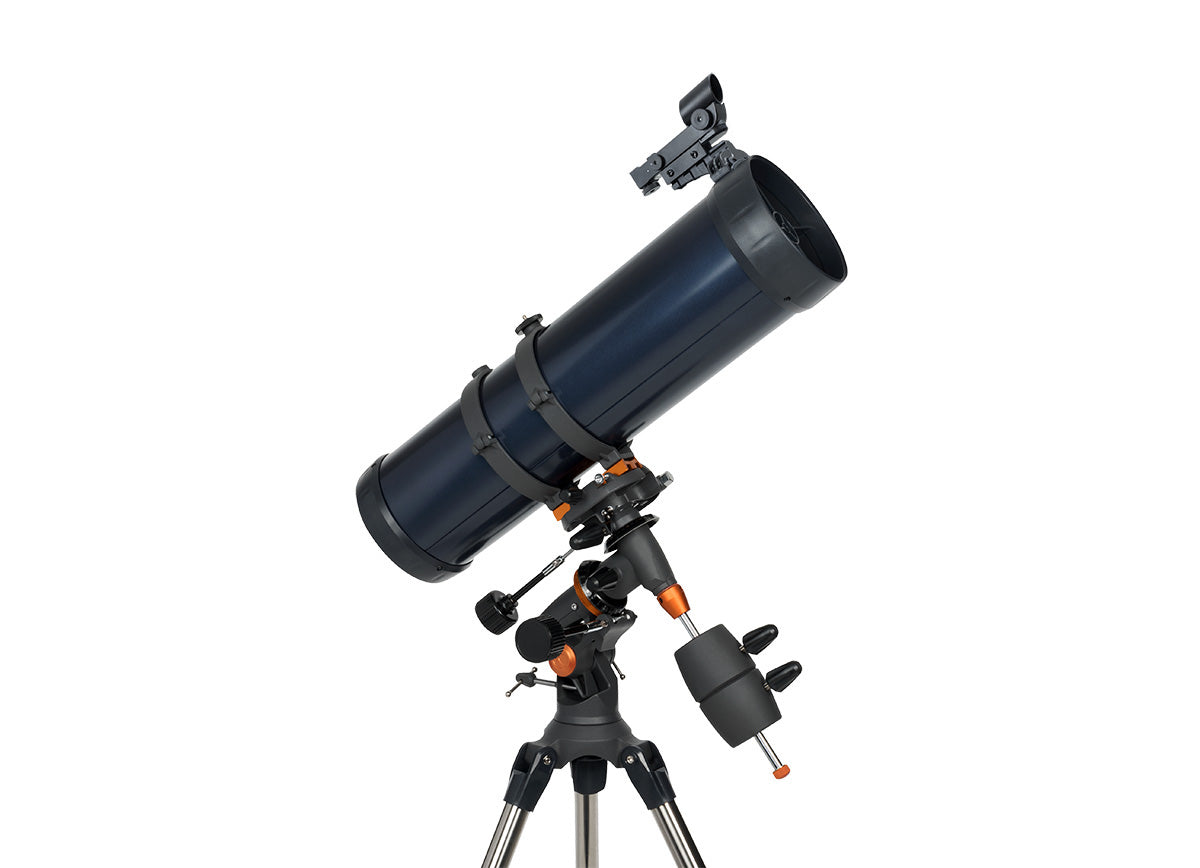
Sky-Watcher 114/900 EQ

An old-fashioned long-tube Newtonian that gets right the thing cheap reflectors usually get wrong: it is slow enough that its mirror does not have to be expensive to be sharp.


68/ 100
Polaris Score
#4 of 12 budget beginner telescopes
See the breakdown ↓
Aperture
114mm
Focal Length
900mm
Focal Ratio
f/7.9
Mount Type
German Equatorial (EQ1 or EQ2)
Optical Design
Newtonian
Weight
10 kg
Typical range: $100–$300Estimated
Try in simulator →See other telescopes →
What it's built forOpen these in the simulator →

This telescope was built for your first nights out.

Light, simple, and forgiving — it shows the Moon, the bright planets, and the showpiece clusters without a manual. The kind of scope that actually gets used, because it is easy to carry out and easy to point.

Easy 30–120× viewsSet up in minutes
The view people remember

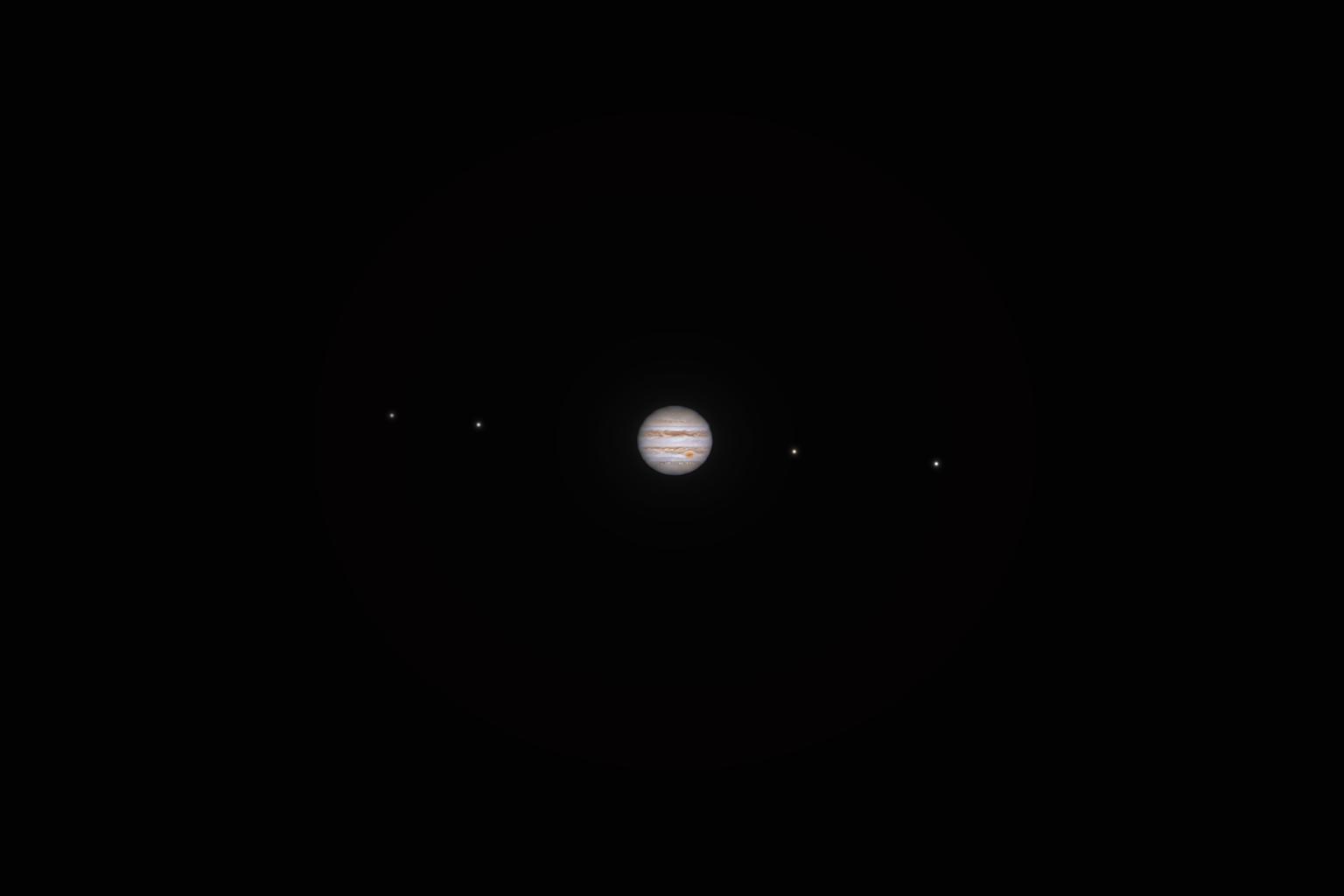
Saturn, with its rings tilted wide.

The one you call people outside to see — the rings standing clear of the planet, the Cassini Division a clean black line drawn around them.

See Saturn through this telescope →
01What it's good at

What it's best at — and the trade-offs.

At f/7.9 the primary mirror is slow enough that the difference between a spherical and a parabolic surface falls below what the eye can detect, which is…
Best at
✓At f/7.9 the primary mirror is slow enough that the difference between a spherical and a parabolic surface falls below what the eye can detect, which is why this tube outperforms short 114 mm scopes selling for the same money
✓Nothing sits in the light path. No corrector, no built-in Barlow, no clever folding. What the mirror collects is what reaches the eyepiece
✓The equatorial mount has slow-motion cables on both axes, so once roughly polar aligned you follow Jupiter across the sky with one slow turn of one knob
✓Collimation is a two-minute job with a cheap collimation cap, and at this focal ratio small errors are forgiving rather than fatal
Trade-offs
!The EQ1 and EQ2 mounts are the weak part of the package, and a 900 mm tube gives vibration a long lever to work with
!Sky-Watcher advertises the primary as aspheric with a parabolic profile, but independent measurements of these mirrors report a range of figures, some genuinely parabolic and some plainly spherical
!The supplied 5x24 or 6x24 finder has a small aperture and a plastic bracket, and is the first thing most owners replace
!A 900 mm tube plus a counterweighted mount is around 10 kg assembled and does not fold, so it is a garden telescope rather than a travelling one
02In plain English

What These Numbers Mean

114mm · f/7.9 · 900mm FL · German Equatorial (EQ1 or EQ2)
Focal ratio
f/7.9
This is the number that makes the telescope work. A spherical mirror only produces visible spherical aberration when it is fast; at f/7.9 a 114 mm mirror departs from the ideal parabolic shape by less than the quarter-wave threshold where the eye starts to notice. That is why this scope outperforms 114 mm short tubes at the same price, and why the maker of a 114 mm f/4.4 has to grind a parabola while this one does not.
Aperture
114 mm (4.5 inch)
Enough for craters and mountain shadows along the lunar terminator, Jupiter's two main belts with its four bright moons, Saturn's rings clearly separated from the globe, and the brighter Messier clusters and nebulae as grey shapes. It is not enough for galaxy structure or planetary colour, and no eyepiece will change that. Aperture sets the ceiling; this one is modest and honest.
Focal length
900 mm
Long focal length frames tightly and magnifies readily. The supplied 25 mm eyepiece gives 36x and the 10 mm gives 90x, both useful. The cost is field width: large targets such as the Pleiades or the Orion Nebula's full extent will not fit in one view, and the widest 1.25-inch eyepiece you can fit still only reaches around 1.8 degrees.
Optical design
Newtonian, unobstructed light path
A plain Newtonian: primary mirror at the bottom, flat secondary near the top, eyepiece in the side. The value here is what is absent. There is no corrector lens in the focuser and no built-in Barlow, so the tube can be collimated with a cheap cap in two minutes and nothing between the mirror and your eye is quietly limiting the view.
Mount
German equatorial, EQ1 or EQ2
An equatorial mount tilts one axis to match the Earth's rotation, so tracking becomes one knob instead of two. From the southern hemisphere you aim the polar axis south at roughly your latitude, and rough alignment is fine for visual use. The catch is capacity: both the EQ1 and the slightly better EQ2 are light for a 900 mm tube, so expect a second or two of wobble after each adjustment. If the shop offers the EQ2 version, take it.
Weight and size
Around 10 kg assembled
The tube is nearly a metre long and the mount needs a counterweight, so the assembled telescope is roughly 10 kg and awkward rather than heavy. It carries outside in one trip but does not pack down. Plan on a permanent corner in the garage rather than a travel case.
03The Polaris Score

How it scores, and why.

68/100 · #4 of 12 budget beginner telescopes
68/ 100
Sky-Watcher 114/900 EQ
#4 of 12 budget beginner telescopes
Performance
68
Ease of use
55
Portability
50
Upgrade potential
45

Polaris weighs optical capability, how easy the scope is to live with, how portable it is, and how far it takes you before you outgrow it — not list price or brand.

04Who it's for

An honest fit check.

A first-time buyer who wants a tripod-mounted telescope and is willing to spend two…
Buy it if you
✓A first-time buyer who wants a tripod-mounted telescope and is willing to spend two sessions learning an equatorial mount
✓Anyone whose observing is mostly the Moon, the planets and the brighter clusters, where a long focal length is an advantage rather than a limit
✓A patient buyer who would rather have honest optics on a mediocre mount than compromised optics on any mount
Look elsewhere if you
!Anyone who wants wide views of large nebulae and clusters, since 900 mm of focal length frames tightly no matter which eyepiece you fit
!Anyone expecting to photograph anything beyond the Moon, because the mount has neither the tracking accuracy nor the load capacity for it
!Anyone who will be irritated by setup, since polar aligning and balancing a 900 mm tube takes a few minutes every session
05Build your rig

What to buy next — and where it leads.

6 pieces of gear, ordered by what changes the view most
Recommended upgrades
A sharper everyday view★ Top pickExplore Scientific 68deg 24mm
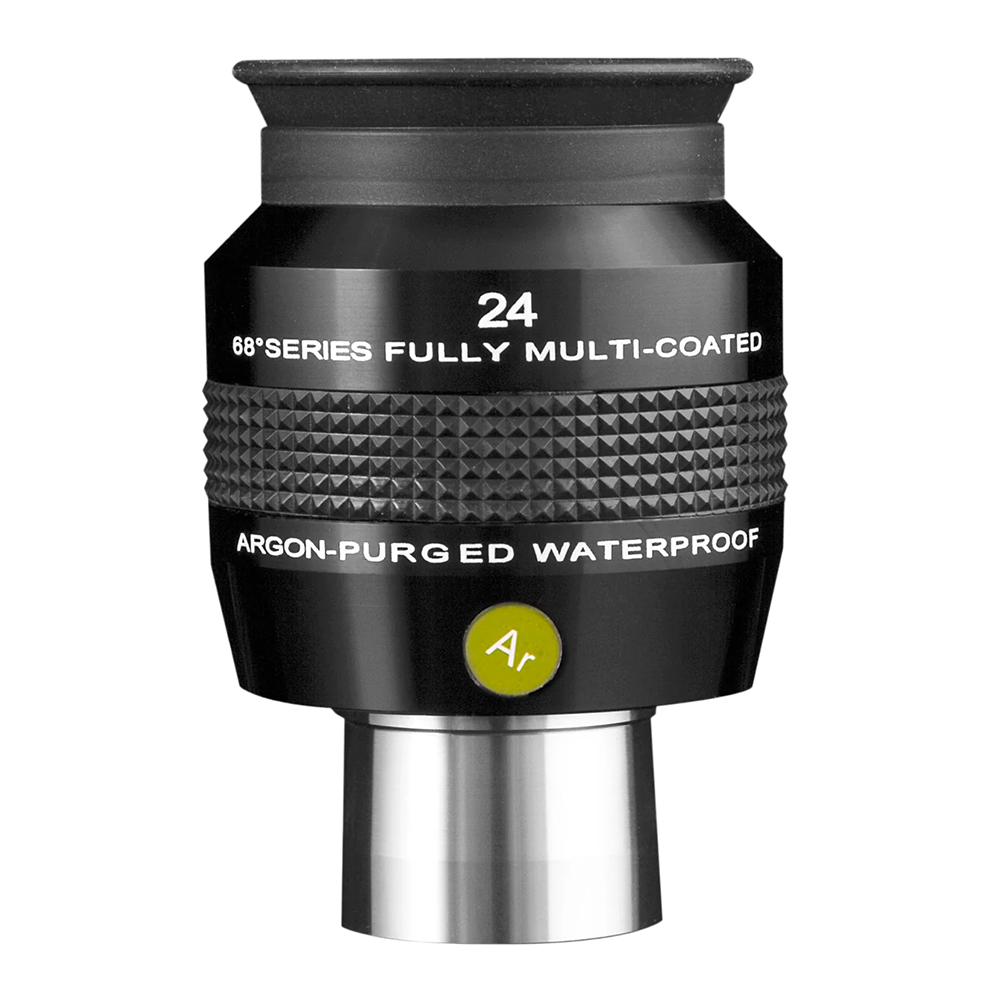
At 900 mm this gives 37x over about 1.8 degrees, the widest comfortable view the 1.25-inch focuser allows

Double your magnificationGSO 2x ED Barlow 1.25-inch
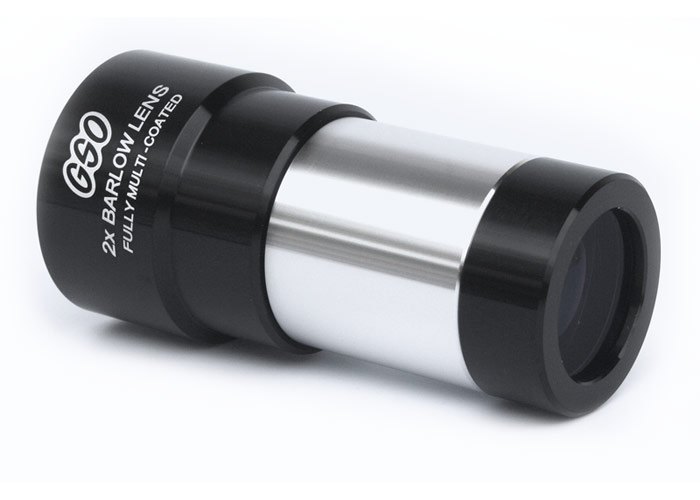
Doubles the supplied 10 mm to 180x for Saturn and Jupiter, which is close to the realistic ceiling for 114 mm

Tame lunar glareGSO Moon Filter 13pct 1.25-inch

At 36x the Moon in a 114 mm mirror is bright enough to wash out its own detail

Grow your kit
Sharper planets & lunar detailSVBony Redline 9mm Ultra Wide Angle
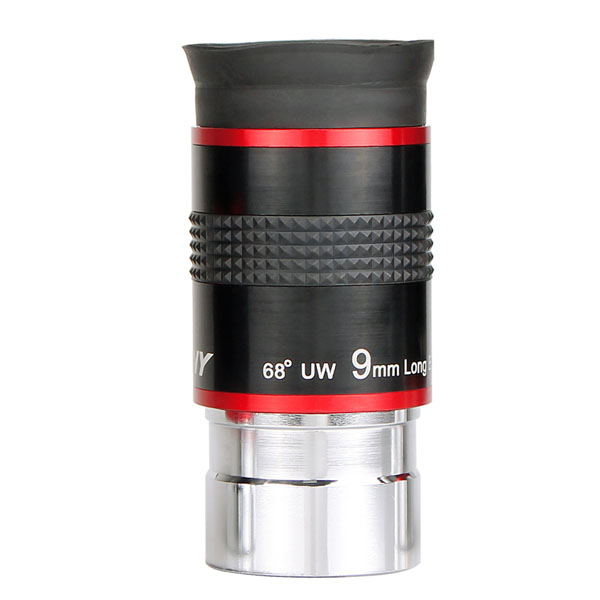
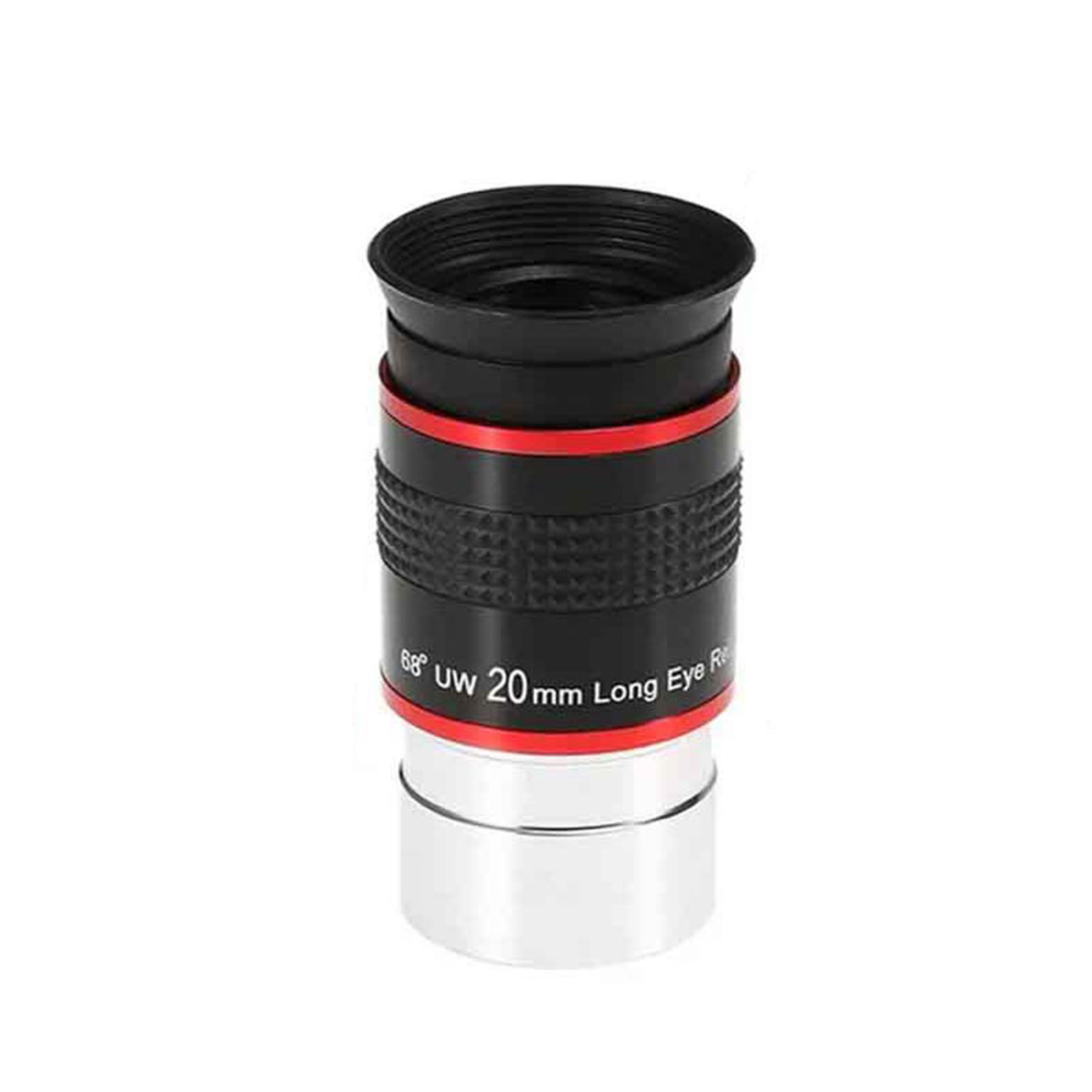
A sharper everyday viewSVBony Redline 20mm Ultra Wide Angle
Make nebulae popSVBony UHC 1.25-inch

Lunar & planetary
Good
Deep-sky visual
Brighter objects
Astrophotography
Short exposures with tracking
06The numbers

Full specifications.

6 measured and stated values
Optics
Optical DesignNewtonian
Aperture114mm
Focal Length900mm
Focal Ratiof/7.9
Mount & drive
Mount TypeGerman Equatorial (EQ1 or EQ2)
Physical
Weight10 kg