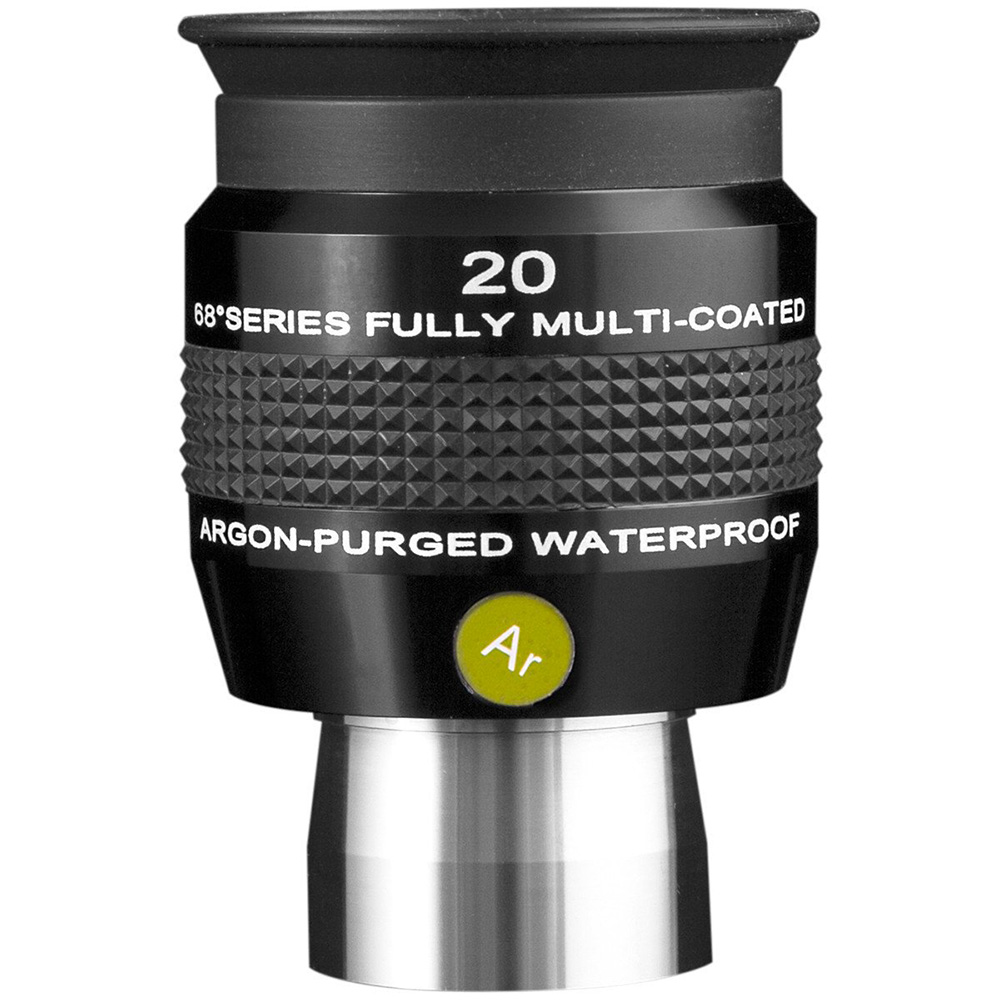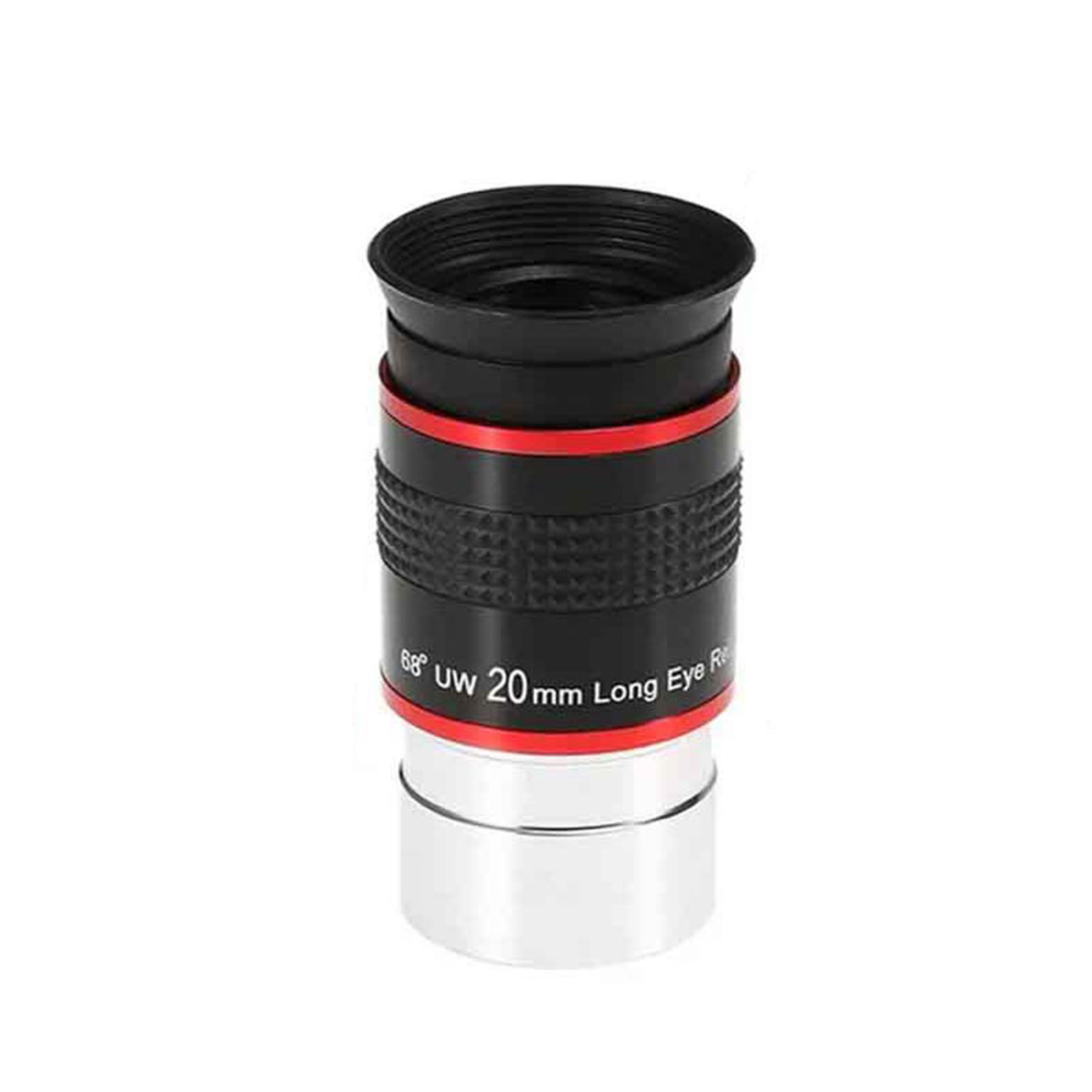
SVBony Redline 20mm Ultra Wide Angle — image 1
SVBony

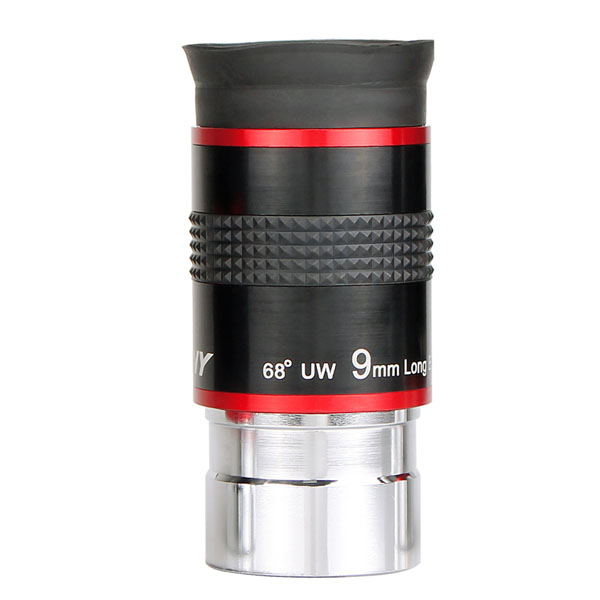
SVBony Redline 20mm Ultra Wide Angle

The wide field end of the goldline set and the most comfortable eyepiece of the four, with 18mm of eye relief. Excellent in a slow telescope, visibly soft at the edge in a fast one.

78/ 100
Polaris Score
Optical quality · Immersion · Comfort · Value
See the breakdown ↓
What it's for
Low power · wide fieldHigh power · narrow field

A low to medium power eyepiece. In most telescopes it lands between 24x and 100x, which is the range for open clusters, large nebulae, sweeping the Milky Way and finding things before you magnify them. It is not a planetary eyepiece.

Apparent Field
68°
Barrel Size
1.25"
Eye Relief
18mm
Focal Length
20mm
From$39.99

Lowest in 90 days

Price tracked by PolarisObserved 38 timesTracking since Sep 2026

Try in simulator →
Where to buy

Verified 8h ago · prices tracked daily

The spacewalk

You don’t look at a field.
You look into the sky.

Every number on the spec sheet matters less than one feeling: how much sky wraps around your eye. Widen the apparent field and watch the black edge of the eyepiece slip away.

68° apparent field

At 68°, the black rim sits out at the corner of your attention rather than in front of you.
Try this eyepiece on your own scope in the Simulator →
01What it's good at

What it's best at — and the trade-offs.

Eighteen millimetres of eye relief, the most in the set, which makes it usable with glasses and comfortable for long sessions.
Best at
✓Eighteen millimetres of eye relief, the most in the set, which makes it usable with glasses and comfortable for long sessions.
✓A 68 degree field at this focal length gives a genuinely wide true field in a 1.25 inch barrel, close to the practical limit the barrel allows.
✓Second best optically of the four focal lengths, and clearly better than the 15mm that sits next to it in the range.
Trade-offs
!Edge astigmatism becomes visible in telescopes faster than about f/6, growing worse as the focal ratio drops. In an f/5 Dobsonian the outer field is noticeably soft.
!A 1.25 inch barrel physically limits the true field at this focal length, so a 2 inch wide field will always show more sky.
!Coatings and blackening are basic, so bright stars just outside the field can throw reflections.
02In your telescope

One eyepiece. A different job in every scope.

24× in a small refractor, 102× in a long SCT

An eyepiece has no magnification of its own — the telescope decides. The same eyepiece becomes 24× and 2.8° of sky in a little refractor, or 102× and a tight frame in a long SCT. Here’s what it does across common scopes.

Small apo refractor
480 mm · f/5.5
Magnification
24×
True field
2.8°
Exit pupil
3.6 mm
In a 480mm apo refractor this gives 24x across 2.8 degrees, a very wide, very bright view with a 3.6mm exit pupil, ideal for sweeping the summer Milky Way and for finding things before switching to more power.
8-inch Dobsonian
1200 mm · f/6
Magnification
60×
True field
1.1°
Exit pupil
3.3 mm
In an eight inch Dobsonian it lands on 60x with a 1.1 degree field, which is the practical wide field limit of a 1.25 inch barrel and frames whole open clusters with sky around them.
12-inch Dobsonian
1500 mm · f/5
Magnification
75×
True field
54′
Exit pupil
4.0 mm
In a twelve inch Dobsonian it reaches 75x across 54 arcminutes, but at f/5 this is the case where the outer field softens, and a better corrected wide field is worth the money in a scope this fast.
8-inch SCT
2032 mm · f/10
Magnification
102×
True field
40′
Exit pupil
2.0 mm
In an eight inch Schmidt-Cassegrain it produces 102x across 40 arcminutes, and the slow f/10 optics are the easiest case for this design, so this is where it looks its best.
Exit pupil is how wide the beam of light leaving the eyepiece is. Around 5–6 mm is bright and immersive under dark skies; push much past 6 mm and you waste light, and under light pollution a smaller exit pupil shows more contrast.
03In plain English

The numbers, in plain English.

20mm FL · 68° AFOV · 1.25"
Eye reliefThe most in the set
18 mm
This is how far behind the lens your eye can sit and still see the whole field, and 18mm is genuinely generous. It is enough to observe with spectacles on, which matters if your prescription includes astigmatism that the telescope's focuser cannot correct for. It also means you are not pressing your eye socket against cold metal in December. SVBONY's own table claims 17mm for every focal length in this family, which is a copy and paste error. The per focal length figures from the identical Agena badged version are the trustworthy ones, and this focal length is the best of them.
Focal ratio toleranceConditional
Best at f/6 and slower
This is the most important number on the page and it is about your telescope, not this eyepiece. A fast telescope delivers light at a steep angle and this design cannot fully correct it at the edge, so stars in the outer fifth of the field stretch into small commas. At f/10 in a Schmidt-Cassegrain you will not see it. At f/5 in a Dobsonian you will. The 9mm in the same family handles fast optics far better, which is why the two focal lengths deserve different scores.
Apparent fieldWide
68°
This is how large the circle of view appears. At 68 degrees you have to move your eye to take in the edge, which is what makes a wide field eyepiece feel like a window instead of a tube. Against the 52 degree Plossl that came with most telescopes, the difference at first look is the single most convincing upgrade in budget astronomy.
True field in an 8-inch DobWide for 1.25 inch
1.1° at 60x
This is how much actual sky you see, and just over a degree is more than two full Moons side by side. It is enough to hold the Double Cluster, most of the Pleiades, or the whole of M31's bright core with room around it. Going wider than this in a 1.25 inch barrel is not possible: the barrel wall itself becomes the limit, which is why the set stops at 20mm.
Optical designMid pack for the line
5 elements in 3 groups
The four focal lengths in this family use different element counts, from four in the 15mm to six in the 9mm. Five here puts this eyepiece in the middle, and that lines up with where reviewers place it: better than the 6mm and the 15mm, not as well corrected as the 9mm. It is a derivative of the classic Konig design, which is a formula that has always traded edge correction in fast scopes for a wide field at low cost.
04What comes alive

The targets this eyepiece was born for.

The Pleiades (M45), The Double Cluster, The Orion Nebula (M42), M31 and its companions, The…
The Pleiades (M45)Comes alive
The Pleiades (M45)
At 24x to 60x the whole cluster sits inside the field with dark sky around it, which is the only way it is worth looking at.
The Double ClusterComes alive
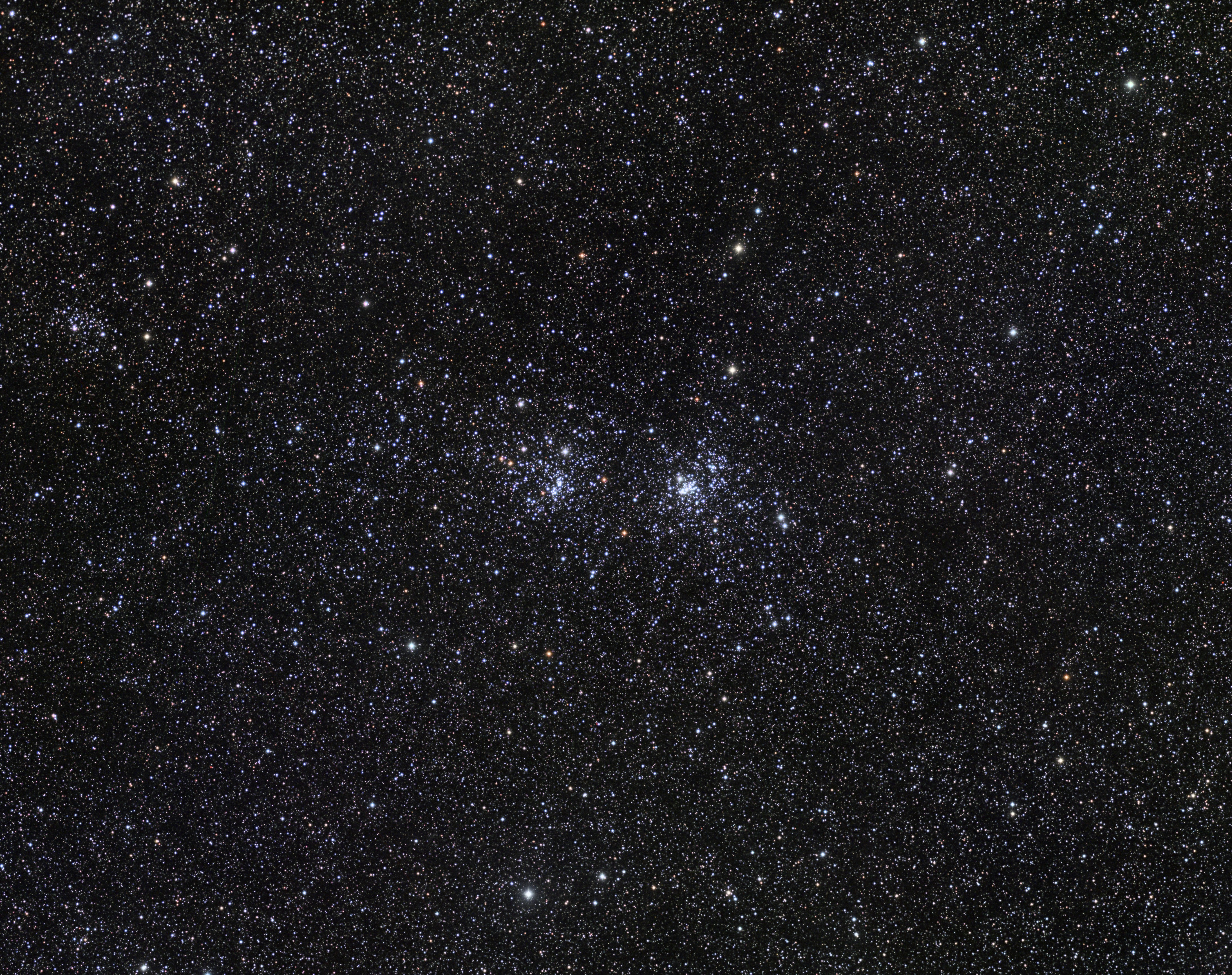
The Double Cluster
Both halves in one field at this power, which a narrower eyepiece cannot do.
The Orion Nebula (M42)Comes alive
The Orion Nebula (M42)
Wide enough to hold the whole nebula and the Trapezium at once, with the wings spreading past the core.
M31 and its companionsExcellent
M31 and its companions
The bright core with M32 and M110 in the same field, which is how the galaxy reads as a system rather than a smudge.
The Veil NebulaExcellent
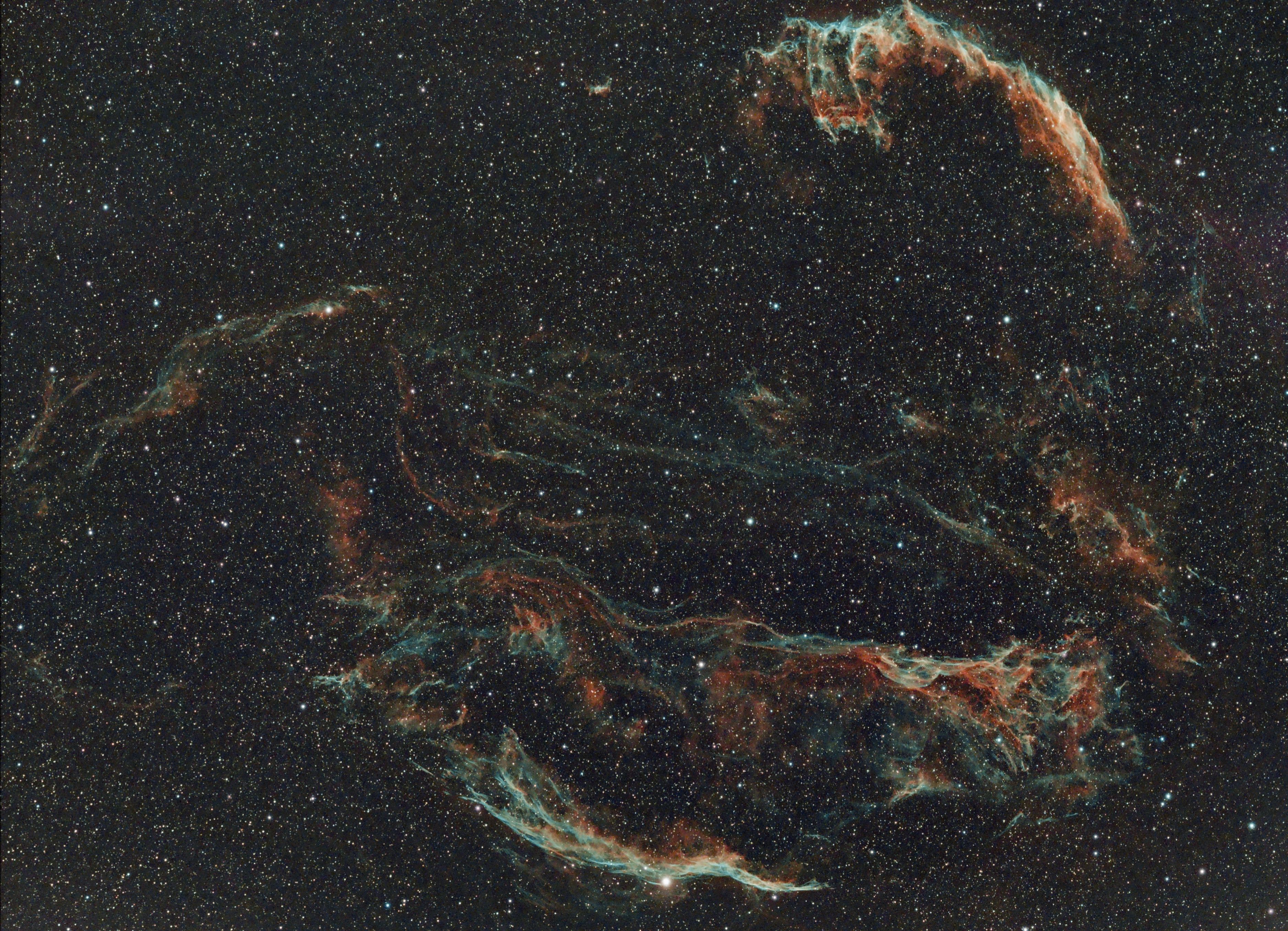
The Veil Nebula
With a UHC or OIII filter threaded into the barrel, this power and field is close to ideal for the eastern segment.
The Moon, wholeExcellent
The Moon, whole
At 60x the full disc sits inside the field with room to spare, which is a different and older pleasure than crater hunting.
05Role in a collection

Where it sits in your eyepiece case.

Where it sits across 3 focal lengths

A good eyepiece collection isn’t a pile of glass — it’s two or three focal lengths that hand off from wide to tight. This is the anchor at the bottom of the ladder: the one you find and frame with. You buy it once, and it stays your low-power eyepiece for life.

20 mmThis one
Low power · wide field
Find, frame and sweep. Your widest true field and the lowest useful magnification — the eyepiece you reach for first.
Veil Nebula · Pleiades · Milky Way star clouds
13 mm
Medium power · the workhorse
Where most deep-sky objects look their best — galaxies, globulars and planetary nebulae at a comfortable scale.
M13 · Ring Nebula · most galaxies
7 mm
High power · detail
Planets, the Moon at the terminator, tight double stars and the smallest planetary nebulae. Steady-air nights only.
Jupiter · Saturn · lunar craters
06Build around it

What it pairs with.

The telescope · Pair it · Filter it
The telescope
Where this focal length works
An f/10 SCT or a Maksutov
Slow optics are the friendliest case for this design and the edge softening simply does not appear.
An f/6 Dobsonian or longer
The practical boundary. Faster than this and the outer field starts costing you stars.
Pair it
What to own alongside
SVBony Redline 9mm Ultra Wide Angle
The other focal length in the set worth owning, and the one that handles fast scopes this one struggles with.
A 2x Barlow
Turns this into a 10mm, which fills the gap in the middle of the range for the price of nothing extra.
Filter it
What changes the view
SVBony UHC 1.25-inch
This is the focal length where a nebula filter pays off most, because the field is wide enough to hold the whole object.
An OIII filter
For the Veil and the larger planetaries, where the narrower passband earns its keep at low power.
07The Polaris Score

How it scores, and why.

78/100
78/ 100
SVBony Redline 20mm Ultra Wide Angle

Ranked second of the four by every reviewer who has compared them, and that matches what the design predicts. It scores well for a genuinely wide, comfortable, easy view at a price no competitor gets near, and it loses ground for edge astigmatism that appears as soon as the telescope gets faster than about f/6. Judged as a budget wide field it is strong. Judged absolutely it is a mixed eyepiece with one clear condition attached.

Optical quality
74
Immersion
80
Comfort
88
Value
92

Polaris weighs how well the eyepiece does the job it was designed for — optics, immersion, comfort and value — never list price or brand.

08Who it's for

An honest fit check.

Anyone who wears glasses at the eyepiece, since 18mm of eye relief is enough to keep them…
Buy it if you
✓Anyone who wears glasses at the eyepiece, since 18mm of eye relief is enough to keep them on and still see the whole field.
✓Owners of slower telescopes, f/6 and longer, where this eyepiece gives its best and the edge softening never appears.
✓Beginners who need a finding and sweeping eyepiece and do not want to spend more on it than on the planetary one.
✓Anyone buying the 9mm who wants a second focal length that covers everything the 9mm does not.
Look elsewhere if you
!Owners of fast Dobsonians at f/4 to f/5, where edge astigmatism is visible and a better corrected wide field is worth the extra money.
!Observers chasing the largest possible true field, who should be looking at a 2 inch eyepiece rather than a 1.25 inch one.
!Anyone who wants planetary magnification, which is the wrong end of the range for this focal length.
!Observers who already own a decent 24mm or 25mm wide field, since the step sideways would be small.
09The numbers

Full specifications.

7 measured and stated values
Optical
Focal Length20mm
Apparent Field68°
CoatingsFully multi-coated
Comfort & handling
Eye Relief18mm
Fit & build
Barrel Size1.25"
More
lens design5 elements in 3 groups
weight g170
Editor’s Take

This is the eyepiece that makes the set worth buying as a pair rather than singly. At 60x in an eight inch Dobsonian it frames a whole open cluster with sky around it, and it does so with enough eye relief that you can keep your glasses on. The catch is honest and specific: the correction depends on your telescope. In an f/10 SCT it is very good. In an f/5 Dobsonian the outer fifth of the field grows small comma shaped stars. Know which scope you own before you decide how good this eyepiece is.

— The Skynocular verdict