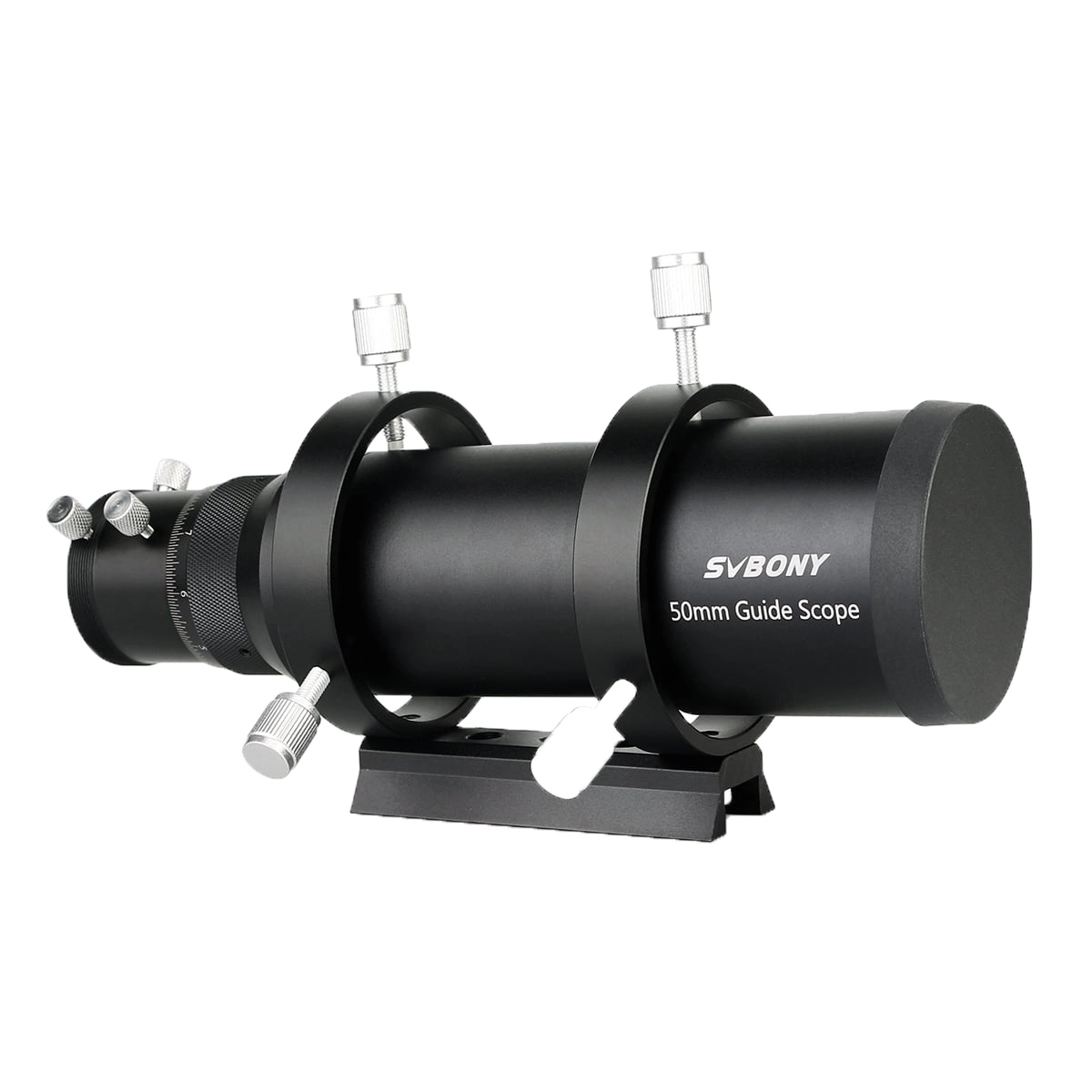
SVBony SV106 50mm Guide Scope
The 50 mm guide scope that most astrophotographers should own. Enough focal length for almost any amateur imaging rig, and it arrives with tube rings and a dovetail rail rather than a finder shoe.
How it actually worksWhat the setup looks like.
The tube contains no electronics. It becomes a guiding system when a camera and software join it:
What the setup looks like.
The tube contains no electronics. It becomes a guiding system when a camera and software join it:
The eight millimetres of helical travel is the one number to check against your camera. It is enough for any bare guide camera and will not absorb a stack of adapters, so keep the optical train short.
01Will it fit my setupCompatibility.
What this accessory works with — check the fit before you check the price.
Compatibility.
What this accessory works with — check the fit before you check the price.
02The numbersWhat These Numbers Mean
5 numbers in plain English · full specifications
What These Numbers Mean
5 numbers in plain English · full specifications
03Before you buyGood to know.
The honest caveats — the things that save you a return, a bad first night, or a second purchase you didn't need.
Good to know.
The honest caveats — the things that save you a return, a bad first night, or a second purchase you didn't need.
Guide scope choice is one of the few places in this hobby where the popular answer is also the correct one. Fifty millimetres at around 200 mm of focal length has been the default for two decades because it is where the compromises stop biting: enough resolution for any amateur focal length, enough aperture to always find a star, and a mounting scheme rigid enough that flexure stops being a suspect. The ED versions cost two to three times as much and guide the same. Buy this, put the difference toward the mount, and never read a guide scope comparison again.
The 50 mm guide scope that most astrophotographers should own. Enough focal length for almost any amateur imaging rig, and it arrives with tube rings and a dovetail rail rather than a finder shoe.