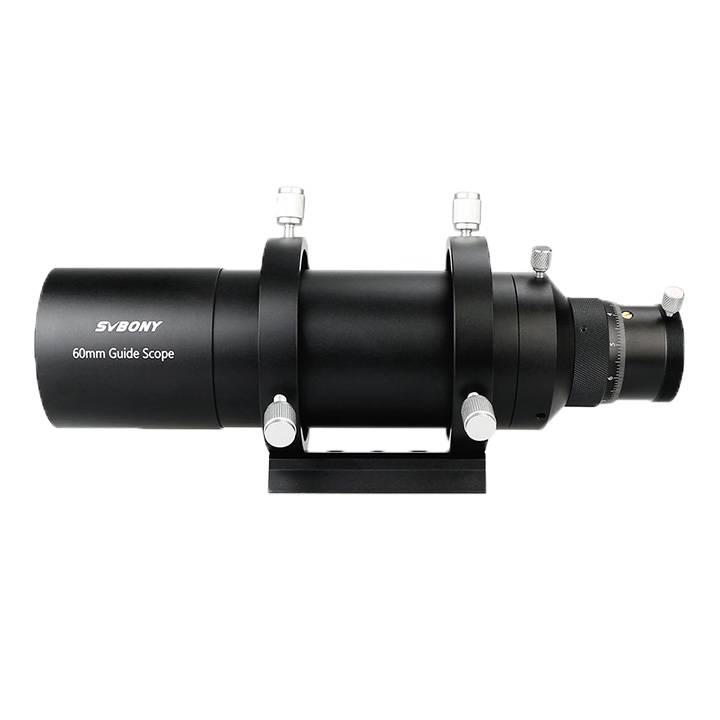
SVBony SV106 60mm Guide Scope
The largest guide scope in the range, for the rigs that need it: long Schmidt-Cassegrains and big Newtonians, where a mini guider simply cannot see the drift that the main camera is recording.
How it actually worksWhat the setup looks like.
Like every guide scope here it is a passive tube. The system comes together with a camera and software:
What the setup looks like.
Like every guide scope here it is a passive tube. The system comes together with a camera and software:
On very long Schmidt-Cassegrains, consider whether an off-axis guider would serve you better. A separate tube of any size cannot detect the main scope's own mirror flop, and this is the focal length range where mirror flop starts to dominate.
01Will it fit my setupCompatibility.
What this accessory works with — check the fit before you check the price.
Compatibility.
What this accessory works with — check the fit before you check the price.
02The numbersWhat These Numbers Mean
5 numbers in plain English · full specifications
What These Numbers Mean
5 numbers in plain English · full specifications
03Before you buyGood to know.
The honest caveats — the things that save you a return, a bad first night, or a second purchase you didn't need.
Good to know.
The honest caveats — the things that save you a return, a bad first night, or a second purchase you didn't need.
There is a temptation to read this page as the best guide scope in the range, and it is not. It is the right one for a narrow set of rigs and the wrong one for most. Guide scope focal length should be matched to your main scope, not maximised, because every millimetre of tube you bolt on top is payload stolen from the mount that is causing your drift in the first place. If you image at 2000 mm, this is a sensible purchase and an off-axis guider is a smarter one. If you image at 700 mm, buy the 30 mm and spend the difference on literally anything else.
The largest guide scope in the range, for the rigs that need it: long Schmidt-Cassegrains and big Newtonians, where a mini guider simply cannot see the drift that the main camera is recording.