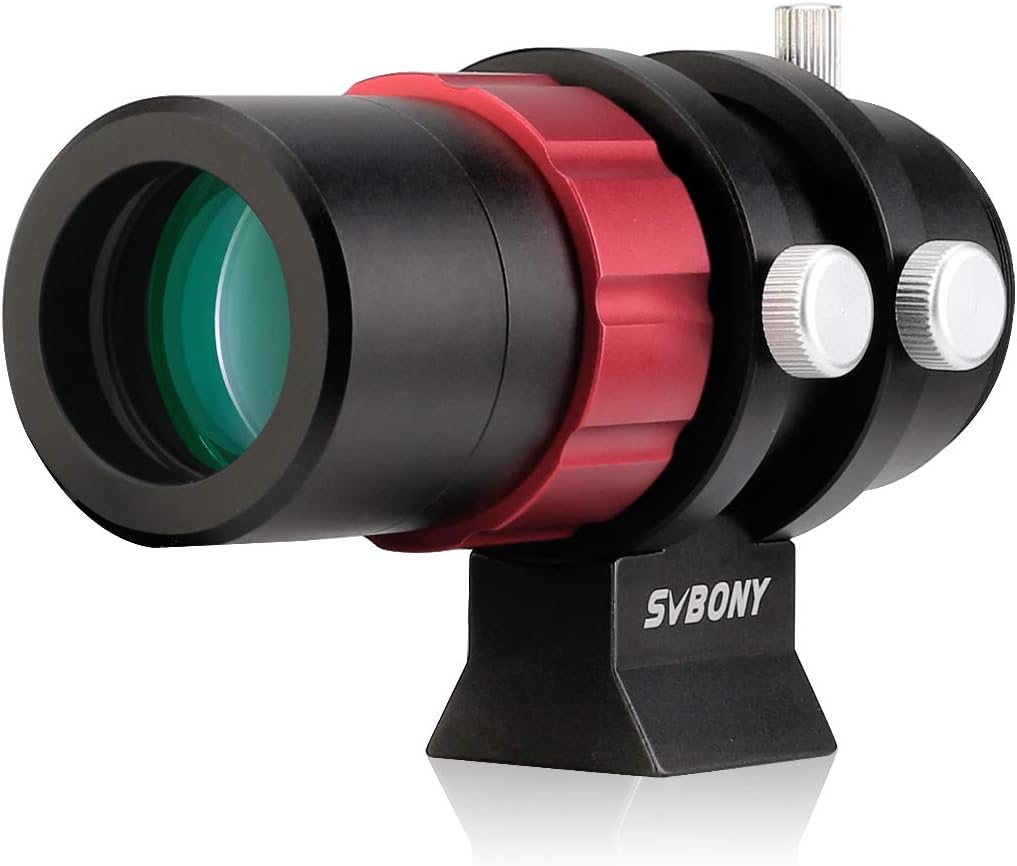
SVBony SV165 30mm Guide Scope
The cheapest way to stop your long exposures from smearing. A 30 mm tube that rides on top of your main scope, watches one star, and lets software keep the mount honest.
How it actually worksWhat the setup looks like.
The SV165 has no electronics at all. It is a tube, a lens and a focuser. It becomes a guiding system when you add two cheap pieces:
What the setup looks like.
The SV165 has no electronics at all. It is a tube, a lens and a focuser. It becomes a guiding system when you add two cheap pieces:
Do not put a star diagonal in the light path. The SV165 has only 45 mm of back focus and will not reach focus with a diagonal in the way. It is also not meant for visual use, though a reticle eyepiece will focus in it if you want to use it as a finder.
01Will it fit my setupCompatibility.
What this accessory works with — check the fit before you check the price.
Compatibility.
What this accessory works with — check the fit before you check the price.
02The numbersWhat These Numbers Mean
5 numbers in plain English · full specifications
What These Numbers Mean
5 numbers in plain English · full specifications
03Before you buyGood to know.
The honest caveats — the things that save you a return, a bad first night, or a second purchase you didn't need.
Good to know.
The honest caveats — the things that save you a return, a bad first night, or a second purchase you didn't need.
Most of the money in astrophotography goes to the mount and the camera, and guiding is where people are tempted to economise badly. The SV165 is the rare case where economising is correct. Above about 1000 mm of main scope focal length it runs out of resolution and you should buy a 50 mm guider. Below that, spending four times as much buys you a tube that guides no better, and the difference is far better spent on the mount that is actually causing the drift.
The cheapest way to stop your long exposures from smearing. A 30 mm tube that rides on top of your main scope, watches one star, and lets software keep the mount honest.