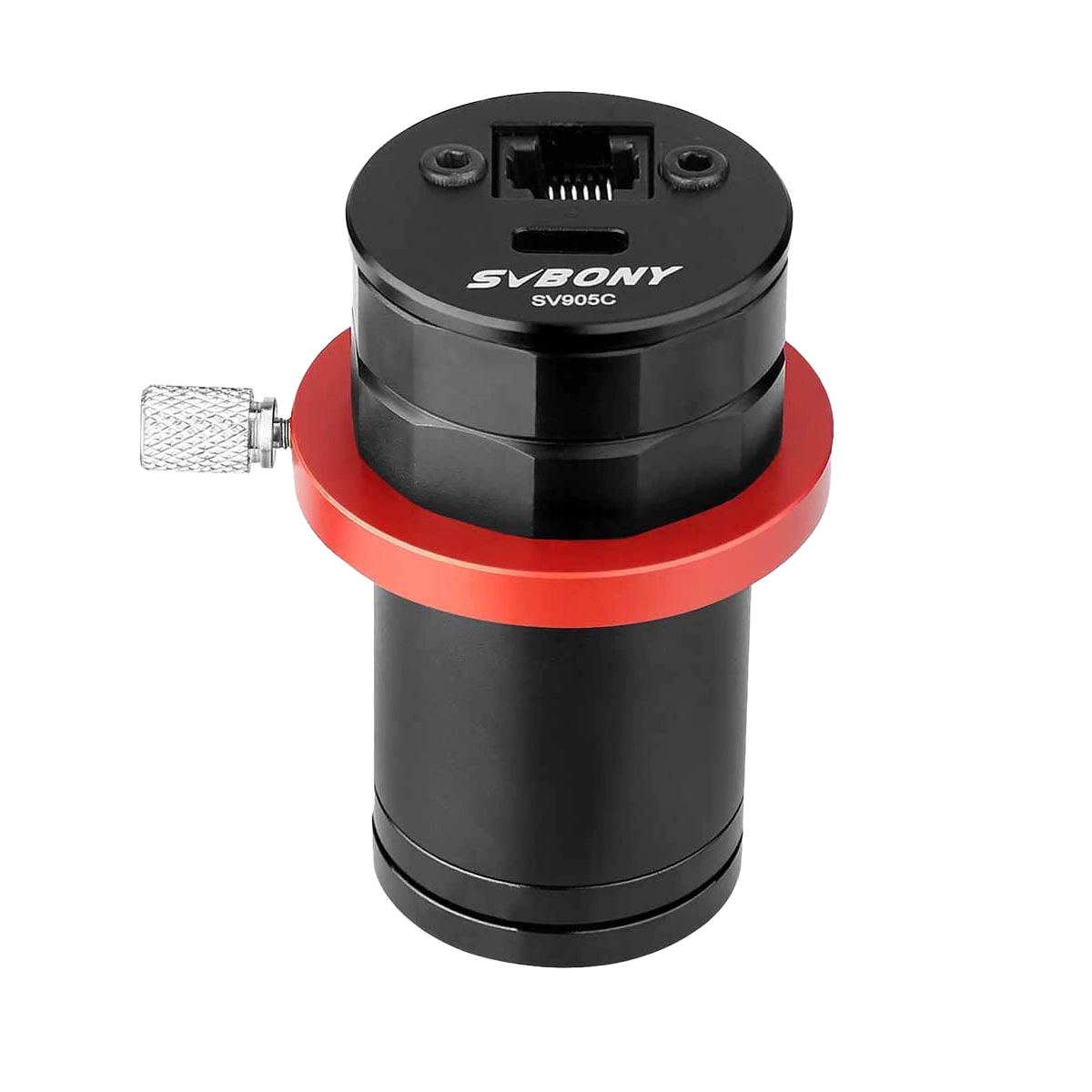
SVBony SV905C Guide Camera
The other half of a guide scope. A 1.2 megapixel sensor that never takes a photograph you keep, and without which none of your photographs are sharp.
This is a guiding sensor and very little else. It will show you the Moon and it will run a planetary capture in a pinch, but 1.2 megapixels with no cooling is not a camera you build an astrophotography plan around.
$1 above 90-day low
Price tracked by PolarisObserved 45 timesTracking since Sep 2026
01What it's good atWhat it's best at — and the trade-offs.
Every guide scope page on this site ends with the same sentence: it needs a guide camera, sold separately. This is the one that fits, at a price that does…
What it's best at — and the trade-offs.
02In plain EnglishThe numbers, in plain English.
Sony IMX225 · 1.2MP · 3.75µm · None
The numbers, in plain English.
03Build your imaging rigEverything you'd actually buy.
Look through · Correct · Run it
Everything you'd actually buy.
04The Polaris ScoreHow it scores, and why.
86/100 · #1 of 1 guide cameras
How it scores, and why.
Scored as a guide camera, not as an imaging camera. Judged on whether it finds a star and reports its centre reliably, the IMX225 is close to the ceiling of what matters. Judged on sensor size, cooling or resolution, it would score poorly, and those axes are irrelevant to the job.
Polaris weighs how well the camera does the job it was designed for — image quality, sensitivity, versatility and value — never list price or brand.
05Who it's forAn honest fit check.
Anyone who has just bought a guide scope and discovered the camera is not in the box.
An honest fit check.
06The numbersFull specifications.
22 measured and stated values
Full specifications.
There is a particular disappointment that comes with unboxing a guide scope and discovering it is an empty tube. This is the part that goes in the back, and the interesting thing about it is how little the specification matters. A guide camera is not trying to make a picture. It is trying to answer one question several times a minute: where is the centre of that star now, compared with a moment ago. An eleven year old 1.2 megapixel sensor answers that as well as anything modern, because the star is bright and the maths is subpixel. Spend the money you did not spend here on the guide scope in front of it, which is the component that actually limits how well the answer comes out.
07AlternativesFor a different goal, start here.
2 alternatives, each mapped to the goal it wins at
For a different goal, start here.
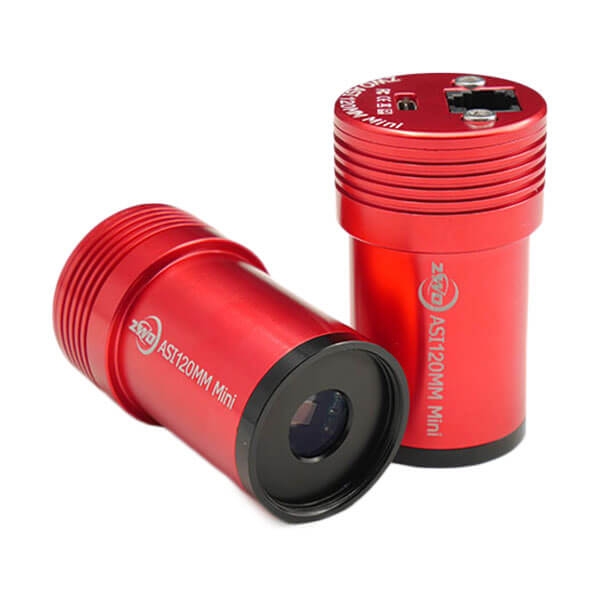
ZWO ASI120MM Mini
A larger guide scope