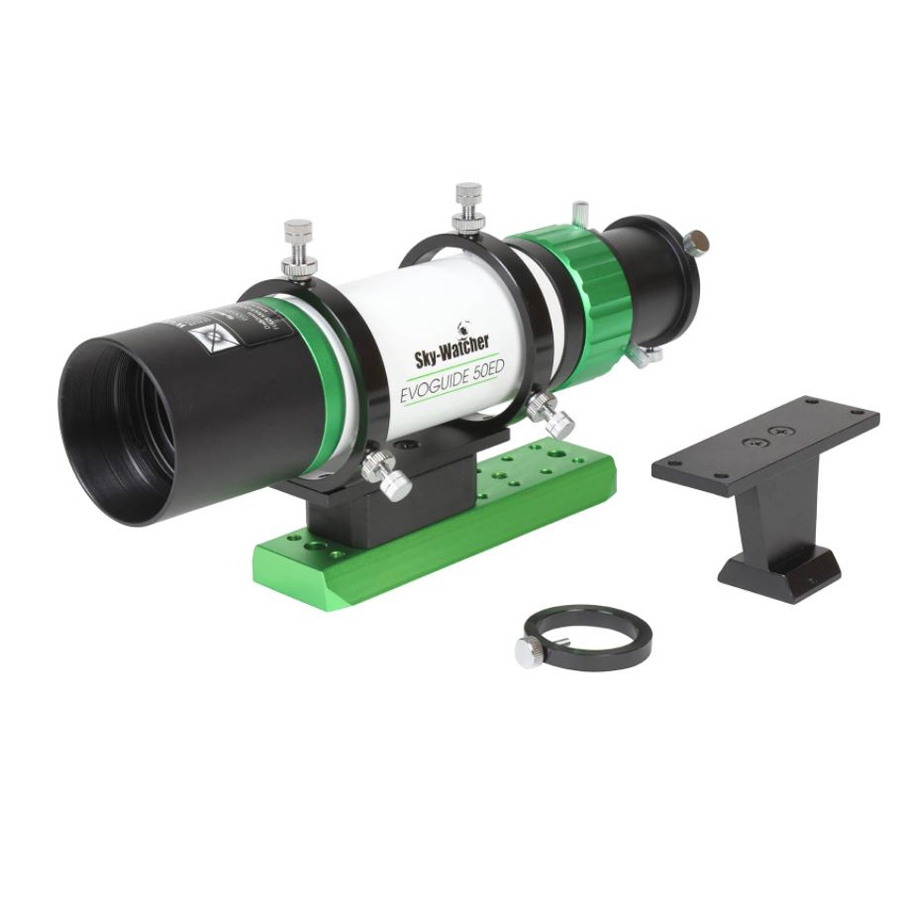
Sky-Watcher EvoGuide 50DX APO Guide Scope
A small, high-quality telescope that rides piggyback on your main scope and keeps your photos sharp during long exposures. It's good enough to take pictures through, too.
How it actually worksWhat the setup looks like.
The guide scope itself has no electronics — it's just glass and a tube. It becomes a “guiding” system once you add two inexpensive pieces. Here's the whole chain:
What the setup looks like.
The guide scope itself has no electronics — it's just glass and a tube. It becomes a “guiding” system once you add two inexpensive pieces. Here's the whole chain:
You can also bolt a DSLR or mirrorless camera to the back and shoot wide-field photos directly through it (it takes standard T-ring adapters). What you don't do is look through it by eye — it's built for cameras, not eyepieces.
01Will it fit my setupCompatibility.
What this accessory works with — check the fit before you check the price.
Compatibility.
What this accessory works with — check the fit before you check the price.
02The numbersWhat These Numbers Mean
4 numbers in plain English · full specifications
What These Numbers Mean
4 numbers in plain English · full specifications
03Before you buyGood to know.
The honest caveats — the things that save you a return, a bad first night, or a second purchase you didn't need.
Good to know.
The honest caveats — the things that save you a return, a bad first night, or a second purchase you didn't need.
If your guide scope will only ever guide, a basic mini scope does the job for a fraction of the price. The EvoGuide 50DX is for the imager who wants one more small telescope in the bargain: it keeps your exposures pinpoint, then turns around and photographs the wide-field targets a big scope can't fit. You pay more than a plain guider, and it earns it the first clear night you point a camera through it.
A small, high-quality telescope that rides piggyback on your main scope and keeps your photos sharp during long exposures. It's good enough to take pictures through, too.