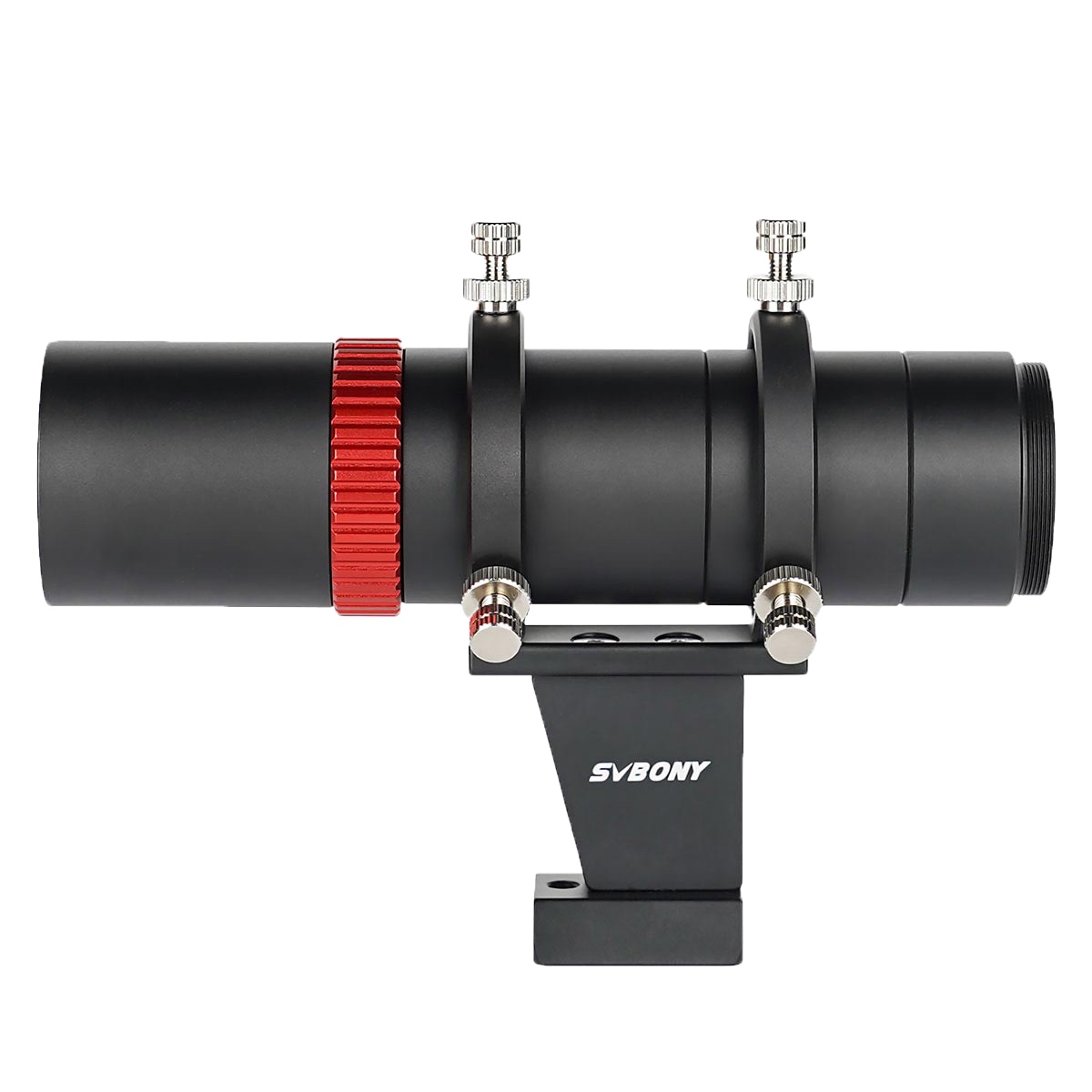
SVBony SV165 40mm Guide Scope
The 30 mm guide scope with a third more focal length and a bracket that does not wobble. The one to buy if your imaging scope is around a metre of focal length and the smallest guider is running out of resolution.
How it actually worksWhat the setup looks like.
There is nothing electronic in this tube. It is a lens, a barrel and a bracket, and it becomes a guiding system once a camera and a laptop join in:
What the setup looks like.
There is nothing electronic in this tube. It is a lens, a barrel and a bracket, and it becomes a guiding system once a camera and a laptop join in:
Check your camera's back focus before you buy. This tube reaches focus at 12.5 mm behind the T2 thread, which is exactly the sensor depth of the common mini guide cameras. Add a filter or an extra adapter and you can run out of travel.
01Will it fit my setupCompatibility.
What this accessory works with — check the fit before you check the price.
Compatibility.
What this accessory works with — check the fit before you check the price.
02The numbersWhat These Numbers Mean
5 numbers in plain English · full specifications
What These Numbers Mean
5 numbers in plain English · full specifications
03Before you buyGood to know.
The honest caveats — the things that save you a return, a bad first night, or a second purchase you didn't need.
Good to know.
The honest caveats — the things that save you a return, a bad first night, or a second purchase you didn't need.
The interesting thing about this one is that the aperture is the least important number on the page. Forty millimetres over thirty buys you a slightly easier time finding a guide star. What actually improves your images is the extra 40 mm of focal length and, more than that, a bracket that holds the tube along its length instead of pinching one end of it in a finder shoe. Guiding failures are far more often mechanical than optical, and this is the cheapest rung on the ladder where the mechanics stop being the weak point.
The 30 mm guide scope with a third more focal length and a bracket that does not wobble. The one to buy if your imaging scope is around a metre of focal length and the smallest guider is running out of resolution.