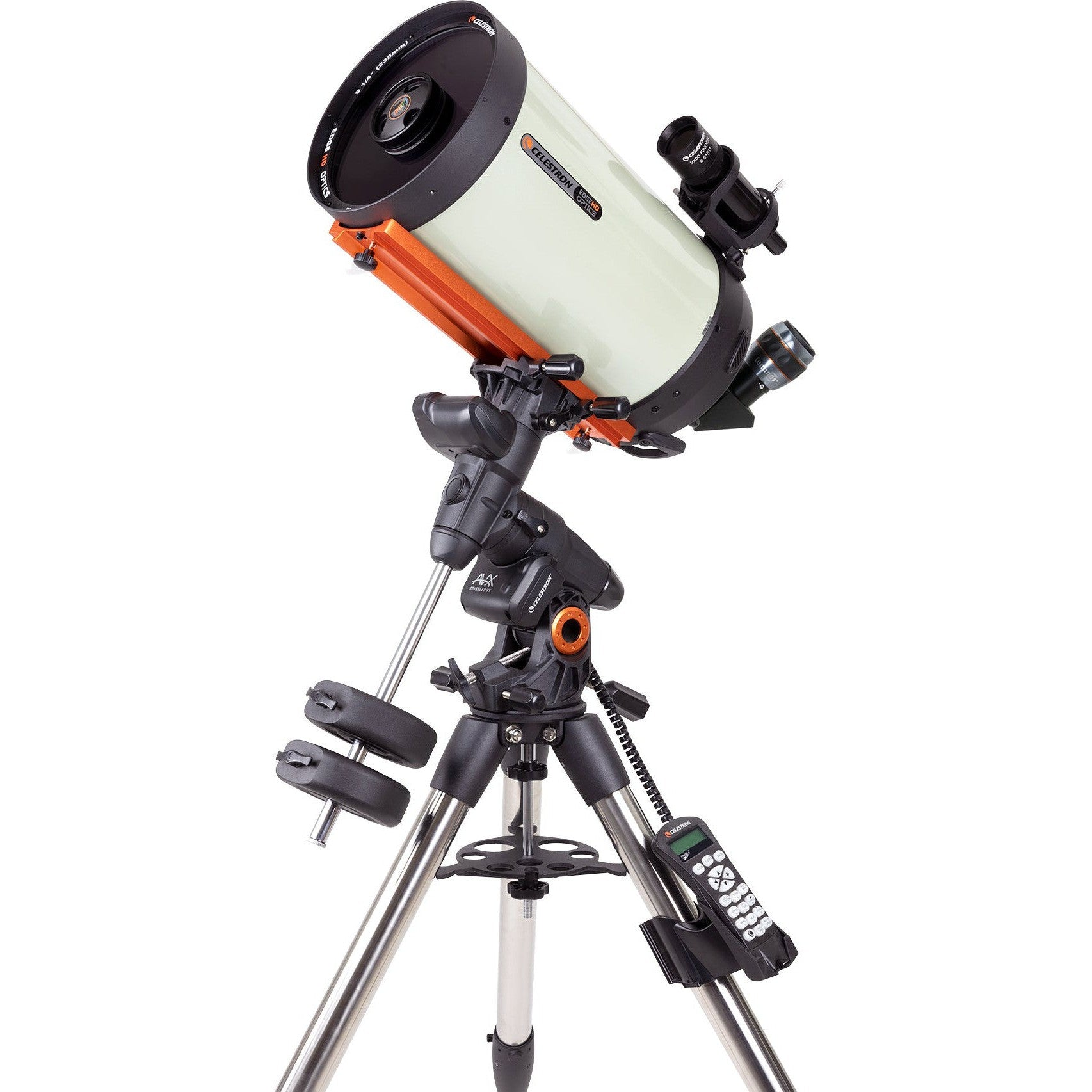
Celestron EdgeHD 9.25" Advanced VX Telescope — image 1
Celestron

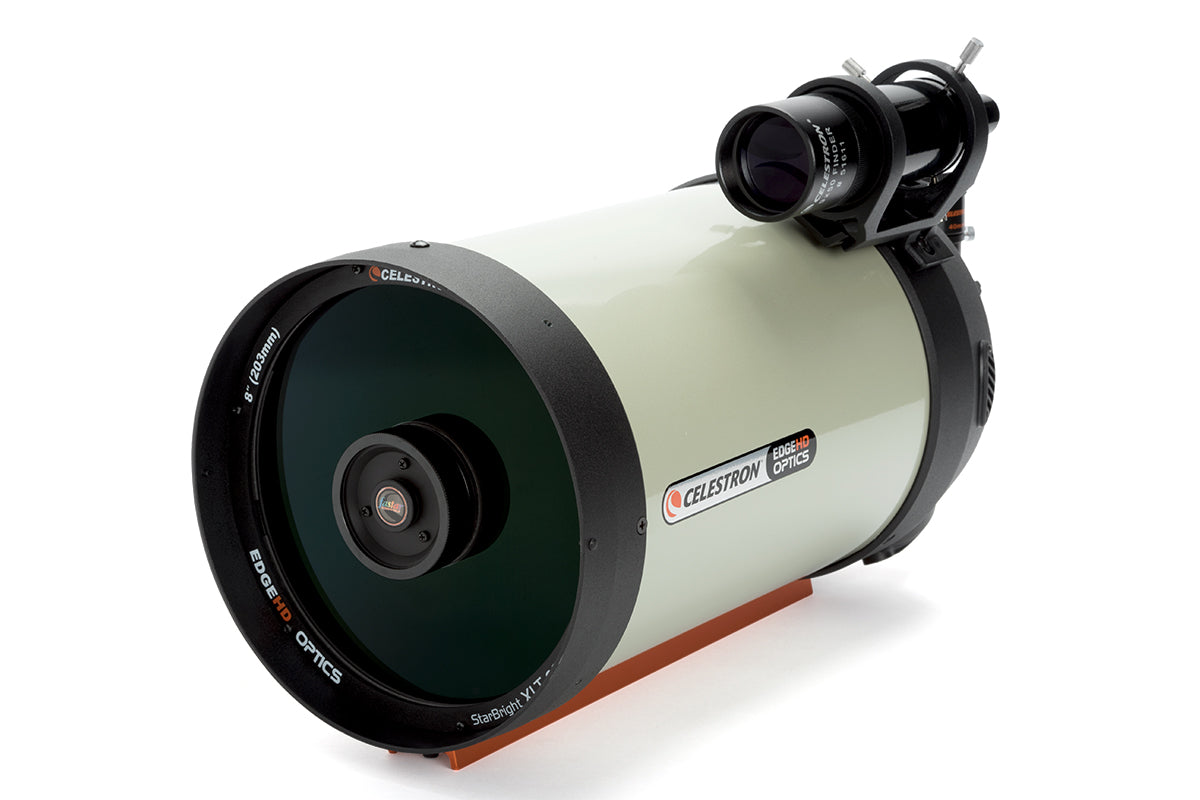
Celestron EdgeHD 9.25" Advanced VX Telescope

The best do-everything premium SCT in the upper-mid tier: aplanatic flat-field optics with the aperture to split Jupiter's belts and image small galaxies, as long as you accept the Advanced VX mount sits near its limit under this much glass.

78/ 100
Polaris Score
#2 of 6 premium 9–11-inch Schmidt-Cassegrains
See the breakdown ↓
Aperture
235mm
Focal Length
2350mm
Focal Ratio
f/10
Mount Type
Computerized GoTo equatorial (Advanced VX)
Optical Design
Schmidt-Cassegrain (EdgeHD aplanatic, flat-field)
Weight
21.3 kg
From$3,399

Lowest in 90 daysLowest ever tracked

Price tracked by PolarisObserved 106 timesTracking since Jun 2026

Try in simulator →
What it's built forOpen these in the simulator →

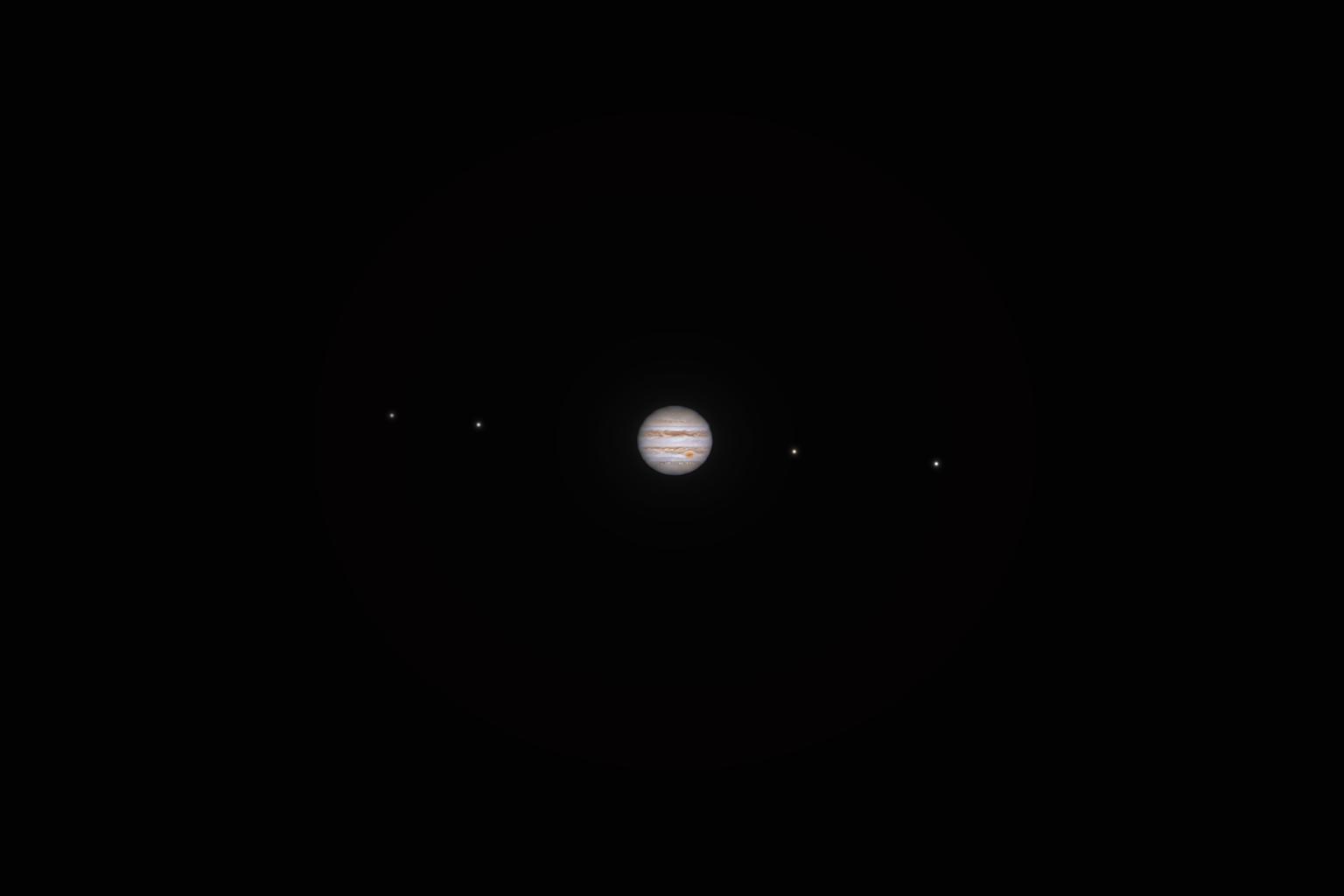
This telescope lives for the planets.

An f/10 focal length built to magnify. Where fast scopes sweep wide, this one holds a single planet rock-steady at high power — a telescope for the patient observer on a steady night.

Sweet spot 180–290×Loves steady seeing
01What it's good at

What it's best at — and the trade-offs.

EdgeHD optics are aplanatic with a built-in field flattener, delivering pinpoint stars to the corners of large sensors.
Best at
✓EdgeHD optics are aplanatic with a built-in field flattener, delivering pinpoint stars to the corners of large sensors.
✓235mm of aperture resolves cloud belts on Jupiter, the Cassini Division on Saturn, and pulls in faint deep-sky detail.
✓The Advanced VX GoTo finds and tracks thousands of objects and supports both the 0.7x reducer and Hyperstar conversion.
✓The compact SCT tube packs long focal length into a short, manageable length compared with an equivalent Newtonian.
Trade-offs
!The Advanced VX mount is near its practical payload limit with this tube, fine for visual, demanding for imaging.
!The long 2350mm focal length is unforgiving of seeing and tracking error; autoguiding is essential for imaging.
!Native f/10 means long exposures and a narrow field, so most deep-sky work really wants the f/7 reducer.
!The exposed corrector plate dews over quickly and needs time to reach thermal equilibrium before views sharpen.
!Total system weight makes this a deliberate, planned setup rather than a spontaneous one.
02In plain English

What These Numbers Mean

235mm · f/10 · 2350mm FL · Computerized GoTo equatorial (Advanced VX)
Aperture
235 mm (9.25 inch)
Nine and a quarter inches of aperture on a tracking equatorial mount, which is a complete and capable observing system rather than a tube. Globular clusters resolve, planetary detail holds at high power, and hundreds of galaxies are within reach.
Focal length
2350 mm
Long, so the natural targets are planets, the Moon, double stars, globulars and small galaxies. At this focal length even minor mount errors are visible, which is why the pairing with a tracking equatorial matters.
Focal ratio
f/10
Slow. Visually that means easy high magnification with ordinary eyepieces; for imaging it means long exposures, precise guiding, and a strong case for adding the 0.7x reducer.
Optical design
EdgeHD aplanatic Schmidt-Cassegrain
The built-in field corrector keeps stars round to the corners of a large sensor, which is exactly what a long focal length otherwise struggles with. It is the version of the SCT built with cameras in mind.
Weight
9.1 kg tube, ~30 kg system
The tube alone is a comfortable lift, but the Advanced VX head, counterweights and tripod add up. Setup is a multi-trip, multi-piece routine rather than a grab-and-go.
Mount
Advanced VX GoTo equatorial
A German equatorial with GoTo and autoguider support, so it tracks properly for long exposures without field rotation. It is at the lighter end of what a 9.25 inch tube wants, so keep the imaging train modest and the tripod on firm ground.
03The Polaris Score

How it scores, and why.

78/100 · #2 of 6 premium 9–11-inch Schmidt-Cassegrains
78/ 100
Celestron EdgeHD 9.25" Advanced VX Telescope
#2 of 6 premium 9–11-inch Schmidt-Cassegrains
Performance
90
Ease of use
65
Portability
45
Upgrade potential
85

Polaris weighs optical capability, how easy the scope is to live with, how portable it is, and how far it takes you before you outgrow it — not list price or brand.

04Who it's for

An honest fit check.

Intermediate-to-advanced observers who want serious aperture for high-resolution planetary…
Buy it if you
✓Intermediate-to-advanced observers who want serious aperture for high-resolution planetary, lunar, and double-star views.
✓Imagers ready to chase galaxies, globular clusters, and planetary nebulae with a flat, aplanatic field across larger sensors.
✓People with a permanent or semi-permanent setup, or the patience to assemble a heavy rig each night.
✓Owners willing to invest in guiding, the f/7 reducer, and accessories to extract the optics' full potential.
Look elsewhere if you
!Beginners, the polar-aligned equatorial mount, balancing, and sheer weight are a steep first-scope learning curve.
!Anyone needing grab-and-go: the full system is a heavy, multi-trip carry that kills spontaneous sessions.
!Wide-field enthusiasts, at 2350mm and f/10 it frames tightly, so large nebulae and the Milky Way won't fit.
!Budget long-exposure imagers who can't add a sturdier mount; the Advanced VX is at its payload limit here.
05Build your rig

What to buy next — and where it leads.

6 pieces of gear, ordered by what changes the view most
Recommended upgrades
See wider, brighter deep-sky views★ Top pickExplore Scientific 68deg 28mm 2-inch
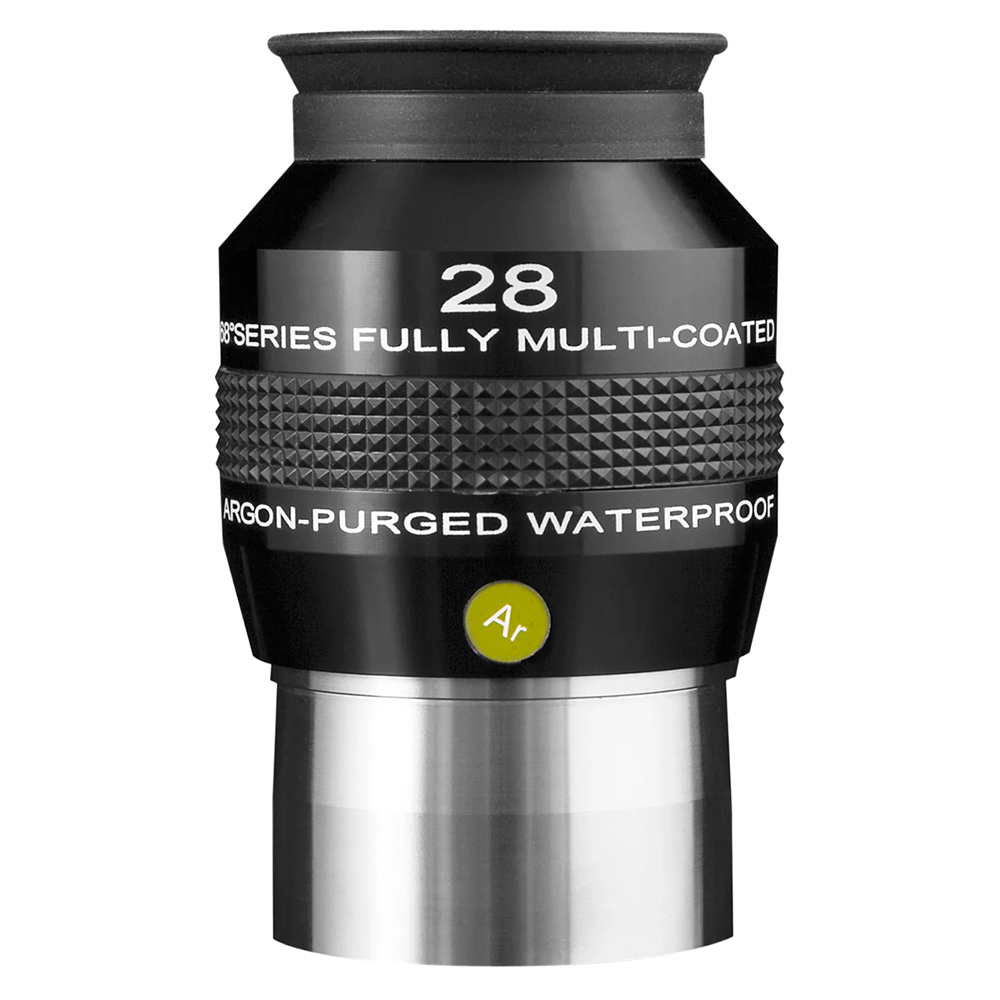
Commonly paired with Celestron EdgeHD 9.25" Advanced VX Telescope

Observe all night, no AA batteriesTele Vue 2.5x Powermate
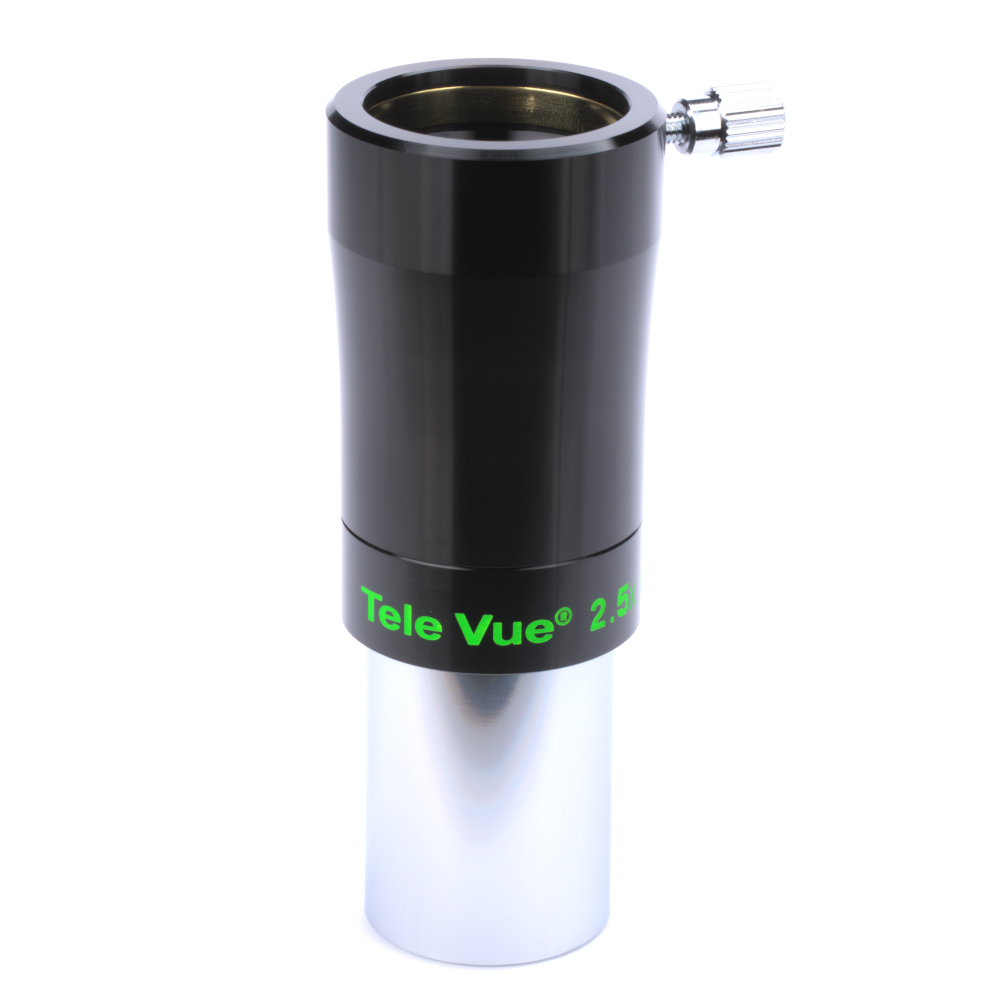
Keeps your mount running all night in the field

No fogging on long sessionsPegasus Astro Multi-Channel Dew Controller
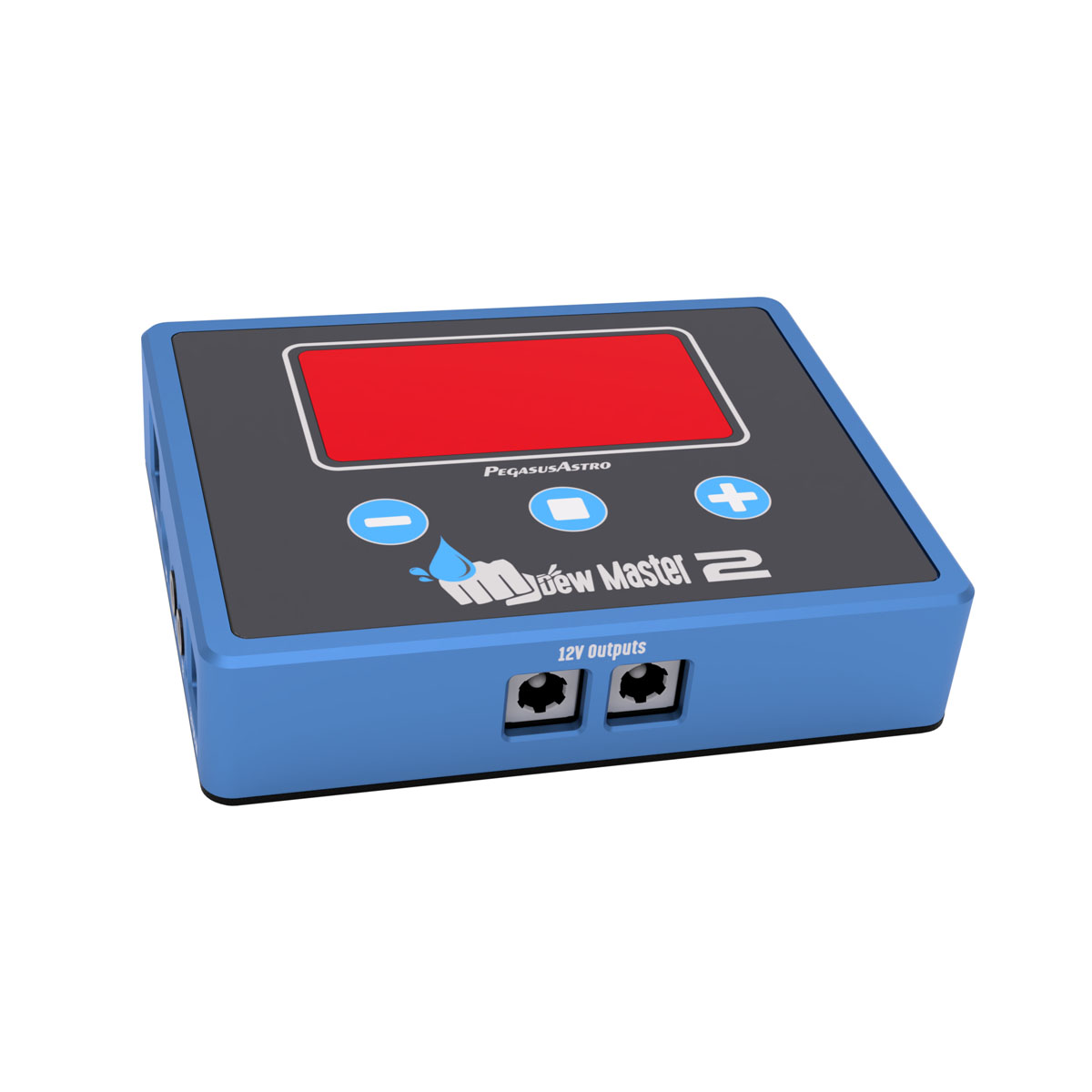
Prevents fog on your optics during long sessions

Imaging path
Visual observing tonightComputerized GoTo equatorial (Advanced VX)✓ Included

Ships with this telescope — point-and-track for visual sessions, no extra setup.

Portable astrophotographyZWO AM5N Harmonic Equatorial Mount✓ Compatible

Start capturing images of the Moon and planets

Permanent-setup astrophotographySky-Watcher EQ6-R Pro✓ Compatible
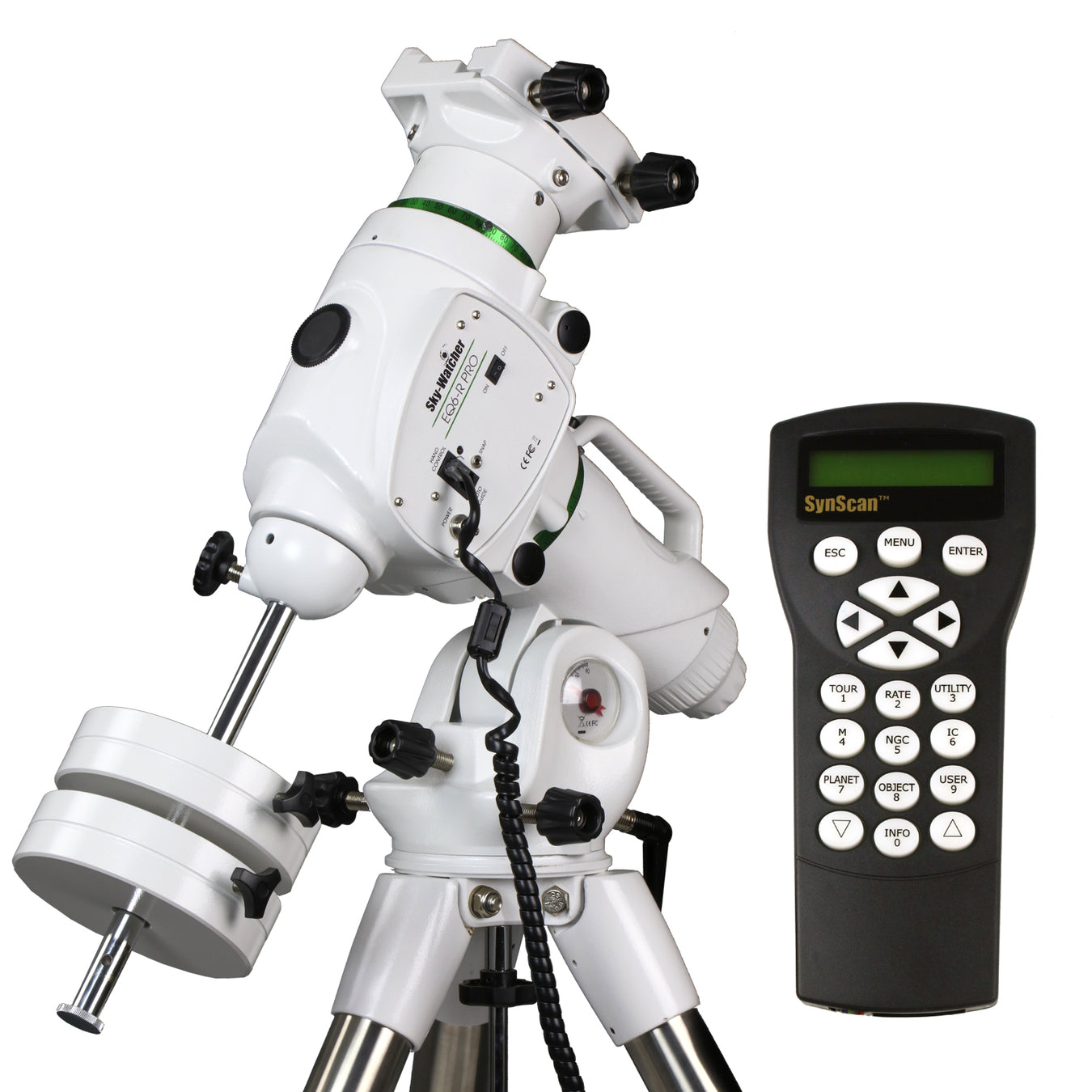
Commonly paired with this telescope

Start imagingZWO ASI662MC
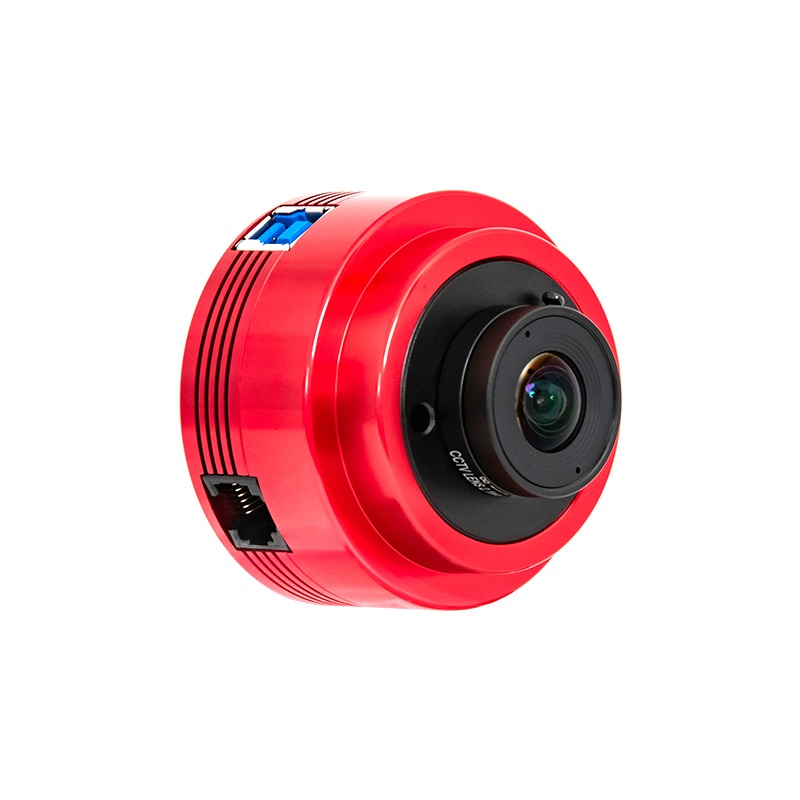
Start capturing images of the Moon and planets

Lunar & planetary
Excellent
Deep-sky imaging
Capable with a reducer
Visual observing
Strong all-rounder
06The numbers

Full specifications.

6 measured and stated values
Optics
Optical DesignSchmidt-Cassegrain (EdgeHD aplanatic, flat-field)
Aperture235mm
Focal Length2350mm
Focal Ratiof/10
Mount & drive
Mount TypeComputerized GoTo equatorial (Advanced VX)
Physical
Weight21.3 kg
07Alternatives

For a different goal, start here.

3 alternatives, each mapped to the goal it wins at
Also worth comparing

Premium aplanatic optics and a deep accessory ecosystem keep this relevant for years, you'll outgrow the Advanced VX mount long before the tube.