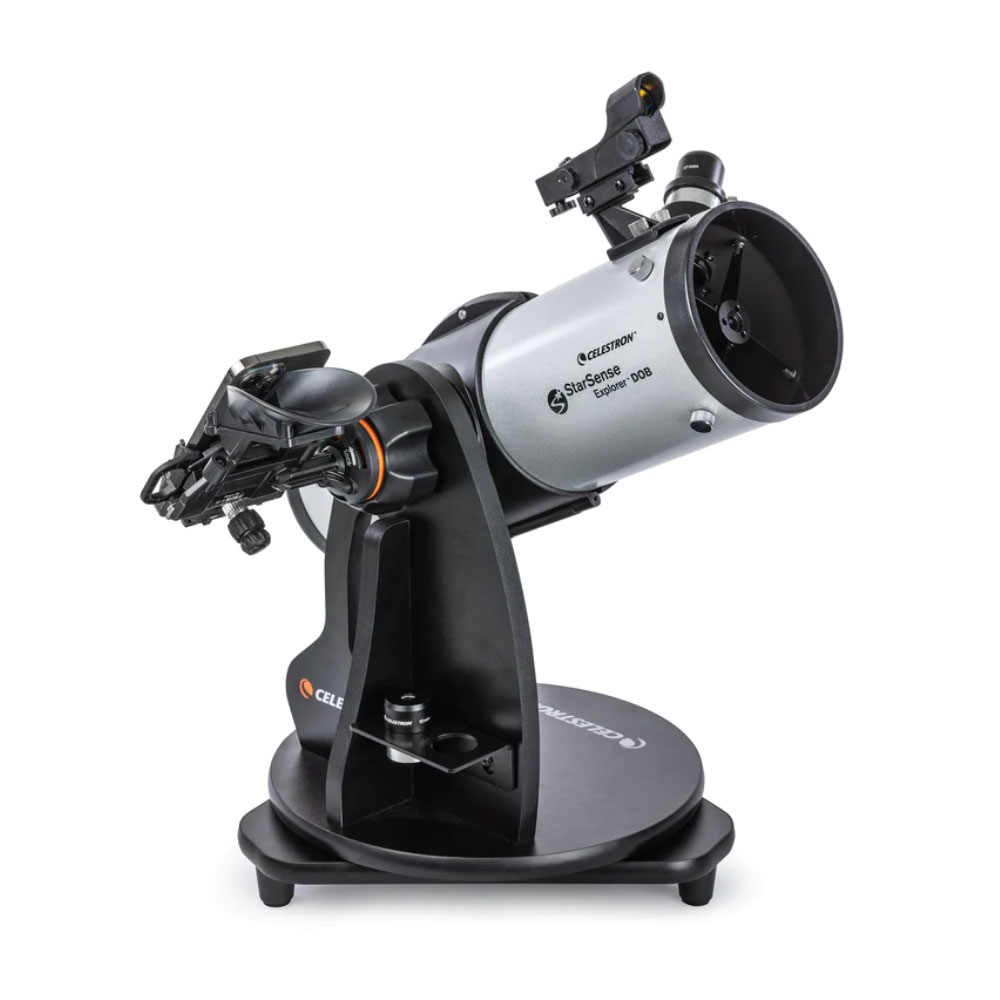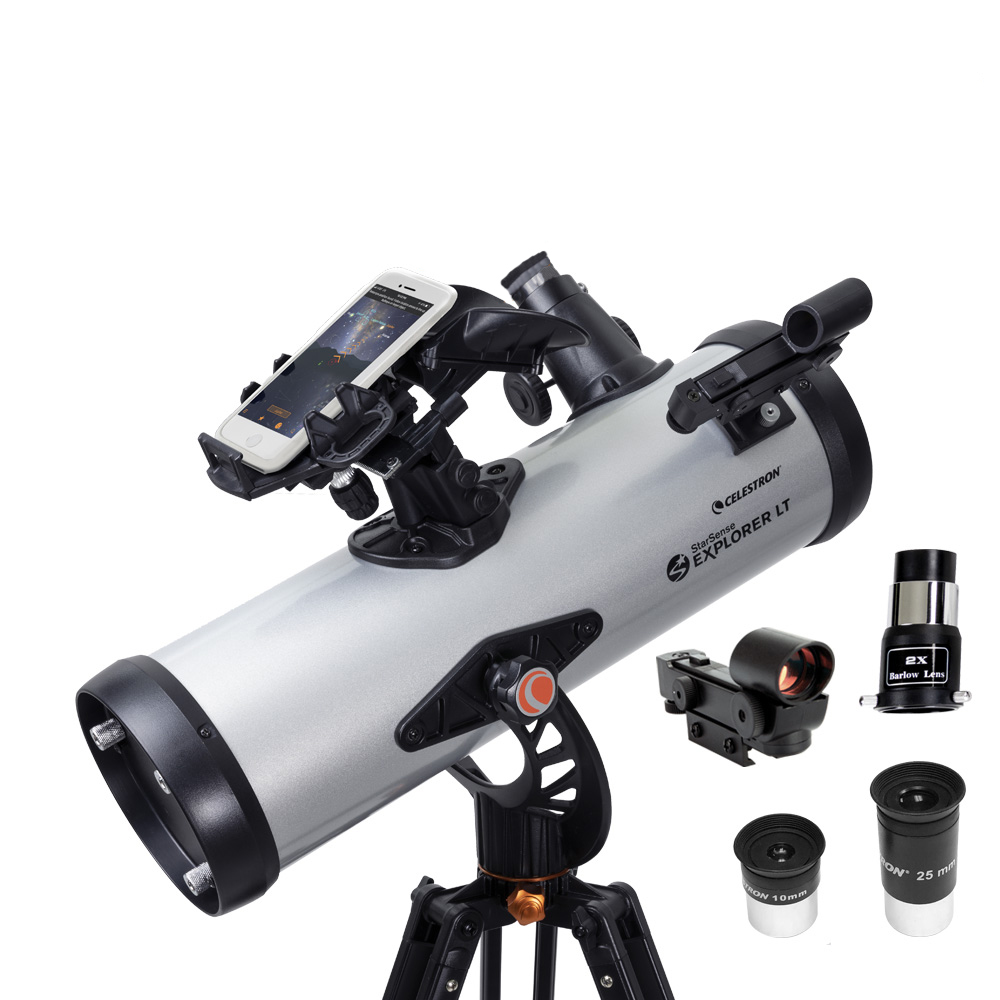
Celestron StarSense Explorer LT 114AZ — image 1
Celestron

Celestron StarSense Explorer LT 114AZ

The one StarSense Explorer we would steer you away from: the app is as good as it is on every other model, but it is bolted to a Bird-Jones tube whose optics and collimation are a genuine step down from the plain Newtonians Celestron sells either side of it.

58/ 100
Polaris Score
#7 of 8 app-guided beginner telescopes
See the breakdown ↓
Aperture
114mm
Focal Length
1000mm
Focal Ratio
f/8.8
Mount Type
Manual Alt-Azimuth
Optical Design
Bird-Jones catadioptric Newtonian
Weight
4.7 kg
From$239.99

$11 above 90-day lowLast $229 in Aug 2026

Price tracked by PolarisObserved 44 timesTracking since Mar 2026
Try in simulator →
Where to buy

Verified yesterday · prices tracked daily

What it's built forOpen these in the simulator →

This telescope was built for your first nights out.

Light, simple, and forgiving — it shows the Moon, the bright planets, and the showpiece clusters without a manual. The kind of scope that actually gets used, because it is easy to carry out and easy to point.

Easy 30–120× viewsSet up in minutes
The view people remember

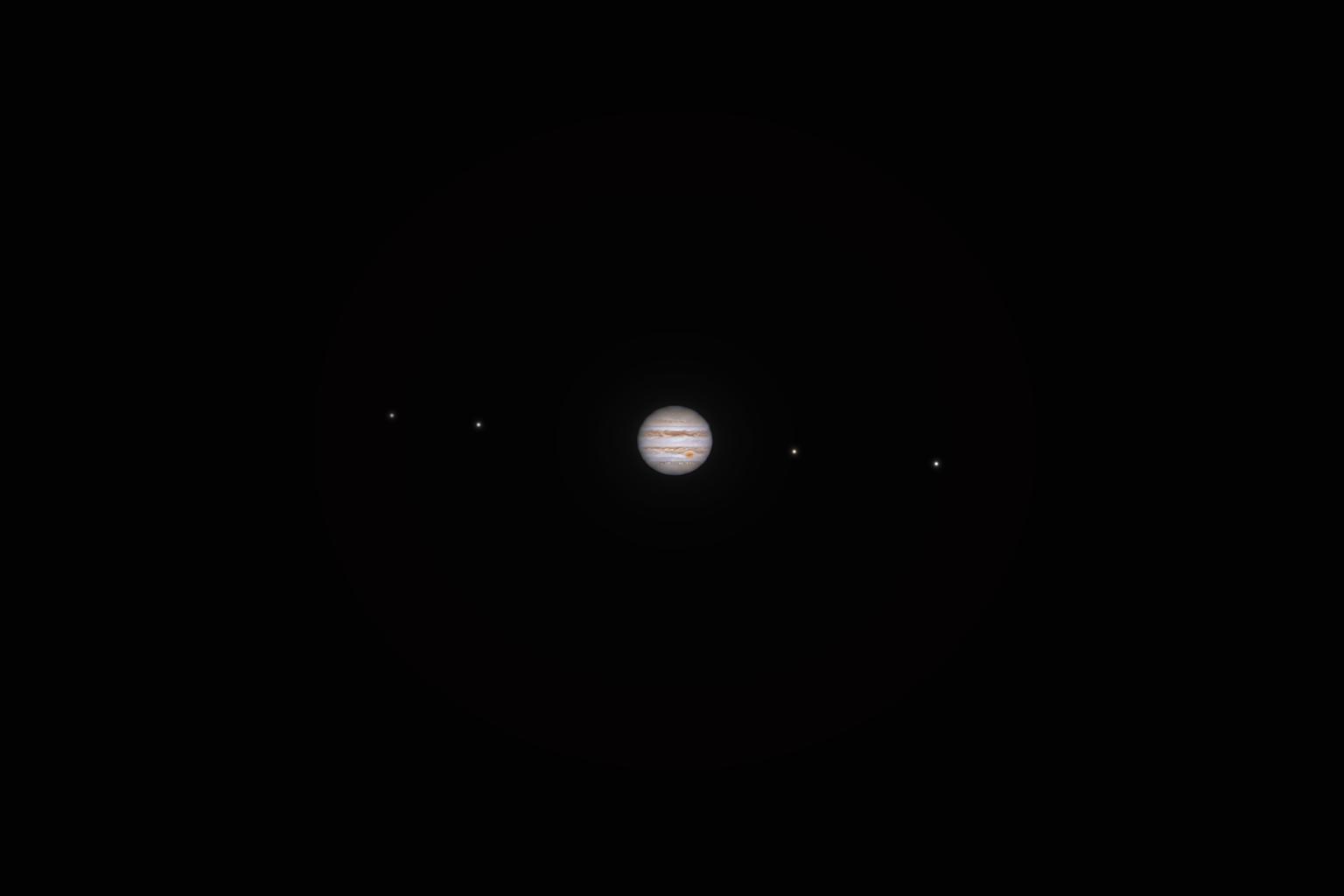
Jupiter and its four moons.

Cloud belts stripe the disk and the Galilean moons shift positions night to night — on a steady evening the Great Red Spot rotates into view.

See Jupiter through this telescope →
01What it's good at

What it's best at — and the trade-offs.

StarSense itself is excellent and works identically here to the models we rate highly: dock the phone, follow the arrows, and it puts targets in the…
Best at
✓StarSense itself is excellent and works identically here to the models we rate highly: dock the phone, follow the arrows, and it puts targets in the eyepiece without any star knowledge
✓1000 mm of focal length in a 500 mm tube makes it the most compact 114 mm scope on a tripod, and the whole kit weighs 4.7 kg
✓The Moon is genuinely good in it, which is what most first nights are actually spent on
✓It is the cheapest way into the StarSense ecosystem on a full-height tripod, if that specific combination is what you need
Trade-offs
!The Bird-Jones design puts a corrector lens inside the focuser drawtube, so stars never come to the clean point a plain Newtonian of this size delivers
!Collimation requires partial disassembly rather than a two-minute adjustment, and these tubes do arrive misaligned
!The alt-azimuth fork has no slow-motion controls, so at 100x you nudge, wait for the shake to stop, and nudge again
!The bundled 2x Barlow is poor enough that it actively misrepresents what the scope can do
02In plain English

What These Numbers Mean

114mm · f/8.8 · 1000mm FL · Manual Alt-Azimuth
Optical design
Bird-Jones catadioptric Newtonian
This is the number that matters most here, and it is not on the box. A 1000 mm focal length inside a roughly 500 mm tube is achieved with a spherical mirror plus a corrector lens buried in the focuser. Done well the design is workable; at this price the mirrors are rarely truly spherical and the correctors are simple, so the image never quite snaps into focus. It is also why collimation means taking the focuser apart.
Aperture
114 mm (4.5 inch)
On paper this is enough for the Moon in detail, Jupiter's belts, Saturn's rings and the brighter clusters. In practice you do not see all of what 114 mm could give you, because the optics ahead of it are the limit rather than the mirror diameter. The same aperture in the tabletop Dobsonian shows visibly more.
Focal length
1000 mm
Long focal length means narrow framing. The bundled 25 mm eyepiece gives 40x and a field about half as wide as the equivalent view in a 130 mm f/5, so large open clusters and nebulae will not fit. It pushes magnification up exactly where this mount is least comfortable.
Focal ratio
f/8.8
A slow focal ratio is normally forgiving: cheap eyepieces perform well and the field stays reasonably flat. That still holds here, and it is the reason the included eyepieces are not the weak link. The corrector in the light path is.
Mount
Manual alt-azimuth fork
A simple push-to fork on an aluminium tripod, with no slow-motion cables. Tracking a planet at 100x means small manual nudges while the image wobbles, which is precisely the frustration StarSense was designed to remove from the finding half of the job.
Finding system
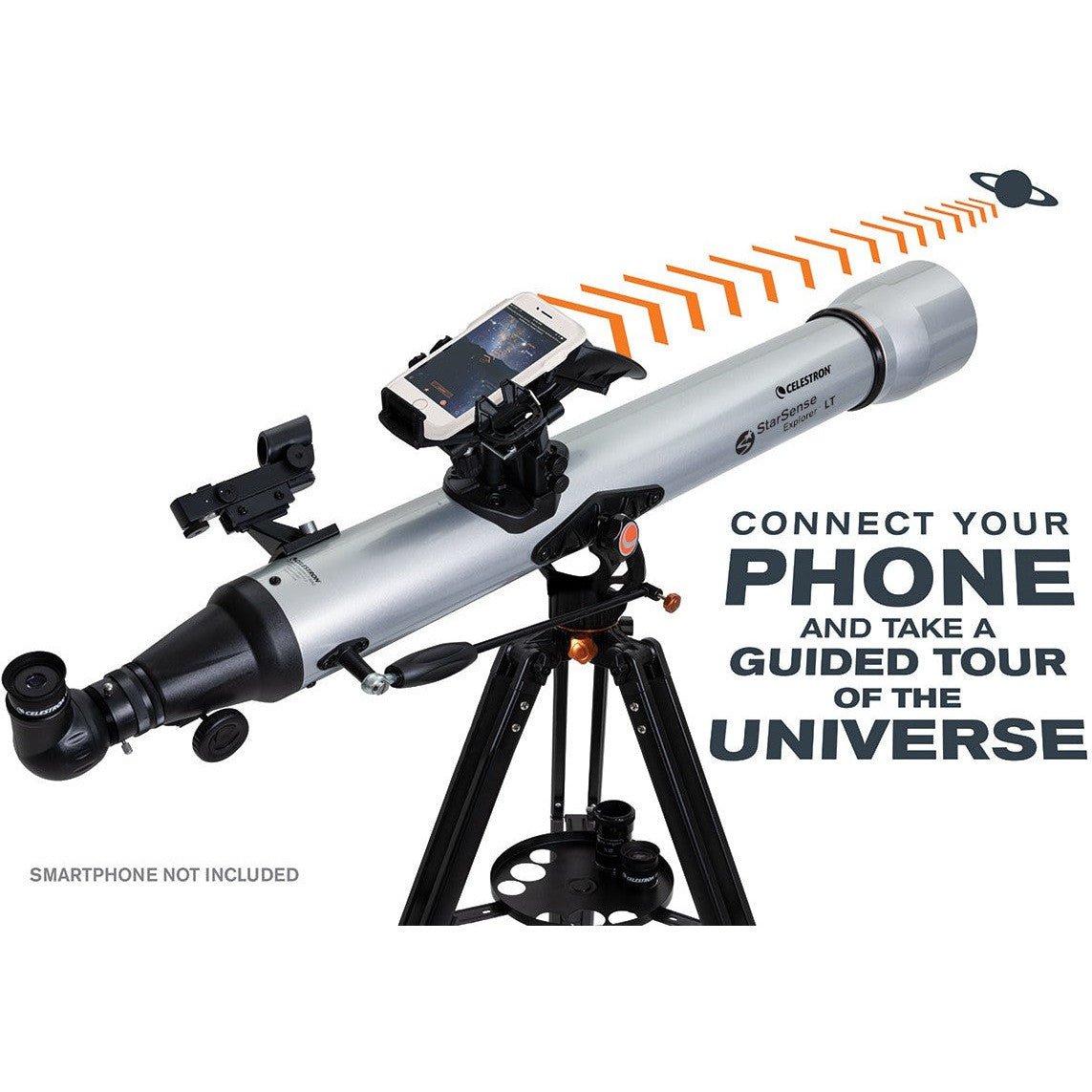
StarSense smartphone dock
The genuinely good part, and identical to the version on the models we rate 8 and above. Your phone reads the star field, works out where the telescope is pointing, and walks you to a target with on-screen arrows. It removes the single biggest reason beginners give up. It just cannot improve what the eyepiece then shows you.
03The Polaris Score

How it scores, and why.

58/100 · #7 of 8 app-guided beginner telescopes
58/ 100
Celestron StarSense Explorer LT 114AZ
#7 of 8 app-guided beginner telescopes
Performance
45
Ease of use
68
Portability
80
Upgrade potential
30

Polaris weighs optical capability, how easy the scope is to live with, how portable it is, and how far it takes you before you outgrow it — not list price or brand.

04Who it's for

An honest fit check.

Someone who has already decided on StarSense and specifically needs a tripod-mounted scope…
Buy it if you
✓Someone who has already decided on StarSense and specifically needs a tripod-mounted scope rather than a tabletop one
✓A buyer who will use it almost entirely on the Moon and the brighter planets and is untroubled by soft views
✓Anyone who finds one used for well under $150, where the app alone roughly justifies the price
Look elsewhere if you
!Anyone comparing it on optical quality, since the 114 mm tabletop Dobsonian and the Heritage 130P are better telescopes for similar money
!Anyone who will want to collimate it, which here means removing the focuser and the corrector lens with a screwdriver
!Anyone hoping to grow into planetary detail or astrophotography, since neither the optics nor the mount support it
05The numbers

Full specifications.

6 measured and stated values
Optics
Optical DesignBird-Jones catadioptric Newtonian
Aperture114mm
Focal Length1000mm
Focal Ratiof/8.8
Mount & drive
Mount TypeManual Alt-Azimuth
Physical
Weight4.7 kg
Editor’s Take

StarSense Explorer is one of the best things to happen to beginner astronomy: your phone looks at the sky, works out where the telescope is aimed, and guides you to targets you could never have found on a star chart. We rate several scopes carrying it highly. This is not one of them, and the reason is a design decision Celestron does not advertise. The LT 114AZ is a Bird-Jones: a spherical mirror with a corrector lens inside the focuser tube, which is how a 1000 mm focal length fits into a half-metre tube at this price. The consequences are real. Stars stay slightly soft, contrast on planets is lower than a plain 114 mm Newtonian would give, and collimation means removing the focuser with a screwdriver instead of turning a thumbscrew. Independent reviewers reach the same conclusion; Telescopic Watch scores it 2.4 out of 5 and does not recommend it. None of that is the app's fault, and if you already own one it is still a telescope that shows you the Moon and Jupiter. But at $240 the same money buys the 114 mm StarSense tabletop Dobsonian or a Heritage 130P, both of which are better instruments with nothing hidden in the light path.

— The Skynocular verdict
07Learn more

Guides and trusted reviews.

1 link — our guides plus reviewers we rate