Guides / Comparison

Same scope, two sizes. The one you carry beats the one you admire.

The NexStar 6SE and 8SE run the identical GoTo system on the identical single-arm mount — same alignment, same 40,000-object database, same tracking. The only real variables are how much the mirror shows you and how much you'll want to lug it outside. That tension is the whole decision.

Same GoTo platform·$1,699 vs $1,199·7 min read · updated Jul 2026
The 20-second verdict

Which sentence sounds more like you?

More aperture
Celestron NexStar 8SE

“Give me the most light I can get on a single-arm mount.”

78% more light than the 6 — real gains on galaxies and faint detail
Best when the view matters more than the weight
$1,699typical street price
vs
More portable
Celestron NexStar 6SE

“I want the one that’s easy enough that I actually take it out.”

Light enough to carry out one-handed, set up in minutes
Best when the scope you use beats the scope you admire
$1,199typical street price

The best telescope is the one you actually set up. Weigh the view you gain against the nights you might skip.
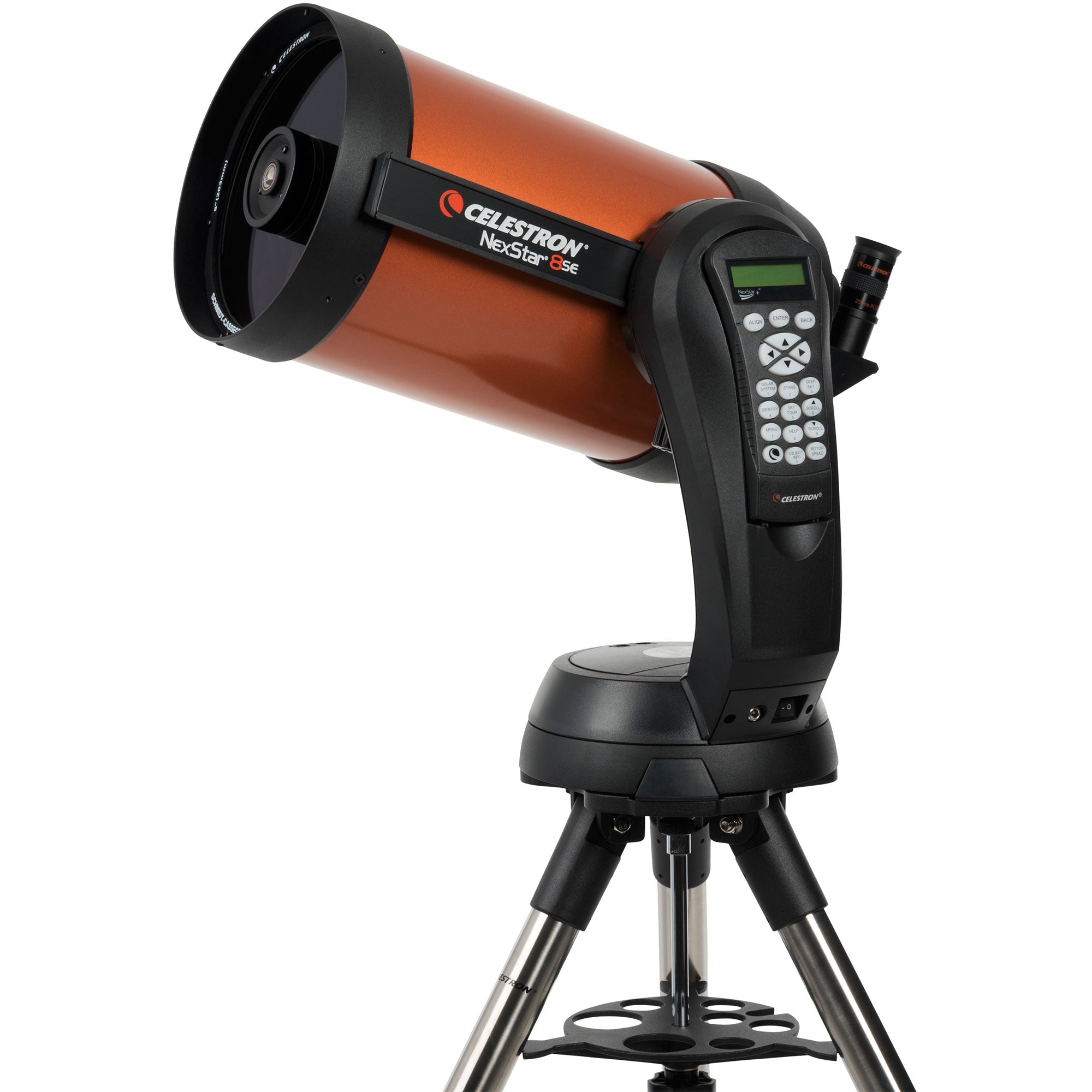
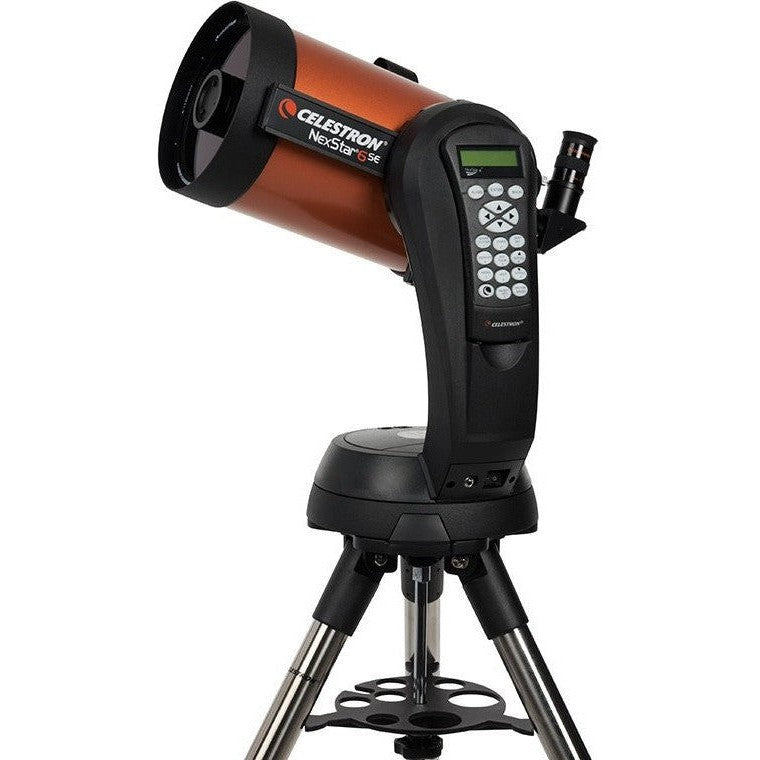
Celestron NexStar 8SE
Celestron

Celestron NexStar 8SE

The biggest mirror in the SE line — noticeably deeper, dimmer, more detailed views.

Celestron NexStar 6SE
Celestron

Celestron NexStar 6SE

The same GoTo experience in a lighter, steadier, grab-it-and-go package.

What owning each is like

Picture a Tuesday night with each.

A night with the 8SE

You lift a genuinely hefty tube onto the tripod — this is the one you plan around, not the one you grab on a whim. But once it's aligned and slewing, the payoff is undeniable: globular clusters resolve into needles of individual stars, dust lanes cut across galaxies, and the Moon fills the eyepiece with detail the 6 simply can't render. On a good night, the extra two inches of aperture is the difference between seeing a smudge and seeing structure.

A night with the 6SE

You carry the whole thing out in one trip, drop it on the patio, and you're aligned before the 8's owner has finished leveling. It's light enough that 'should I bother tonight?' almost always ends in yes — and that's the quiet superpower. The views are a real step below the 8 on faint targets, but on planets, the Moon, and bright clusters it's crisp and satisfying, and it's the one that actually racks up nights under the stars.

Side by side

Same brain. Different mirror.

NexStar 8SE
NexStar 6SE
Identical on paper
Optical designSchmidt-CassegrainSchmidt-Cassegrain
Both are Schmidt-Cassegrains at f/10 on the same NexStar SE single-arm GoTo mount. The finding, tracking, and menus are identical — you’re choosing aperture and portability, nothing else.
Where they actually differ
Aperture203 mm (8")150 mm (6")
Light-gathering≈ 78% more than the 6Baseline (smaller mirror)
Focal length2032 mm1500 mm
Focal ratiof/10f/10
Optical tube weightHeavier — a two-hands, plan-ahead liftLight — one-handed, grab-and-go
Best onFaint galaxies, resolving globulars, lunar detailPlanets, the Moon, bright clusters — anywhere fast
Nights actually usedFewer, but each shows moreMore — the low-friction one
Price$1,699$1,199
Find yourself

Which one is you?

The NexStar 8SE is you if…

You have somewhere to store and a way to move a big tube
Faint fuzzies and pushing deeper is exactly what you want
You observe mostly from home, not from the trunk of a car
You'd rather buy once and not wish you'd sized up

The NexStar 6SE is you if…

Setup friction is the thing that keeps you from observing
You travel to darker skies, or observe from a small balcony
Planets and the Moon are most of what you chase
A lighter scope you use nightly beats a big one in the closet

Related guides

More to see, or more likely to go out?

Go a level deeper on whichever one fits your space and your nights — full details, what it shows in the eyepiece, and today’s price.

See NexStar 8SE details →See NexStar 6SE details →
View NexStar 8SE deal at Agena AstroProducts →View NexStar 6SE deal at Agena AstroProducts →