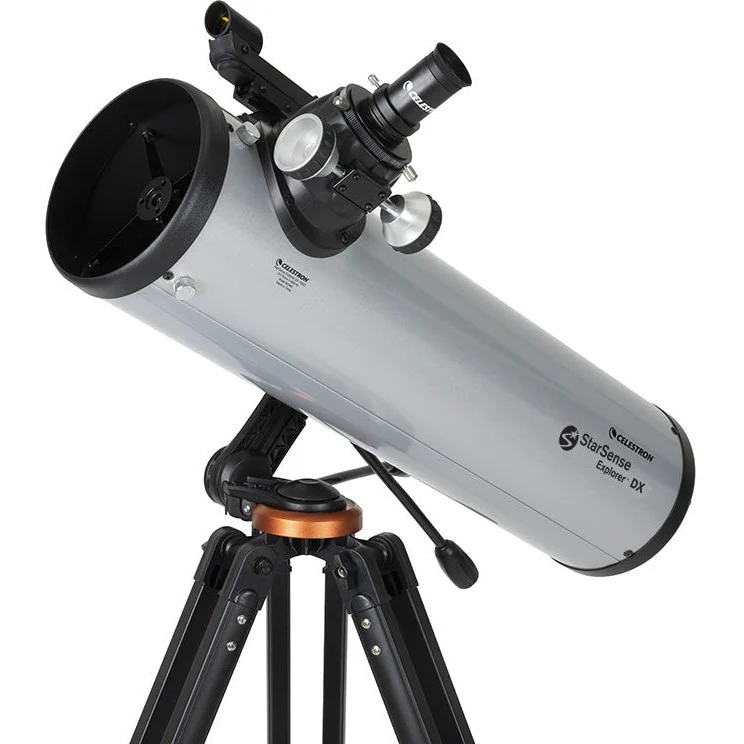
A 130 mm reflector on a simple alt-az mount with StarSense phone-guided finding. A friendly first real telescope: enough aperture for the Moon, planets and bright deep sky, with an app that removes the where-do-I-point hurdle beginners hit hardest.
130 mm at f/5 (650 mm) shows lunar detail, Saturn's rings, Jupiter's moons and brighter deep-sky objects.
StarSense plate-solves with your phone and points you to targets with an on-screen arrow.
The fast f/5 optics give wide, forgiving low-power views that are easy to aim.
The classic first imaging refractor: an 80mm ED doublet that shows clean, colour-controlled stars for a fraction of a triplet apo. The scope that has launched more astrophotographers than any other.
An FPL-53 ED element controls most false colour, so stars image far cleaner than a cheap achromat.
At 80mm f/7.5 it is small, light and forgiving, an ideal first scope on a modest tracking mount.
A dual-speed Crayford focuser holds a camera and nails fine focus.
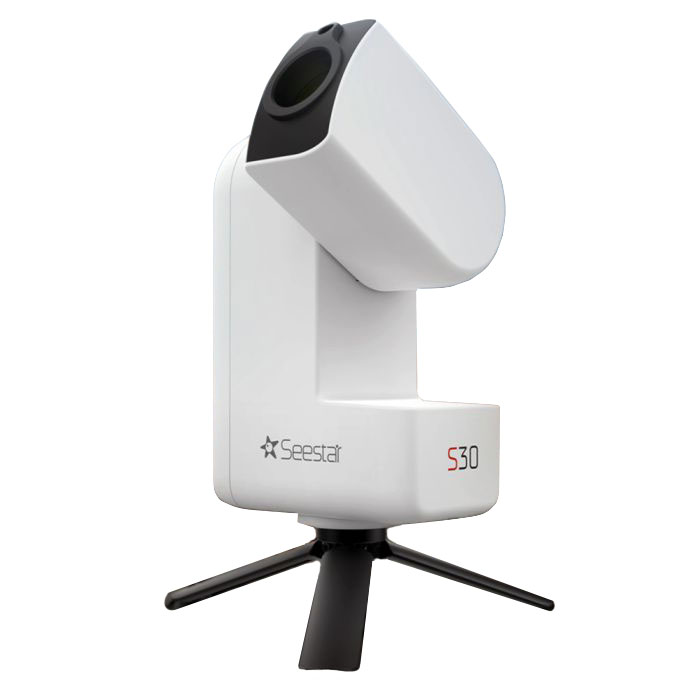
The smaller, cheaper Seestar: an all-in-one smart telescope that points, tracks and stacks deep-sky images from a phone. The S30 keeps the wildly popular Seestar formula in an even more compact, wider-field package.
Fully automated: it finds, focuses, tracks and live-stacks with no user setup.
A wider field than the S50 frames large nebulae and the Milky Way more easily.
Very compact and light, it is a true throw-in-the-bag imager.
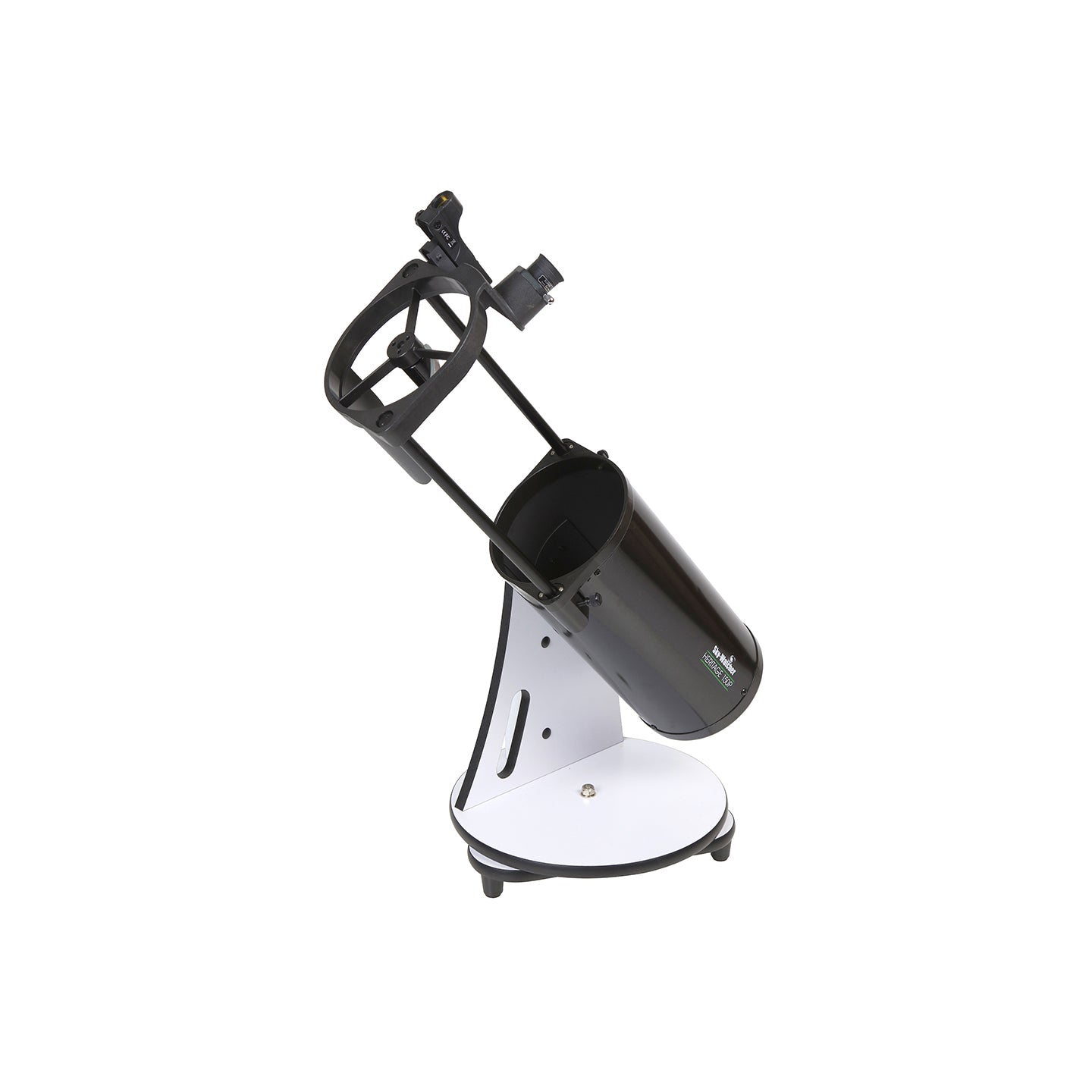
A bigger mirror collects more light — and light is everything. An 8-inch Dobsonian shows dramatically more than a 3-inch refractor at the same price. Buy the widest aperture you can carry.
02
Avoid cheap EQ mounts
Wobbly equatorial mounts ruin the experience — every nudge sends the view shaking for seconds. A Dobsonian or a simple alt-az base is far steadier and far easier to live with.
03
Dobsonian = best value
Dollar-for-dollar, no other design gives you as much aperture. Simple, stable, and ready to observe the moment you set it down.