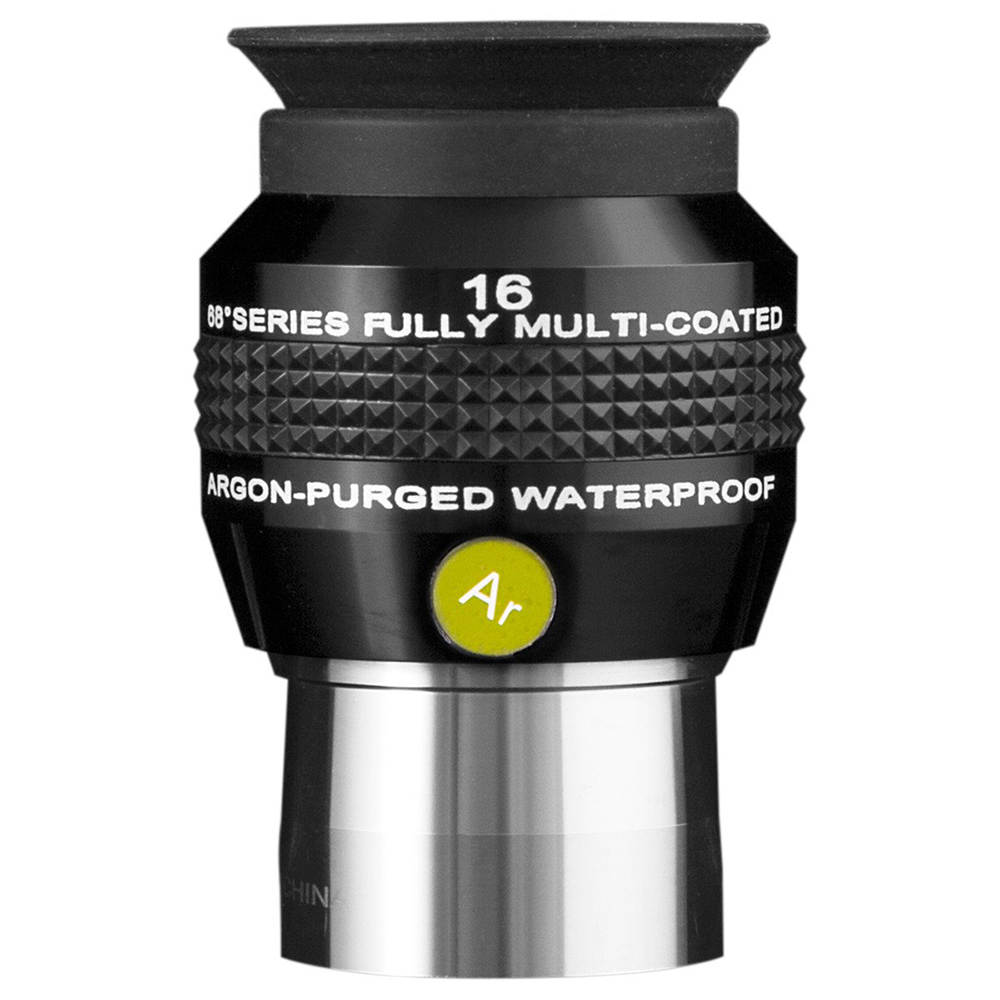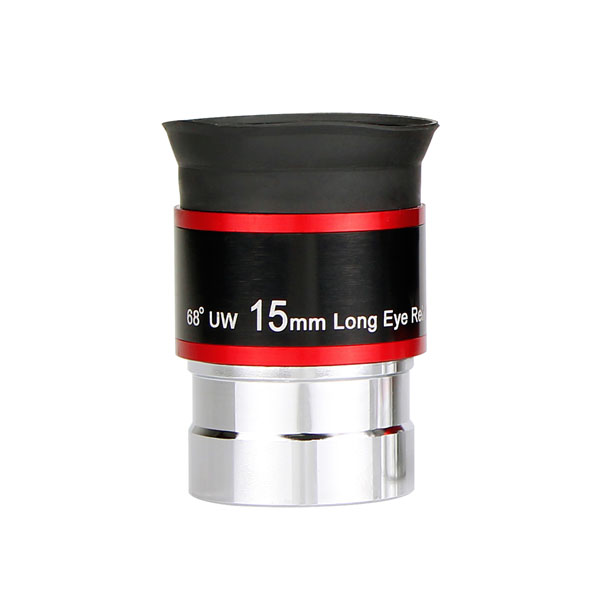
SVBony Redline 15mm Ultra Wide Angle — image 1
SVBony

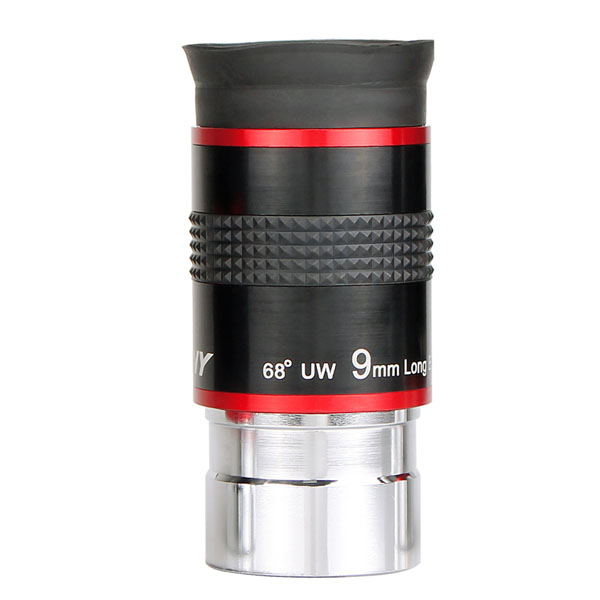
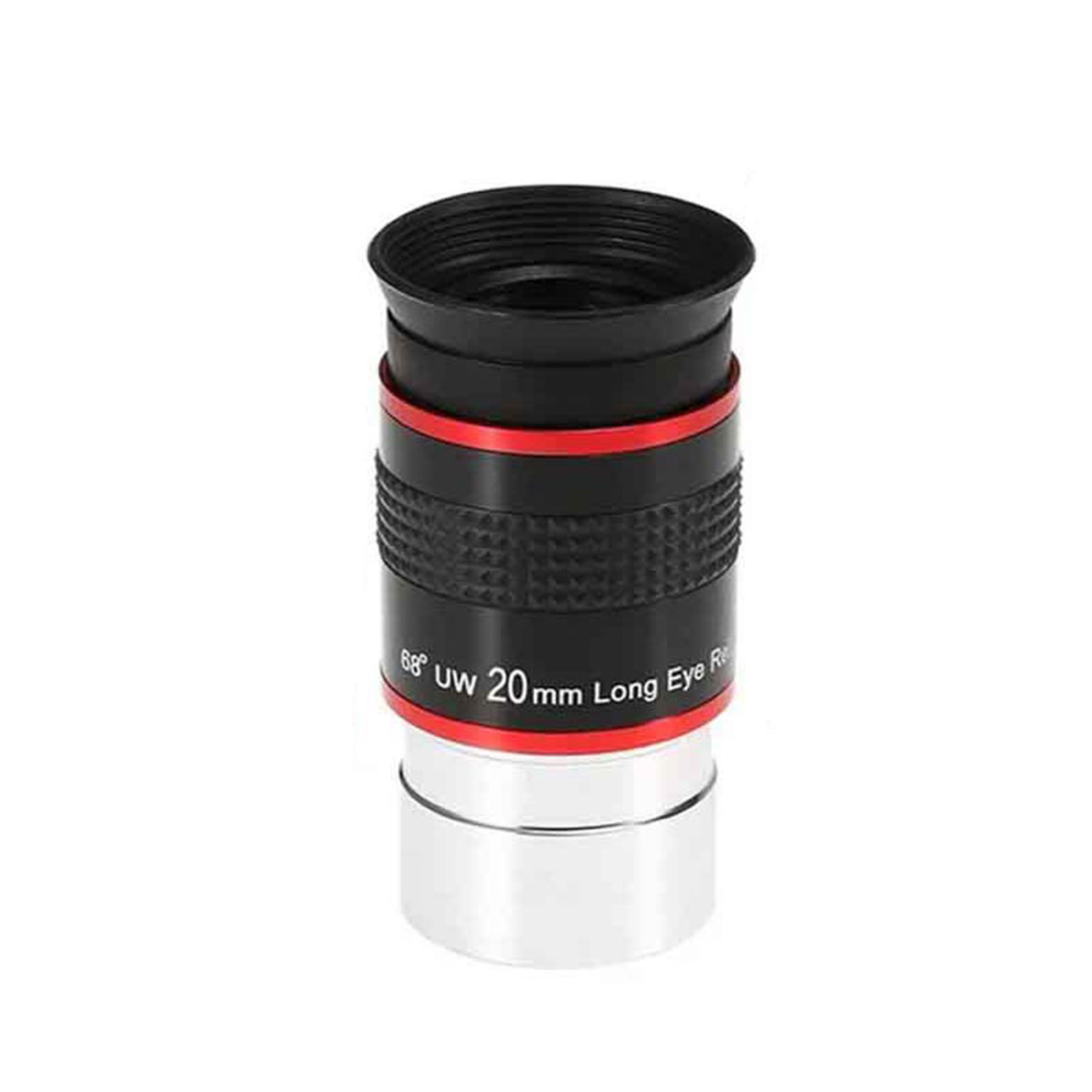
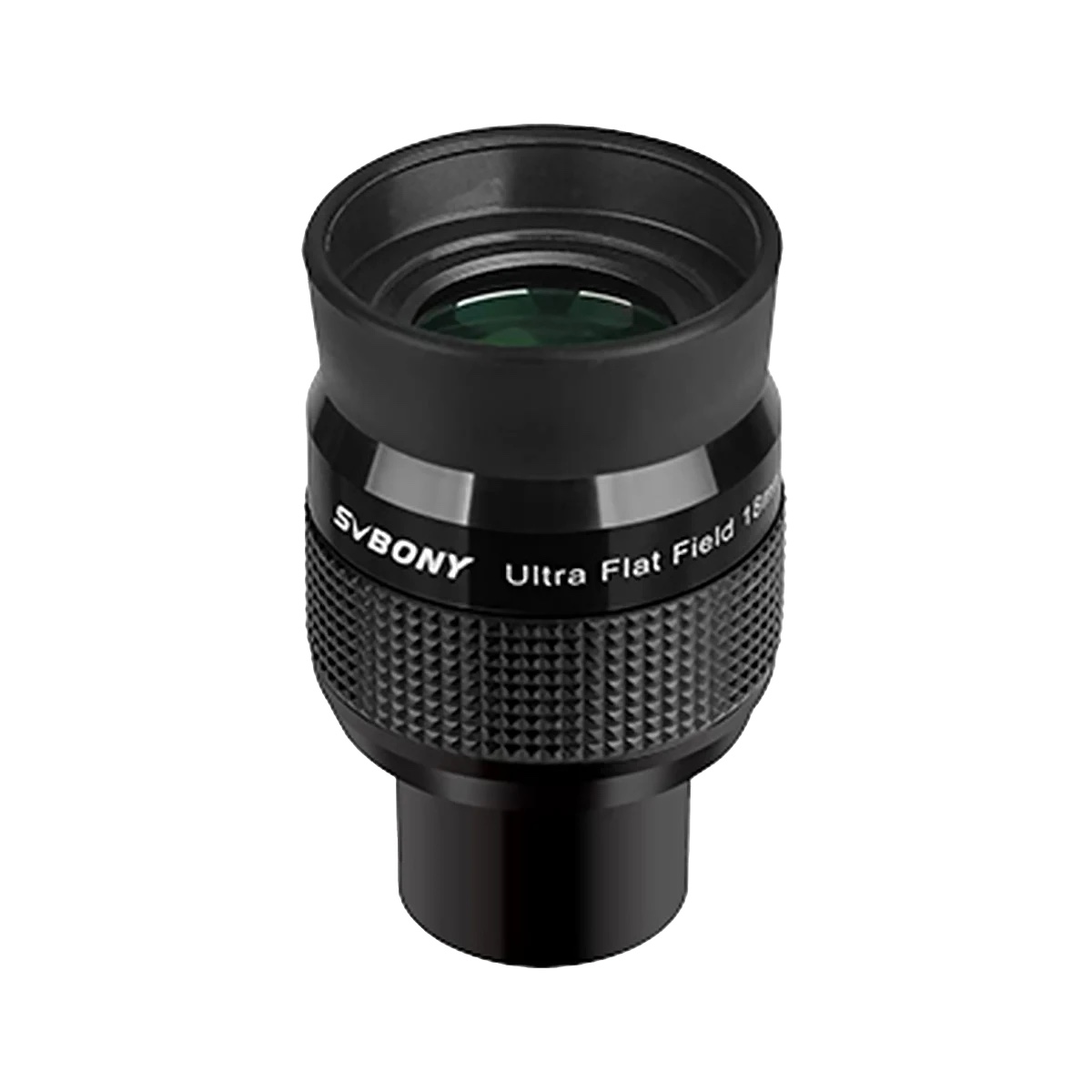
SVBony Redline 15mm Ultra Wide Angle

The weak link in a set that is otherwise a bargain. Four elements where its siblings have five or six, and astigmatism across the outer field that the other focal lengths do not show. Buy the 9mm and Barlow it instead.

64/ 100
Polaris Score
Optical quality · Immersion · Comfort · Value
See the breakdown ↓
What it's for
Low power · wide fieldHigh power · narrow field

A medium power eyepiece. In most telescopes it lands between 30x and 135x, the general purpose range for open clusters, brighter galaxies and the larger planetary nebulae. It is the most useful focal length in the range on paper, which is what makes this particular execution of it disappointing.

Apparent Field
68°
Barrel Size
1.25"
Eye Relief
13mm
Focal Length
15mm
From$36.99

Lowest in 90 days

Price tracked by PolarisObserved 38 timesTracking since Sep 2026

Try in simulator →
Where to buy

Verified 8h ago · prices tracked daily

The spacewalk

You don’t look at a field.
You look into the sky.

Every number on the spec sheet matters less than one feeling: how much sky wraps around your eye. Widen the apparent field and watch the black edge of the eyepiece slip away.

68° apparent field

At 68°, the black rim sits out at the corner of your attention rather than in front of you.
Try this eyepiece on your own scope in the Simulator →
01What it's good at

What it's best at — and the trade-offs.

The on-axis image is honest and sharp, and the middle of the field gives no cause for complaint.
Best at
✓The on-axis image is honest and sharp, and the middle of the field gives no cause for complaint.
✓Thirteen millimetres of eye relief at this power is comfortable, and enough for most observers to use without strain.
✓It is the cheapest way to fill this focal length, and in a slow telescope the compromise is real but modest.
Trade-offs
!Astigmatism across the outer field, worse than any other focal length in this family, and clearly visible in telescopes faster than about f/6.
!Four elements in three groups, the least glass in the set, and the direct cause of the correction problem.
!Reviewers who have tested the whole family consistently rank this focal length last, behind the 9mm, the 20mm and the 6mm.
02In your telescope

One eyepiece. A different job in every scope.

32× in a small refractor, 135× in a long SCT

An eyepiece has no magnification of its own — the telescope decides. The same eyepiece becomes 32× and 2.1° of sky in a little refractor, or 135× and a tight frame in a long SCT. Here’s what it does across common scopes.

Small apo refractor
480 mm · f/5.5
Magnification
32×
True field
2.1°
Exit pupil
2.7 mm
In a 480mm apo refractor this gives 32x across 2.1 degrees with a 2.7mm exit pupil, a pleasant wide field power, though at f/5.5 the outer field is where this design is weakest.
8-inch Dobsonian
1200 mm · f/6
Magnification
80×
True field
51′
Exit pupil
2.5 mm
In an eight inch Dobsonian it lands on 80x with a 51 arcminute field, a genuinely useful general purpose power, but at f/6 the edge softening is already visible on a rich star field.
12-inch Dobsonian
1500 mm · f/5
Magnification
100×
True field
41′
Exit pupil
3.0 mm
In a twelve inch Dobsonian it reaches 100x with a 3mm exit pupil, and this f/5 case is the least flattering of the four: the astigmatism reaches well in from the edge.
8-inch SCT
2032 mm · f/10
Magnification
135×
True field
30′
Exit pupil
1.5 mm
In an eight inch Schmidt-Cassegrain it produces 135x across 30 arcminutes, and the slow f/10 optics hide most of the correction problem, which makes this the one telescope where the eyepiece is straightforwardly good value.
Exit pupil is how wide the beam of light leaving the eyepiece is. Around 5–6 mm is bright and immersive under dark skies; push much past 6 mm and you waste light, and under light pollution a smaller exit pupil shows more contrast.
03In plain English

The numbers, in plain English.

15mm FL · 68° AFOV · 1.25"
Optical designLeast glass in the set
4 elements in 3 groups
The four focal lengths in this family are not one design scaled. The 9mm uses six elements, the 6mm and 20mm use five, and this one uses four. Those missing surfaces were doing the work of correcting the light that arrives at the edge of the field, and their absence is visible. This single number explains why an eyepiece with the same badge, the same price and the same claimed field is the one reviewers put last.
Edge correctionThe real weakness
Astigmatism across the outer field
Astigmatism turns a star into a short line or a cross rather than a point, and it grows as you look further from the centre of the field. Here it starts closer to the centre than it should, and in a fast telescope it can affect the outer half of the view. You will notice it first on a rich star field, where the edges look like tiny dashes while the middle stays sharp. A wide field is only worth having if the outer part of it is usable.
Eye reliefAdequate
13 mm
This is how far behind the lens your eye can sit and still see the whole field. Thirteen millimetres is comfortable for most people and marginal with glasses on. It is, oddly, the shortest in the family despite this being a middling focal length, because the 6mm and 9mm gain eye relief from a built-in Barlow group that this one does not have. SVBONY's own table claims 17mm for all four, which is a copy and paste error.
Apparent fieldWide
68° claimed, about 66° measured
This is how large the circle of view appears, and the measured figure here is close to the label. The problem is not how much field you get but how much of it is sharp. A 66 degree field whose outer third shows stretched stars is effectively a narrower eyepiece with a blurry border, which is why the field specification alone does not tell you what an eyepiece is worth.
Focal ratio toleranceRestrictive
f/8 and slower
Slow telescopes send light into the eyepiece at a gentle angle and hide correction faults. In an f/10 Schmidt-Cassegrain this eyepiece is acceptable. In an f/5 Dobsonian, which is what most people buying a cheap eyepiece set actually own, it is the member of the family that will disappoint. Match the eyepiece to the telescope before you judge either one.
04What comes alive

The targets this eyepiece was born for.
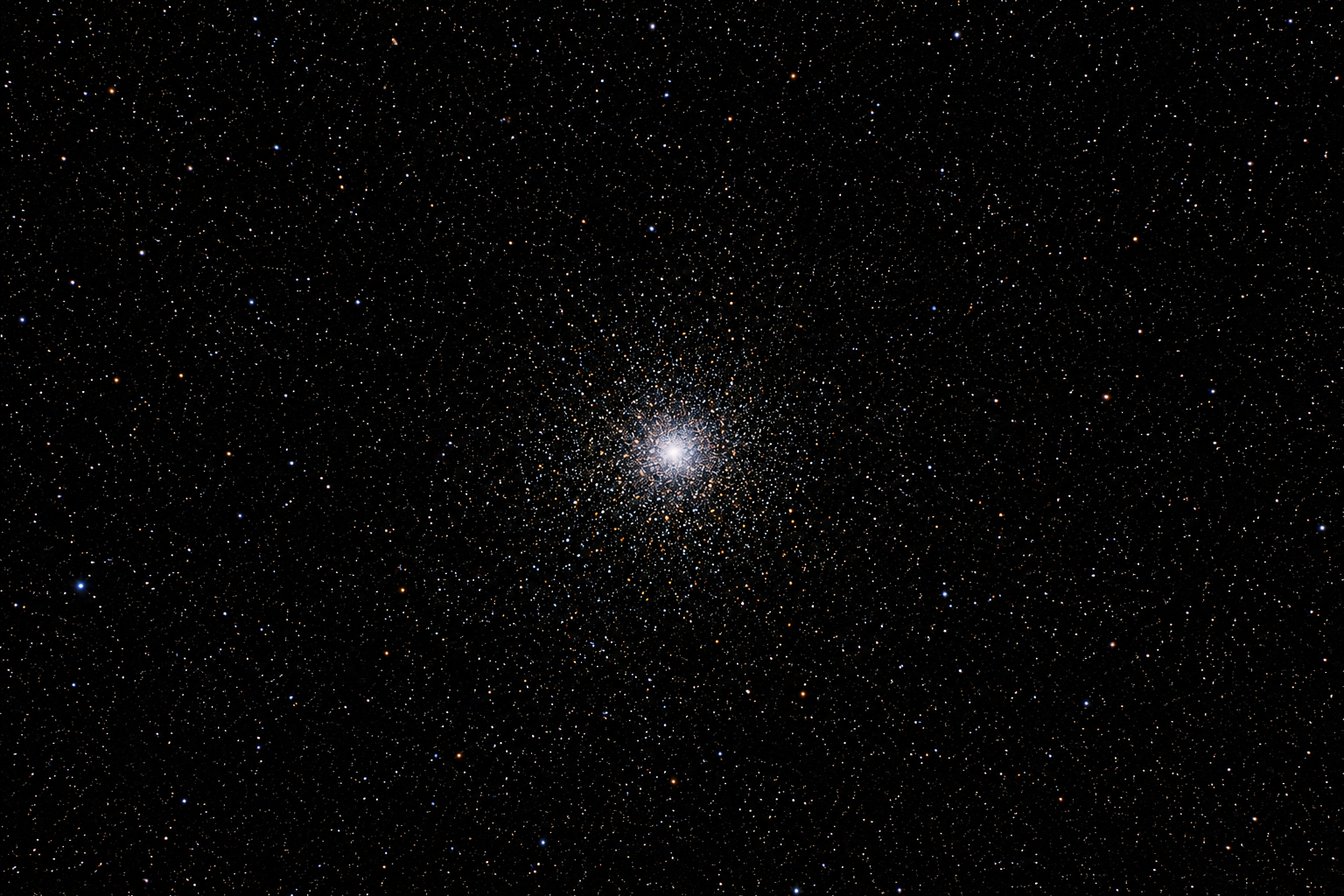
M13 and the brighter globulars, The Moon, whole disc, Open clusters such as M11, The Orion…
M13 and the brighter globularsExcellent
M13 and the brighter globulars
At 80x to 135x the cluster fills a useful part of the field and the outer stars begin to resolve.
The Moon, whole discExcellent
The Moon, whole disc
Fits comfortably at this power with room around it, and the centre of the field is sharp where it counts.
Open clusters such as M11Excellent
Open clusters such as M11
A good power for compact clusters, though the outer field is where the soft stars announce themselves.
The Orion Nebula (M42)Excellent
The Orion Nebula (M42)
Bright enough to shrug off the correction issues, and this power frames the core and the wings together.
Brighter galaxies such as M81 and M82Excellent
Brighter galaxies such as M81 and M82
Both in one field at this power, which is the pairing that makes them worth the trip.
Comes alive
Rich Milky Way star fields
Also the target that exposes this eyepiece most clearly, because thousands of point sources make edge astigmatism obvious.
05Role in a collection

Where it sits in your eyepiece case.

Where it sits across 3 focal lengths

A good eyepiece collection isn’t a pile of glass — it’s two or three focal lengths that hand off from wide to tight. This is the anchor at the bottom of the ladder: the one you find and frame with. You buy it once, and it stays your low-power eyepiece for life.

32 mm
Low power · wide field
Find, frame and sweep. Your widest true field and the lowest useful magnification — the eyepiece you reach for first.
Veil Nebula · Pleiades · Milky Way star clouds
15 mmThis one
Medium power · the workhorse
Where most deep-sky objects look their best — galaxies, globulars and planetary nebulae at a comfortable scale.
M13 · Ring Nebula · most galaxies
7 mm
High power · detail
Planets, the Moon at the terminator, tight double stars and the smallest planetary nebulae. Steady-air nights only.
Jupiter · Saturn · lunar craters
06Build around it

What it pairs with.

The telescope · Pair it · Filter it
The telescope
Where this focal length works
An f/10 SCT or a Maksutov
The only case where this eyepiece is comfortably recommendable. Slow optics hide the correction fault.
Not a fast Dobsonian
At f/4 to f/5 the soft field reaches too far in. The 9mm in this same family is the right choice there.
Filter it
What changes the view
SVBony UHC 1.25-inch
At this power a nebula filter works well on the larger emission nebulae, and darkening the background also disguises the soft edge.
A Moon filter
Optional here. At 80x to 135x the Moon is bright but not punishing.
07The Polaris Score

How it scores, and why.

64/100
64/ 100
SVBony Redline 15mm Ultra Wide Angle

This is the lowest score we give any member of an otherwise well regarded line, and it is deliberate. Judged against the 9mm sitting beside it at the same price, with the same badge and two more elements, the 15mm gives up field correction for nothing in return. It keeps a respectable mark only because the on-axis image is honest and the price is very low. Anyone buying on the family's reputation should know that the reputation was earned by the other three.

Optical quality
58
Immersion
80
Comfort
76
Value
72

Polaris weighs how well the eyepiece does the job it was designed for — optics, immersion, comfort and value — never list price or brand.

08Who it's for

An honest fit check.

Observers with slow telescopes at f/8 or longer, where the astigmatism is least intrusive…
Buy it if you
✓Observers with slow telescopes at f/8 or longer, where the astigmatism is least intrusive and the price is hard to argue with.
✓Anyone who wants to fill a focal length gap for the smallest possible amount of money and accepts a soft outer field as the cost.
✓Buyers who already own the 9mm and the 20mm and want the middle covered without another decision.
Look elsewhere if you
!Owners of fast telescopes at f/4 to f/6, which is most Dobsonians, where the soft field reaches well in from the edge.
!Anyone buying a single eyepiece from this family, since the 9mm is better in every respect that matters and costs the same.
!Observers who care about star shape at the edge of the field, which is exactly what this eyepiece gives up.
!Anyone who owns a 2x Barlow, because a 9mm plus that Barlow already covers this territory better.
09The numbers

Full specifications.

7 measured and stated values
Optical
Focal Length15mm
Apparent Field68°
CoatingsFully multi-coated
Comfort & handling
Eye Relief13mm
Fit & build
Barrel Size1.25"
More
lens design4 elements in 3 groups
weight g170
Editor’s Take

It is tempting to buy all four of a cheap set and be done with it. This is the one to leave out. The 15mm is the only member of the family built on four elements rather than five or six, and every reviewer who has compared the set puts it last, usually by a clear margin. Stars in the outer half of the field grow small tails, and in a fast telescope the effect reaches uncomfortably far in towards the centre. The eyepiece is not a scam and the middle of the field is fine. It is simply outclassed by its own siblings, which cost the same.

— The Skynocular verdict