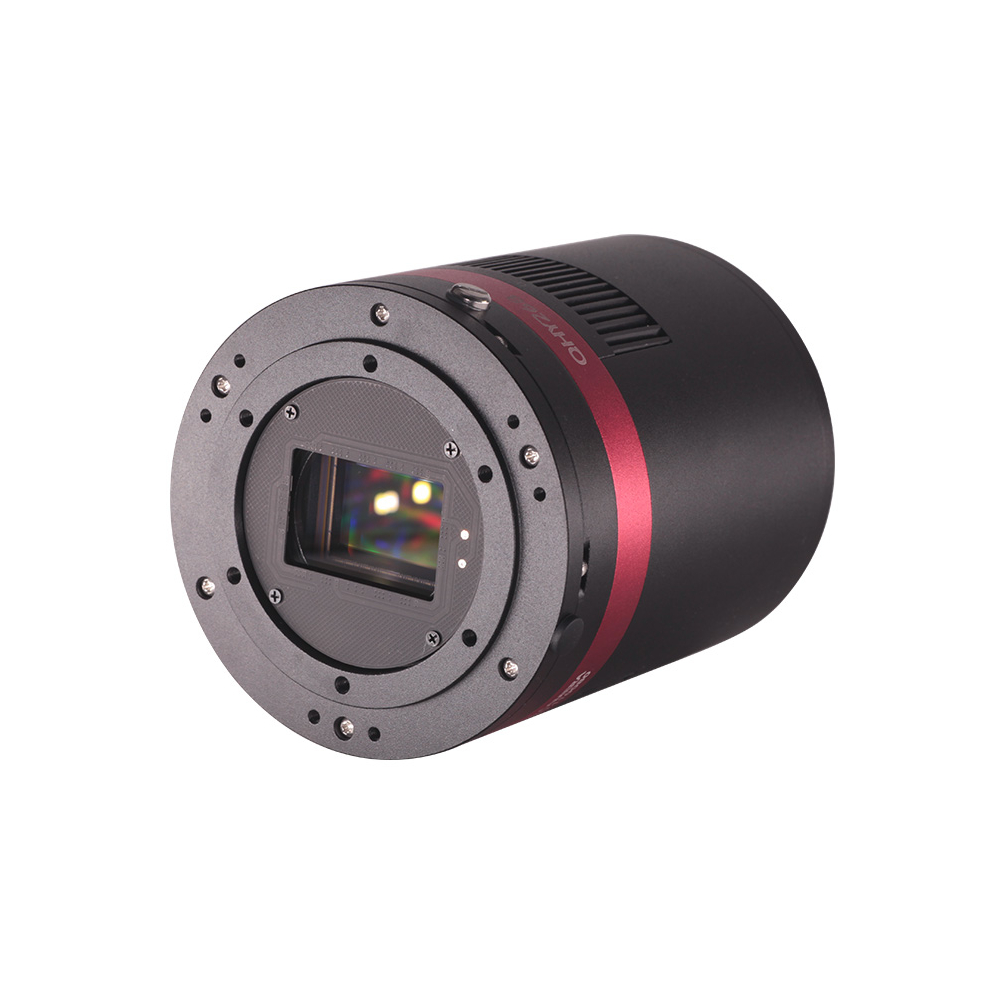
QHY600 Photographic Color — image 1
QHY

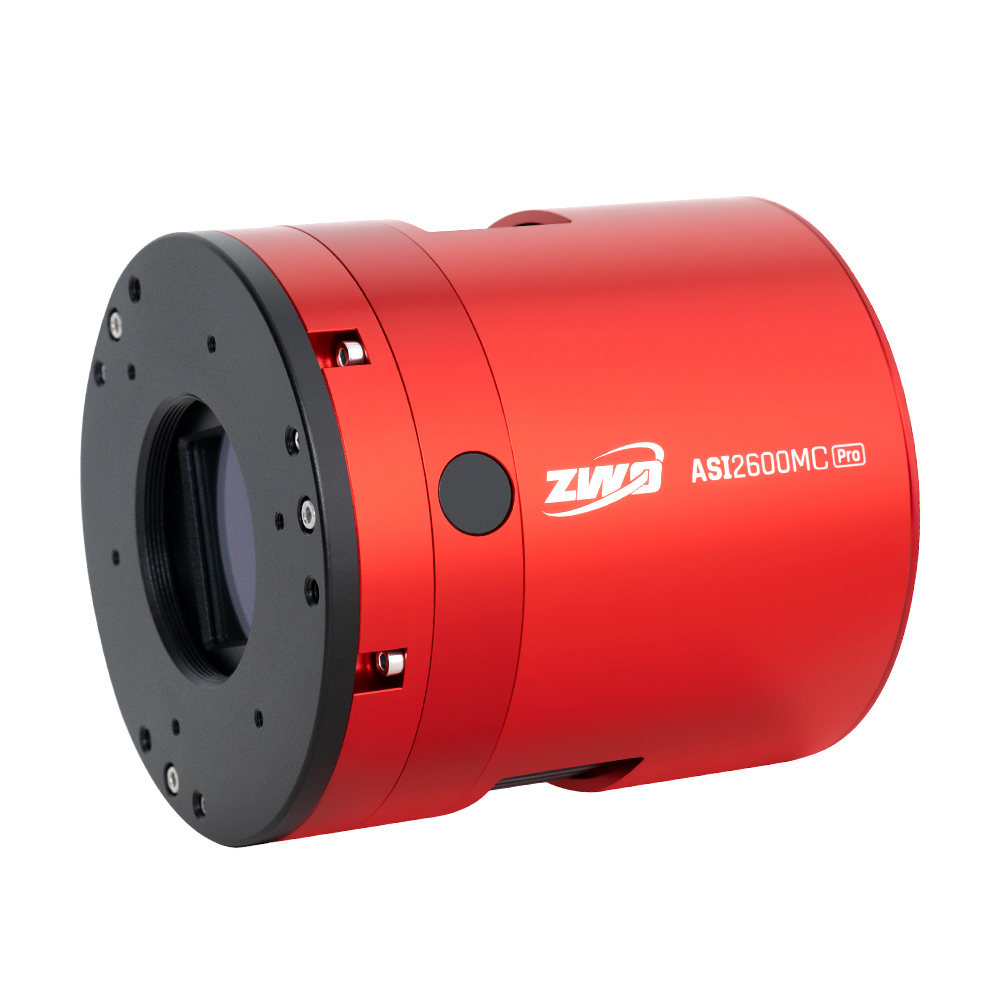
QHY600 Photographic Color

A 61-megapixel full-frame one-shot-colour camera, the widest field and highest resolution you can get without going mono, for imagers who want to capture whole constellations at once.

91/ 100
Polaris Score
#3 of 8 colour deep-sky cameras
See the breakdown ↓
Camera Type
PlanetaryDeep sky

A pure wide-field deep-sky instrument, the full-frame sensor frames the largest nebula complexes and star fields whole.

Type
One-shot colour
Cooling
−35°C below ambient
Pixel Size
3.76µm
Read noise
1.0 e⁻
Resolution
61 MP · 9576×6388
Sensor
Sony IMX455 · Full-frame
From$4,599

Lowest in 90 daysLowest ever tracked

Price tracked by PolarisObserved 52 timesTracking since Mar 2026

Try in simulator →
Where to buy

Verified yesterday · prices tracked daily

The frame it captures

Same camera. Different telescope. A completely different photograph.

A camera has no field of view of its own, the telescope in front of it decides everything. Pick a target and watch the same 61-megapixel frame become three different images.

RedCat 51
250 mm · f/4.9
FOV 8.3° × 5.5°
Sits small in a wide field, room for its two companion galaxies.
Esprit 100ED
550 mm · f/5.5
FOV 3.8° × 2.5°
Framed with space to spare, the full disc and both companions.
EdgeHD 8
2032 mm · f/10
FOV 1° × 0.68°
Overflows frame
Only the bright core fits; the spiral arms spill off the sensor.
Explore any telescope in the Simulator →
01What it's good at

What it's best at — and the trade-offs.

The full-frame IMX455 frames the largest nebula complexes and rich star fields in a single shot
Best at
✓The full-frame IMX455 frames the largest nebula complexes and rich star fields in a single shot
✓61 megapixels resolve extraordinary fine detail across the whole field
✓A true 16-bit readout and deep cooling give smooth, low-noise data
✓One-shot colour keeps the workflow simple despite the sensor's scale
Trade-offs
!The full-frame circle needs a scope that corrects sharply to the far corners
!61-megapixel files are large and demand real storage and processing power
!The premium price is only justified for wide-field, high-resolution work
02In plain English

The numbers, in plain English.

Sony IMX455 · 61MP · 3.76µm · −35°C below ambient
SensorFull-frame
Full frame, 36 × 24 mm
The largest sensor in common amateur use, able to frame entire nebula complexes in one exposure. It also demands optics corrected right to the far corners, so a telescope that looks fine on APS-C may show soft edges here.
ResolutionVery high
61 MP
Enough resolution to hold fine detail even after cropping hard into a frame. The cost is very large files: a night of subframes runs to tens of gigabytes and processing needs memory to match.
Pixel sizeBalanced
3.76 µm
A middle pixel size that samples well across the focal lengths most people image at, roughly 400 mm to 1200 mm. It avoids both the light starvation of tiny pixels and the coarse sampling of large ones.
Read noiseExcellent
About 1.0 e⁻
Read noise is what the camera itself adds every time a frame is read out. At around one electron, faint signal survives in short subframes, which lets you shoot shorter exposures and lose less to satellites, wind and cloud.
CoolingDeep
Regulated TEC
Regulated cooling drops thermal noise and, just as importantly, holds the sensor at a repeatable temperature so a dark library stays valid across months rather than being rebuilt each session.
03Typical targets

What it shines on.

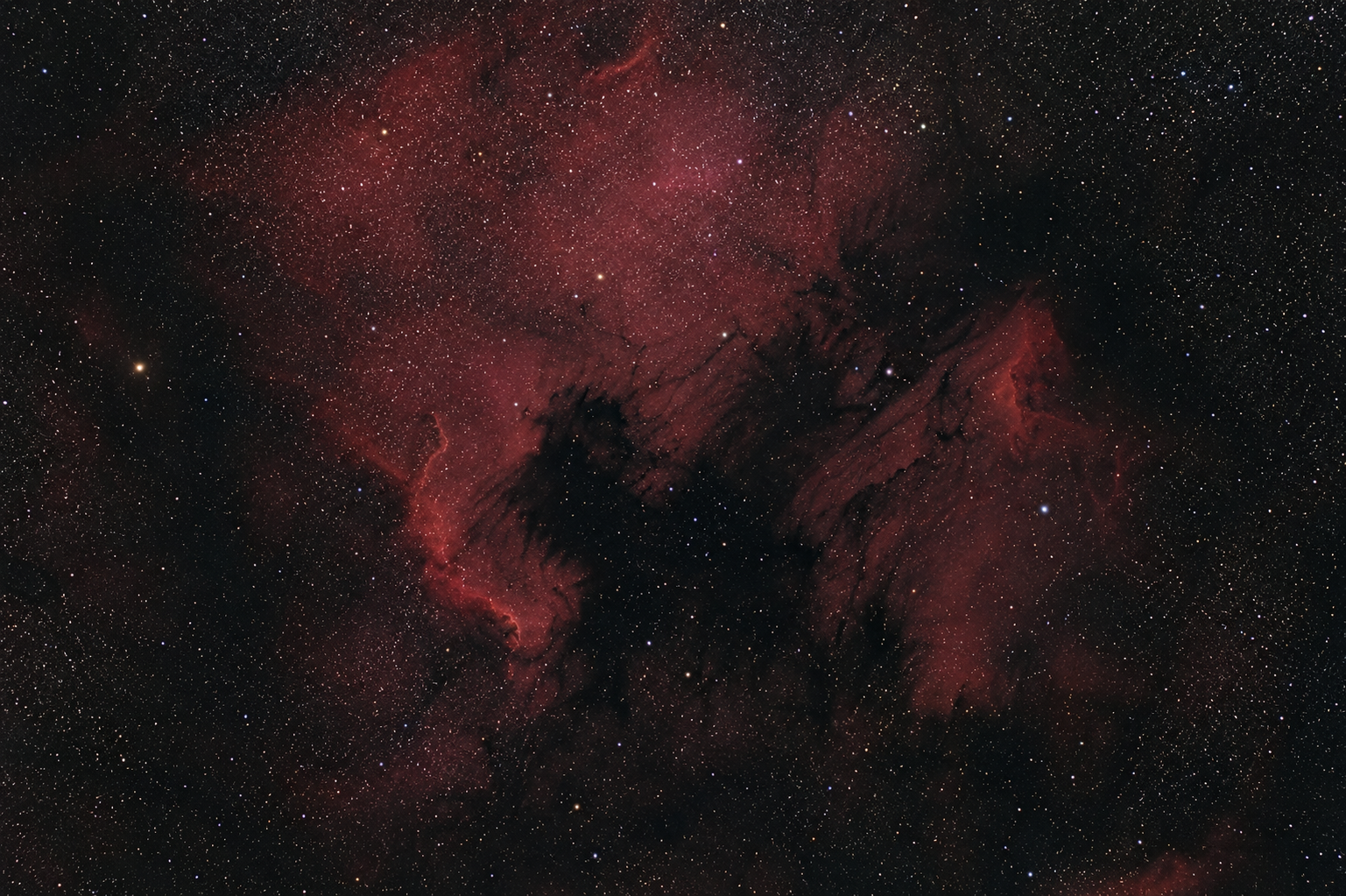
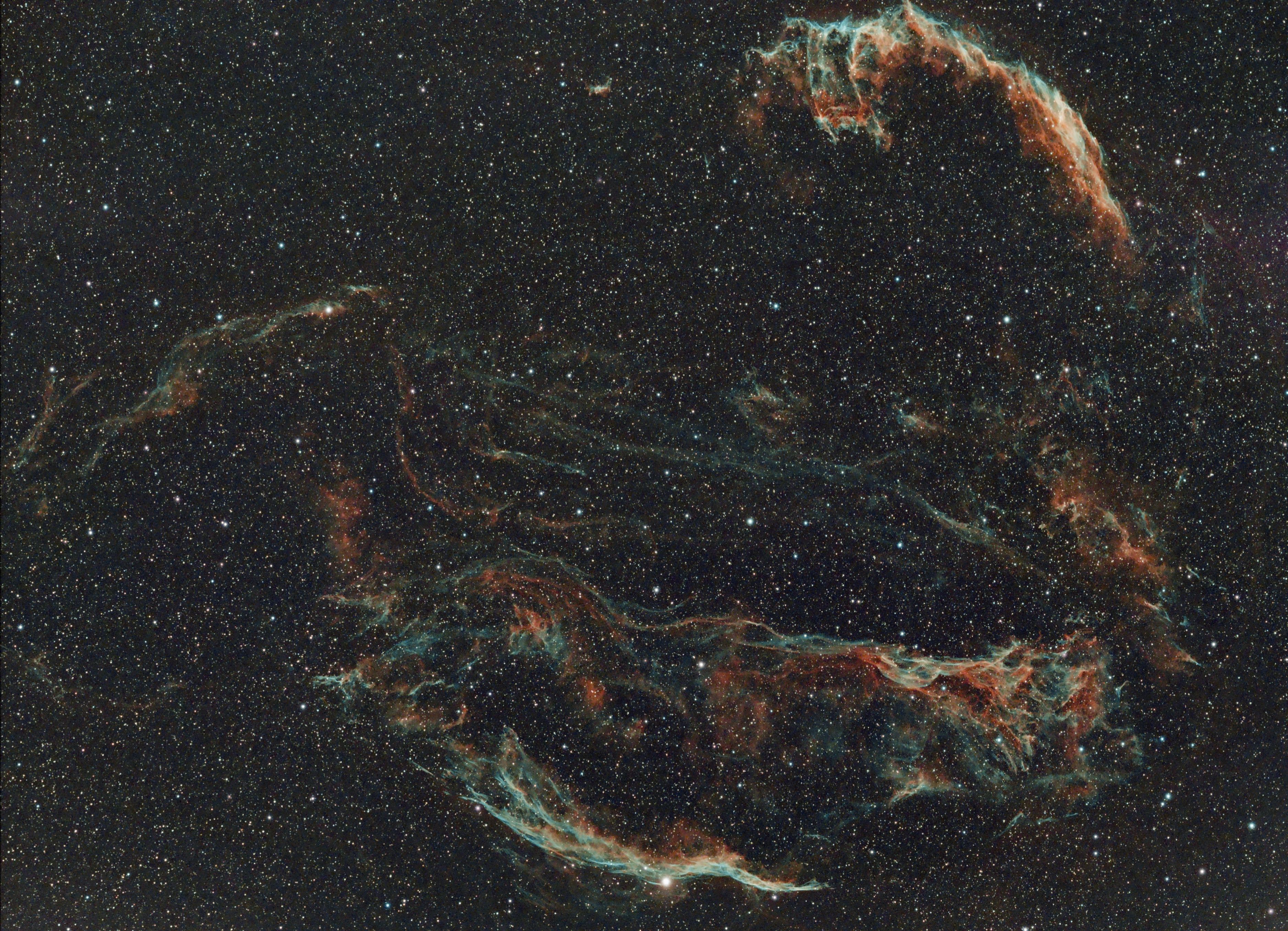
The North America & Pelican complex, The Andromeda Galaxy (M31), The Veil Nebula
The North America & Pelican complexComes alive
The North America & Pelican complex
The whole nebula region frames in one full-frame shot.
The Andromeda Galaxy (M31)Excellent
The Andromeda Galaxy (M31)
The full galaxy with generous surrounding field and both companions.
The Veil NebulaExcellent
The Veil Nebula
Both arcs of the supernova remnant fit together on the wide sensor.
04Build your imaging rig

Everything you'd actually buy.

Capture · Track · Frame
Track
What holds it steady
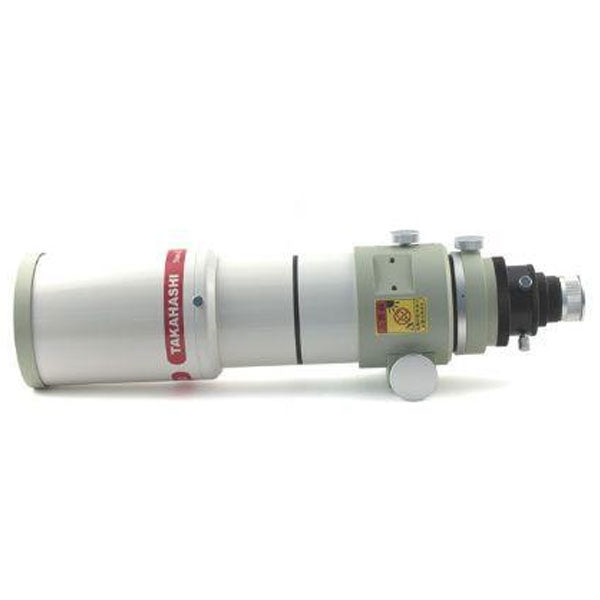
A capable tracking equatorial mount
The full-frame workflow rewards a stable, accurately guided mount.
Frame
Pull signal from the sky
A dual-band filter
Isolates emission nebulae so the wide field pops against light pollution.
05The Polaris Score

How it scores, and why.

91/100 · #3 of 8 colour deep-sky cameras
91/ 100
QHY600 Photographic Color
#3 of 8 colour deep-sky cameras

The best image quality and widest field of any colour camera here, at a premium price and with the highest demands on optics and mount.

Image quality
97
Low-light sensitivity
90
Ease of use
78
Value
80

Polaris weighs how well the camera does the job it was designed for — image quality, sensitivity, versatility and value — never list price or brand.

06Who it's for

An honest fit check.

Experienced imagers who want the widest possible field and highest resolution
Buy it if you
✓Experienced imagers who want the widest possible field and highest resolution
✓People shooting large nebula complexes and expansive star fields
✓Imagers with a premium, fully-corrected refractor and a capable mount
Look elsewhere if you
!Beginners, since the sensor demands top-tier optics and adds workflow overhead
!Anyone on a budget, since it is among the most expensive colour cameras
!Long-focal-length imagers chasing small galaxies, where the wide field is wasted
07The numbers

Full specifications.

18 measured and stated values
Sensor
ModelSony IMX455
TypeCMOS · Full-frame
Megapixels61
Pixel Size3.76µm
Bit depth16-bit ADC
Noise & sensitivity
Read noise1.0 e⁻
Full well51,000 e⁻
Peak QE~90%
Dynamic range14 stops
Cooling
Cooling−35°C below ambient
Connectivity & fit
InterfaceUSB 3.0
Weight0.85 kg
More
cooledtrue
Sensor Height24mm
Sensor Width36mm
Editor’s Take

The IMX455 is the full-frame flagship sensor: 61 megapixels across a 36×24mm chip. It demands a scope that fully corrects that huge circle and a mount to carry the workflow, but nothing frames a large nebula region like it. Files are big; plan your storage.

— The Skynocular verdict