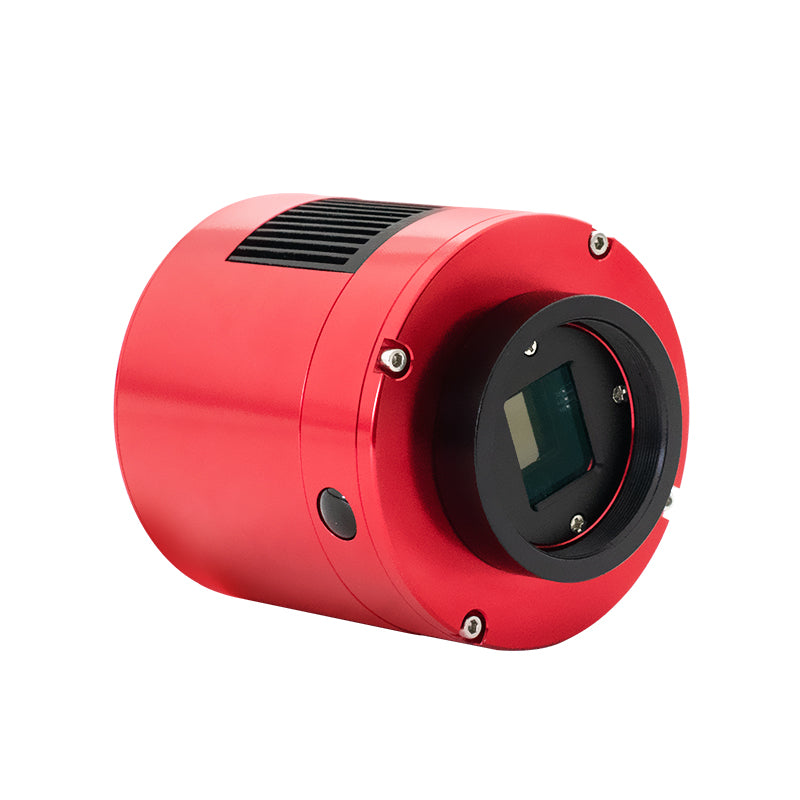
ZWO ASI2600MM Pro — image 1
ZWO

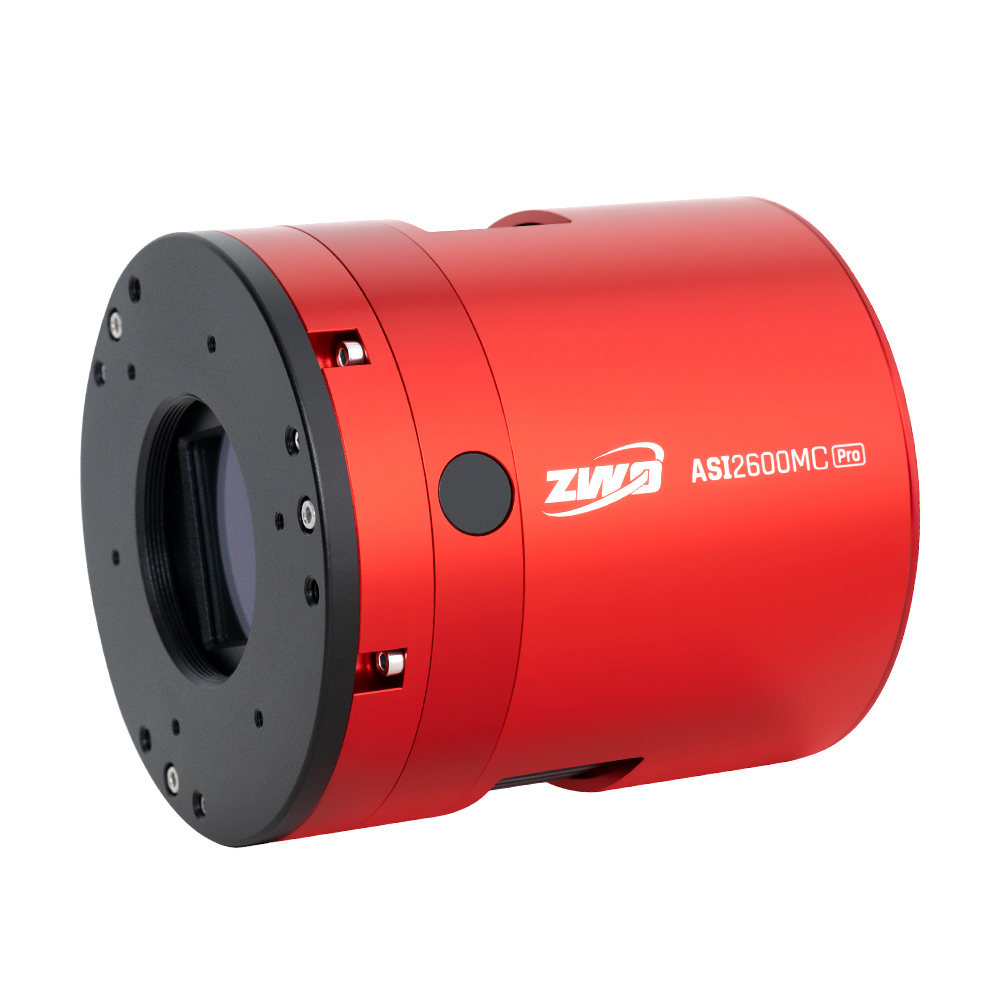
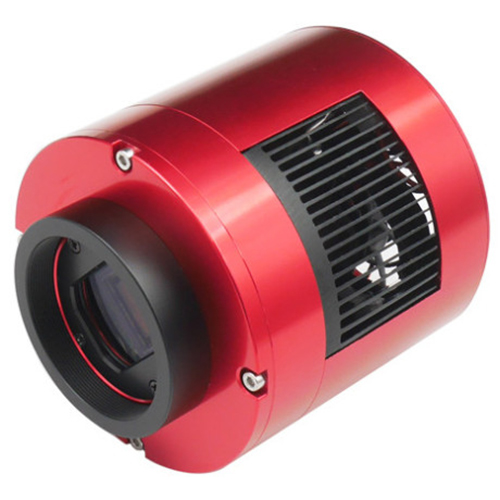
ZWO ASI2600MM Pro

The monochrome IMX571: 26 megapixels of APS-C with the highest resolution and deepest narrowband this sensor can give, the reference deep-sky mono camera.

95/ 100
Polaris Score
#1 of 7 mono deep-sky cameras
See the breakdown ↓
Camera Type
PlanetaryDeep sky

Built for deep sky, nebulae, galaxies and clusters under long exposure. Capable on the Moon, but oversized for high-resolution planets.

Type
Monochrome
Cooling
−35°C
Pixel Size
3.76µm
Read noise
1.0 – 3.3 e⁻
Resolution
26 MP · 6248×4176
Sensor
Sony IMX571 · APS-C
From$1,999

$200 above 90-day lowLast $1,799 in Aug 2026

Price tracked by PolarisObserved 97 timesTracking since Jul 2026

Try in simulator →
Where to buy

Verified 13h ago · prices tracked daily

The frame it captures

Same camera. Different telescope. A completely different photograph.

A camera has no field of view of its own, the telescope in front of it decides everything. Pick a target and watch the same 26-megapixel frame become three different images.

RedCat 51
250 mm · f/4.9
FOV 5.4° × 3.6°
Framed with space to spare, the full disc and both companions.
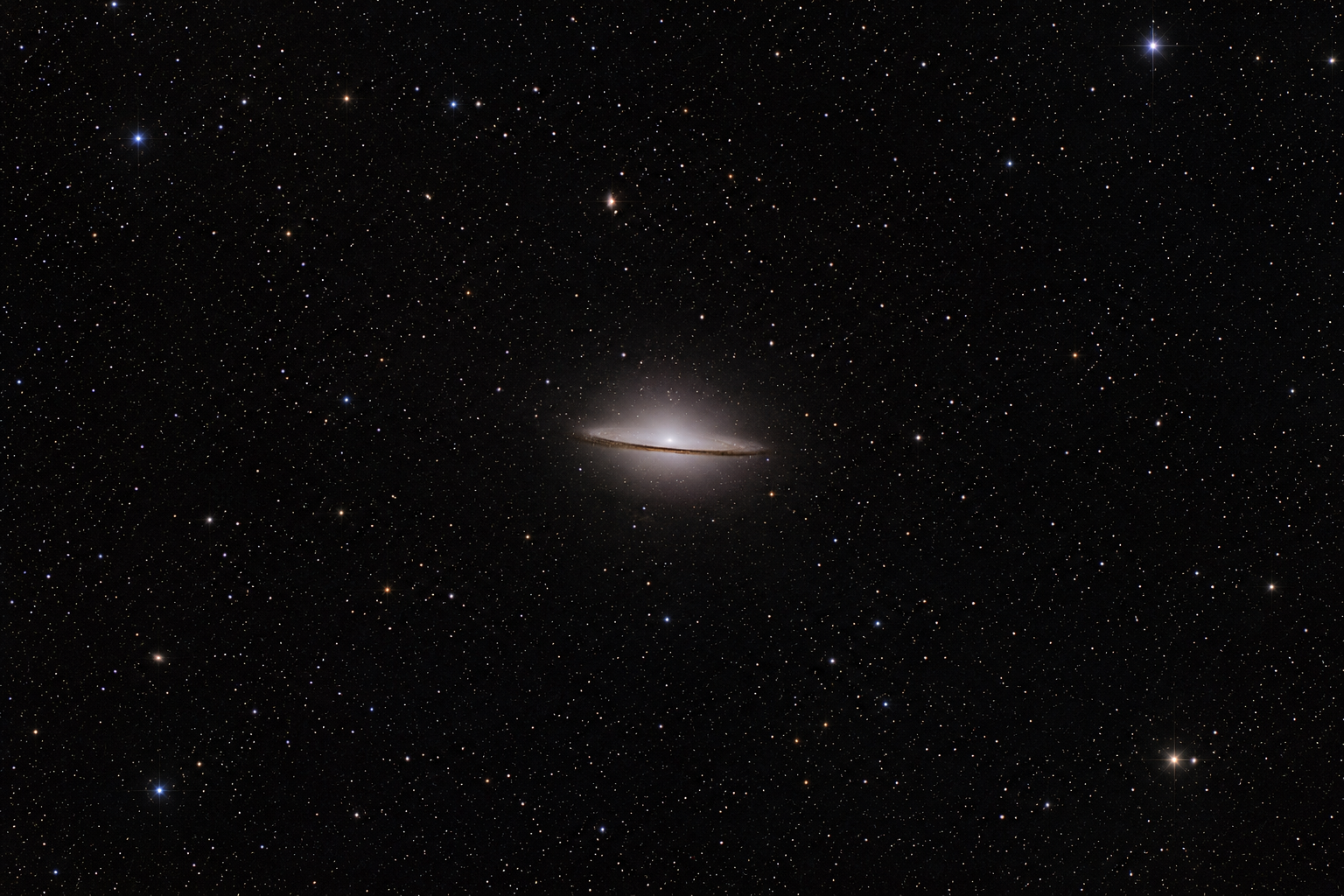
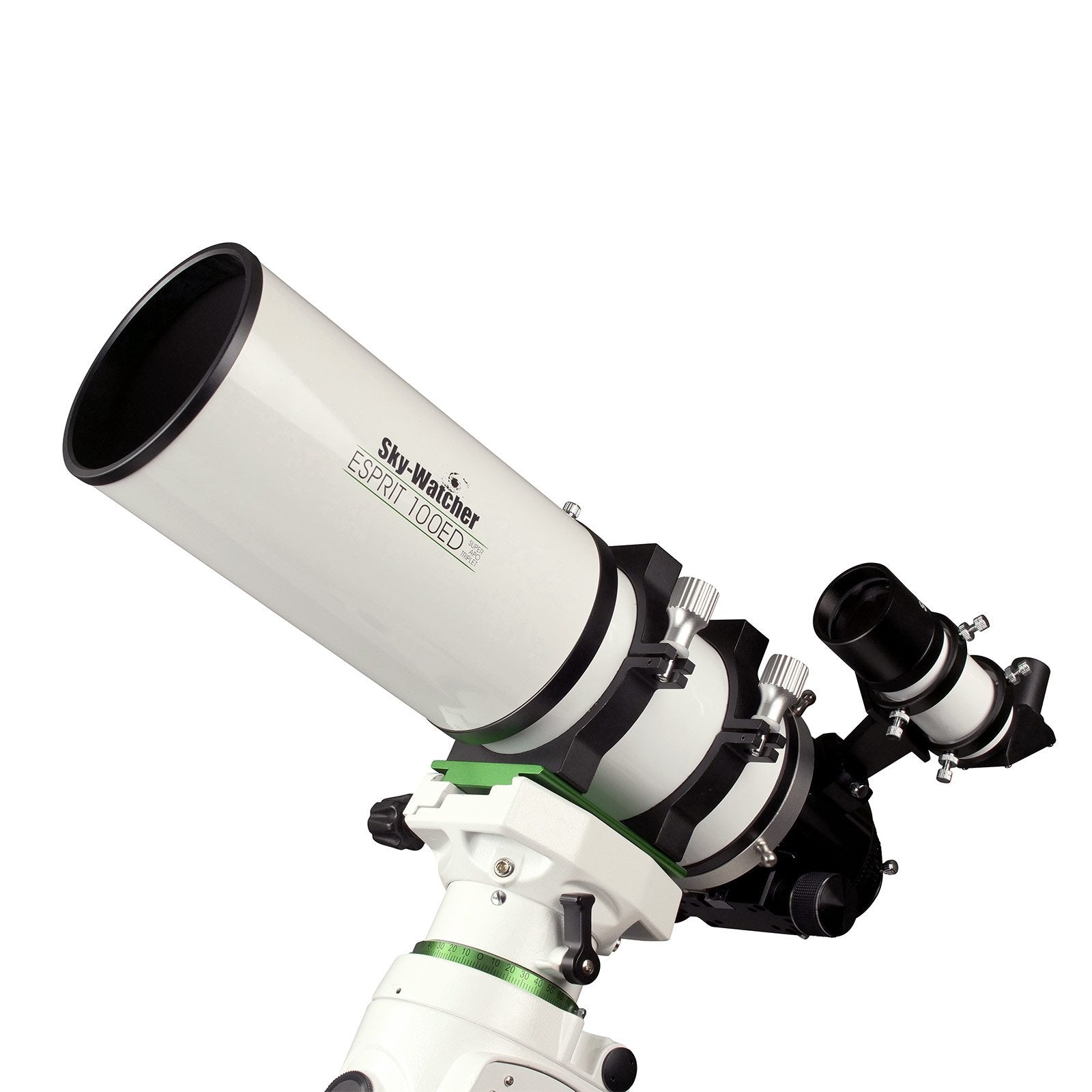
Esprit 100ED
550 mm · f/5.5
FOV 2.4° × 1.6°
Fills the frame edge to edge, the classic full-galaxy portrait.
EdgeHD 8
2032 mm · f/10
FOV 0.66° × 0.44°
Overflows frame
Only the bright core fits; the spiral arms spill off the sensor.
Explore any telescope in the Simulator →
01What it's good at

What it's best at — and the trade-offs.

Full sensor resolution per channel, sharper than a Bayer-masked colour sensor.
Best at
✓Full sensor resolution per channel, sharper than a Bayer-masked colour sensor.
✓~91% peak QE and 16-bit files pull faint narrowband signal out of bright skies.
✓Narrowband filters cut light pollution and moonlight that stop colour cameras.
Trade-offs
!Needs filters and a filter wheel, a real added cost and complexity.
!Capture sequences are longer: multiple channels per target.
!Not a beginner’s first camera; the workflow assumes some experience.
02In plain English

The numbers, in plain English.

Sony IMX571 · 26MP · 3.76µm · −35°C
Read noiseExcellent
1.0 to 3.3 e⁻
Read noise is what the camera adds each time it reads a frame, and it varies with gain setting across this range. At the low end faint signal survives in short subframes, which matters most in narrowband work where exposures are long and every source of noise compounds.
Pixel sizeBalanced
3.76 µm
A middle pixel size that samples sensibly from roughly 500 to 1200 mm of focal length, which covers most amateur telescopes. It avoids both the light starvation of very small pixels and the coarse sampling of large ones.
SensorLarge
Sony IMX571, APS-C
A big sensor frames large nebulae and galaxy groups whole rather than in pieces. It also asks more of the telescope, since field curvature and tilt show up first in the corners of a chip this size, so a matched flattener stops being optional.
CoolingRegulated TEC
35 C below ambient
Thermal noise roughly halves for every six or seven degrees of cooling, so deep cooling is what lets long narrowband exposures stack cleanly. Regulation matters as much as depth, because it keeps calibration frames reusable night after night.
Full wellDynamic range
50,000 e⁻
Full well is how much charge a pixel holds before it clips and detail is lost. A deep well protects bright star cores and galaxy centres while you expose long enough to reach the faint outskirts.
Peak QESensitivity
About 91 percent
Very little of the arriving light is wasted, which is what makes mono narrowband imaging practical: each filter throws away most of the spectrum, so you need the photons that do get through to be recorded efficiently.
03Typical targets

What it shines on.

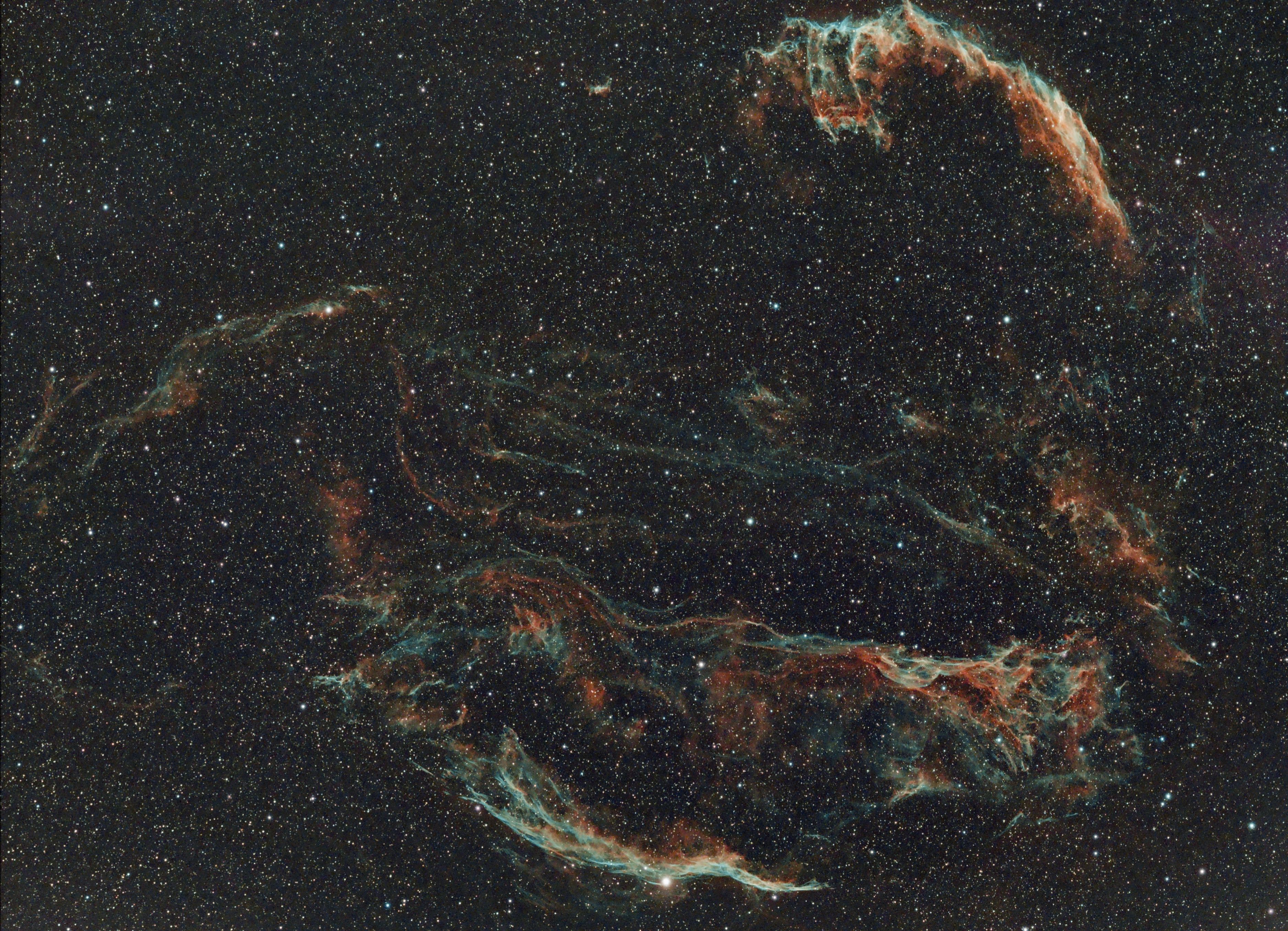
The Veil Nebula (narrowband), The Heart & Soul Nebulae, The Andromeda Galaxy (LRGB), The…
The Veil Nebula (narrowband)Comes alive
The Veil Nebula (narrowband)
Ha and OIII filters separate the lacework into crisp layers.
Comes alive
The Heart & Soul Nebulae
Classic SHO narrowband targets that mono resolves deeply.
The Andromeda Galaxy (LRGB)Excellent
The Andromeda Galaxy (LRGB)
Luminance carries the detail; RGB adds natural colour.
Excellent
The Crescent Nebula
Ha and OIII reveal the shell against a dense star field.
Edge-on galaxiesExcellent
Edge-on galaxies
High-resolution luminance pulls out dust lanes.
Comes alive
The Pelican Nebula
Narrowband cuts light pollution and sharpens the ridges.
04Build your imaging rig

Everything you'd actually buy.

Capture · Track · Complete it
Track
What holds it steady
A tracking equatorial mount
Long exposures need a solid, guided EQ mount underneath.
Complete it
What unlocks its range
Filter wheel + LRGB/narrowband filters
Mono needs filters; a motorised wheel automates the sequence.
05The Polaris Score

How it scores, and why.

95/100 · #1 of 7 mono deep-sky cameras
95/ 100
ZWO ASI2600MM Pro
#1 of 7 mono deep-sky cameras

The mono version of the benchmark APS-C sensor: higher effective resolution than colour and unmatched narrowband depth. The cost is filters, a wheel and a longer workflow.

Image quality
98
Low-light sensitivity
96
Ease of use
76
Value
88

Polaris weighs how well the camera does the job it was designed for — image quality, sensitivity, versatility and value — never list price or brand.

06Who it's for

An honest fit check.

Imagers ready to move up to filters for higher resolution and true narrowband.
Buy it if you
✓Imagers ready to move up to filters for higher resolution and true narrowband.
✓Chase the Ha/OIII/SIII palette on emission nebulae from light-polluted skies.
✓Want the deepest luminance detail a sensor of this size can give.
✓Are comfortable running a filter wheel and a longer capture sequence.
Look elsewhere if you
!Beginners who want a fast, simple one-shot-colour path to an image.
!Anyone unwilling to buy and run filters and a wheel.
!Planetary-only imagers.
!People without a guided equatorial mount.
07The numbers

Full specifications.

19 measured and stated values
Sensor
ModelSony IMX571
TypeCMOS · APS-C
Megapixels26
Pixel Size3.76µm
Bit depth16-bit ADC
Noise & sensitivity
Read noise1.0 – 3.3 e⁻
Full well50,000 e⁻
Peak QE~91%
Dynamic range16 stops
Cooling
Cooling−35°C
Connectivity & fit
InterfaceUSB 3.0
Weight0.7 kg
More
cooledtrue
Sensor Height15.7mm
Sensor Width23.5mm
Editor’s Take

Add a filter wheel and the 2600MM turns light-polluted skies into clean Ha/OIII/SIII data that colour cameras simply cannot reach. It is where imagers go when they want the most out of a night.
— The Skynocular verdict