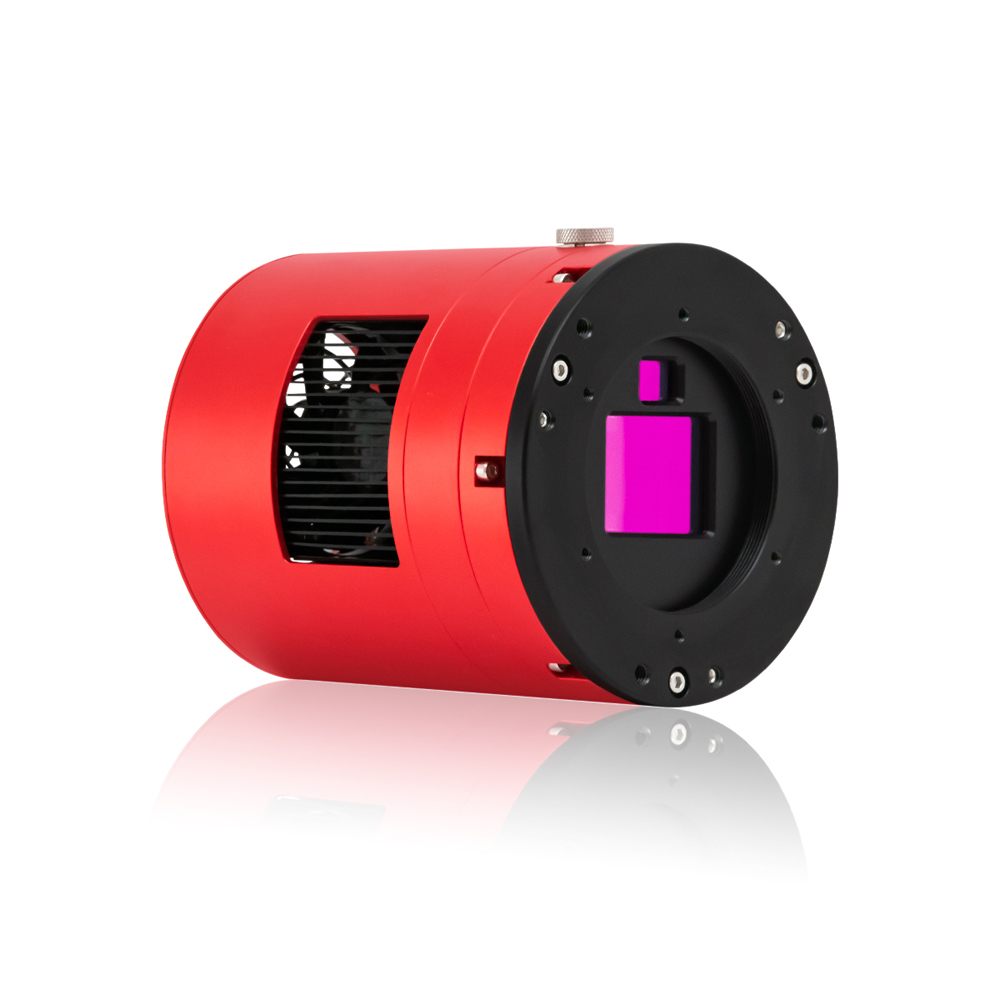
ZWO ASI2600MC Duo — image 1
ZWO

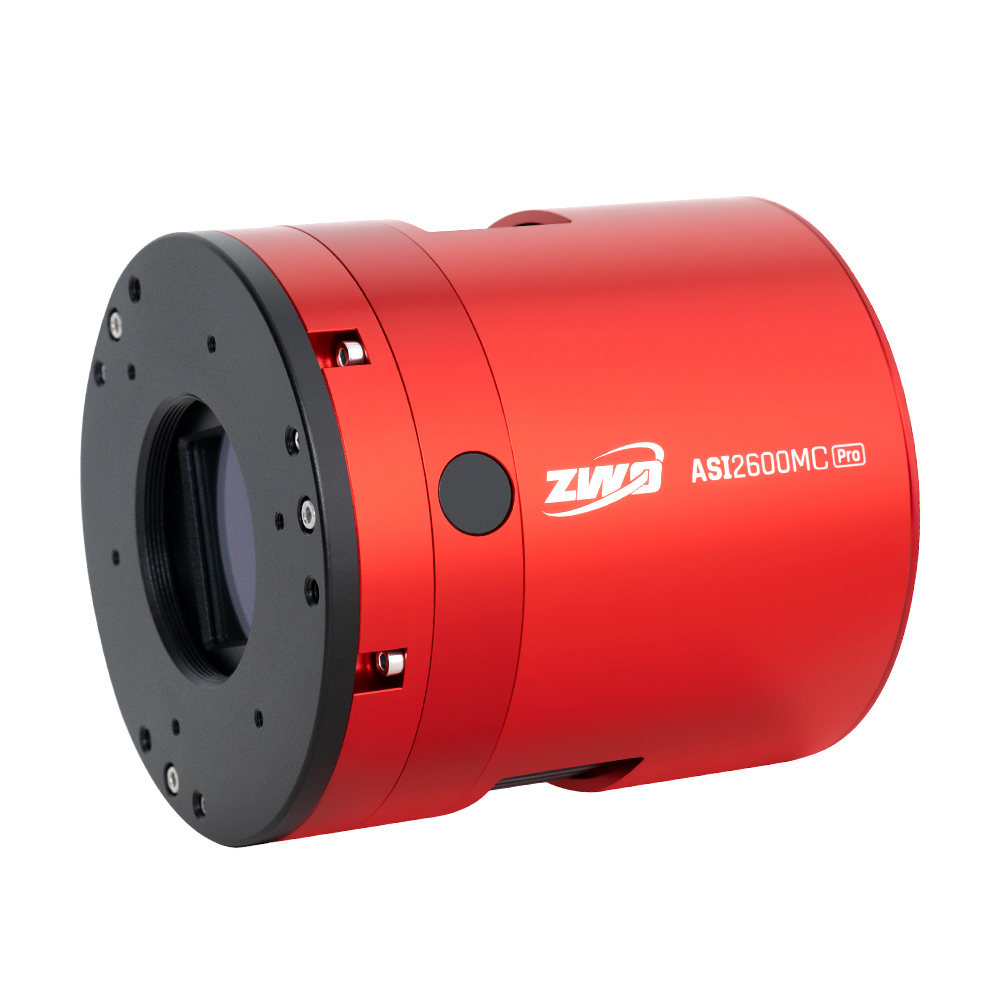
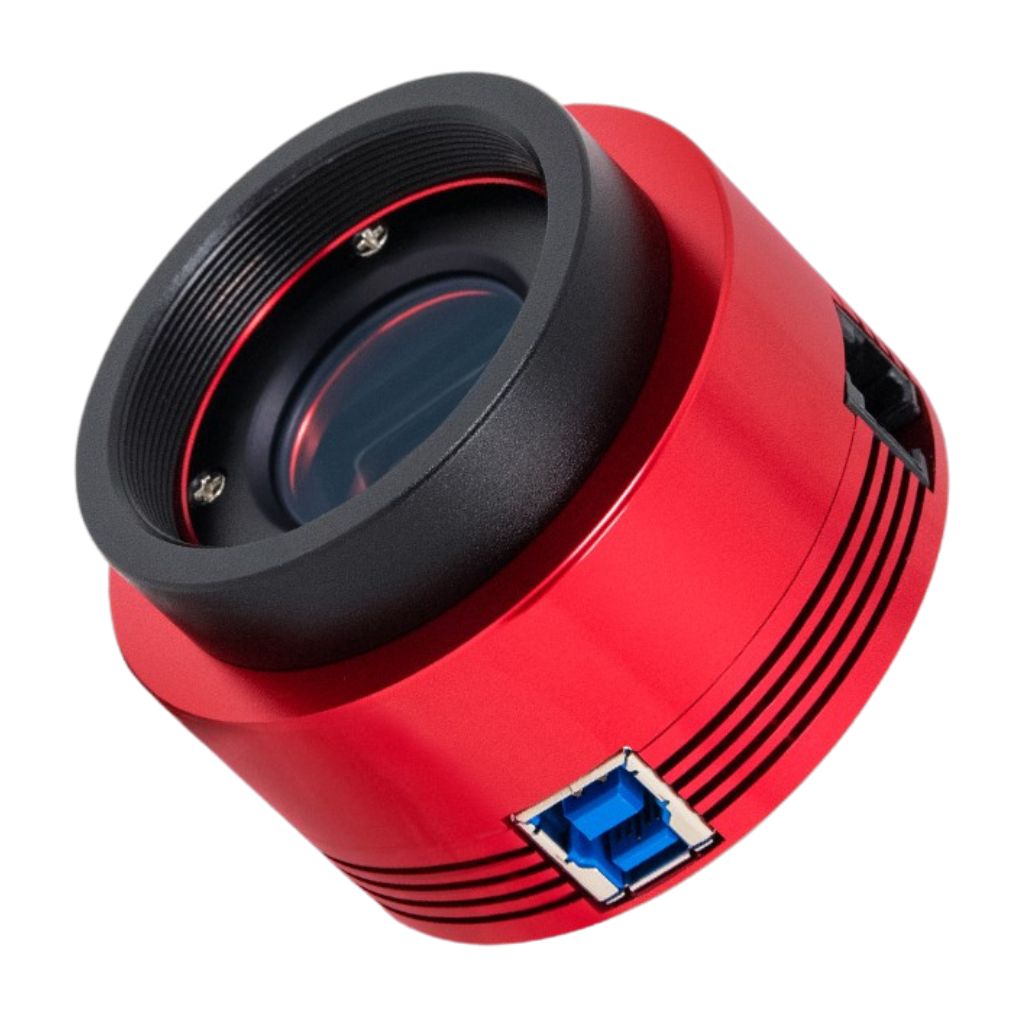
ZWO ASI2600MC Duo

The acclaimed 26-megapixel APS-C colour camera with a guide sensor built in — one body that images and guides at once, so you drop the guide scope, the off-axis guider and half the cabling.

91/ 100
Polaris Score
#1 of 6 cooled one-shot-colour cameras
See the breakdown ↓
Type
One-shot colour
Cooling
−35°C
Pixel Size
3.76µm
Read noise
1.0 – 3.3 e⁻
Resolution
26 MP · 6248×4176
Sensor
Sony IMX571 · APS-C
From$1,799

Lowest in 90 days

Price tracked by PolarisObserved 55 timesTracking since Aug 2026

Try in simulator →
Where to buy

Verified 10h ago · prices tracked daily

The frame it captures

Same camera. Different telescope. A completely different photograph.

A camera has no field of view of its own — the telescope in front of it decides everything. Pick a target and watch the same 26-megapixel frame become three different images.

RedCat 51
250 mm · f/4.9
FOV 5.4° × 3.6°
Framed with space to spare — the full disc and both companions.
Esprit 100ED
550 mm · f/5.5
FOV 2.4° × 1.6°
Fills the frame edge to edge — the classic full-galaxy portrait.
EdgeHD 8
2032 mm · f/10
FOV 0.66° × 0.44°
Overflows frame
Only the bright core fits; the spiral arms spill off the sensor.
Explore any telescope in the Simulator →
01What it's good at

What it's best at — and the trade-offs.

The same IMX571 APS-C sensor as the acclaimed 2600MC Pro, with ~91% QE, 1 e⁻ read noise and a 16-bit readout
Best at
✓The same IMX571 APS-C sensor as the acclaimed 2600MC Pro, with ~91% QE, 1 e⁻ read noise and a 16-bit readout
✓A built-in guide sensor images guide stars off the same light path, so you guide without a guide scope or off-axis guider
✓Deep, regulated cooling to 35°C below ambient makes dark frames repeatable and keeps thermal noise low on long subs
✓One-shot colour means every sub is already colour, the simplest path from the sky to a finished picture
Trade-offs
!The built-in guide sensor sees a small, fixed patch of sky, so on sparse fields a usable guide star is not always guaranteed
!As a one-shot-colour camera it resolves a little less fine detail than a mono sensor of the same chip
!The large APS-C sensor demands a well-corrected, flat field, an uncorrected or slow scope will show soft, elongated corners
02In plain English

The numbers, in plain English.

Sony IMX571 · 26 MP · 3.76µm · Two-stage TEC
Built-in guide sensorThe Duo's whole point
No separate guider
A second sensor images guide stars off the same light path, so you guide without a guide scope or off-axis guider, one camera, one cable, two jobs.
APS-C sensorFrames large objects
23.5 × 15.7 mm
A big field that captures whole nebulae and galaxies at once, but it demands a flat, well-corrected optical field to keep the corners sharp.
1.0 e⁻ read noiseFaint signal survives
Very low
The camera adds almost no noise of its own, so short subs still hold faint detail, a real advantage under light pollution.
3.76 µm pixelsWide compatibility
Balanced
A middle-ground pixel size that samples well across a broad range of focal lengths, from fast astrographs to longer scopes.
−35°C coolingRepeatable darks
Regulated TEC
Deep, set-point cooling drives down thermal noise and lets you reuse a dark-frame library night to night.
~91% peak QECatches faint light
Highly sensitive
The sensor converts nearly every photon that lands on it, so faint targets build signal fast.
03Typical targets

What it shines on.

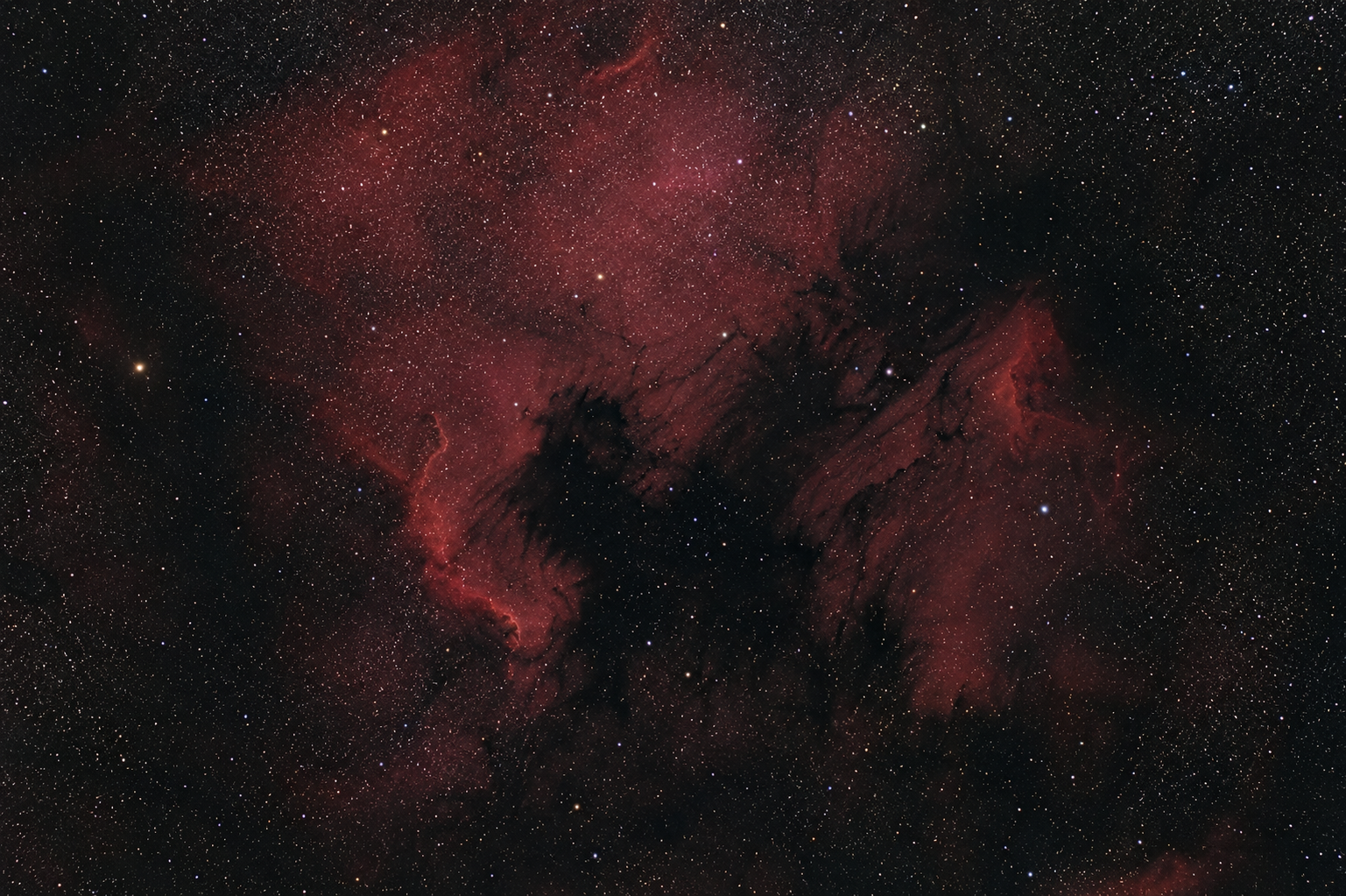
North America Nebula, Andromeda Galaxy (M31), Orion Nebula (M42), Rosette Nebula, Pleiades…
North America NebulaComes alive
North America Nebula
The large APS-C field frames the whole continent shape in a single exposure, and a dual-band filter makes the emission glow.
Andromeda Galaxy (M31)Comes alive
Andromeda Galaxy (M31)
Big enough to nearly fill the frame, with dust lanes and both companion galaxies riding along in the same field.
Orion Nebula (M42)Comes alive
Orion Nebula (M42)
The bright core and the sweeping wings together, the high dynamic range holding both the blazing Trapezium and the faint outer folds.
Excellent
Rosette Nebula
The full flower of gas fits the frame whole, ideal for one-shot colour with a light-pollution or dual-band filter.
Pleiades (M45)Excellent
Pleiades (M45)
The whole cluster with room for the faint blue reflection nebulosity that only long, guided exposures reveal.
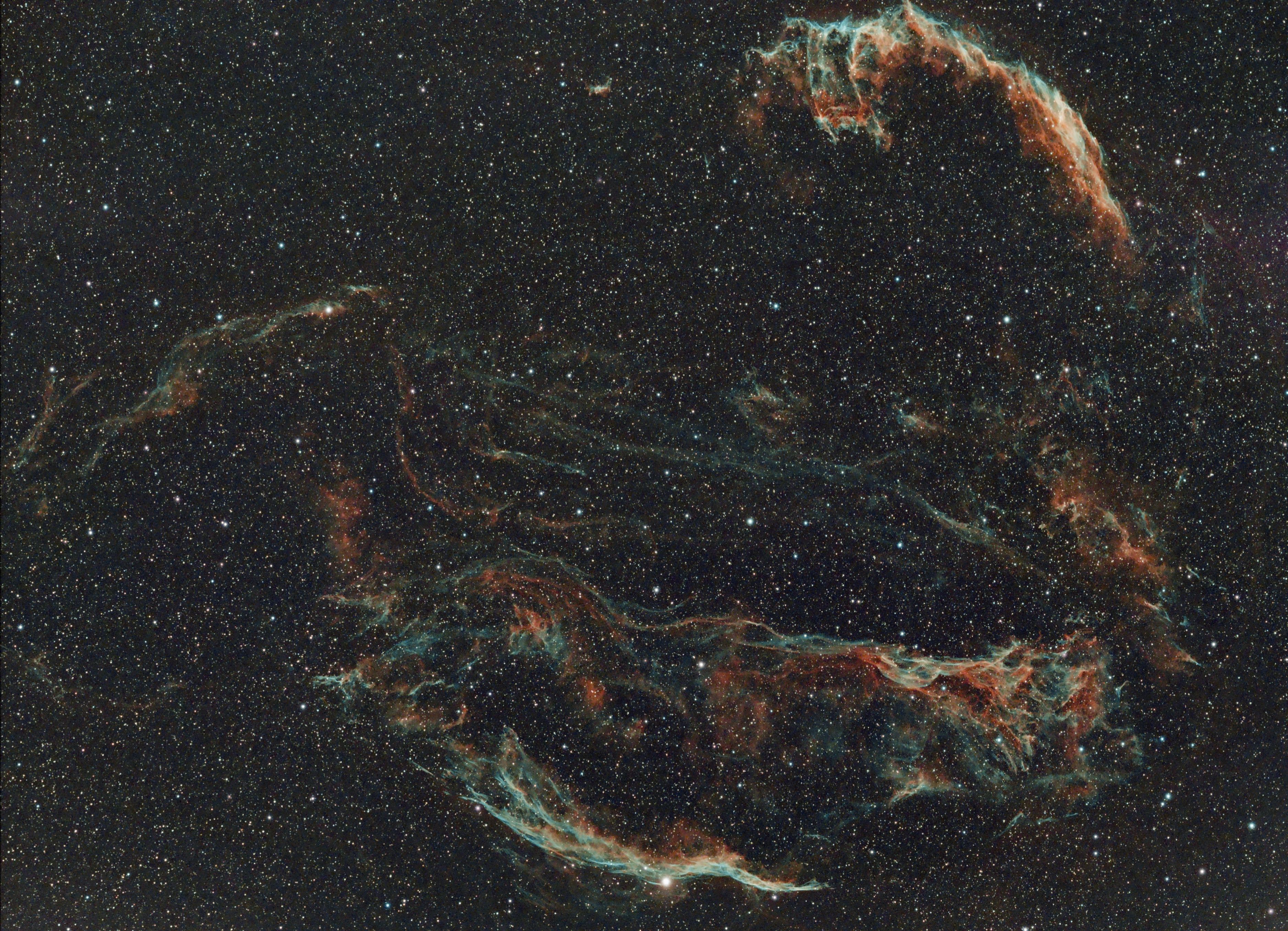
Veil NebulaExcellent
Veil Nebula
The delicate supernova filaments stretch across the wide field, guided subs keeping every thread sharp.
04Build your imaging rig

Everything you'd actually buy.

The telescope · Pair it · Filter it
The telescope
What it images through
Fast apo astrograph · f/4–f/6
Its natural partner, a flat, well-corrected APS-C field for whole-nebula framing
Small refractor · 60–80 mm
Wide-field colour on large targets, an easy, portable imaging pairing
8-inch f/4 imaging Newtonian
More aperture and reach with a coma corrector to flatten the fast field
Pair it
What completes the rig
A tracking EQ mount
The guided long exposures the Duo is built for need a solid equatorial mount
No guide scope needed
The built-in guider replaces the usual guide scope and second camera outright
Field flattener / reducer
Matches the scope to the APS-C field so stars stay round into the corners
Filter it
What transforms the view
Dual-band (Ha/OIII) filter
The key filter for one-shot colour on emission nebulae from the city
Light-pollution filter
Lifts broadband targets like galaxies out of a bright suburban sky
2-inch filter drawer
Swap filters without breaking the imaging train or shifting focus
05The Polaris Score

How it scores, and why.

91/100 · #1 of 6 cooled one-shot-colour cameras
91/ 100
ZWO ASI2600MC Duo
#1 of 6 cooled one-shot-colour cameras

It pairs the best-loved APS-C colour sensor in the hobby with a built-in guider, removing hardware and failure points without giving up image quality. It loses a little to a pure imaging camera only on the modest price premium the guide sensor adds.

Image quality
92
Low-light sensitivity
90
Ease of use
90
Value
87

Polaris weighs how well the camera does the job it was designed for — image quality, sensitivity, versatility and value — never list price or brand.

06Who it's for

An honest fit check.

Deep-sky imagers who want a cooled APS-C colour camera and hate wrestling with a separate…
Buy it if you
✓Deep-sky imagers who want a cooled APS-C colour camera and hate wrestling with a separate guide scope
✓People building a compact or travel rig where every removed component and cable matters
✓Beginners stepping up from a DSLR who want a capable, guided setup without assembling a guiding chain themselves
✓Anyone imaging at longer focal lengths where reliable guiding is essential
Look elsewhere if you
!Mono imagers chasing the deepest narrowband detail, who want a filter wheel and a mono sensor instead
!Planetary and lunar imagers, who are better served by a small, fast, uncooled high-frame-rate camera
!Imagers who already own a well-sorted guide scope and camera and do not need the integrated guider
!Anyone on the tightest budget, since the built-in guide sensor adds a small premium over the plain 2600MC Pro
07The numbers

Full specifications.

28 measured and stated values
Sensor
ModelSony IMX571
TypeCMOS · APS-C
Diagonal28.3 mm
Resolution6248 × 4176
Megapixels26 MP
Pixel Size3.76µm
Bit depth16-bit ADC
Noise & sensitivity
Read noise1.0 – 3.3 e⁻
Full well50,000 e⁻
Peak QE~91%
Dynamic range14 stops
Cooling
Cooling typeTwo-stage TEC
Cooling−35°C
Anti-dew heaterYes
Regulation±0.1°C setpoint
Connectivity & fit
InterfaceUSB 3.0
Onboard buffer512 MB DDR3
Backfocus17.5mm
ThreadM42 / M48
Weight0.7 kg
More
cooledtrue
guide sensorIntegrated · shares the imaging light path
guidingBuilt-in guide sensor (no guide scope / OAG)
Sensor Height15.7mm
Sensor Width23.5mm
Editor’s Take

The 2600MC Pro is the camera most imagers should own; the Duo is that camera with the single most annoying part of a deep-sky rig, guiding, folded inside. No guide scope to align, no off-axis prism to fiddle with, one USB cable doing two jobs. For a compact or travel setup it is close to the ideal one-and-done colour camera.

— The Skynocular verdict