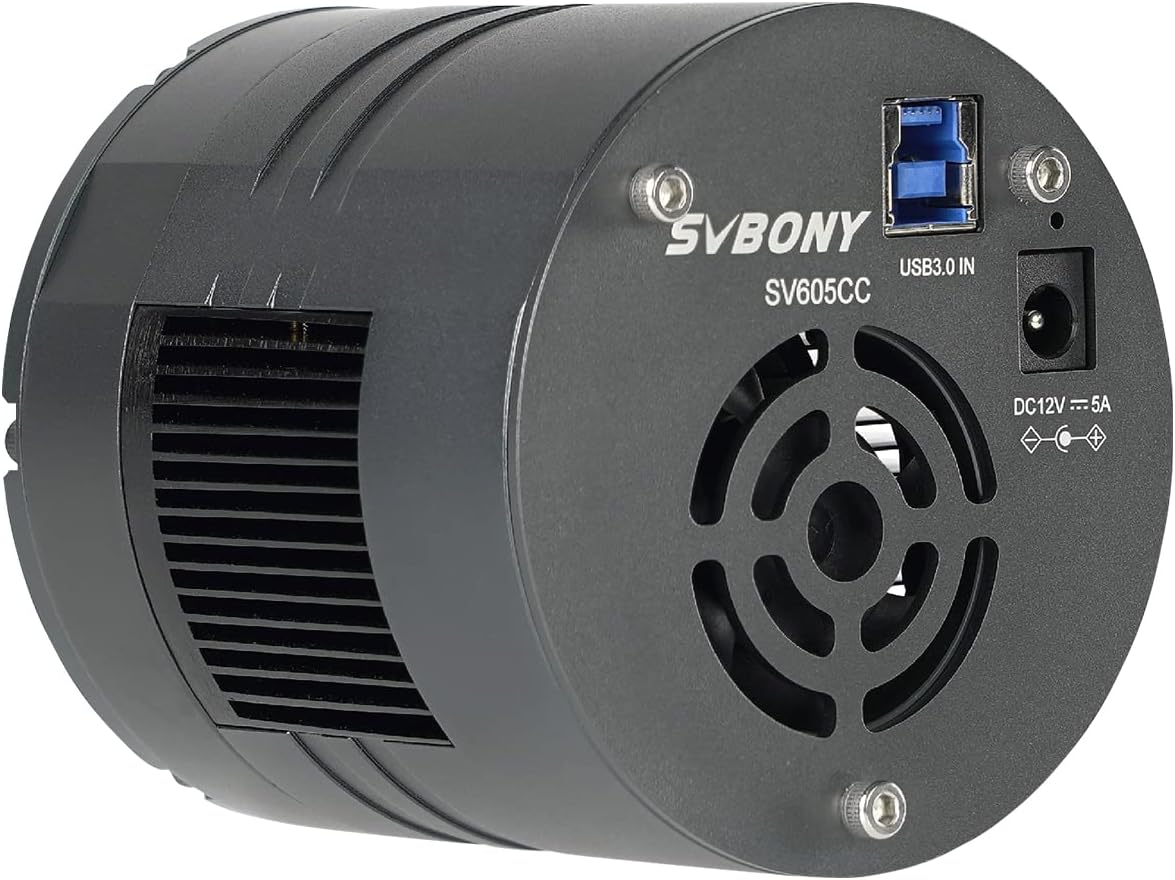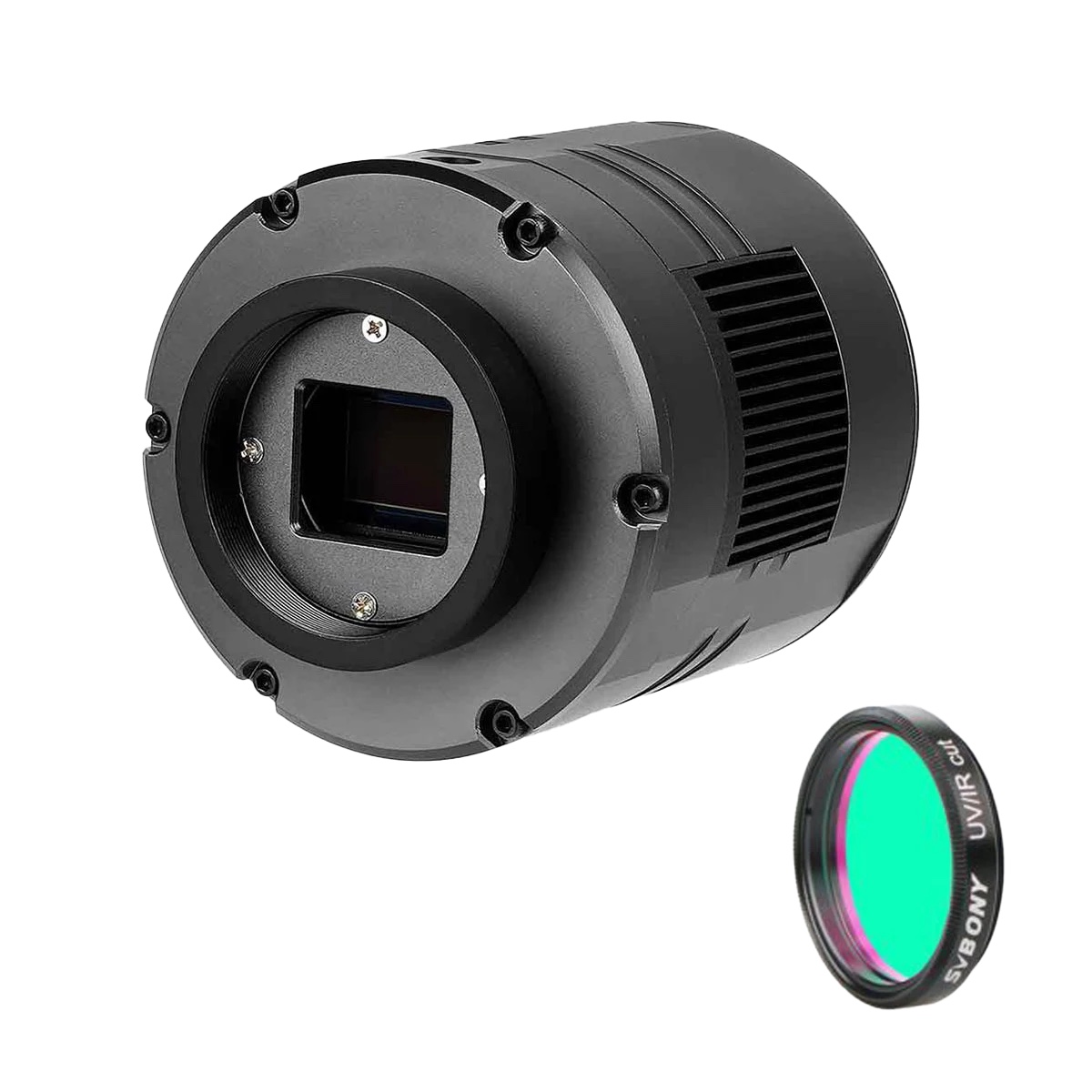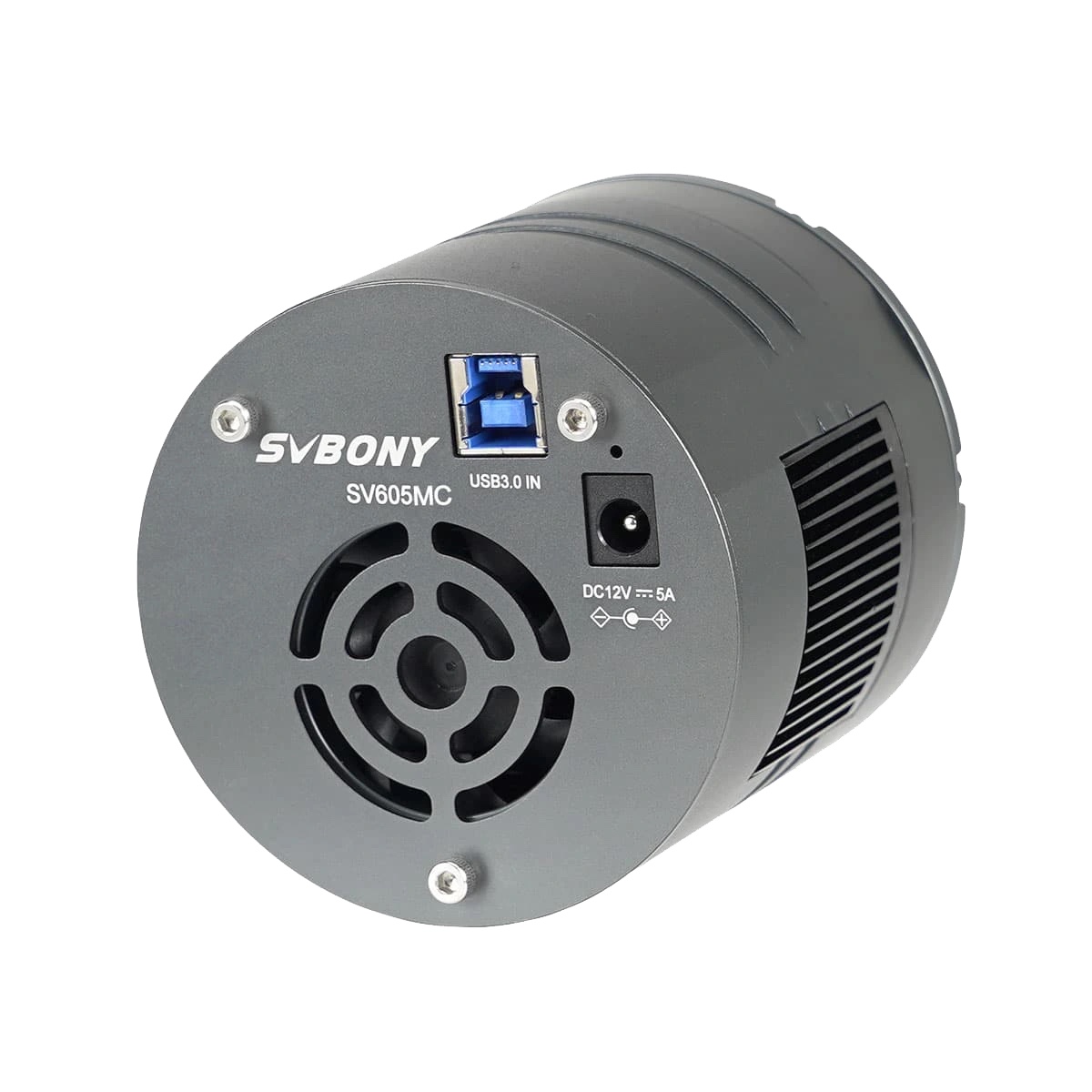
SVBony SV605MC
The monochrome twin of the SV605CC, and a different proposition entirely. Roughly 91 percent quantum efficiency with no Bayer filter over the pixels, in exchange for buying filters and shooting everything three times.
A dedicated deep-sky monochrome camera. The square 1 inch sensor suits medium targets and planetary nebulae, and at 20 frames per second it is not a planetary instrument.
Lowest in 90 days
Price tracked by PolarisObserved 44 timesTracking since Sep 2026
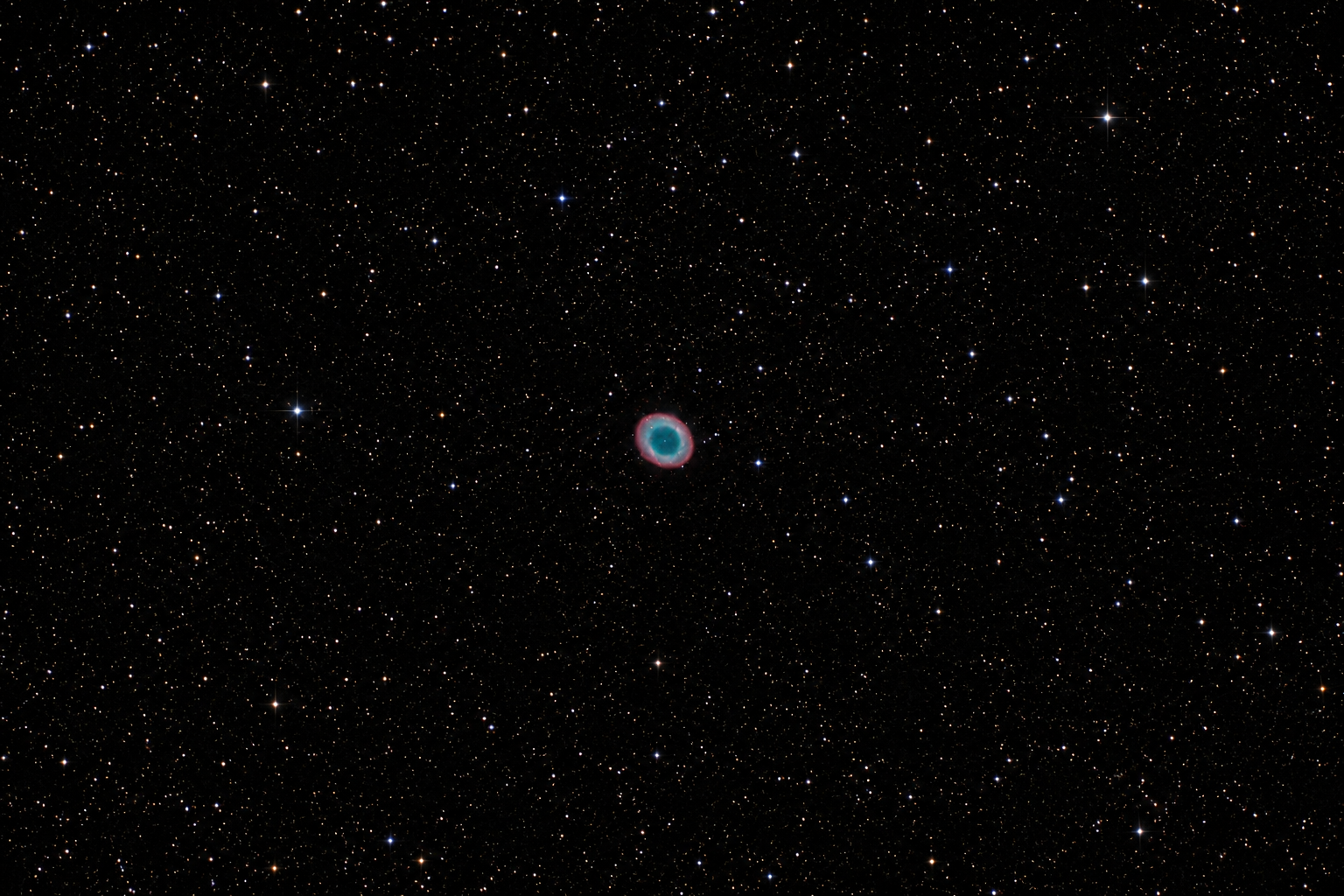
Same camera. Different telescope. A completely different photograph.
A camera has no field of view of its own — the telescope in front of it decides everything. Pick a target and watch the same 9.1-megapixel frame become three different images.
01What it's good atWhat it's best at — and the trade-offs.
Removing the Bayer colour filter array lifts effective sensitivity substantially, because every pixel now records every photon that reaches it rather than…
What it's best at — and the trade-offs.
02In plain EnglishThe numbers, in plain English.
Sony IMX533 · 9.1MP · 3.76µm · Two-stage TEC
The numbers, in plain English.
03Typical targetsWhat it shines on.
The Ring Nebula (M57), The Eagle Nebula (M16), The Dumbbell Nebula (M27), The Whirlpool…
What it shines on.
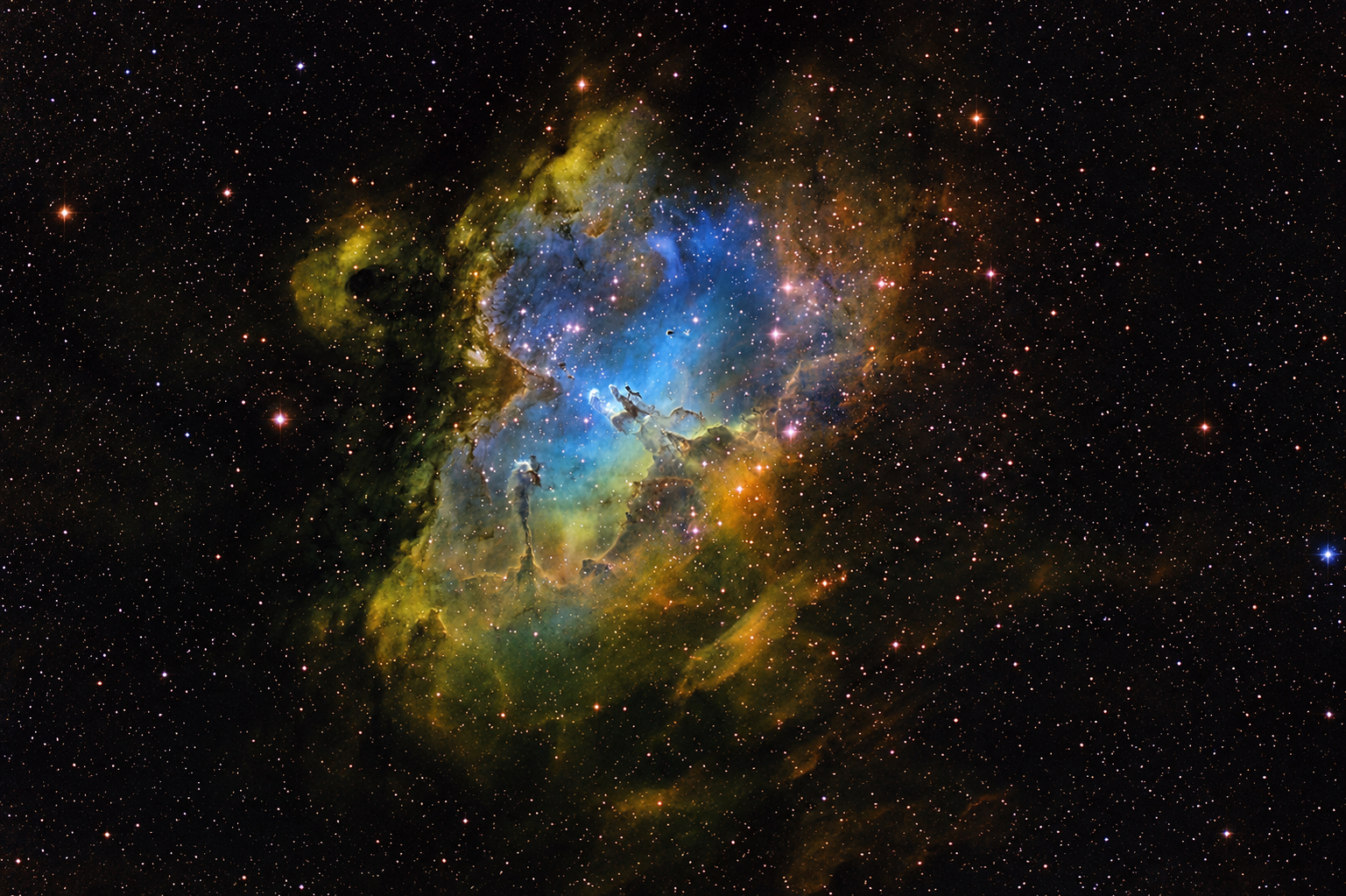
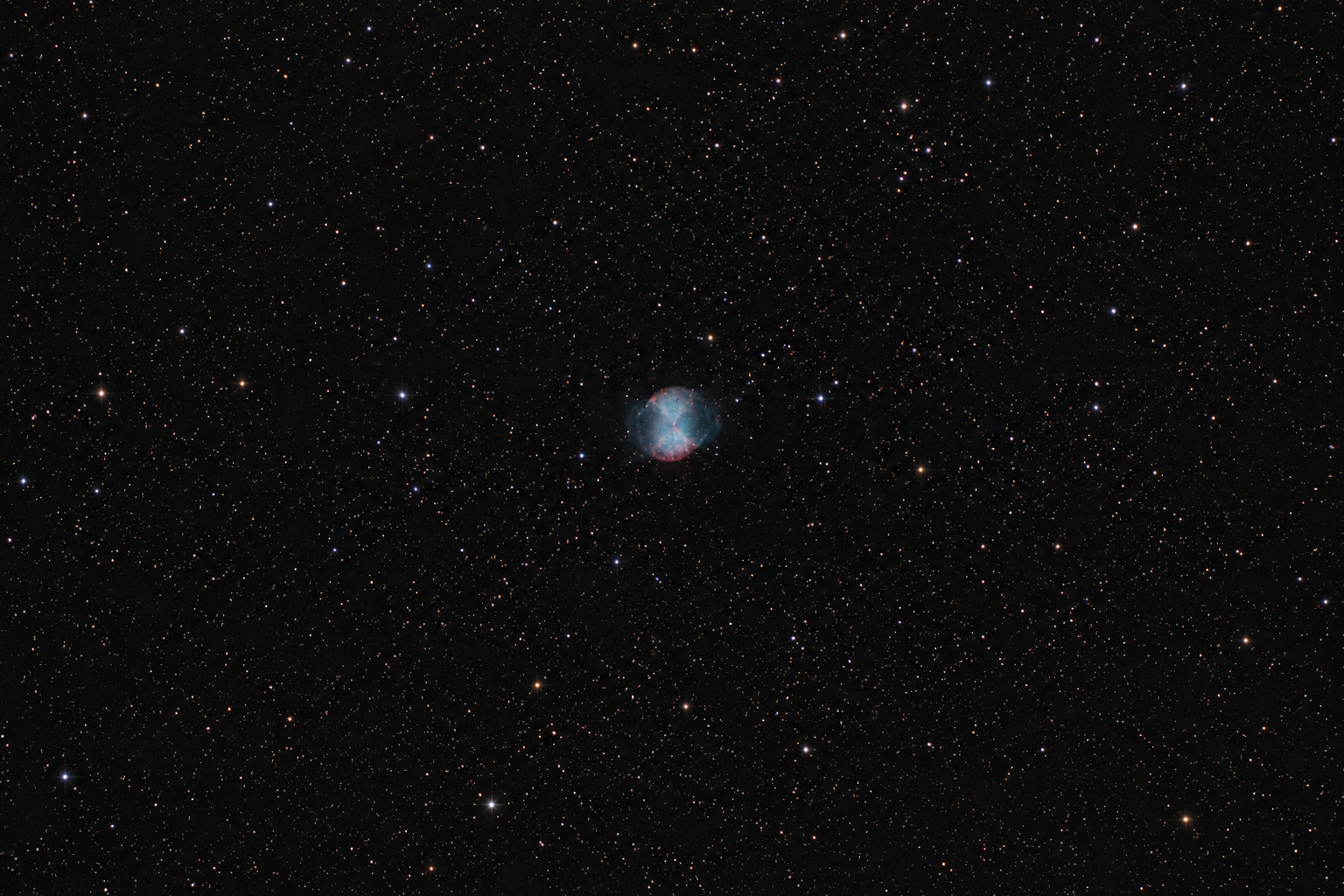
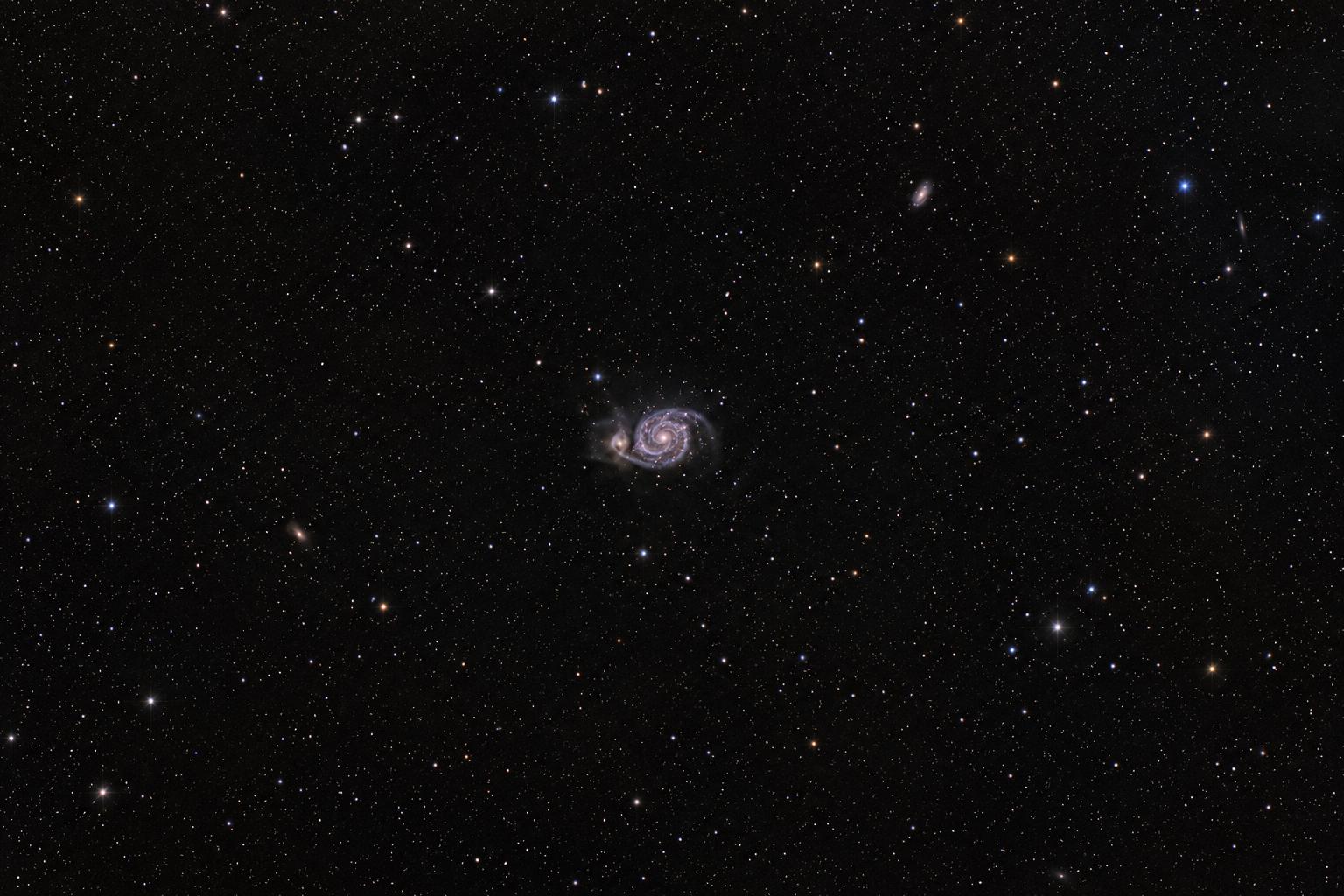
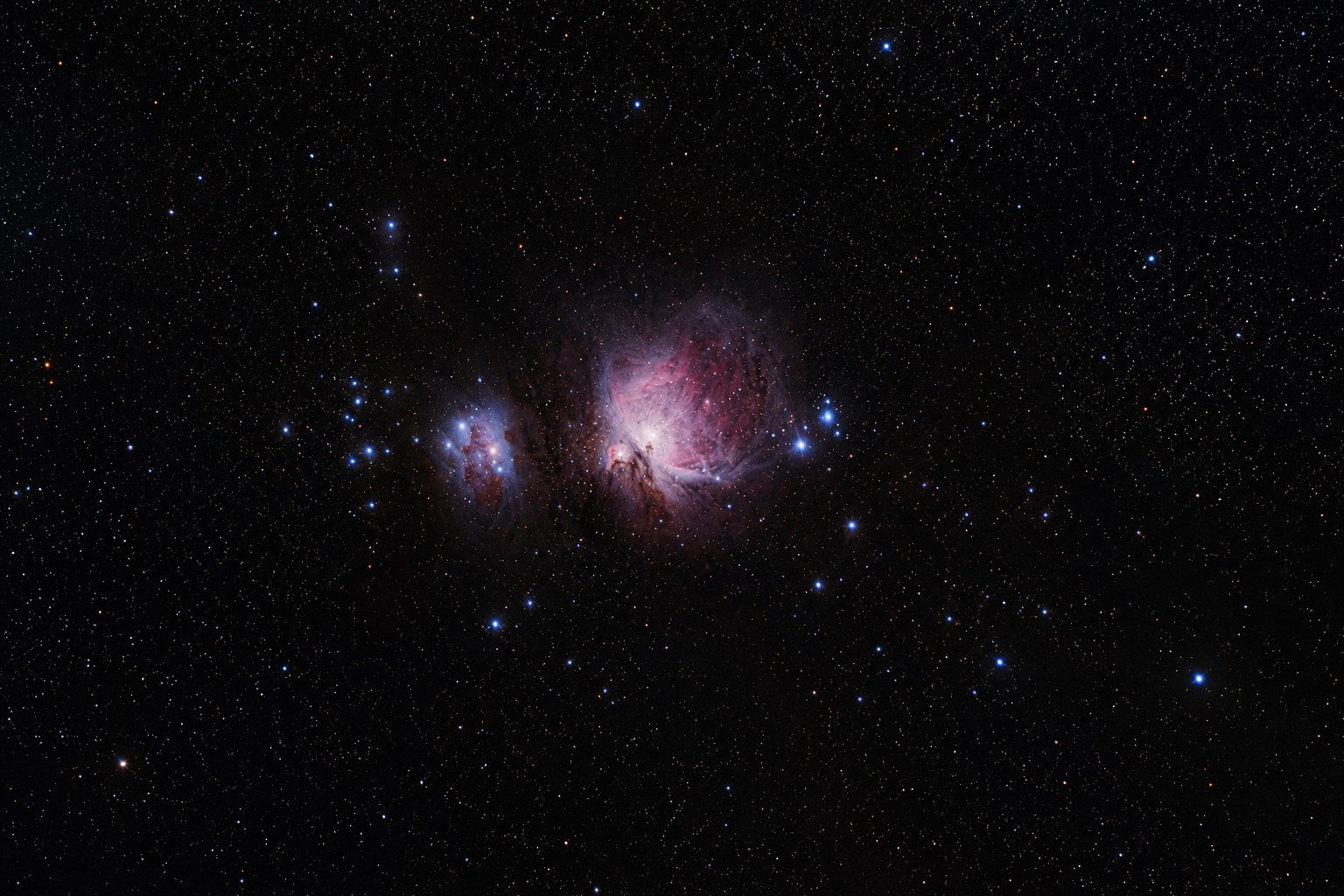
04Build your imaging rigEverything you'd actually buy.
Capture · Filter it · Track
Everything you'd actually buy.
05The Polaris ScoreHow it scores, and why.
84/100 · #3 of 6 cooled monochrome deep-sky cameras
How it scores, and why.
Judged as a monochrome deep-sky camera it is close to the practical ceiling for its sensor: high quantum efficiency, no amp glow, deep enough wells and a well behaved read noise curve. The score is held down by what monochrome demands of the user, since a filter wheel, filters and three times the imaging time are all required before it produces a single colour picture.
Polaris weighs how well the camera does the job it was designed for — image quality, sensitivity, versatility and value — never list price or brand.
06Who it's forAn honest fit check.
An imager who has outgrown one-shot colour and accepted that the next real improvement…
An honest fit check.
07The numbersFull specifications.
22 measured and stated values
Full specifications.
The honest advice about monochrome is that almost nobody should buy it first. It is not a better camera than its colour twin, it is a more demanding one, and it repays the demand only if you enjoy the process. What it genuinely unlocks is narrowband imaging from a bad sky, and that is not a marginal gain: it is the difference between owning a hobby in a city and not. If you have looked at your one-shot colour results, understood exactly why the sky gradient is winning, and concluded that filters are the answer, this is a well-judged camera to answer it with. If you are still hoping the next camera will fix your images, it will not, and the colour version will make you happier.