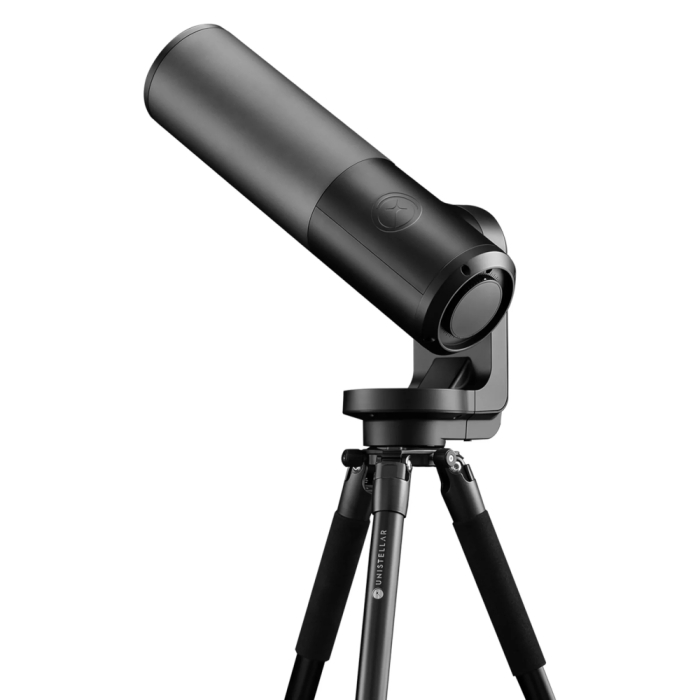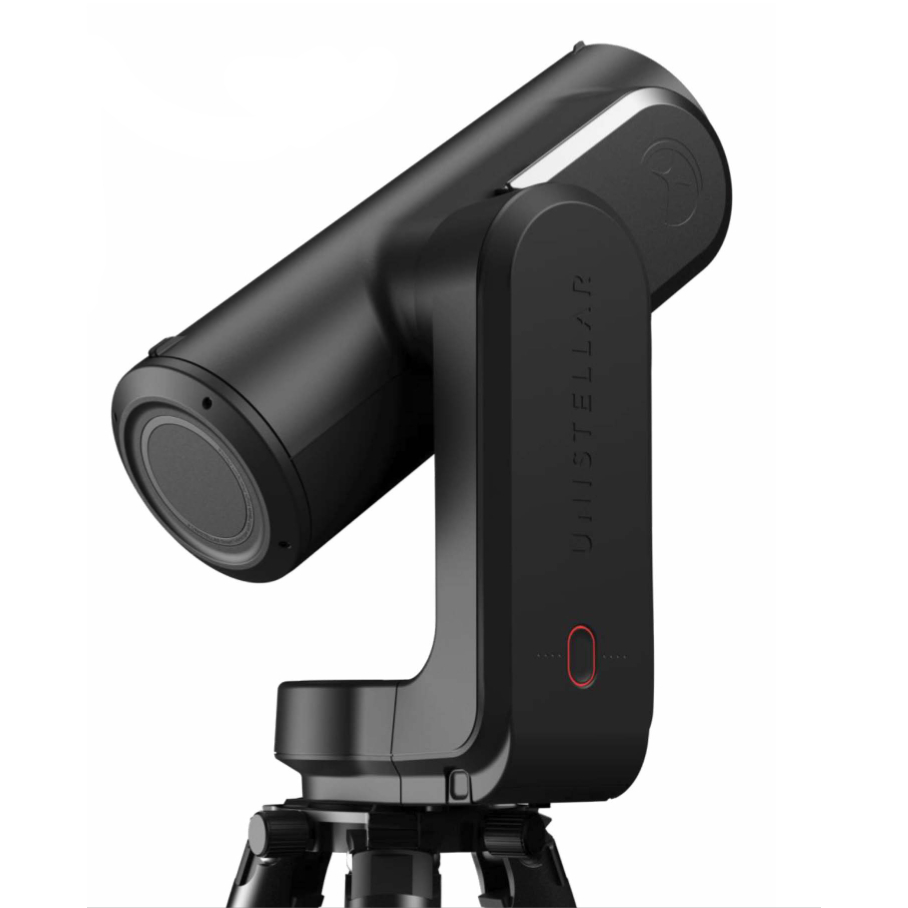
Unistellar Odyssey — image 1
Unistellar

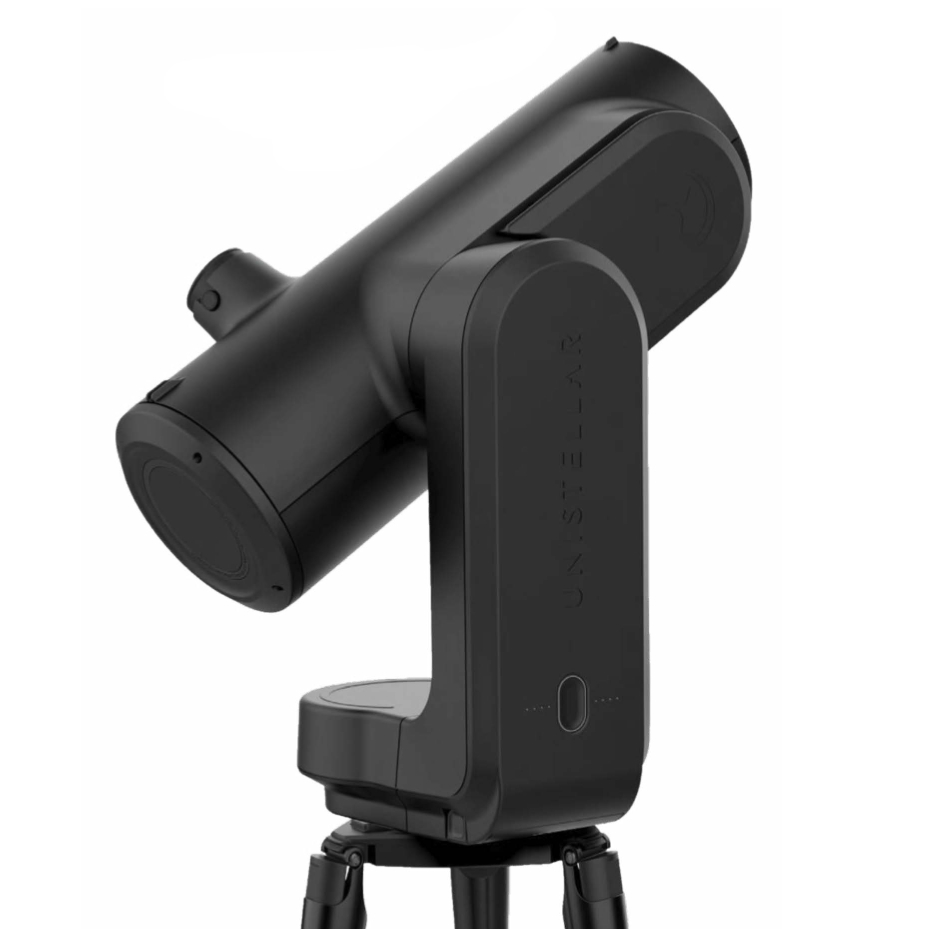
Unistellar Odyssey

The best grab-and-go smart telescope for city dwellers who want galaxies on a screen tonight, but its 85mm mirror and closed software mean you are paying flagship money for convenience, not aperture.

71/ 100
Polaris Score
#2 of 5 premium smart telescopes
See the breakdown ↓
Aperture
85mm
Focal Length
320mm
Focal Ratio
f/3.9
Mount Type
Motorized Alt-Azimuth
Optical Design
Newtonian reflector
Sensor Height
3.13mm
From$2,499

Lowest in 90 daysLowest ever tracked

Price tracked by PolarisObserved 65 timesTracking since Mar 2026

See captured results →
Where to buy

Verified 14h ago · prices tracked daily
What it's built forOpen these in the simulator →

This telescope was built to capture, not to squint.

Point it, tap a target, and it stacks a live image on your phone — color and faint detail no eyepiece will show you. The trade is simple: the experience lives on a screen, not at an eyepiece.

Fully automated captureStacks live in the app
The view people remember

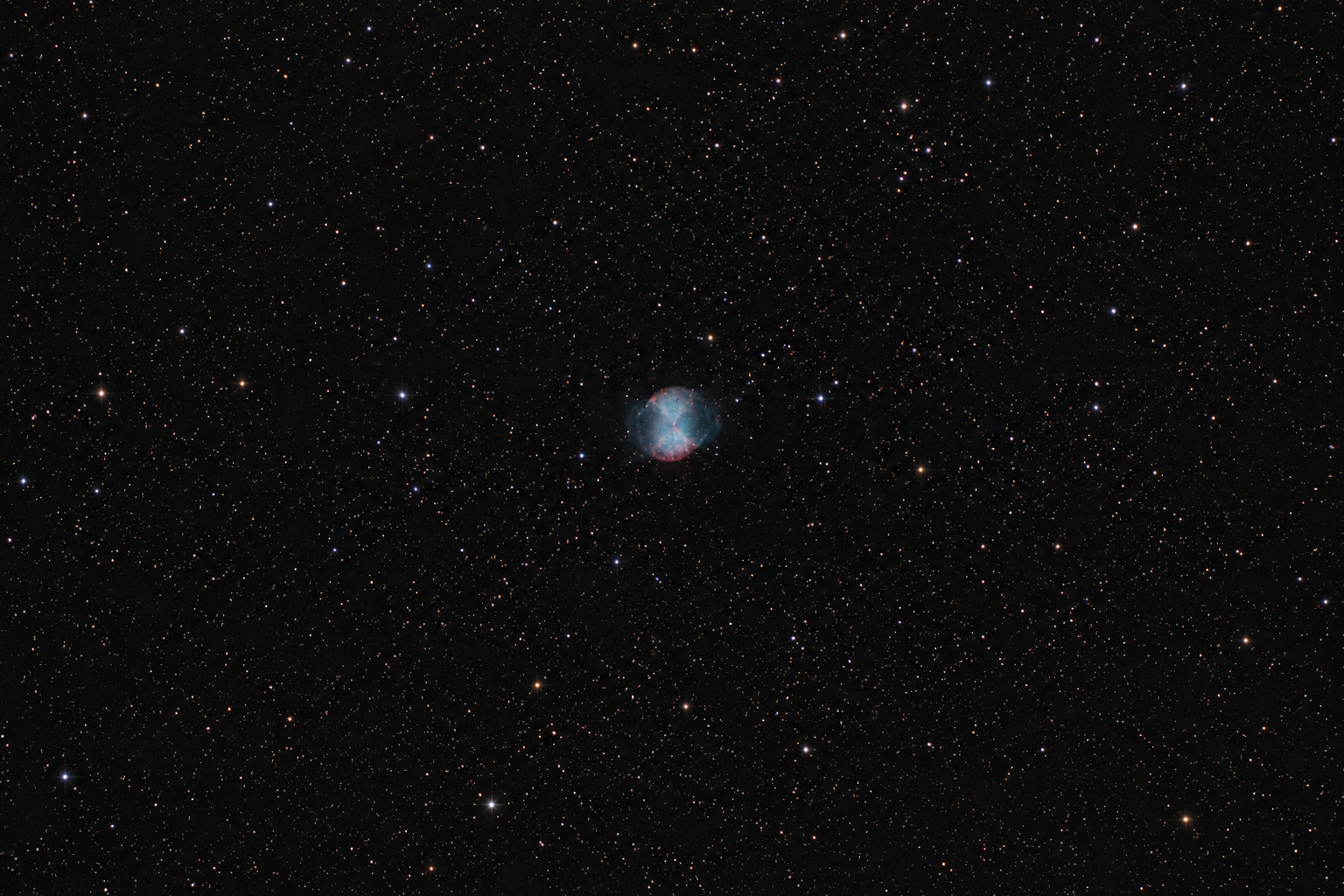
The Dumbbell, an hourglass of gas.

The brightest planetary nebula in the sky — a fat, glowing apple-core shape that takes magnification well and only gets richer with aperture.

See The Dumbbell through this telescope →
01What it's good at

What it's best at — and the trade-offs.

Onboard image stacking and Deep Dark Technology meaningfully cut light pollution, revealing targets that a same-aperture conventional scope shows as gray…
Best at
✓Onboard image stacking and Deep Dark Technology meaningfully cut light pollution, revealing targets that a same-aperture conventional scope shows as gray smudges.
✓Fully automated GoTo with plate-solving means it finds and centers any of 5,000+ catalog objects without user alignment.
✓At 4kg for the optical tube plus a 2.5kg tripod, it is genuinely one-bag portable.
✓Live RAW/FITS export lets more advanced users take the captured frames into their own processing later.
✓Five-hour battery and 64GB onboard storage cover a full observing session untethered.
Trade-offs
!85mm of aperture is the hard physical ceiling: no software trick adds light-gathering, so faint or small targets stay dim.
!It is an electronically-assisted (EAA) experience, not visual; the base model has no true eyepiece.
!Closed ecosystem: you cannot change optics, sensor, or mount, and you are dependent on Unistellar's app and servers.
!Short f/3.9 focal length gives wide fields but low magnification, so planets remain tiny.
!Premium price for the aperture: you are paying for automation and software, not glass.
02In plain English

What These Numbers Mean

85mm · f/3.9 · 320mm FL · Motorized Alt-Azimuth
Aperture
85 mm
Three and a third inches, smaller than the eVscope line but paired with faster optics and newer processing. It handles bright nebulae, clusters and larger galaxies well, while the faintest targets need more patience.
Focal length
320 mm
Short and wide, which frames large nebulae and clusters generously and makes the system forgiving about pointing accuracy. It is a wide-field imager rather than a high-resolution one.
Focal ratio
f/3.9
Fast, so short frames carry usable signal and the live image builds quickly. Speed is doing the work that aperture does in a traditional telescope.
Optical design
Sealed smart reflector with non-focal design
The optics are sealed and require no focusing at all, which removes the one adjustment most beginners get wrong. There is no eyepiece: you watch the image build on a phone or tablet.
Weight
4 kg complete
About 9 lb including the mount, less than half the eVscope 2. That is the difference between a telescope you take on a trip and one you take to the garden.
Mount
Integrated alt-azimuth GoTo
Self-aligning and self-tracking with no setup routine, controlled entirely from the app. Alt-azimuth tracking means stacked short frames rather than long exposures.
03The Polaris Score

How it scores, and why.

71/100 · #2 of 5 premium smart telescopes
71/ 100
Unistellar Odyssey
#2 of 5 premium smart telescopes
Performance
65
Ease of use
95
Portability
90
Upgrade potential
30

Polaris weighs optical capability, how easy the scope is to live with, how portable it is, and how far it takes you before you outgrow it — not list price or brand.

04Who it's for

An honest fit check.

City and suburban observers fighting heavy light pollution, where the Odyssey's onboard…
Buy it if you
✓City and suburban observers fighting heavy light pollution, where the Odyssey's onboard stacking pulls faint galaxies and nebulae out of glowing skies.
✓Complete beginners who want results in under a minute with zero alignment, collimation, or star-hopping.
✓Travelers and apartment dwellers who need a telescope that fits in a daypack and sets up in seconds.
✓Outreach hosts and families who want everyone to share live views on phones and tablets simultaneously.
Look elsewhere if you
!Visual purists who want photons hitting their eye through a glass eyepiece, since the base Odyssey is screen-only (the Pro adds the Nikon micro-OLED eyepiece).
!Planetary detail hunters, since 85mm of aperture and a 320mm focal length cannot resolve fine features on Jupiter, Saturn, or Mars.
!Astrophotographers who want to process their own data freely or swap cameras, filters, and optics, because this is a sealed system.
!Anyone on a budget, as 130mm+ smart scopes and far larger Dobsonians cost less and gather more light.
05The numbers

Full specifications.

8 measured and stated values
Optics
Optical DesignNewtonian reflector
Aperture85mm
Focal Length320mm
Focal Ratiof/3.9
Mount & drive
Mount TypeMotorized Alt-Azimuth
Physical
Weight4 kg
Imaging
Sensor Width4.19mm
Sensor Height3.13mm
Editor’s Take

The Odyssey is Unistellar's most compact "smart telescope," an automated camera-based scope with no eyepiece, driven from your phone. It finds and tracks its own targets and stacks short exposures live, so within a minute or two a faint smudge resolves into a bright, colourful galaxy (electronically-assisted astronomy), punching through light pollution that would defeat a normal eyepiece. Its folded optics need no mirror alignment, and setup is essentially "unfold, tap a target." Effortless, shareable deep-sky views from anywhere.

— The Skynocular verdict