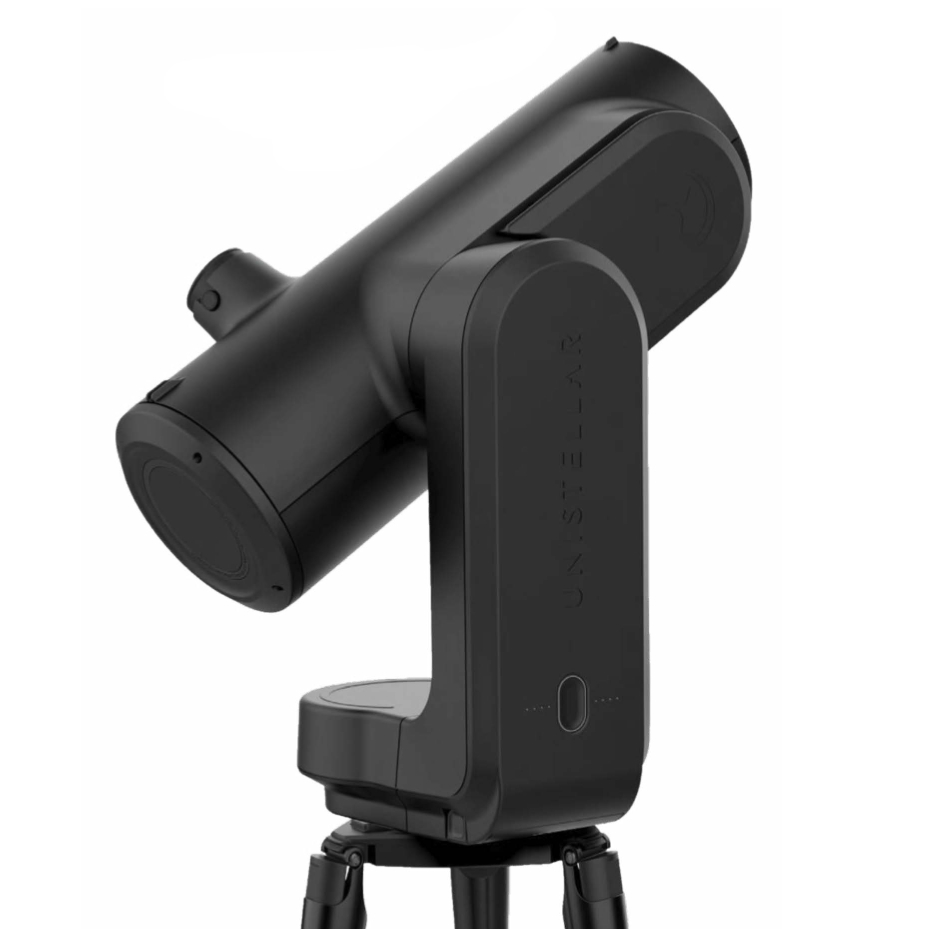
Unistellar Odyssey Pro — image 1
Unistellar

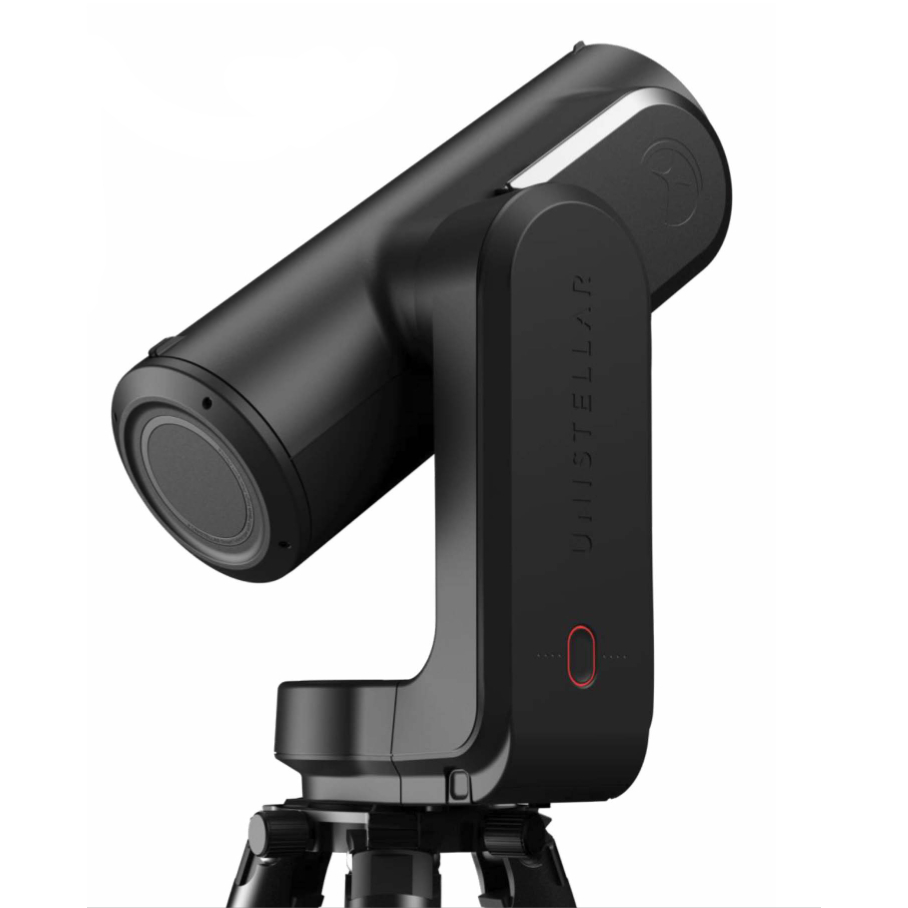
Unistellar Odyssey Pro

The best smart telescope for people who refuse to give up the eyepiece, adding a Nikon micro-OLED viewfinder that restores the look-through ritual. But you pay about $2,000 over the standard Odyssey for that viewfinder alone, on identical 85mm optics.

70/ 100
Polaris Score
#2 of 5 premium smart telescopes with eyepieces
See the breakdown ↓
Aperture
85mm
Focal Length
320mm
Focal Ratio
f/3.9
Mount Type
Motorized Alt-Azimuth
Optical Design
Newtonian reflector
Sensor Height
3.13mm
From$4,499

Lowest in 90 daysLowest ever tracked

Price tracked by PolarisObserved 65 timesTracking since Mar 2026

See captured results →
Where to buy

Verified 14h ago · prices tracked daily
What it's built forOpen these in the simulator →

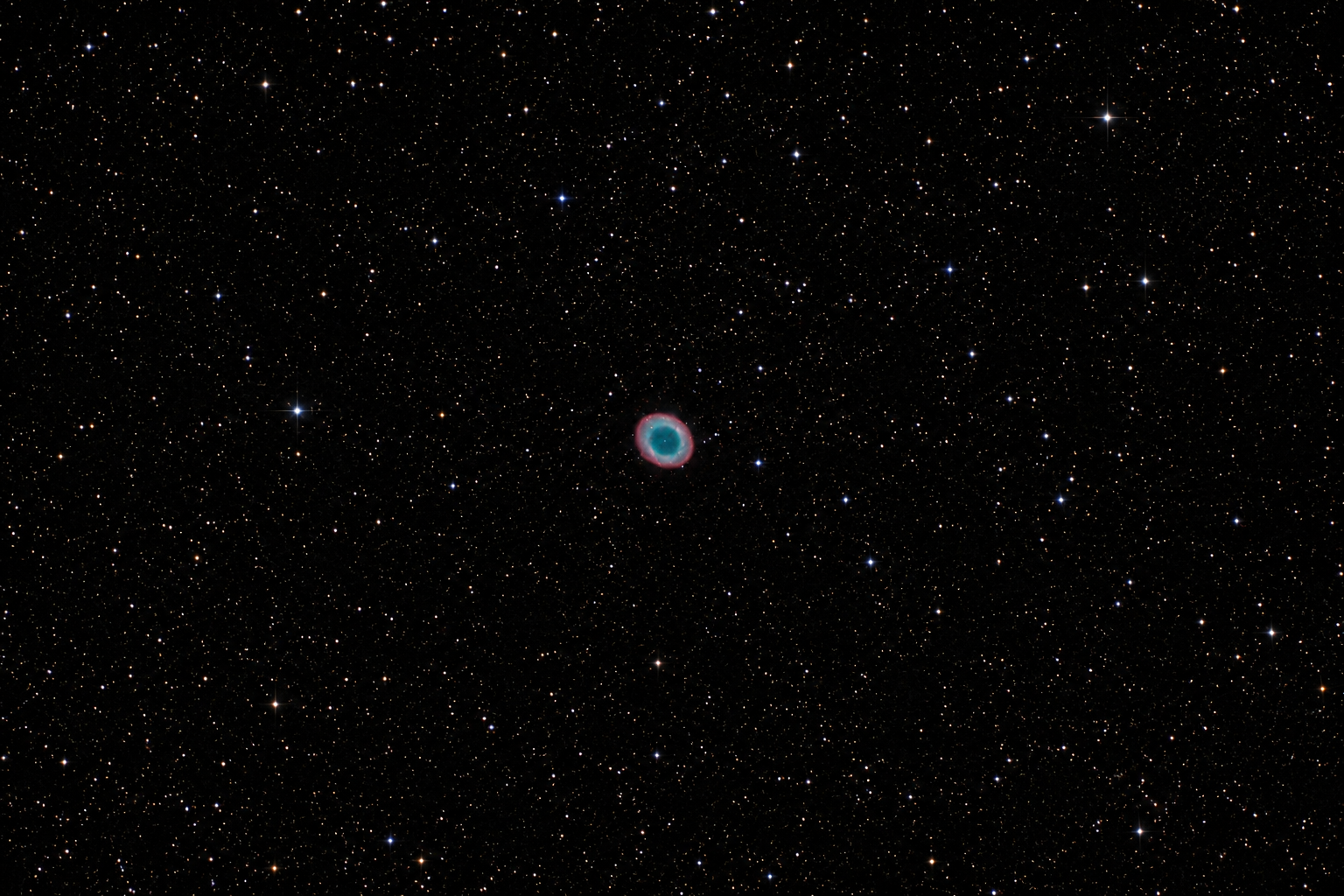
This telescope was built to capture, not to squint.

Point it, tap a target, and it stacks a live image on your phone — color and faint detail no eyepiece will show you. The trade is simple: the experience lives on a screen, not at an eyepiece.

Fully automated captureStacks live in the app
The view people remember

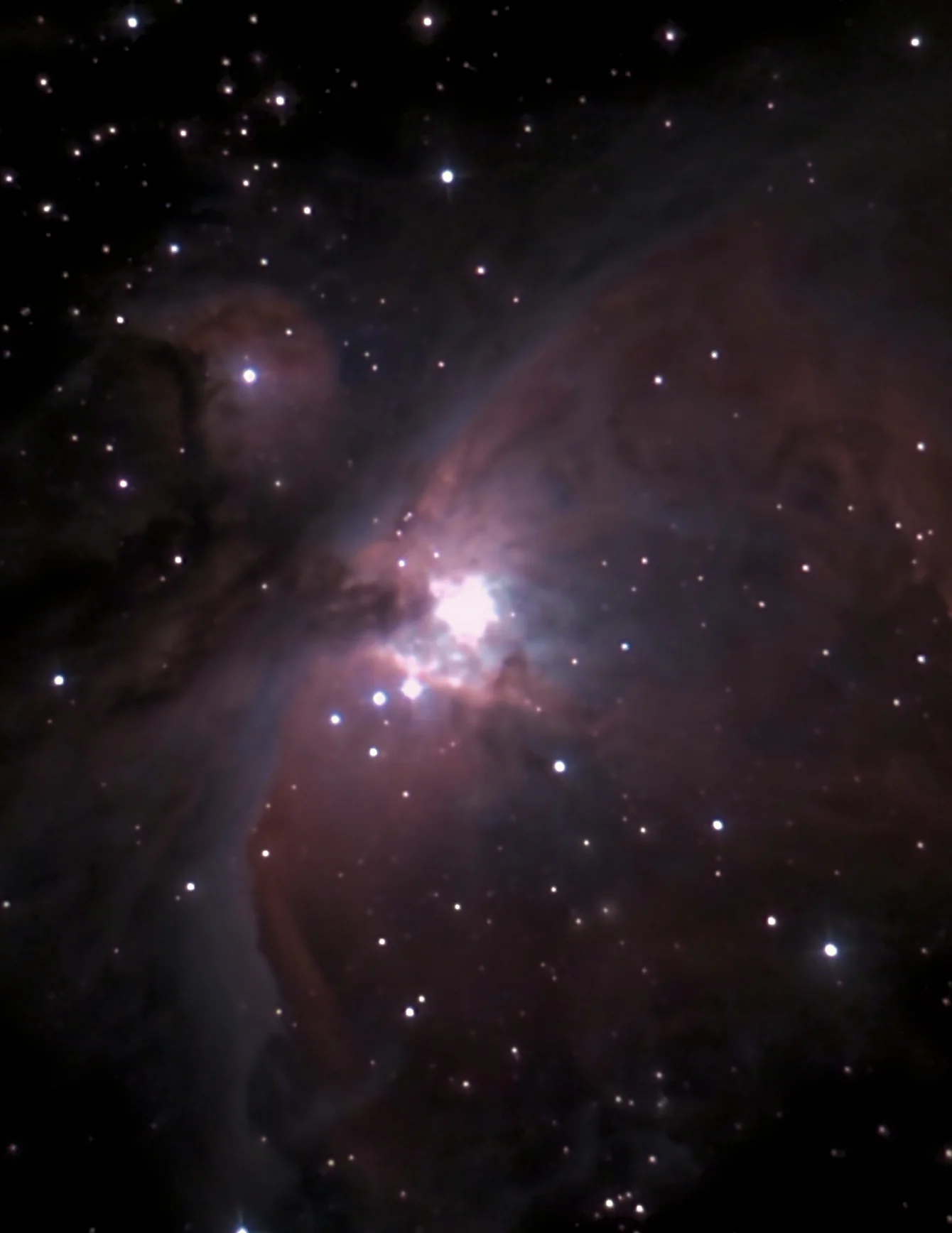
The Orion Nebula, wings unfolded.

The four stars of the Trapezium sit inside folded sheets of glowing gas — the closest stellar nursery to us, bright enough to show real structure even from the suburbs.

See Orion Nebula through this telescope →
01What it's good at

What it's best at — and the trade-offs.

The Nikon-developed micro-OLED eyepiece is the genuine differentiator: it brings back the eye-to-glass experience that screen-only smart scopes lose.
Best at
✓The Nikon-developed micro-OLED eyepiece is the genuine differentiator: it brings back the eye-to-glass experience that screen-only smart scopes lose.
✓Onboard stacking and Deep Dark Technology cut light pollution, surfacing galaxies and nebulae that look like gray smudges in a conventional 85mm.
✓Fully automated GoTo with plate-solving finds and centers any of 5,000+ catalog objects with no user alignment.
✓At 4kg for the tube plus a 2.5kg tripod, it is genuinely one-bag portable.
✓Live RAW/FITS export lets more advanced users take captured frames into their own processing later.
Trade-offs
!85mm of aperture is a hard physical ceiling: no eyepiece or software adds light-gathering, so faint targets stay dim.
!The roughly $2,000 premium over the base Odyssey buys only the eyepiece, not better optics, mount, or sensor.
!It is an electronically-assisted (EAA) view; even the eyepiece is a screen, not direct optical light.
!Closed ecosystem: you cannot change optics, sensor, or mount, and you depend on Unistellar's app and servers.
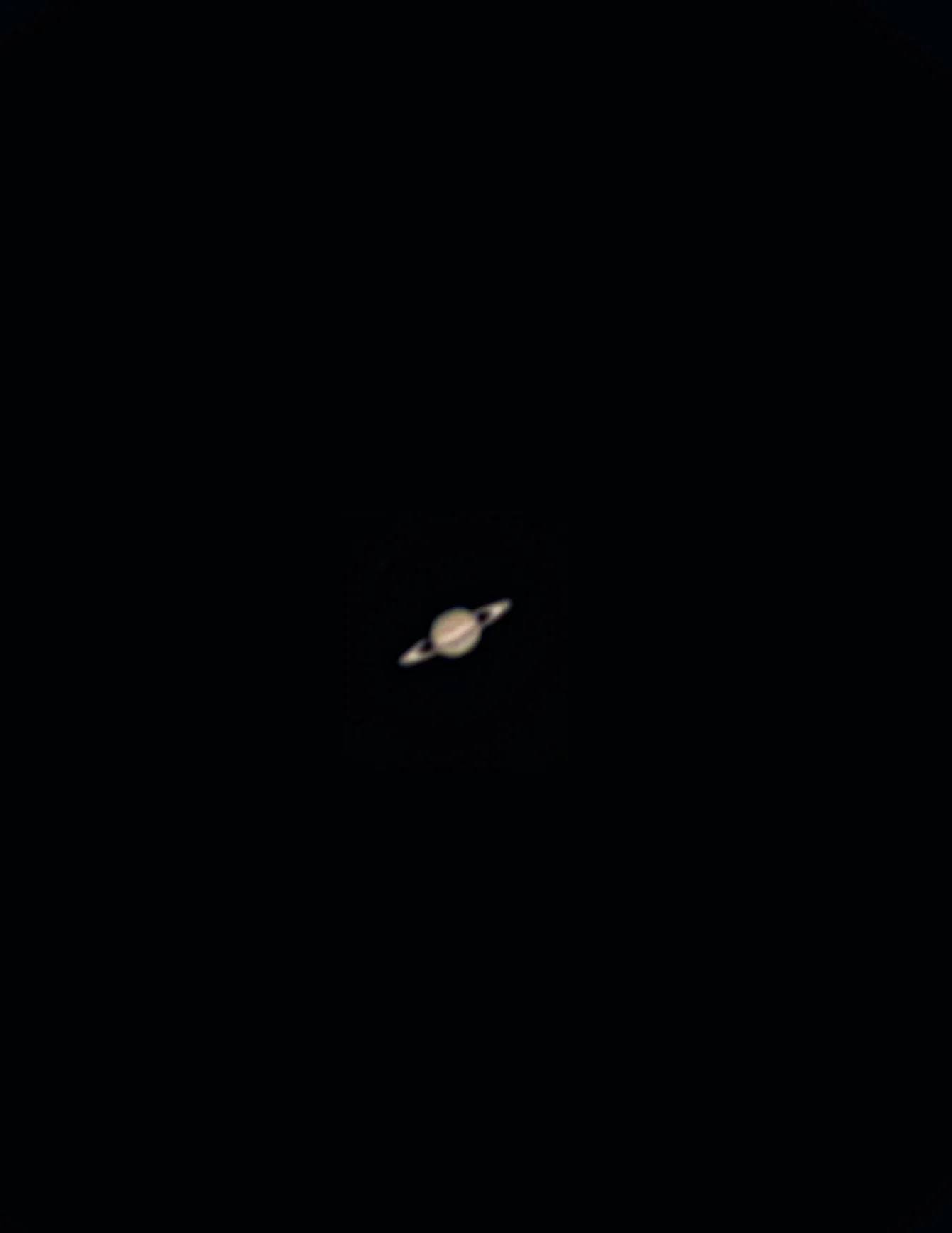
!Short f/3.9 focal length gives wide fields but low magnification, so planets remain small.
02In plain English

What These Numbers Mean

85mm · f/3.9 · 320mm FL · Motorized Alt-Azimuth
Aperture
85 mm
Three and a third inches of aperture with fast optics behind it. Bright nebulae, clusters and larger galaxies come through clearly in live stacking; the faintest small targets remain a patience exercise.
Focal length
320 mm
Wide field, which suits the large showpiece objects most people want to see and makes framing forgiving. Planets and compact targets are outside its purpose.
Focal ratio
f/3.9
Fast enough that each short frame carries real signal, so the stacked image visibly improves second by second rather than requiring long waits.
Optical design
Sealed smart reflector with Nikon eyepiece
The Pro adds the Nikon-designed OLED eyepiece, so you can put your eye to the telescope and see the live stacked view directly instead of only through the app. That is the entire difference from the standard Odyssey.
Weight
4 kg complete
About 9 lb including mount and tripod, light enough for a backpack and a genuine travel telescope. It is less than half the weight of the eVscope 2 with the same eyepiece concept.
Mount
Integrated alt-azimuth GoTo
Fully automatic alignment, finding and tracking with nothing to learn. Alt-azimuth tracking keeps it to stacked short frames, which is what the live-viewing experience is built on.
03The Polaris Score

How it scores, and why.

70/100 · #2 of 5 premium smart telescopes with eyepieces
70/ 100
Unistellar Odyssey Pro
#2 of 5 premium smart telescopes with eyepieces
Performance
65
Ease of use
95
Portability
90
Upgrade potential
30

Polaris weighs optical capability, how easy the scope is to live with, how portable it is, and how far it takes you before you outgrow it — not list price or brand.

04Who it's for

An honest fit check.

Observers who want the meditative look-through-the-eyepiece experience but also want…
Buy it if you
✓Observers who want the meditative look-through-the-eyepiece experience but also want automated GoTo and light-pollution stacking.
✓City and suburban stargazers whose skies are too bright for a same-aperture conventional scope to show much.
✓Beginners who want zero setup friction: no alignment, no collimation, no star charts.
✓Travelers and apartment dwellers who need a full deep-sky rig that packs into a single bag.
Look elsewhere if you
!Value-focused buyers, since the standard Odyssey delivers identical optics and imaging for roughly $2,000 less.
!Planetary detail hunters, because 85mm and a 320mm focal length cannot resolve fine features on Jupiter, Saturn, or Mars.
!Astrophotographers who want to swap cameras and filters or freely process their own data, as this is a sealed system.
!Anyone expecting a true optical eyepiece view; the Nikon eyepiece is a high-quality micro-OLED screen, not direct photons.
05The numbers

Full specifications.

8 measured and stated values
Optics
Optical DesignNewtonian reflector
Aperture85mm
Focal Length320mm
Focal Ratiof/3.9
Mount & drive
Mount TypeMotorized Alt-Azimuth
Physical
Weight4 kg
Imaging
Sensor Width4.19mm
Sensor Height3.13mm
Editor’s Take

The Odyssey Pro is Unistellar's compact "smart telescope" with a premium touch: a built-in electronic eyepiece. Like all smart scopes it is an automated, camera-based instrument run from your phone that points itself, tracks, and stacks short exposures live so faint objects brighten into colourful galaxies in a minute or two (electronically-assisted astronomy), cutting through light pollution an eyepiece cannot. The "Pro" difference is a Nikon micro-OLED eyepiece you look into, so it feels like traditional observing while you actually see the stacked image. About as easy as astronomy gets.

— The Skynocular verdict