Guides / Comparison

The same mirror. One lets your phone do the finding.

Both are 8-inch Dobsonians with essentially identical optics — same aperture, same focal length, same views once you're on target. The whole decision is one thing: do you want your phone to point you there, or do you want to learn to find it yourself?

Both 203 mm mirror·$879 vs $629·7 min read · updated Jul 2026
The 20-second verdict

Which sentence sounds more like you?

Guided
Celestron StarSense Explorer 8

“Just show me where to push, and let me get straight to looking.”

On almost anything in minutes — no charts, no memorizing
Best when you want the view now, not the scavenger hunt
$879typical street price
vs
Self-taught
Sky-Watcher Classic 8 Dobsonian

“I'd rather learn the sky myself — and keep the extra $150 in glass.”

The cheapest way into a serious 8-inch mirror
Best when finding it yourself is the whole point
$629typical street price

Same glass, same night sky. The only thing you’re really buying is how you get to each target.
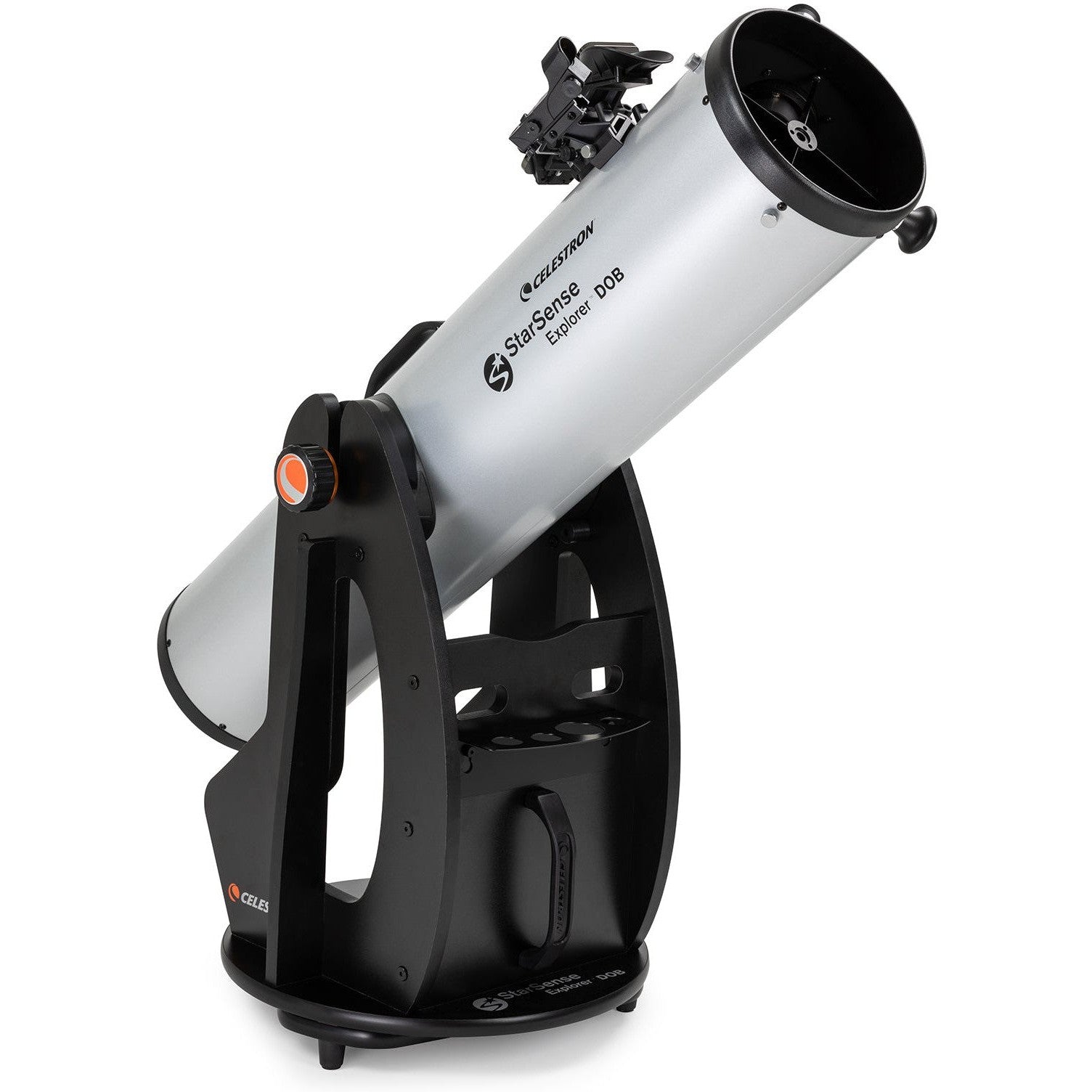
Celestron StarSense Explorer 8
Celestron

Celestron StarSense Explorer 8

Your phone reads the sky and walks you to the target, arrow by arrow.

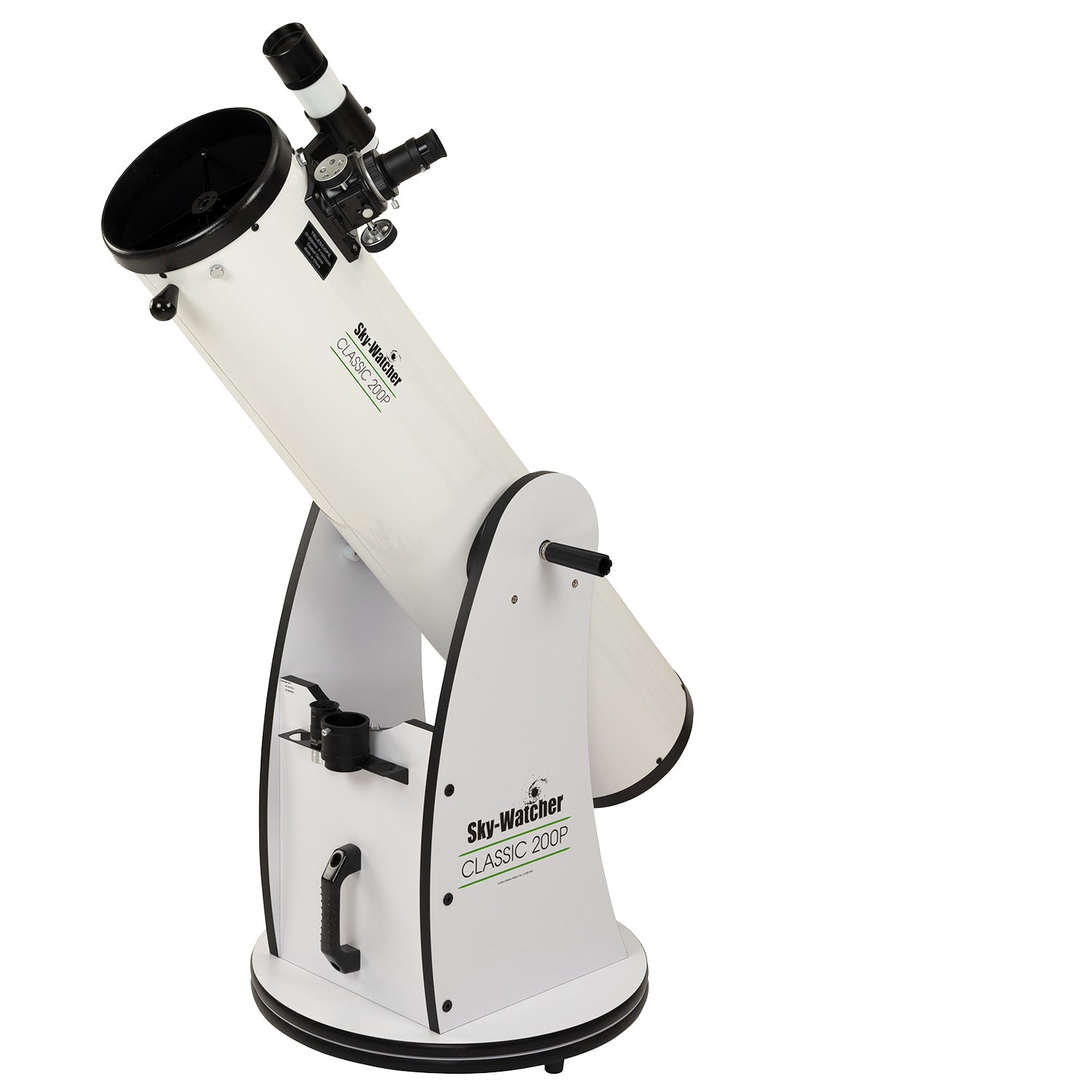
Sky-Watcher Classic 8 Dobsonian
Sky-Watcher

Sky-Watcher Classic 8 Dobsonian

A pure, no-electronics Dob you aim by hand and by knowing where things are.

What owning each is like

Picture your first hour with it.

A night with the StarSense 8

You dock your phone in the cradle, open the app, and it reads the actual star pattern overhead to figure out exactly where the tube is aimed. Then it just draws arrows: nudge up, nudge left — and a bullseye locks on. Thirty seconds later the Orion Nebula is sitting in the eyepiece. You never touch a star chart. On a first night with friends, everyone gets a turn and everyone sees something, because nobody has to know the sky to use it.

A night with the Classic 8

There's nothing to boot, nothing to align, nothing to die on you. You learn to hop from a bright star you know to the faint smudge you don't — and the first time you land a galaxy you found entirely by yourself, it feels earned in a way a phone arrow never will. Every dollar you didn't spend on electronics went straight into the same mirror, so the view when you finally arrive is exactly as bright.

Side by side

Same optics. The difference is how you aim.

StarSense 8
Classic 8
Identical on paper
Aperture203 mm (8")203 mm (8")
Optically these are near-twins — same light-grasp, same resolving power, the same deep-sky reach. What you’re choosing between is the finding method, not the view.
Where they actually differ
Optical designNewtonianNewtonian
Focal length1200 mm1200 mm
Focal ratiof/5.9f/5.9
Finding objectsPhone push-to — StarSense arrowsFully manual star-hopping
Learning curveAlmost none — the app guides youReal, and rewarding once it clicks
Batteries / phoneNeeds your phone in the cradleNone — nothing to power
Setup each night2–3 min (dock phone, align app)1–2 min (carry out + point)
Price$879$629
Find yourself

Which one is you?

The StarSense 8 is you if…

You want to see things tonight, not learn constellations first
You'll share it with family or friends who don't know the sky
You already have your phone on you every session anyway
The $150 premium is worth never feeling lost under the stars

The Classic 8 is you if…

Learning your way around the sky sounds like the fun part
You'd rather not depend on a phone and an app to observe
You want the most mirror for the money, full stop
You like gear that just works with nothing to charge or update

Related guides

Same view. The only question is how you get there.

Go a level deeper on whichever one fits how you like to observe — full details, what it shows in the eyepiece, and today’s price.

See StarSense 8 details →See Classic 8 details →
View StarSense 8 deal at Agena AstroProducts →View Classic 8 deal at Agena AstroProducts →