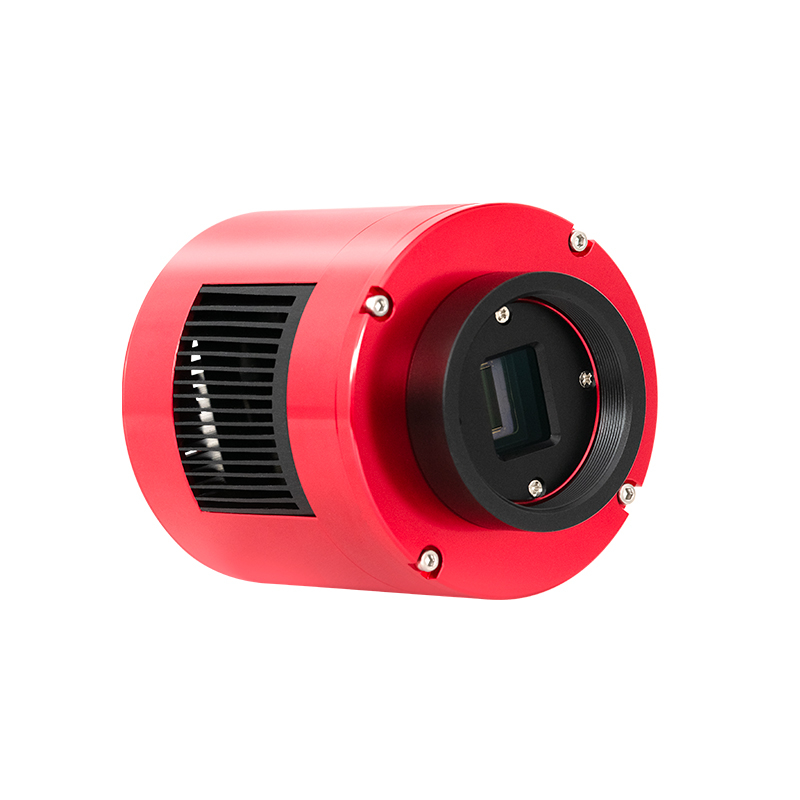
ZWO ASI585MC Pro — image 1
ZWO

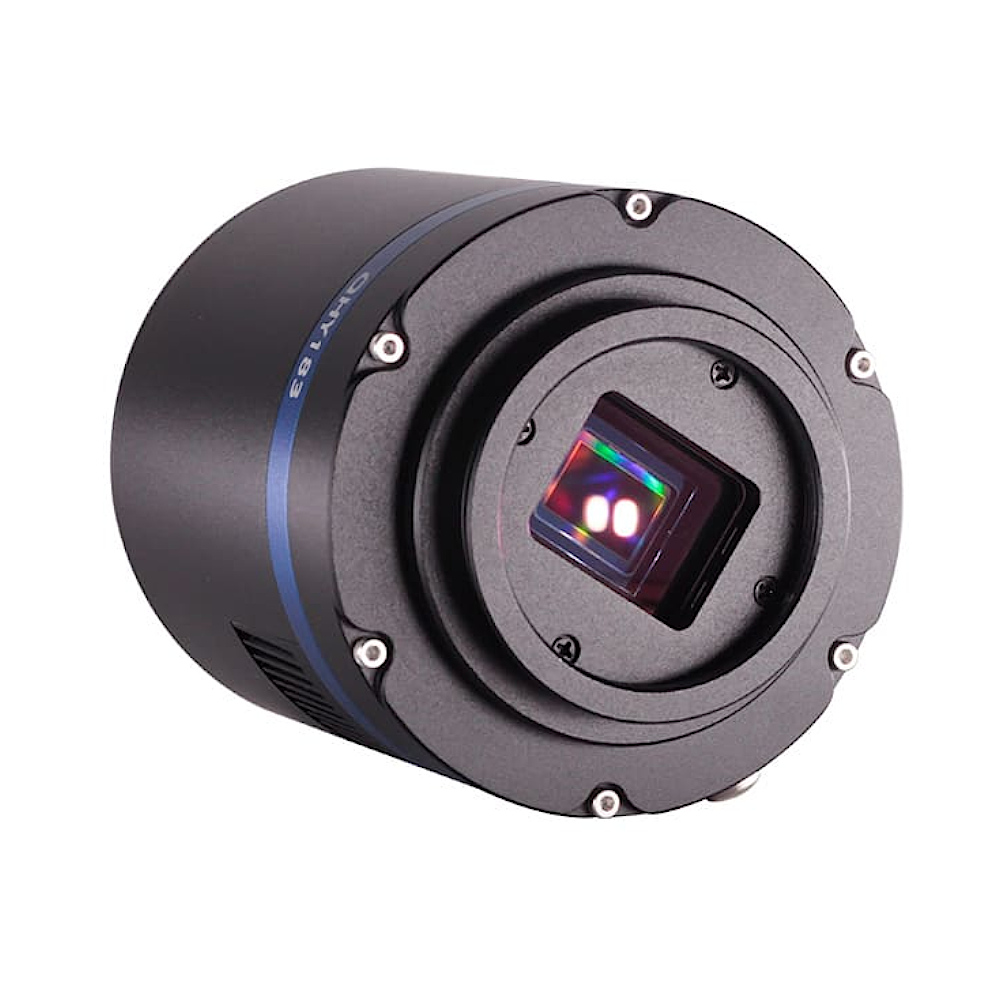
ZWO ASI585MC Pro

A cooled colour camera on the modern IMX585, very high sensitivity and low read noise in a compact, affordable body that shines for both deep-sky and live-view EAA.

86/ 100
Polaris Score
#5 of 8 colour deep-sky cameras
See the breakdown ↓
Camera Type
PlanetaryDeep sky

A versatile cooled colour camera: sensitive enough for deep-sky nebulae and galaxies, and fast and responsive enough for live-view EAA.

Type
One-shot colour
Cooling
−35°C below ambient
Pixel Size
2.9µm
Read noise
0.9 e⁻
Resolution
8.3 MP · 3840×2160
Sensor
Sony IMX585 · 1/1.2"
From$399

Lowest in 90 days

Price tracked by PolarisObserved 55 timesTracking since Aug 2026

Try in simulator →
Where to buy

Verified 12h ago · prices tracked daily

The frame it captures

Same camera. Different telescope. A completely different photograph.

A camera has no field of view of its own, the telescope in front of it decides everything. Pick a target and watch the same 8.3-megapixel frame become three different images.

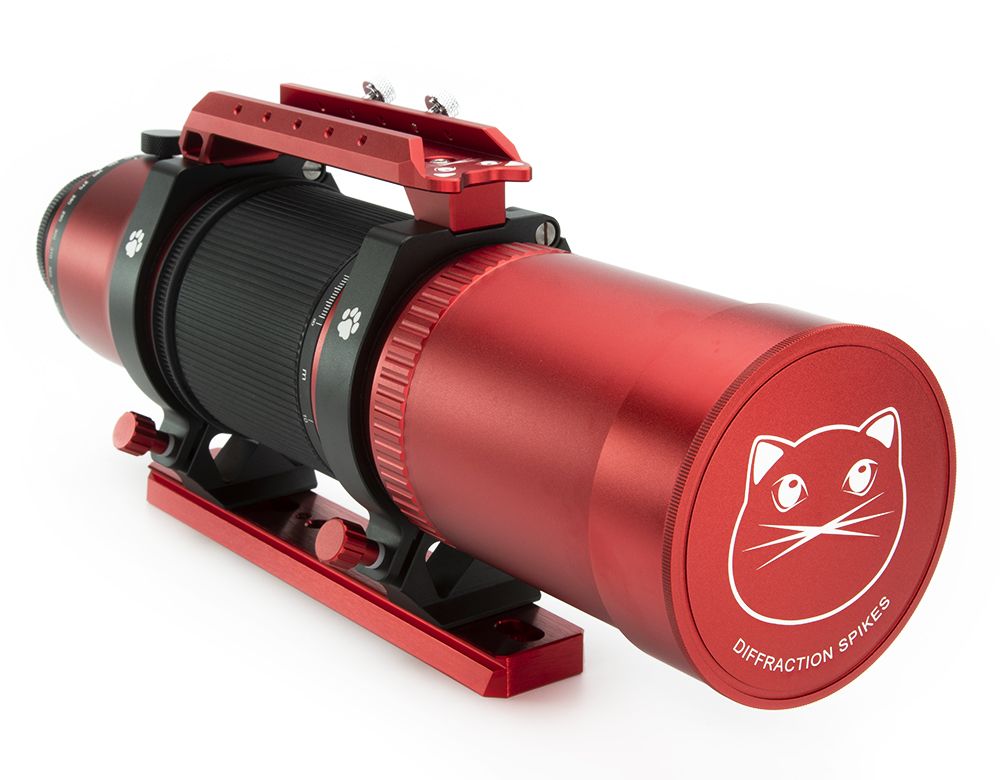
RedCat 51
250 mm · f/4.9
FOV 2.6° × 1.4°
Fills the frame edge to edge, the classic full-galaxy portrait.
Esprit 100ED
550 mm · f/5.5
FOV 1.2° × 0.66°
Overflows frame
Only the bright core fits; the spiral arms spill off the sensor.
EdgeHD 8
2032 mm · f/10
FOV 0.32° × 0.18°
Overflows frame
Only the bright core fits; the spiral arms spill off the sensor.
Explore any telescope in the Simulator →
01What it's good at

What it's best at — and the trade-offs.

The IMX585 is highly sensitive with very low read noise and essentially no amp glow
Best at
✓The IMX585 is highly sensitive with very low read noise and essentially no amp glow
✓Deep cooling makes it a real long-exposure deep-sky camera, not just an EAA tool
✓Strong near-infrared response opens up dust and hydrogen detail
✓Small, light and affordable, an easy camera to travel and learn with
Trade-offs
!The 1/1.2-inch sensor sees a smaller field than APS-C
!A 12-bit ADC has less tonal depth than the 16-bit cameras
!Long exposures still need a tracking mount and, ideally, guiding
02In plain English

The numbers, in plain English.

Sony IMX585 · 8.3MP · 2.9µm · −35°C below ambient
SensitivityVery high
IMX585, very high QE
Quantum efficiency is the fraction of arriving photons the sensor actually records. A high figure means shorter exposures for the same signal, which is what makes this sensor popular for electronically assisted observing where you want an image within seconds.
Read noiseExcellent
About 0.9 e⁻
Very low read noise means faint detail survives in short subframes, so a stack of thirty-second exposures can rival much longer ones. It also suits live stacking, where each frame is brief by design.
SensorCompact
1/1.2 inch, 11.2 × 6.3 mm
Smaller than APS-C, so the field is narrower and large nebulae will not fit at longer focal lengths. Pair it with a short refractor and the compact sensor becomes an advantage, since corner correction is easy.
Pixel sizeFine
2.9 µm
Small pixels sample finely, which suits short focal lengths and good seeing. At long focal lengths they oversample, spreading the same light over more pixels and lengthening exposures for no extra detail.
CoolingDeep
Regulated TEC
The Pro designation is the cooling, and it is what separates this from the uncooled version: thermal noise drops sharply and the sensor holds a repeatable temperature for reusable calibration frames.
03Typical targets

What it shines on.

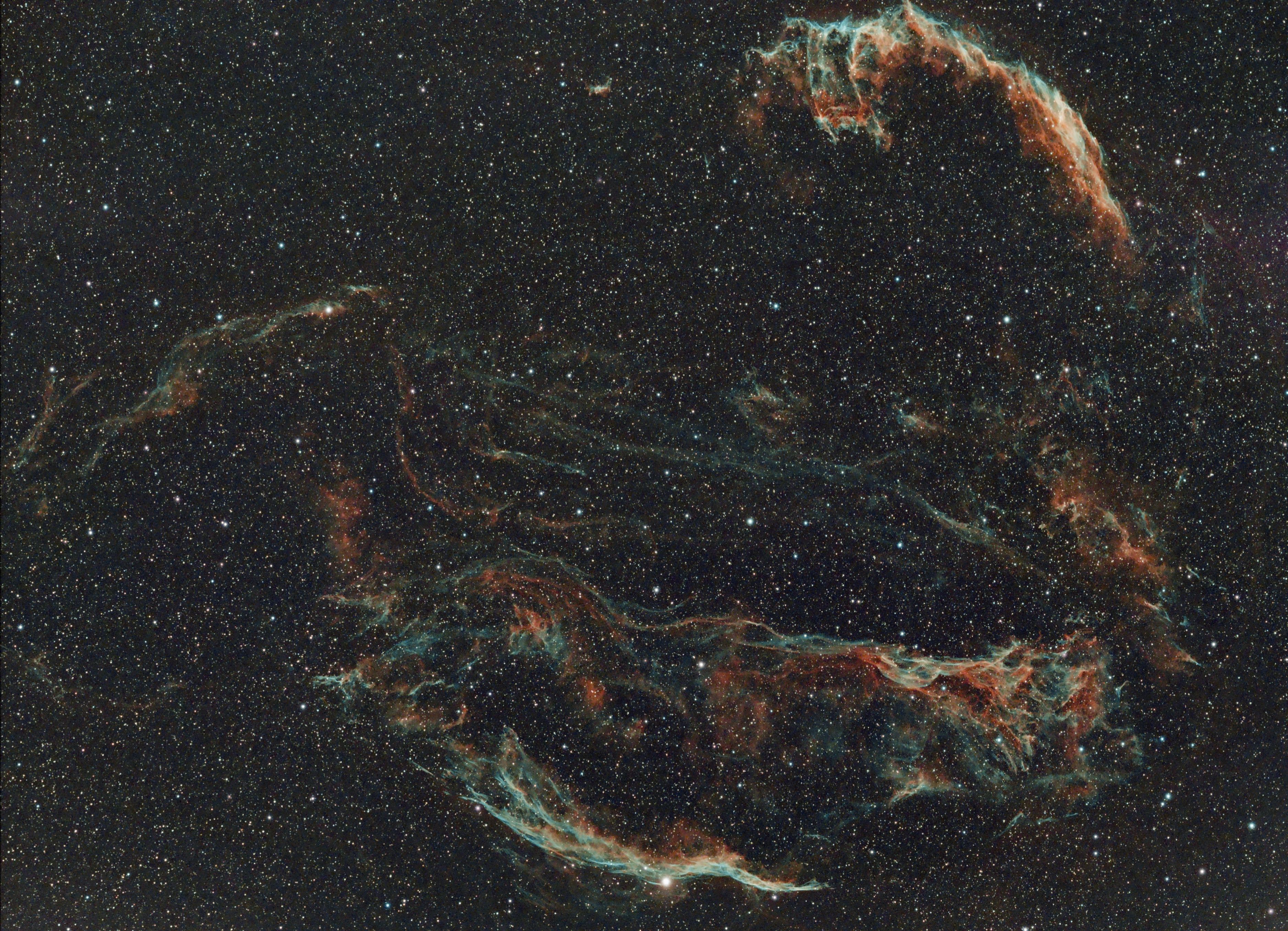
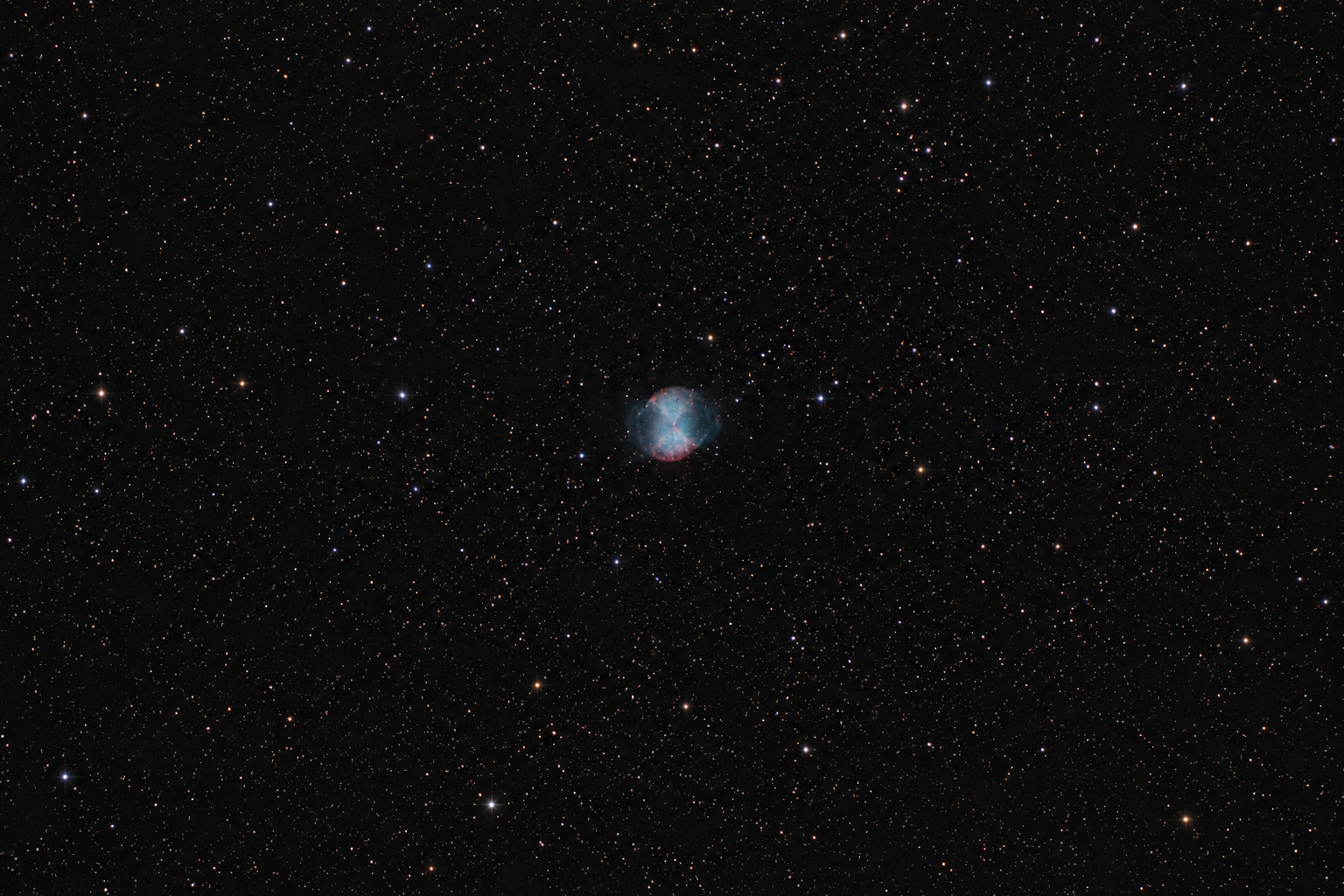
The Orion Nebula (M42), The Eastern Veil Nebula, The Dumbbell Nebula (M27)
The Orion Nebula (M42)Excellent
The Orion Nebula (M42)
The sensitive sensor builds the bright core and faint wings quickly.
The Eastern Veil NebulaComes alive
The Eastern Veil Nebula
Strong sensitivity pulls the delicate filaments from a dark sky.
The Dumbbell Nebula (M27)Excellent
The Dumbbell Nebula (M27)
Bright and compact, a great match for the small, sensitive sensor.
04Build your imaging rig

Everything you'd actually buy.

Capture · Track · Frame
Track
What holds it steady
A tracking equatorial mount
Cooled long exposures reward accurate tracking; add guiding for the best stars.
Frame
Pull signal from the sky
A dual-band filter
Isolates emission nebulae so they stand out from light-polluted skies.
05The Polaris Score

How it scores, and why.

86/100 · #5 of 8 colour deep-sky cameras
86/ 100
ZWO ASI585MC Pro
#5 of 8 colour deep-sky cameras

A very sensitive, low-noise modern sensor in an affordable, portable cooled body. Held back only by a smaller field and 12-bit depth versus the APS-C cameras.

Image quality
86
Low-light sensitivity
90
Ease of use
86
Value
88

Polaris weighs how well the camera does the job it was designed for — image quality, sensitivity, versatility and value — never list price or brand.

06Who it's for

An honest fit check.

Imagers who want a sensitive, affordable cooled colour camera
Buy it if you
✓Imagers who want a sensitive, affordable cooled colour camera
✓EAA observers who also want to do proper deep-sky integration
✓People pairing it with a short, fast telescope for a portable rig
Look elsewhere if you
!Imagers who need the largest field of an APS-C or full-frame sensor
!Those wanting 16-bit depth for the smoothest gradients
!Mono narrowband specialists chasing the deepest detail
07The numbers

Full specifications.

18 measured and stated values
Sensor
ModelSony IMX585
TypeCMOS · 1/1.2"
Megapixels8.3
Pixel Size2.9µm
Bit depth12-bit ADC
Noise & sensitivity
Read noise0.9 e⁻
Full well40,000 e⁻
Peak QE~91%
Dynamic range13 stops
Cooling
Cooling−35°C below ambient
Connectivity & fit
InterfaceUSB 3.0
Weight0.46 kg
More
cooledtrue
Sensor Height6.3mm
Sensor Width11.2mm
Editor’s Take

The IMX585 is one of the most sensitive modern colour sensors, with almost no amp glow and excellent near-infrared response. In a cooled body it makes a genuinely versatile camera, small enough to travel, sensitive enough for real deep-sky work, and quick enough for electronically assisted astronomy.
— The Skynocular verdict