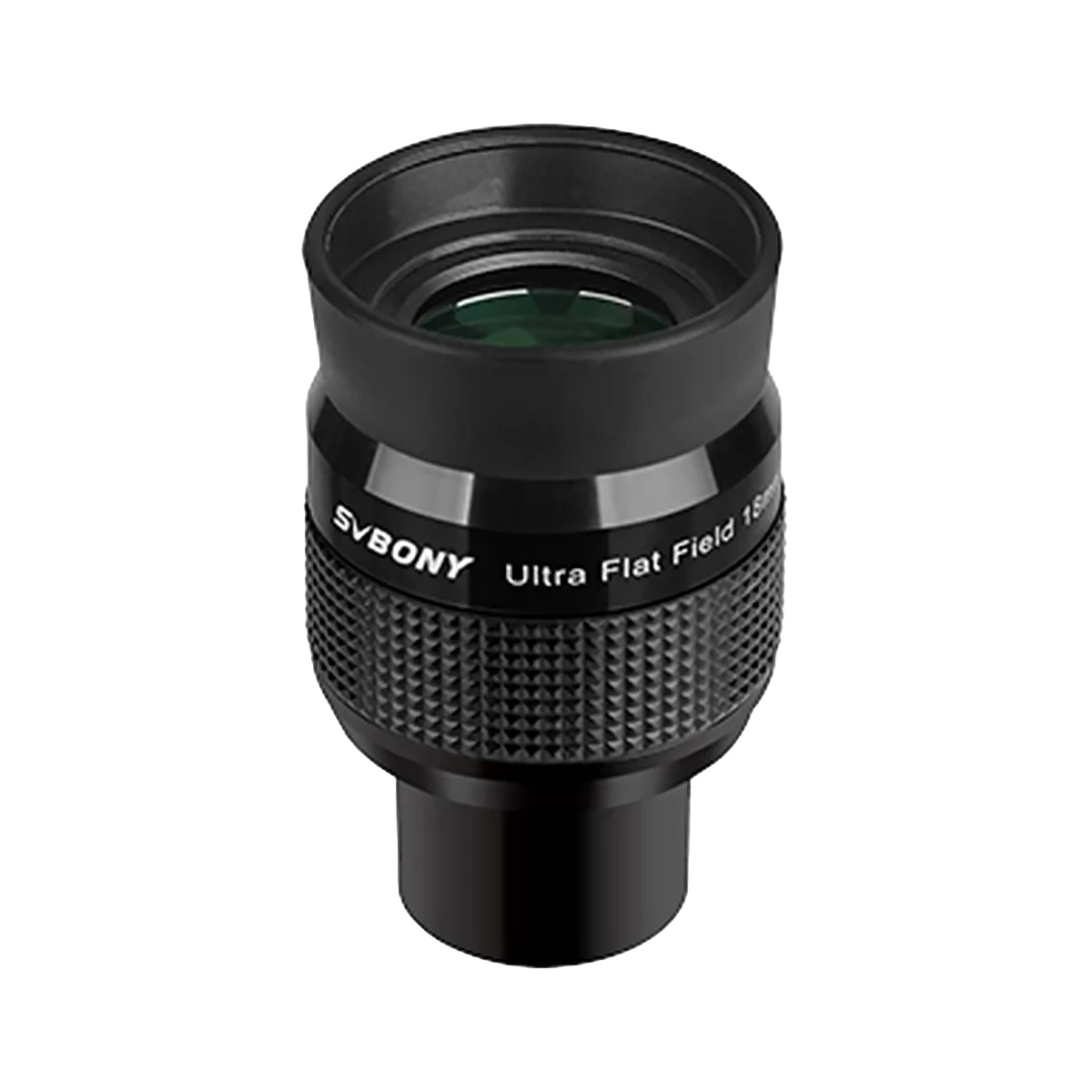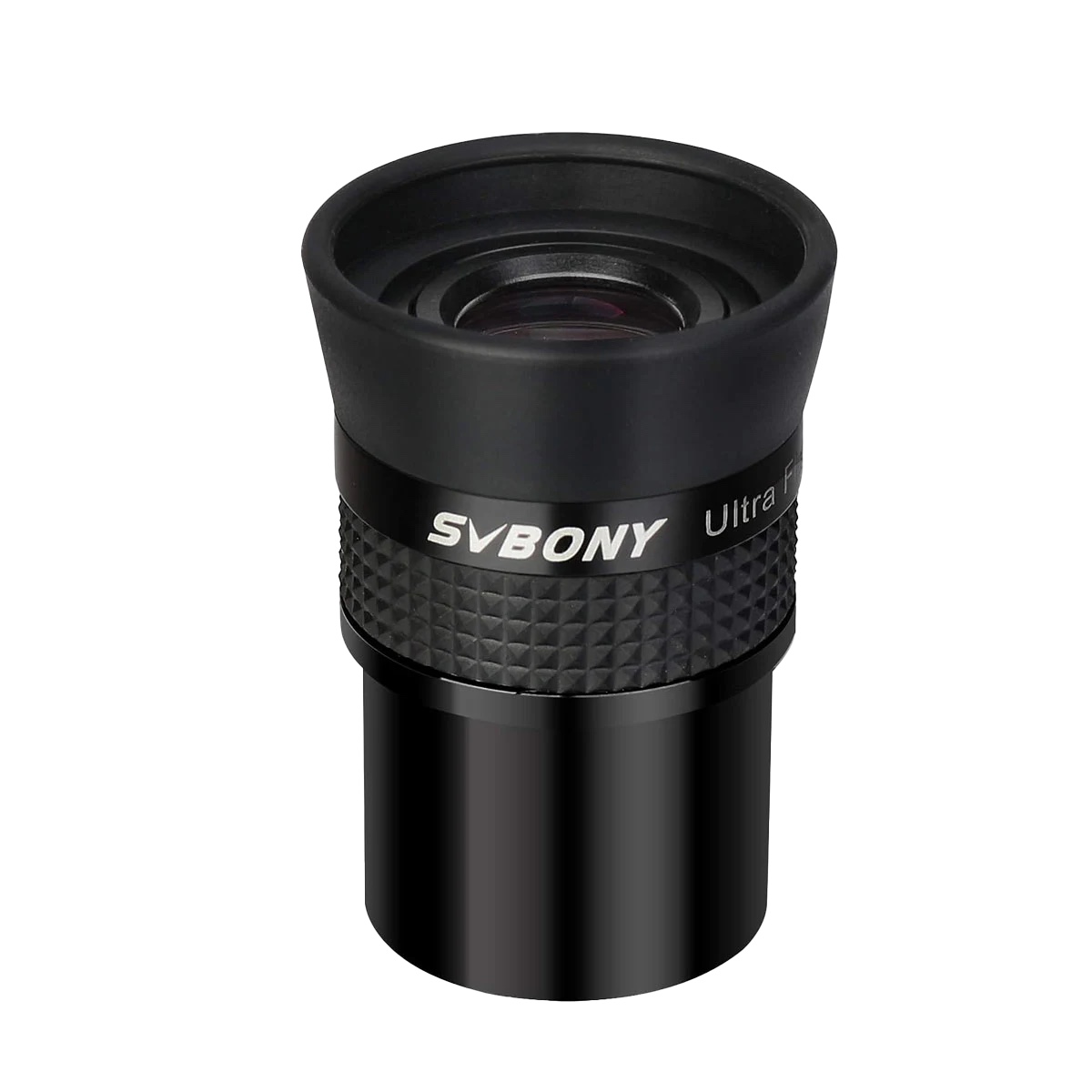
SVBony SV190 Ultra Flat Field 10mm — image 1
SVBony

SVBony SV190 Ultra Flat Field 10mm

A 60 degree field with 16 millimetres of eye relief for the price of a Plossl. The eyepiece to hand a beginner who has just discovered that their kit 10mm is uncomfortable to look through.

79/ 100
Polaris Score
Optical quality · Immersion · Comfort · Value
See the breakdown ↓
What it's for
Low power · wide fieldHigh power · narrow field

A medium to high power eyepiece. In most telescopes this lands between 50x and 200x, which is the range for planets, the Moon, double stars and small bright deep sky objects. It is the wrong focal length for large nebulae and open clusters, which need something around 25mm.

Apparent Field
60°
Barrel Size
1.25"
Eye Relief
16mm
Focal Length
10mm
From$49.99

Lowest in 90 days

Price tracked by PolarisObserved 45 timesTracking since Sep 2026

Try in simulator →
Where to buy

Verified 3h ago · prices tracked daily

The spacewalk

You don’t look at a field.
You look into the sky.

Every number on the spec sheet matters less than one feeling: how much sky wraps around your eye. Widen the apparent field and watch the black edge of the eyepiece slip away.

60° apparent field

At 60°, you are aware of the field edge, like looking down a short, comfortable tube.
Try this eyepiece on your own scope in the Simulator →
01What it's good at

What it's best at — and the trade-offs.

Sixteen millimetres of eye relief at 10mm focal length, where the common budget alternatives give six to eight and are genuinely unpleasant to use for…
Best at
✓Sixteen millimetres of eye relief at 10mm focal length, where the common budget alternatives give six to eight and are genuinely unpleasant to use for long.
✓The field is flat, so stars at the edge stay as tight as stars at the centre even in an f/5 telescope, which is where cheap eyepieces visibly fail.
✓At this price the alternatives in our catalogue are all 52 degree Plossls, so this is the only way into a genuinely wide flat field under sixty dollars.
Trade-offs
!Sixty degrees is the narrowest field in the Ultra Flat Field line, and noticeably tighter than the 65 degrees its 18mm sibling offers.
!In an f/10 Schmidt-Cassegrain this yields 203x and a 1mm exit pupil, which is at the edge of useful for all but the steadiest nights.
!The rubber eyecup and 84 gram body are light and functional rather than well finished, and the barrel is not tapered against slipping.
02In your telescope

One eyepiece. A different job in every scope.

48× in a small refractor, 203× in a long SCT

An eyepiece has no magnification of its own — the telescope decides. The same eyepiece becomes 48× and 1.3° of sky in a little refractor, or 203× and a tight frame in a long SCT. Here’s what it does across common scopes.

Small apo refractor
480 mm · f/5.5
Magnification
48×
True field
1.3°
Exit pupil
1.8 mm
In a 480mm apo this gives 48x across 1.3 degrees, a useful all-round power for lunar detail and the brighter planetary nebulae without losing the field you need to find them.
8-inch Dobsonian
1200 mm · f/6
Magnification
120×
True field
30′
Exit pupil
1.7 mm
In an eight inch Dobsonian it lands on 120x with a 30 arcminute field, almost exactly the width of the full Moon, which is the classic planetary power for this aperture.
12-inch Dobsonian
1500 mm · f/5
Magnification
150×
True field
24′
Exit pupil
2.0 mm
In a twelve inch Dobsonian it reaches 150x with a 2mm exit pupil, bright enough to hold detail on Mars and Jupiter while the flat field keeps the edge stars clean at f/5.
8-inch SCT
2032 mm · f/10
Magnification
203×
True field
18′
Exit pupil
1.0 mm
In an eight inch Schmidt-Cassegrain it produces 203x and an 18 arcminute field with a 1mm exit pupil, which is real planetary magnification and demands a steady night to pay off.
Exit pupil is how wide the beam of light leaving the eyepiece is. Around 5–6 mm is bright and immersive under dark skies; push much past 6 mm and you waste light, and under light pollution a smaller exit pupil shows more contrast.
03In plain English

The numbers, in plain English.

10mm FL · 60° AFOV · 1.25"
Eye reliefGenerous
16 mm
This is the distance your eye can sit behind the lens and still see the whole field, and it is the number that decides whether an eyepiece is pleasant or a chore. Most 10mm eyepieces offer six to eight millimetres, which means pressing your eye socket against the glass and fogging it with every breath. Sixteen millimetres lets you hold your eye back, and is just enough to keep spectacles on if your prescription requires them.
Apparent fieldModerately wide
60°
This is how large the circle of view appears, and it is the specification the product name most misleads on. Ultra Flat Field describes the flatness of the field, not its width. At 60 degrees this is wider than a 52 degree Plossl and clearly narrower than a 68 degree wide field, so expect a comfortable porthole rather than a window you can lean into.
Focal lengthMedium to high power
10 mm
Focal length sets magnification once you divide it into your telescope's. That is 48x in a small refractor, 120x in an eight inch Dobsonian and 203x in an eight inch Schmidt-Cassegrain. The middle of that range is the classic planetary power, where Jupiter's belts and Saturn's rings resolve without the image softening into mush.
Optical designWell corrected
5 elements in 4 groups
Five elements is what buys the flat field. A three element Plossl is simpler, cheaper and curves its field, so in a fast telescope the outer stars bloat while the centre stays sharp. The extra glass here holds the focal plane flat across the whole 60 degrees, which is why this stays usable at f/5 where a Plossl visibly does not.
Exit pupil rangeNarrow
1.0 to 1.8 mm
Exit pupil is the width of the beam of light leaving the eyepiece, and it tells you how bright the image will be. Between one and two millimetres the view is dim but sharp, which suits planets and double stars and works against faint galaxies. The 1.0mm figure comes from an f/10 Schmidt-Cassegrain and is the one case where you might prefer a longer eyepiece.
04What comes alive

The targets this eyepiece was born for.
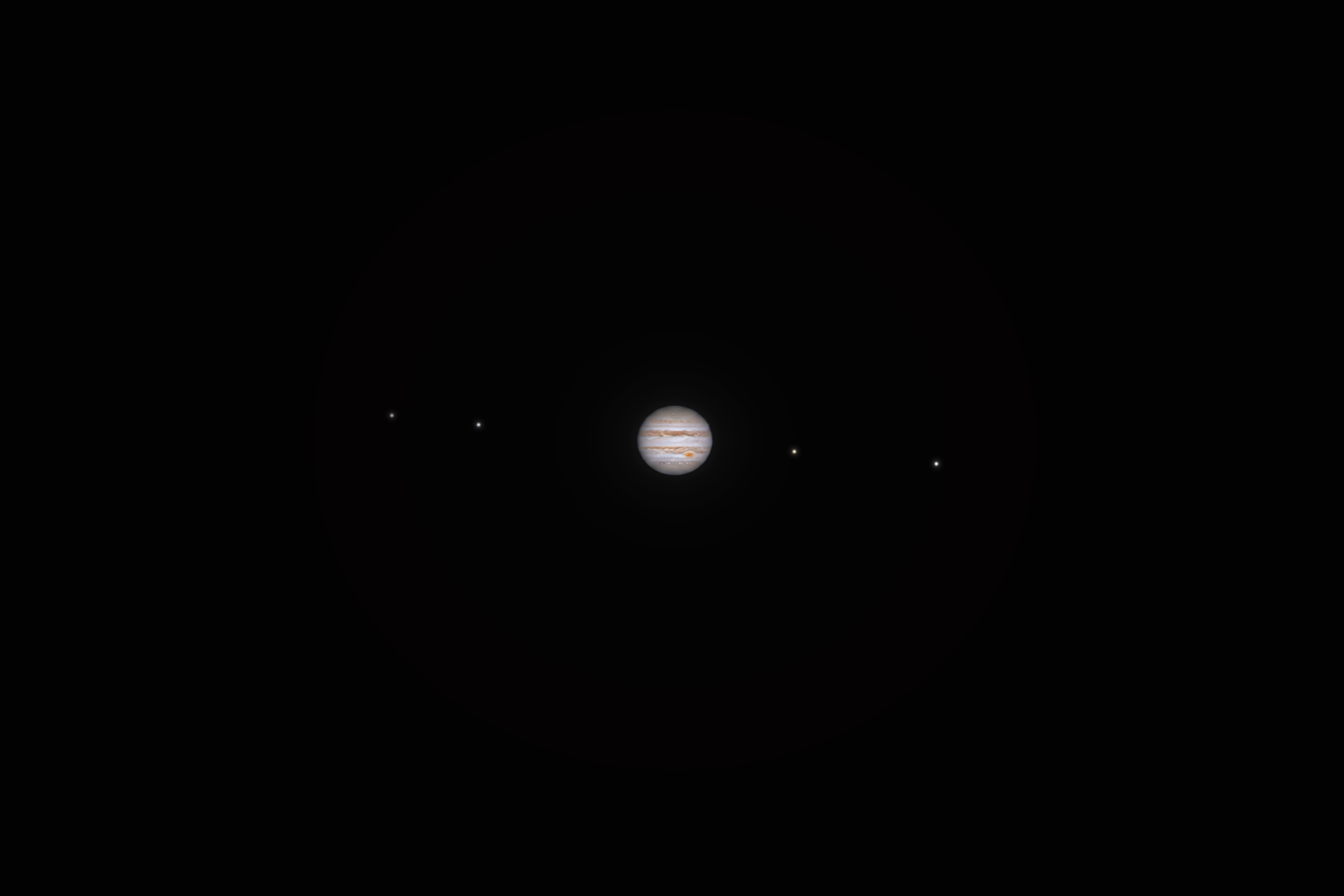
Jupiter, The Moon, Saturn, The Ring Nebula (M57), Mars, Albireo
JupiterComes alive
Jupiter
At 120x to 203x the equatorial belts, the Great Red Spot and the shadow transits of the moons all separate cleanly.
The MoonComes alive
The Moon
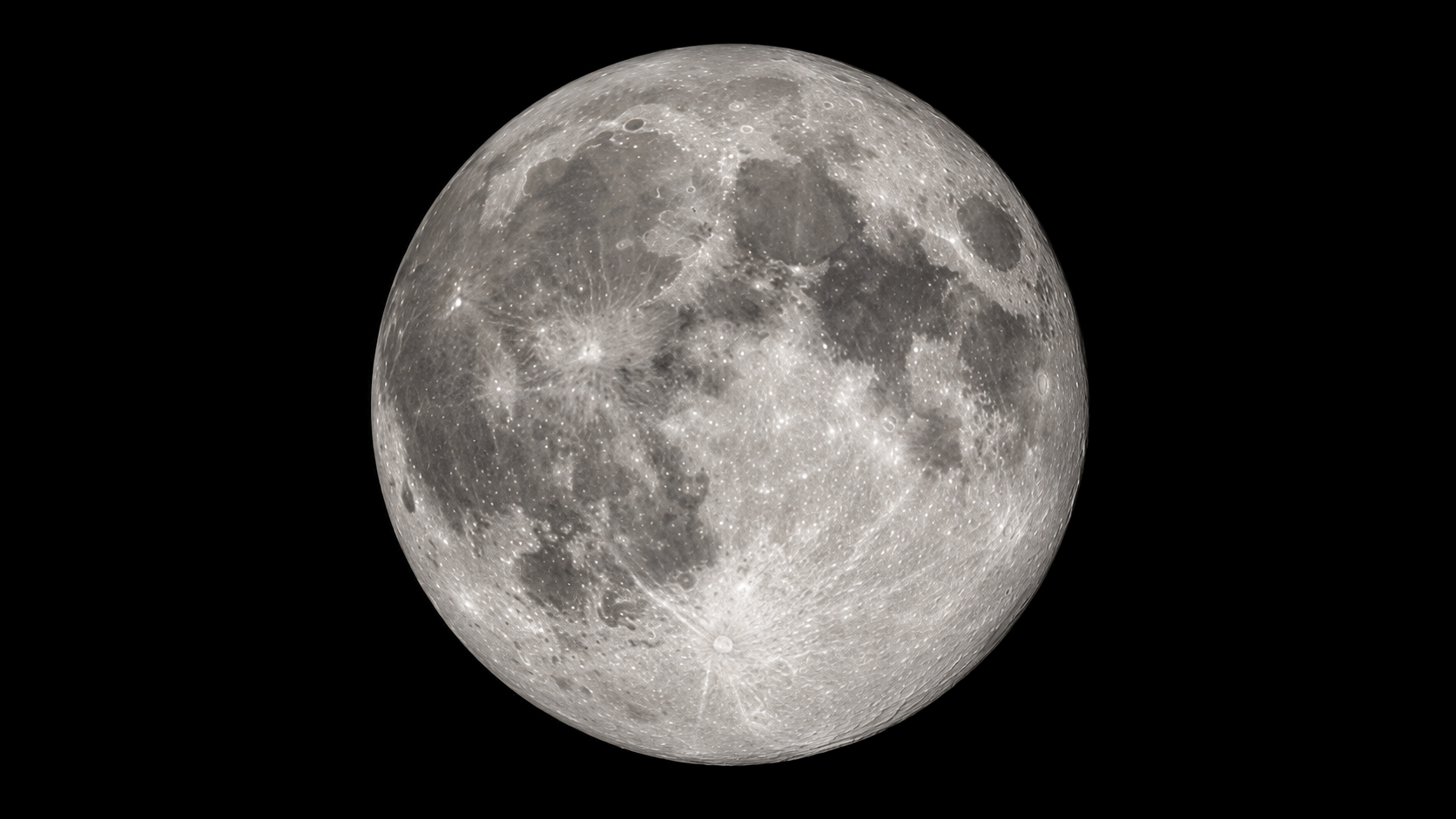
Crater walls and central peaks along the terminator, with enough eye relief to study them for a long time without discomfort.
SaturnComes alive
Saturn
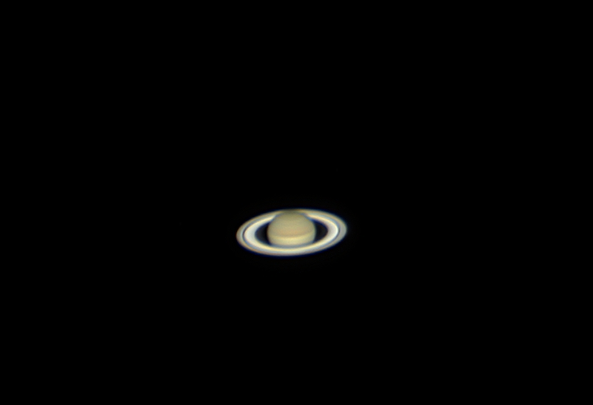
The Cassini division becomes a real gap rather than a suspicion once you are past about 150x.
The Ring Nebula (M57)Excellent
The Ring Nebula (M57)
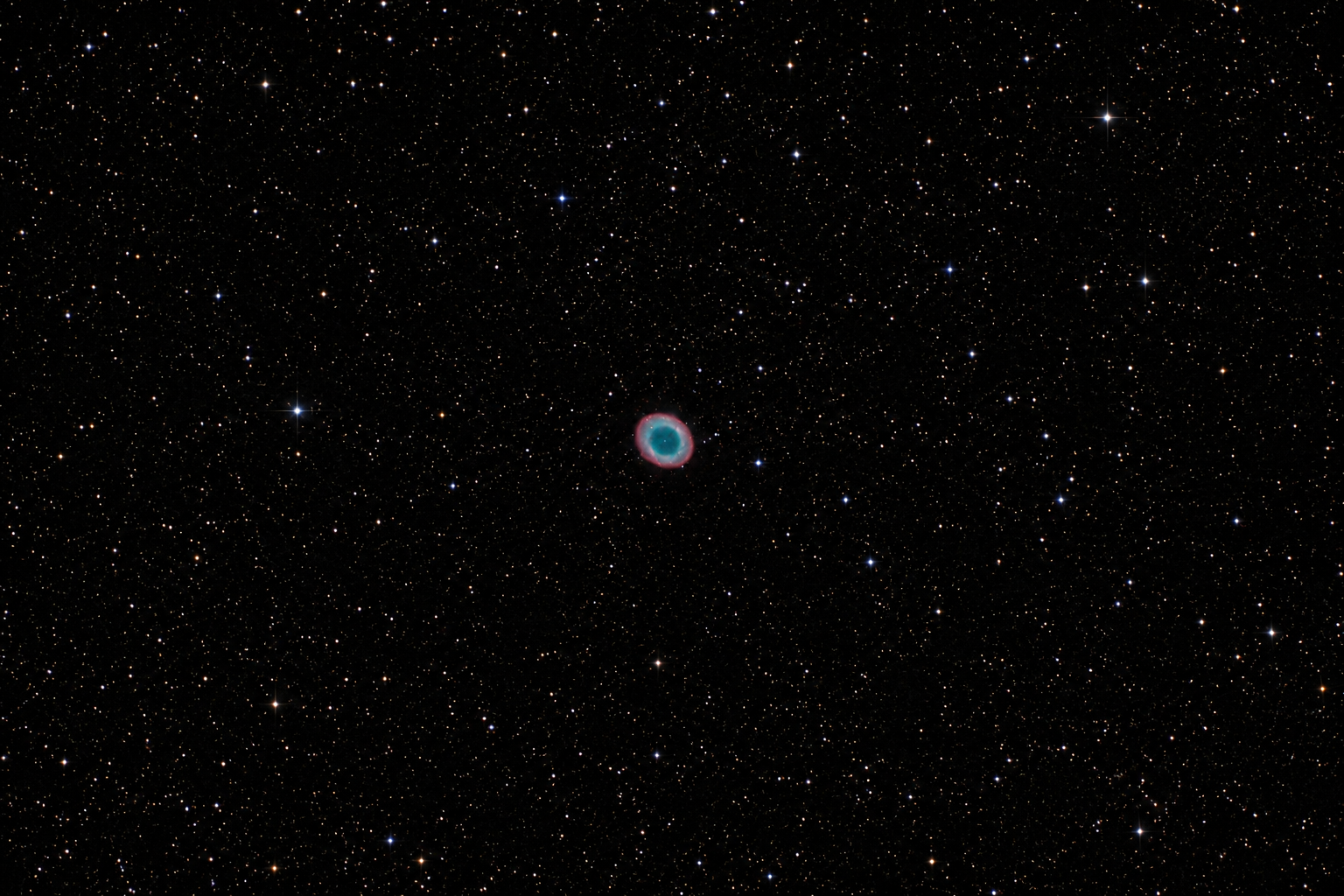
A small planetary that wants magnification. At this power the ring structure opens up rather than sitting as a dot.
MarsExcellent
Mars
Near opposition this reaches the power where the polar cap and the larger dark markings show, seeing permitting.
Excellent
Albireo
The gold and blue pair splits wide and the flat field keeps both components tight even off centre.
05Role in a collection

Where it sits in your eyepiece case.

Where it sits across 3 focal lengths

A good eyepiece collection isn’t a pile of glass — it’s two or three focal lengths that hand off from wide to tight. This is the anchor at the bottom of the ladder: the one you find and frame with. You buy it once, and it stays your low-power eyepiece for life.

32 mm
Low power · wide field
Find, frame and sweep. Your widest true field and the lowest useful magnification — the eyepiece you reach for first.
Veil Nebula · Pleiades · Milky Way star clouds
10 mmThis one
Medium power · the workhorse
Where most deep-sky objects look their best — galaxies, globulars and planetary nebulae at a comfortable scale.
M13 · Ring Nebula · most galaxies
7 mm
High power · detail
Planets, the Moon at the terminator, tight double stars and the smallest planetary nebulae. Steady-air nights only.
Jupiter · Saturn · lunar craters
06Build around it

What it pairs with.

The telescope · Pair it · Filter it
The telescope
Where this focal length works
An eight inch Dobsonian
120x with a half degree field is the planetary sweet spot for this aperture, and the flat field earns its keep at f/6.
Any fast refractor at f/5 to f/6
This is where a flat field stops being a specification and becomes visible: edge stars stay points instead of small commas.
Pair it
What to own alongside
SVBony SV190 Ultra Flat Field 18mm
The natural partner. Between 10mm and 18mm you cover planetary and most deep sky without a third eyepiece.
A 2x Barlow
Turns this into a 5mm for the nights when the seeing is genuinely steady, without buying another eyepiece.
Filter it
What helps at this power
A neutral density Moon filter
At 120x the Moon is bright enough to leave an afterimage. A grey filter costs little and makes long lunar sessions comfortable.
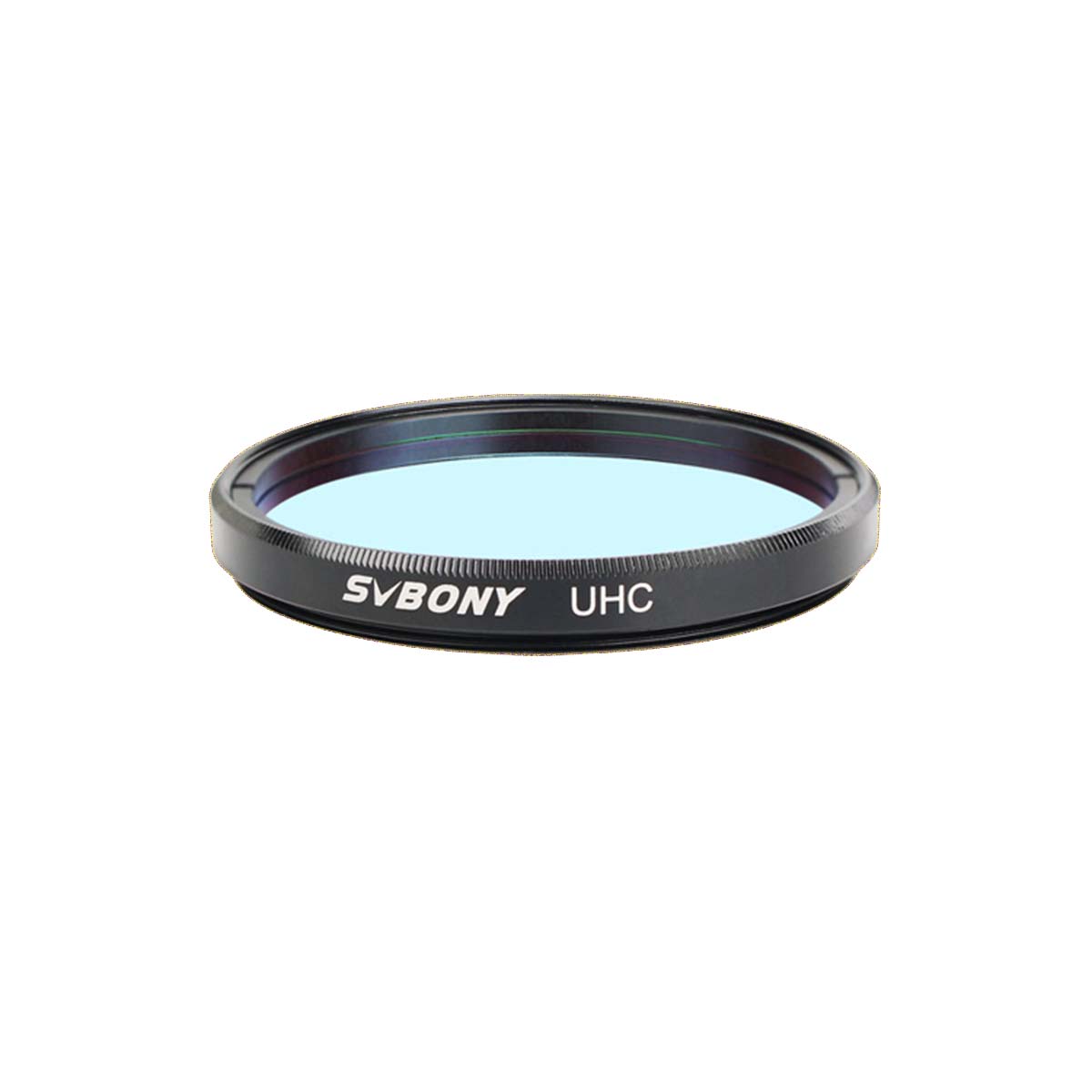
SVBony UHC 1.25 inch
Of limited use at this power on most targets, but it lifts the Ring and the Dumbbell out of a light polluted sky.
07The Polaris Score

How it scores, and why.

79/100
79/ 100
SVBony SV190 Ultra Flat Field 10mm

Judged against what a beginner actually replaces, which is a 50 degree kit eyepiece with cramped eye relief, this is a substantial improvement on both counts for very little money. It is held back from a higher score by a field that is wide rather than immersive, and by a 60 degree spec that sits below the 65 degrees the rest of the line offers.

Optical quality
80
Immersion
62
Comfort
84
Value
95

Polaris weighs how well the eyepiece does the job it was designed for — optics, immersion, comfort and value — never list price or brand.

08Who it's for

An honest fit check.

Anyone who has looked through the 10mm eyepiece that came with their telescope and found…
Buy it if you
✓Anyone who has looked through the 10mm eyepiece that came with their telescope and found their eyelashes touching the glass.
✓Beginners building a first set of three or four eyepieces who want a working planetary power without spending premium money.
✓Observers with fast telescopes, where a flat field is not a luxury: at f/5 an ordinary budget eyepiece smears stars visibly in the outer third of the view.
✓Anyone who wears glasses at the eyepiece and has given up on short focal lengths.
Look elsewhere if you
!Observers chasing immersion, who will find 60 degrees noticeably tighter than the 68 and 82 degree eyepieces and should spend more for one.
!Owners of long focal length Schmidt-Cassegrains, where 10mm already gives over 200x and a 1mm exit pupil, which is more magnification than most nights of seeing will support.
!Anyone hunting large deep sky objects, which need a low power wide field eyepiece rather than this.
!Observers who already own a good 9mm or 12mm, since the gain from switching would be small.
09The numbers

Full specifications.

7 measured and stated values
Optical
Focal Length10mm
Apparent Field60°
CoatingsFully multi-coated
Comfort & handling
Eye Relief16mm
Fit & build
Barrel Size1.25"
More
lens design5 elements in 4 groups
weight g84
Editor’s Take

The name oversells one thing and undersells another. Ultra Flat Field does not mean ultra wide, and at 60 degrees this is a moderate field, not a spacewalk. What it does mean is that the field is genuinely flat, so stars near the edge stay as tight as the ones in the middle even in a fast telescope. Combine that with 16 millimetres of eye relief at a focal length where most eyepieces give you seven, and you have the rarest thing in budget astronomy: a component with no obvious compromise, at a price that suggests there should be one.

— The Skynocular verdict