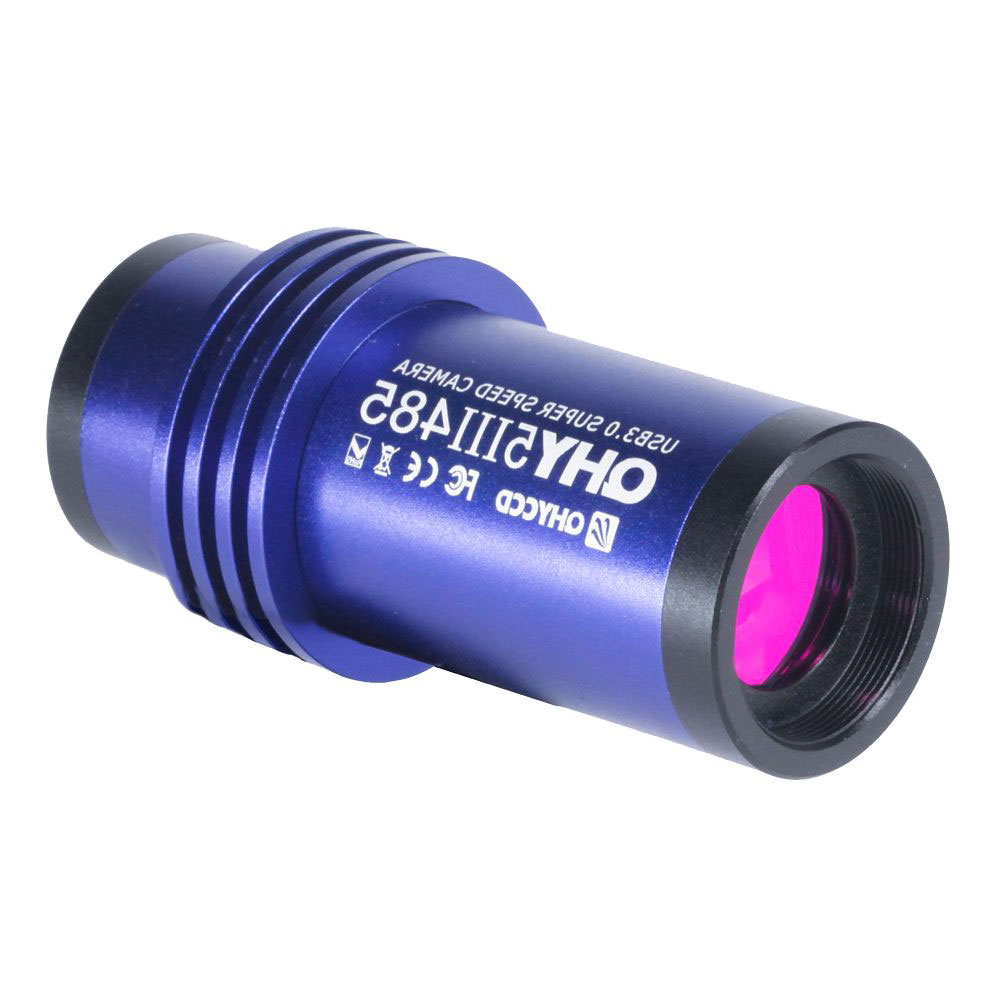
QHY5III715C — image 1
QHY

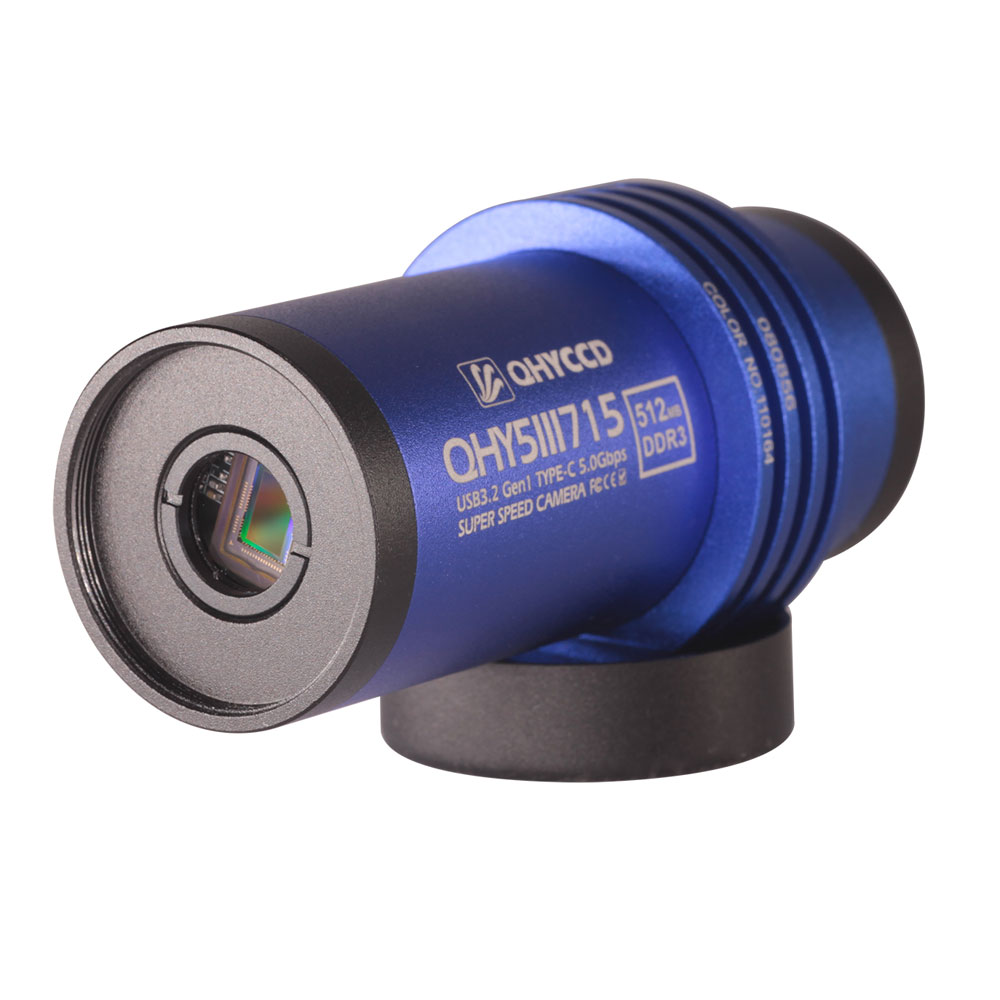
QHY5III715C

An affordable, high-resolution colour planetary camera, tiny sensitive pixels and a fast readout that also make it a capable guide and near-infrared camera.

82/ 100
Polaris Score
#3 of 4 planetary & all-sky cameras
See the breakdown ↓
Camera Type
PlanetaryLunar

A budget high-resolution planetary and lunar camera with strong near-infrared response, also usable for guiding.

Type
Colour (planetary)
Cooling
Uncooled
Pixel Size
1.45µm
Read noise
0.8 e⁻
Resolution
8.3 MP · 3864×2192
Sensor
Sony IMX715 · 1/2.8"
From$229

Lowest in 90 daysLowest ever tracked

Price tracked by PolarisObserved 52 timesTracking since Mar 2026

Try in simulator →
Where to buy

Verified yesterday · prices tracked daily

The frame it captures

Same camera. Different telescope. A completely different photograph.

A camera has no field of view of its own, the telescope in front of it decides everything. Pick a target and watch the same 8.3-megapixel frame become three different images.

RedCat 51
250 mm · f/4.9
FOV 1.3° × 0.73°
Overflows frame
Only the bright core fits; the spiral arms spill off the sensor.
Esprit 100ED
550 mm · f/5.5
FOV 0.58° × 0.33°
Overflows frame
Only the bright core fits; the spiral arms spill off the sensor.
EdgeHD 8
2032 mm · f/10
FOV 0.16° × 0.09°
Overflows frame
Only the bright core fits; the spiral arms spill off the sensor.
Explore any telescope in the Simulator →
01What it's good at

What it's best at — and the trade-offs.

Very fine 1.45-micron pixels resolve high planetary detail on a long scope
Best at
✓Very fine 1.45-micron pixels resolve high planetary detail on a long scope
✓Strong near-infrared response helps cut through unsteady seeing
✓Fast readout captures thousands of frames for lucky imaging
✓Inexpensive, tiny and light, and it doubles as a guide camera
Trade-offs
!It is uncooled, so it is not for long deep-sky exposures
!The small sensor and shallow well limit field and dynamic range
!Fine pixels need a long focal length and good seeing to shine
02In plain English

The numbers, in plain English.

Sony IMX715 · 8.3MP · 1.45µm · Uncooled
Pixel sizeVery fine
1.45 µm
Very small pixels are exactly what planetary imaging wants: at 2000 mm and above you need many pixels across a small planetary disc to resolve fine detail. The same pixels are too small to be useful for faint deep-sky work.
SensorSmall
1/2.8 inch, 5.6 × 3.2 mm
A small field, which is not a limitation when the target is a planet occupying a fraction of the frame. It does mean framing the whole Moon requires a mosaic or a shorter focal length.
Near-infraredSeeing-beater
Strong NIR response
Longer wavelengths are less disturbed by atmospheric turbulence, so an infrared pass filter on this sensor can produce sharp detail on nights when visible light is mush. It is a genuine advantage on Mars and Jupiter.
Frame rateLucky imaging
High over USB 3.0
Planetary imaging records thousands of frames and keeps only the sharpest few percent, so frame rate directly sets how good your final image can be. Crop to a region of interest around the planet and the rate climbs further.
CoolingPlanetary only
None
Exposures here are measured in milliseconds, so thermal noise never has time to build and cooling would add cost for nothing. It also means this camera is unsuitable for the long exposures deep-sky targets require.
03Typical targets

What it shines on.

Jupiter, Saturn, The Moon
JupiterExcellent
Jupiter
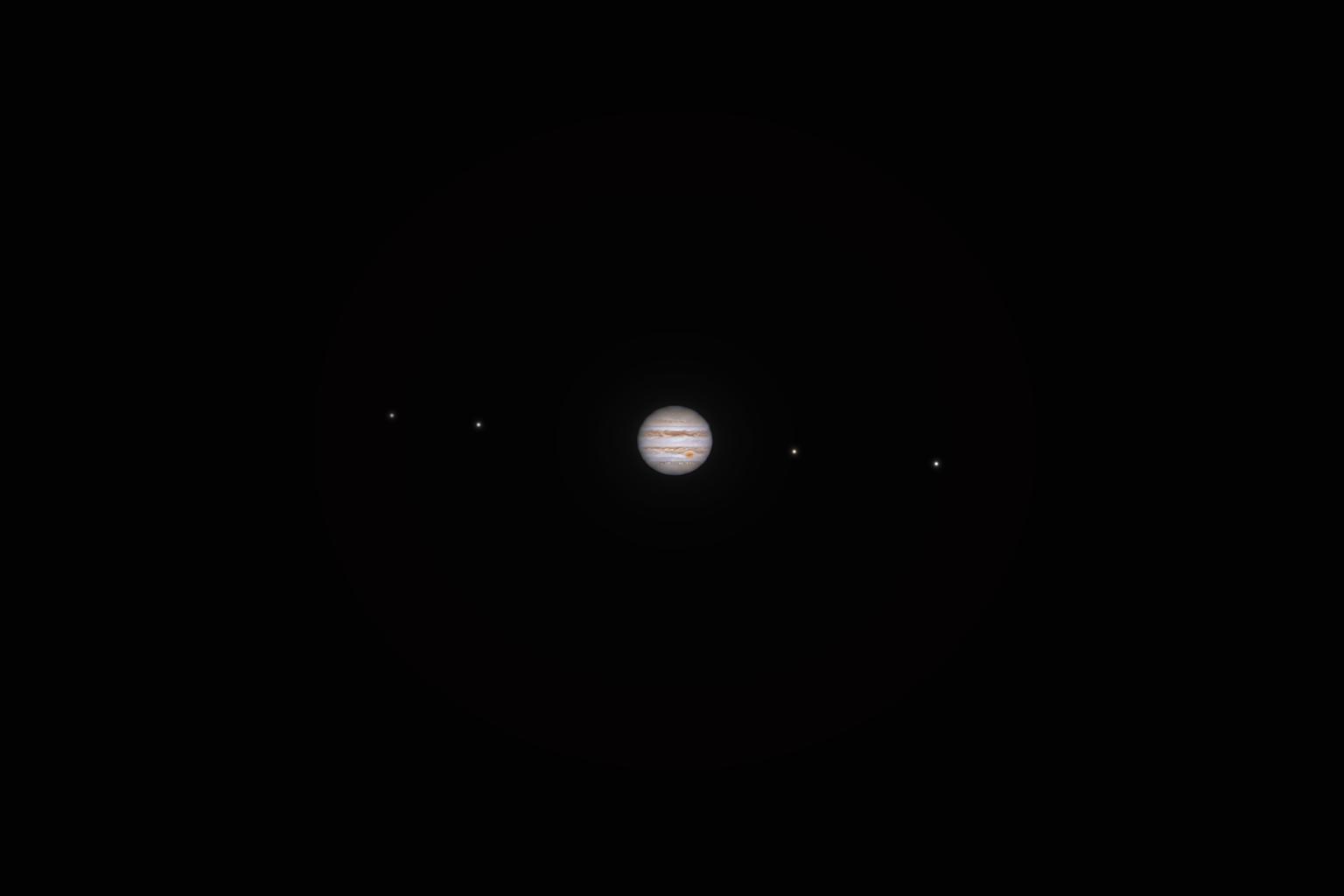
Fine pixels and NIR response resolve belt detail even in soft seeing.
SaturnStrong
Saturn
High resolution captures the rings and Cassini division in good seeing.
The MoonComes alive
The Moon
Sharp crater detail in high-frame-rate lucky-imaging runs.
04Build your imaging rig

Everything you'd actually buy.

Capture · Steady · Sharpen
Capture
The scope that forms the image
Sky-Watcher Skymax 180 Maksutov-Cassegrain
A long planetary tube that matches the fine pixels for high image scale.
Steady
What holds it steady
A tracking mount
Keeps the planet centred through long capture runs.
Sharpen
Reach and detail
A Barlow or Powermate
Adds image scale to suit the tiny pixels and the seeing.
05The Polaris Score

How it scores, and why.

82/100 · #3 of 4 planetary & all-sky cameras
82/ 100
QHY5III715C
#3 of 4 planetary & all-sky cameras

A lot of planetary resolution and NIR sensitivity for a low price. Uncooled with tiny pixels, so it rewards a long focal length and good seeing.

Image quality
80
Low-light sensitivity
80
Ease of use
88
Value
90

Polaris weighs how well the camera does the job it was designed for — image quality, sensitivity, versatility and value — never list price or brand.

06Who it's for

An honest fit check.

Budget-minded planetary and lunar imagers
Buy it if you
✓Budget-minded planetary and lunar imagers
✓People who want a cheap, capable second camera for guiding
✓Imagers on long focal lengths where fine pixels resolve detail
Look elsewhere if you
!Deep-sky imagers, who need a cooled sensor for long exposures
!Anyone imaging at short focal lengths, where the tiny pixels over-sample
!Imagers wanting a large field or the widest dynamic range
07The numbers

Full specifications.

18 measured and stated values
Sensor
ModelSony IMX715
TypeCMOS · 1/2.8"
Megapixels8.3
Pixel Size1.45µm
Bit depth12-bit ADC
Noise & sensitivity
Read noise0.8 e⁻
Full well8,000 e⁻
Peak QE~
Dynamic range12 stops
Cooling
CoolingUncooled
Connectivity & fit
InterfaceUSB 3.0
Weight0.11 kg
More
cooledfalse
Sensor Height3.2mm
Sensor Width5.6mm
Editor’s Take

The IMX715 packs very fine 1.45-micron pixels, so on a long planetary scope it resolves a lot of detail for the money. Strong near-infrared sensitivity helps punch through unsteady seeing. Uncooled and shallow-welled, it is a lucky-imaging tool first.
— The Skynocular verdict