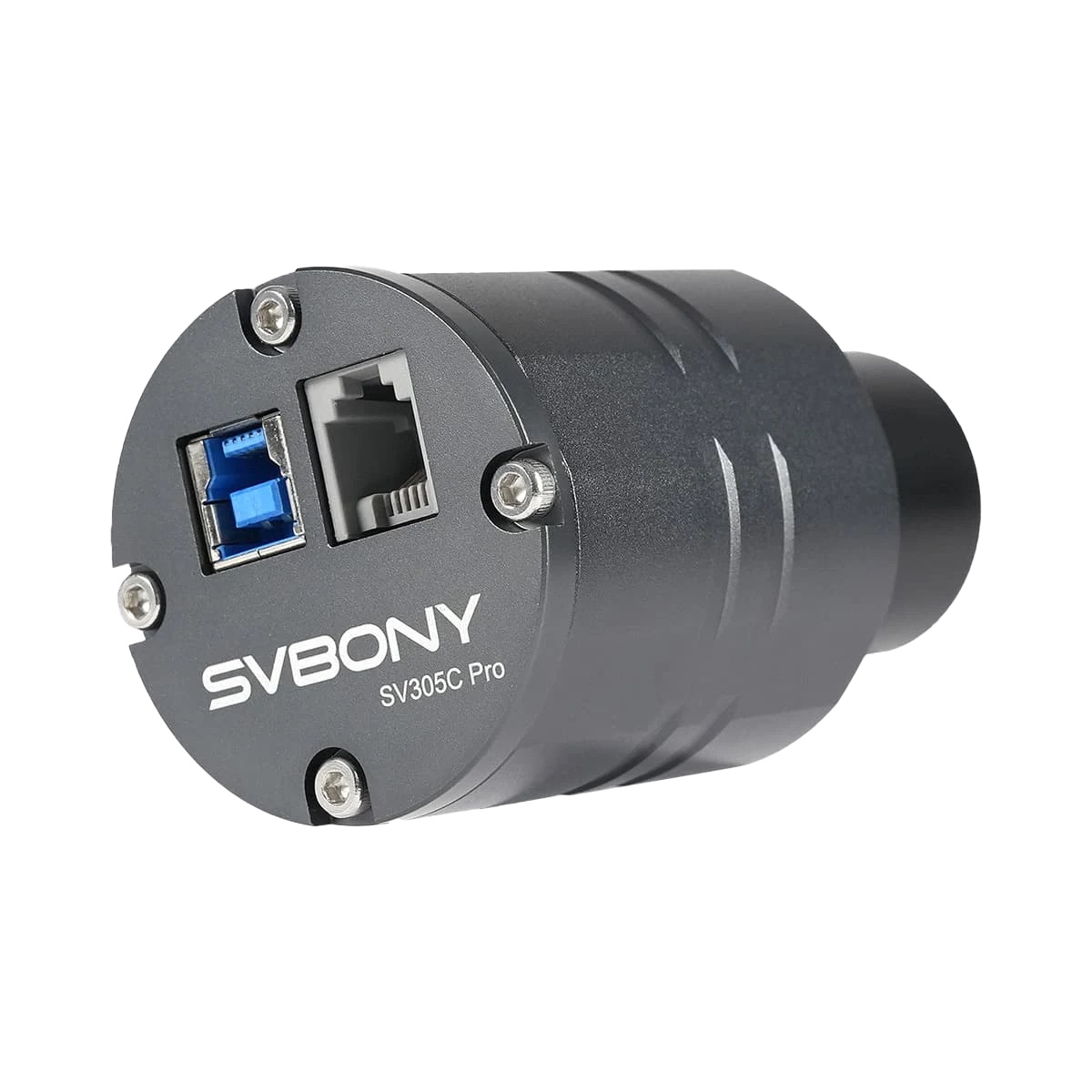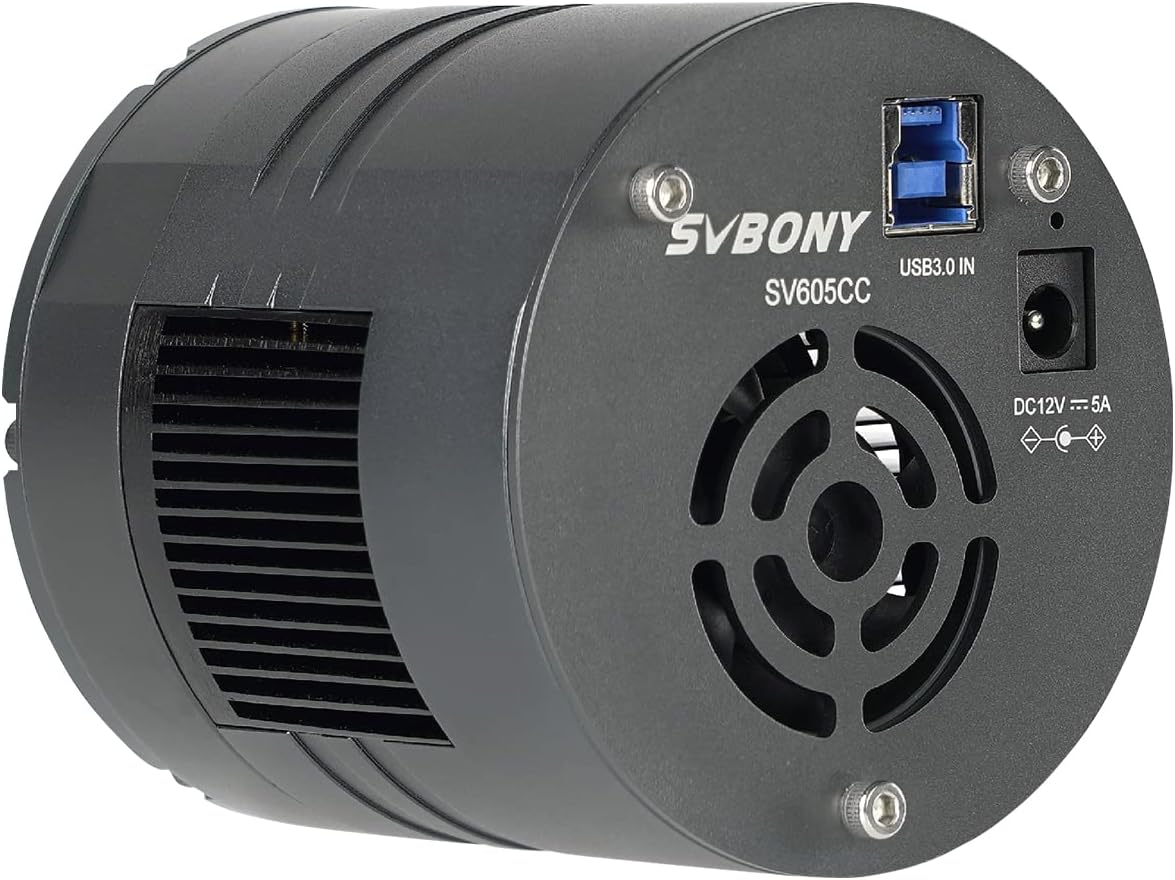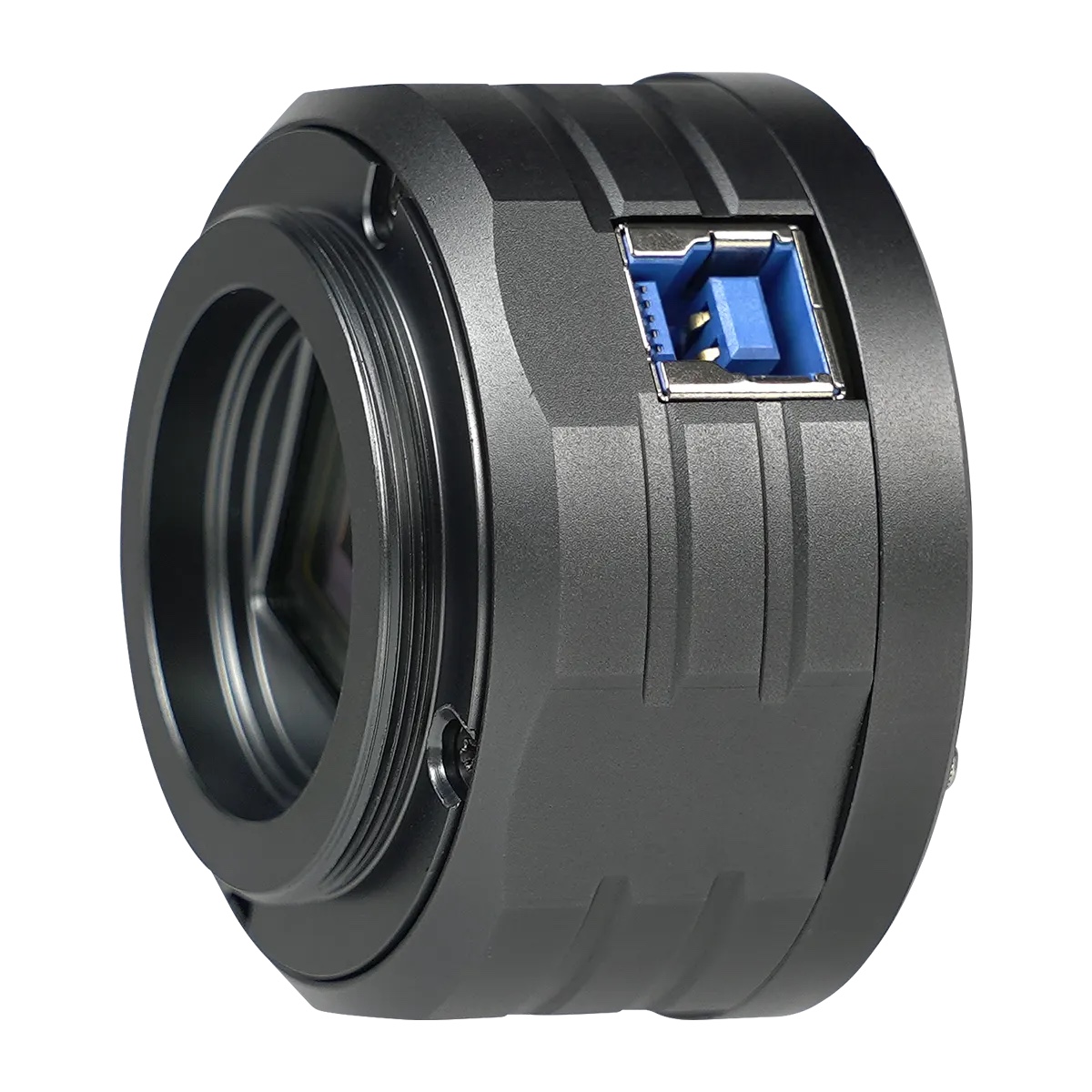
SVBony SV705C
The IMX585 is the current sensor of choice for planetary work, and this is an inexpensive way to own one. Roughly 90 percent quantum efficiency and 0.7 electrons of read noise at high gain, with a sensor large enough to double as an electronically assisted viewing camera.
Primarily a planetary and lunar camera, where fast readout and low noise matter more than sensor area. The 1/1.2 inch sensor is large enough that it also works for electronically assisted viewing, which is unusual in this class.
Lowest in 90 days
Price tracked by PolarisObserved 45 timesTracking since Sep 2026
01What it's good atWhat it's best at — and the trade-offs.
Planetary imaging is a numbers game: you capture thousands of frames and keep the sharpest few percent, so 45 frames per second at full resolution is the…
What it's best at — and the trade-offs.
02In plain EnglishThe numbers, in plain English.
Sony IMX585 · 8.3MP · 2.9µm · None
The numbers, in plain English.
03Typical targetsWhat it shines on.
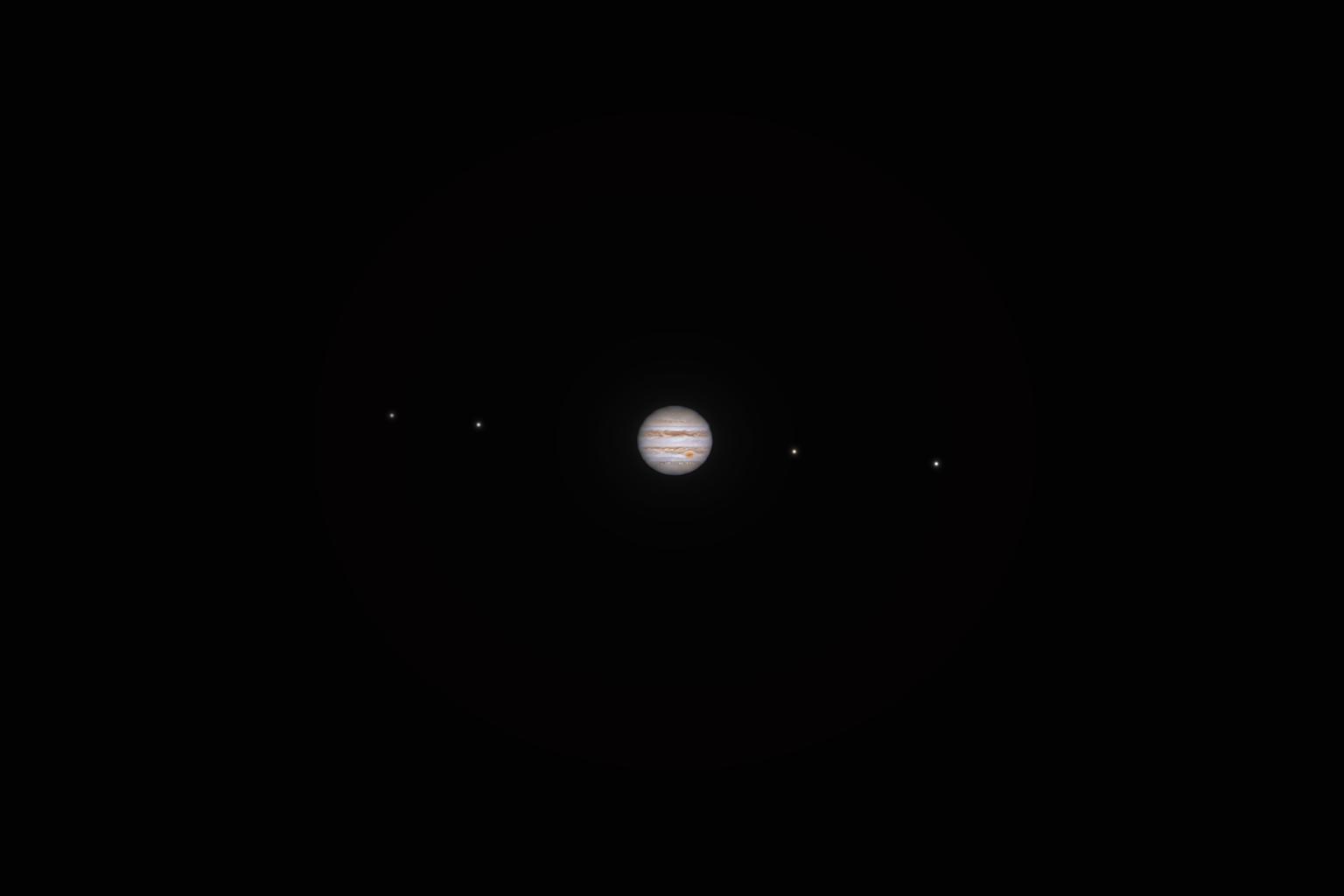
Jupiter, Saturn, The Moon, Mars, Venus, The Orion Nebula (M42)
What it shines on.
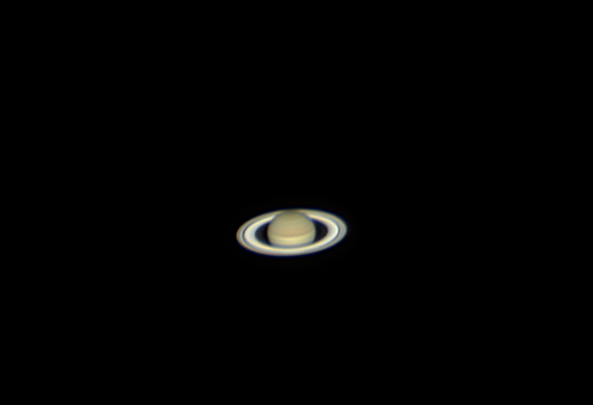
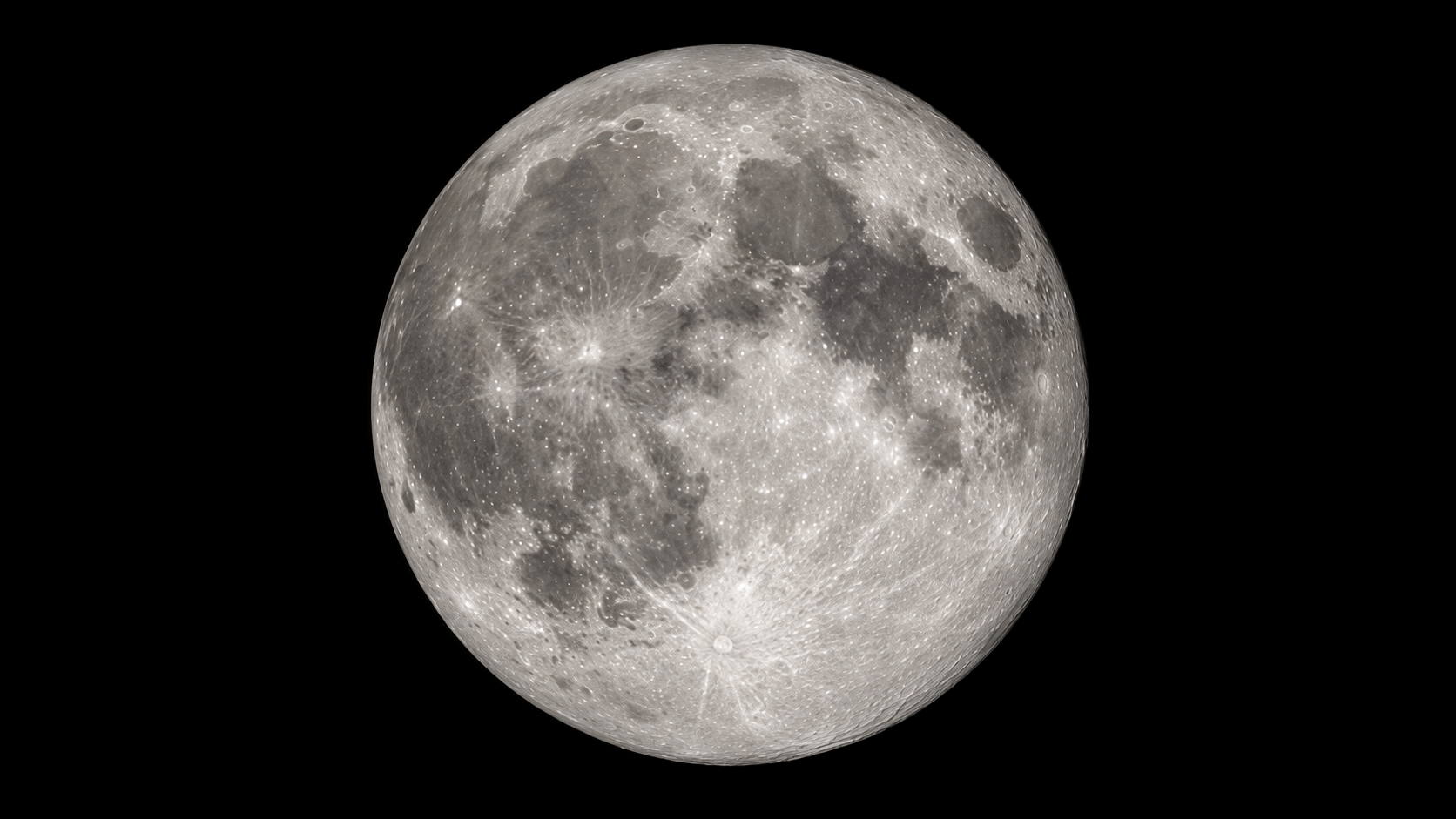
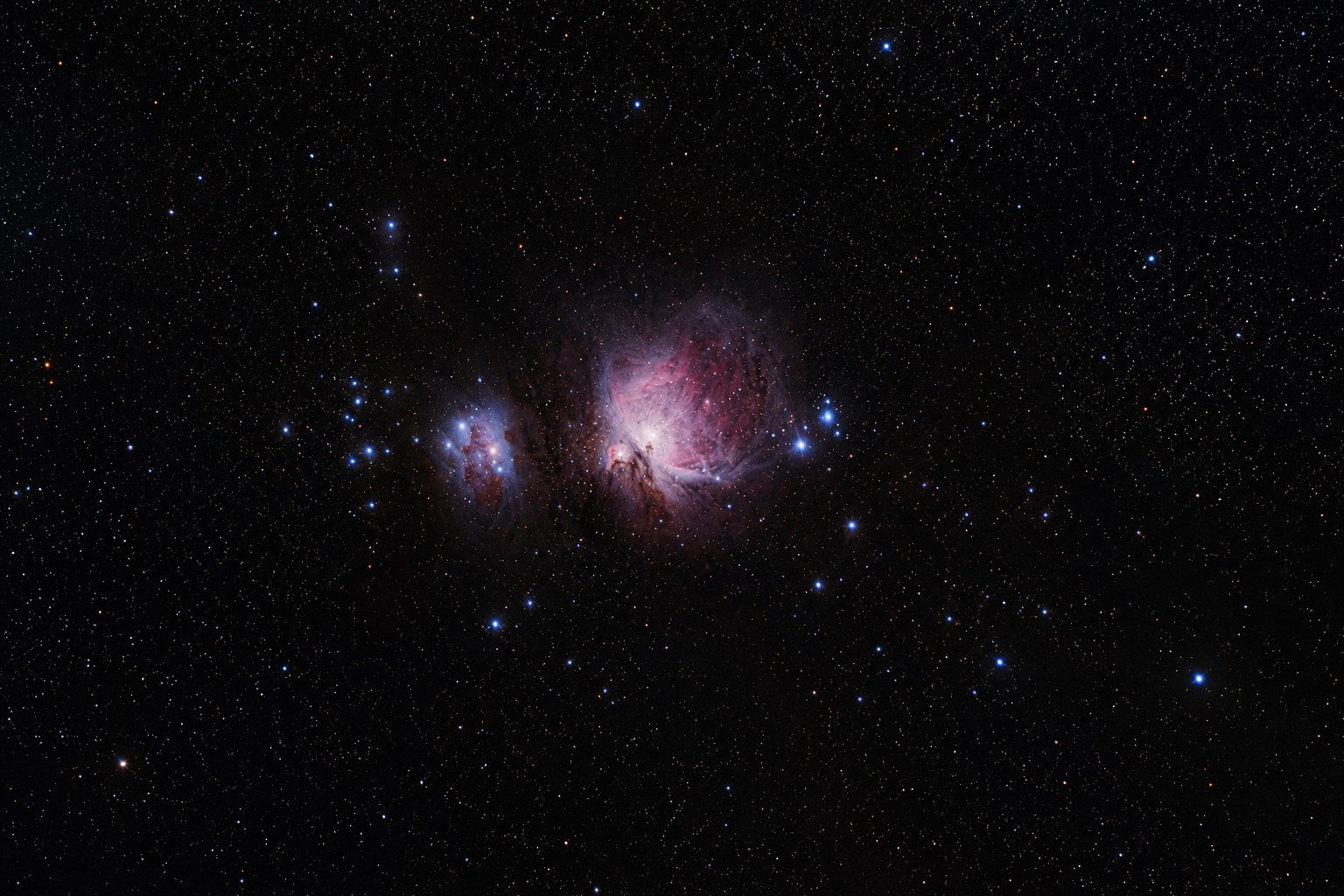
04Build your imaging rigEverything you'd actually buy.
Capture · Steady it · Second duty
Everything you'd actually buy.
05The Polaris ScoreHow it scores, and why.
85/100 · #2 of 5 planetary cameras
How it scores, and why.
Judged as a planetary camera this is close to the top of what is available, because it carries the sensor the premium brands use at a substantially lower price. It gives up ground on software polish and long-exposure deep-sky work, neither of which is what a planetary camera is bought for.
Polaris weighs how well the camera does the job it was designed for — image quality, sensitivity, versatility and value — never list price or brand.
06Who it's forAn honest fit check.
Anyone with a Schmidt-Cassegrain or a Maksutov who wants to photograph Jupiter, Saturn and…
An honest fit check.
07The numbersFull specifications.
21 measured and stated values
Full specifications.
Planetary imaging is the one part of this hobby where a modest telescope and a good camera beat a large telescope and a poor one, because what you are really fighting is the atmosphere and the answer is frames per second. The IMX585 became the sensor everyone wanted for exactly that reason, and the interesting thing about this camera is not that it performs well but that it carries that sensor at a third of what the specification used to cost. The large sensor is the bonus nobody asks for and everybody appreciates the first time they shoot the Moon and find they need two panels instead of six.