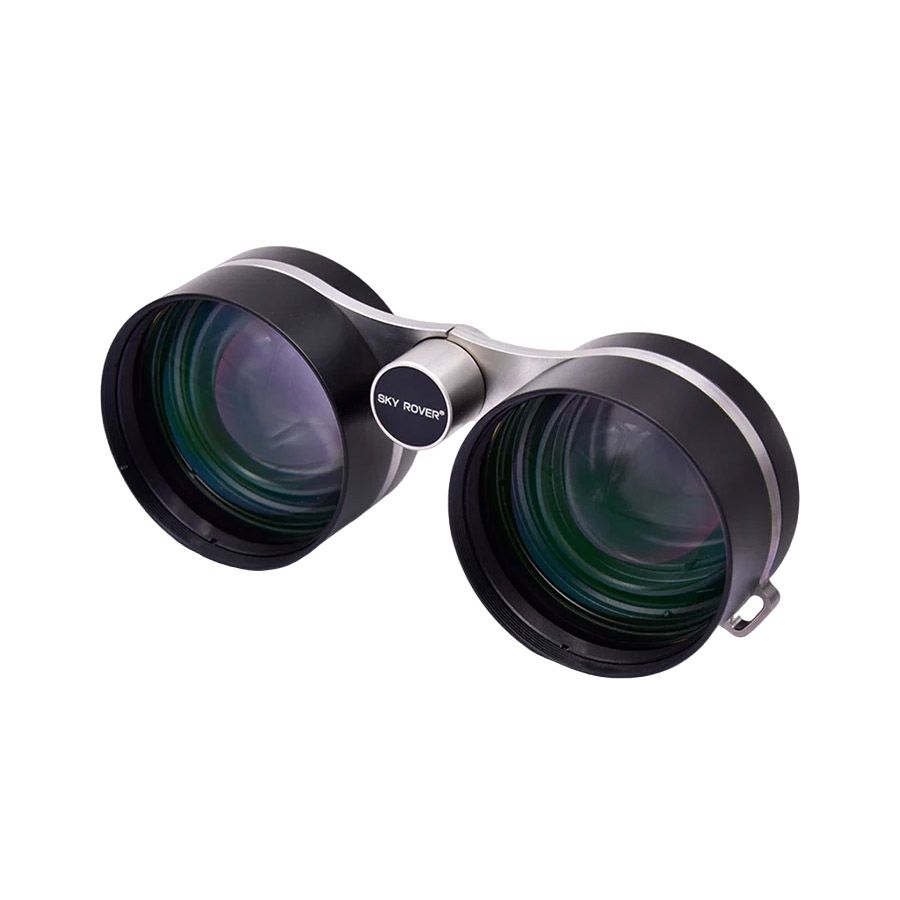
Sky Rover 2x54 Wide Field Galilean Binoculars
A two power binocular with thirty six degrees of field, built for the one thing telescopes and normal binoculars both fail at: seeing a whole constellation at once, slightly brighter than your eyes can manage alone.
How it actually worksWhat the setup looks like.
A Galilean has no prisms: an objective lens and a diverging eyepiece lens, the design Galileo used, and the reason this is small, light and cheap. It also behaves differently from a normal binocular in two ways that catch people out on the first night.
What the setup looks like.
A Galilean has no prisms: an objective lens and a diverging eyepiece lens, the design Galileo used, and the reason this is small, light and cheap. It also behaves differently from a normal binocular in two ways that catch people out on the first night.
Give your eyes the full twenty minutes to dark adapt before judging it. The gain here is at the threshold of visibility, and that is exactly the part of your vision that a glance at a phone destroys.
01Will it fit my setupCompatibility.
What this accessory works with — check the fit before you check the price.
Compatibility.
What this accessory works with — check the fit before you check the price.
02The numbersWhat These Numbers Mean
5 numbers in plain English · full specifications
What These Numbers Mean
5 numbers in plain English · full specifications
03Before you buyGood to know.
The honest caveats — the things that save you a return, a bad first night, or a second purchase you didn't need.
Good to know.
The honest caveats — the things that save you a return, a bad first night, or a second purchase you didn't need.
The catalog is full of instruments that answer the question "what else is out there". This one answers "what am I actually looking at", and it does it by making the sky larger rather than closer. It will not impress anyone you hand it to for ten seconds, because ten seconds is not long enough for a dark-adapted eye to notice one and a half magnitudes. Give it a night, in a chair, on a constellation you thought you already knew, and it becomes the thing you reach for before the telescope comes out.
A two power binocular with thirty six degrees of field, built for the one thing telescopes and normal binoculars both fail at: seeing a whole constellation at once, slightly brighter than your eyes can manage alone.