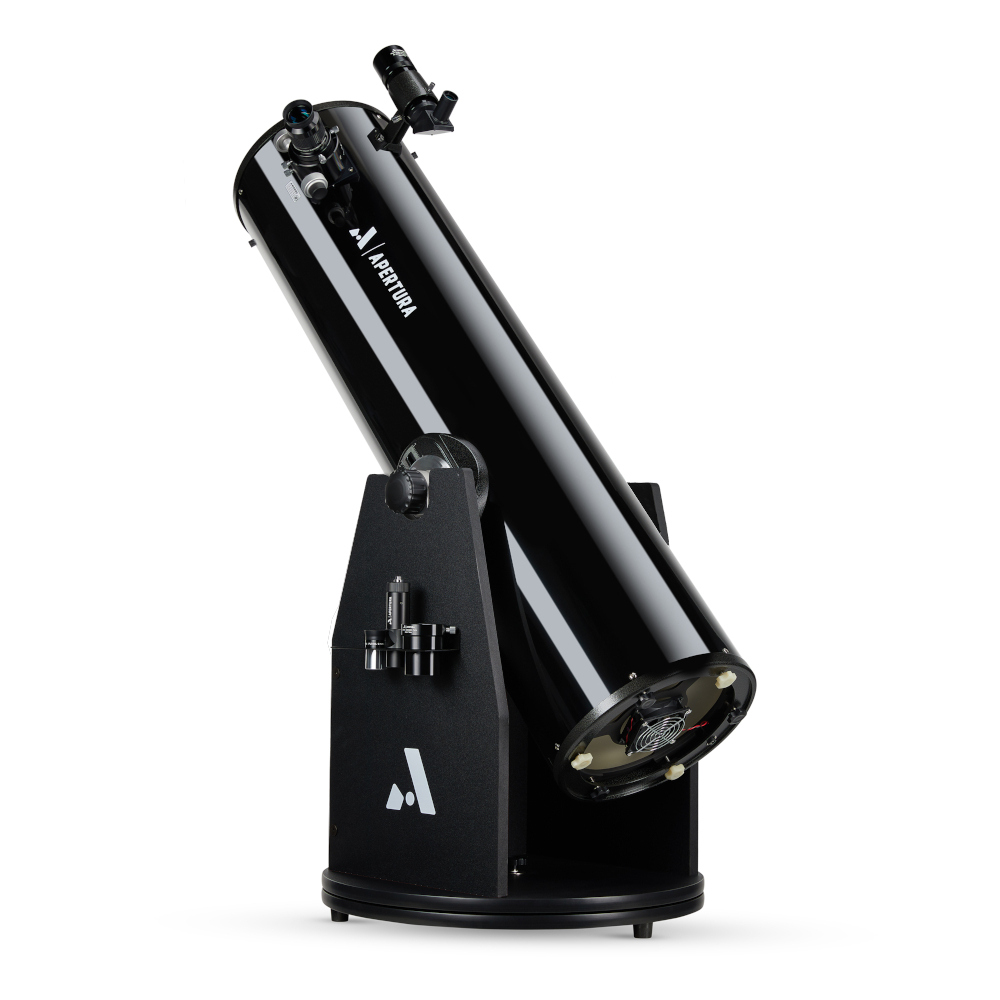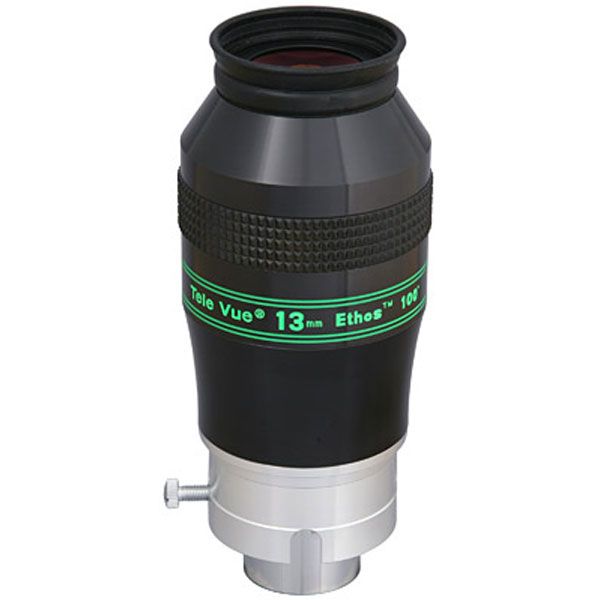
Ethos 13mm — image 1
Tele Vue

Ethos 13mm

The 100-degree Ethos turns a mid-power view into a spacewalk: a true field wide enough to frame whole clusters and nebulae with the edge nowhere in sight. It is the eyepiece for deep-sky observers who want immersion first and will pay for it.

93/ 100
Polaris Score
Optical quality · Immersion · Comfort · Value
See the breakdown ↓
What it's for
Low power · wide fieldHigh power · narrow field

A mid-power, ultra-wide deep-sky field: high enough to reveal structure in nebulae and galaxies, wide enough to keep large objects whole. It is not a planetary eyepiece and not a low-power rich-field sweeper.

Apparent Field
100°
Barrel Size
2"
Eye Relief
15mm
Focal Length
13mm
From$745

Lowest in 90 daysLowest ever tracked

Price tracked by PolarisObserved 90 timesTracking since Jul 2026

Try in simulator →
The spacewalk

You don’t look at a field.
You look into the sky.

Every number on the spec sheet matters less than one feeling: how much sky wraps around your eye. Widen the apparent field and watch the black edge of the eyepiece slip away.

100° apparent field

At 100°, the edge slips into your peripheral vision — you stop looking at a field and start looking into the sky.
Try this eyepiece on your own scope in the Simulator →
01What it's good at

What it's best at — and the trade-offs.

The 100-degree field is genuinely edge-to-edge sharp even at f/5, which is the hard engineering problem most wide-fields fail.
Best at
✓The 100-degree field is genuinely edge-to-edge sharp even at f/5, which is the hard engineering problem most wide-fields fail.
✓At mid power it frames large showpieces like the Orion Nebula and the Double Cluster whole, with dark sky around them.
✓Tele Vue build and coatings deliver the contrast that makes faint nebulosity and galaxy structure stand out.
Trade-offs
!It is heavy enough to shift a Dobsonian's balance, and it demands a sturdy 2-inch focuser.
!Eye relief is a real 15mm, but the enormous eye lens makes it less glasses-friendly than the number suggests.
!On a fast Newtonian without a coma corrector, stars near the edge show the scope's coma, visible across this wide field.
02In your telescope

One eyepiece. A different job in every scope.

37× in a small refractor, 156× in a long SCT

An eyepiece has no magnification of its own — the telescope decides. The same eyepiece becomes 37× and 2.7° of sky in a little refractor, or 156× and a tight frame in a long SCT. Here’s what it does across common scopes.

Small apo refractor
480 mm · f/5.5
Magnification
37×
True field
2.7°
Exit pupil
2.4 mm
In a fast little apo it becomes a rich-field cruiser: 37x over a 2.7-degree window, sweeping large swaths of the Milky Way with pinpoint stars to the edge.
8-inch Dobsonian
1200 mm · f/6
Magnification
92×
True field
1.1°
Exit pupil
2.2 mm
In an 8-inch f/6 Dob this is the deep-sky home run, 92x framing the Orion Nebula or the Double Cluster whole inside a full degree of dark sky.
12-inch Dobsonian
1500 mm · f/5
Magnification
115×
True field
52′
Exit pupil
2.6 mm
In a fast 12-inch it pushes to 115x while still holding most large objects, though at f/5 a coma corrector earns its keep at the field edge.
8-inch SCT
2032 mm · f/10
Magnification
156×
True field
38′
Exit pupil
1.3 mm
In an f/10 SCT it turns into a high-power globular and galaxy eyepiece, 156x on a small but fully immersive 0.64-degree field.
Exit pupil is how wide the beam of light leaving the eyepiece is. Around 5–6 mm is bright and immersive under dark skies; push much past 6 mm and you waste light, and under light pollution a smaller exit pupil shows more contrast.
03In plain English

The numbers, in plain English.

13mm FL · 100° AFOV · 2"
Apparent fieldHyperwide
100°
The whole point: the field edge sits outside your vision, so the object seems to float in space rather than sit in a porthole.
Focal lengthMid power
13 mm
High enough to darken the sky and show structure, low enough to keep large clusters and nebulae in a single frame.
Eye reliefAdequate
15 mm
Comfortable bare-eyed; usable with glasses, but the large eye lens means you must position your eye carefully to take in all 100 degrees.
BarrelTwo-inch
2"
Needs a 2-inch focuser and adds real weight; this is not a lightweight travel eyepiece.
Optical designPremium
Tele Vue Ethos
Edge-to-edge sharpness at f/5 is the design's signature, with reference-grade contrast and coatings.
04What comes alive

The targets this eyepiece was born for.

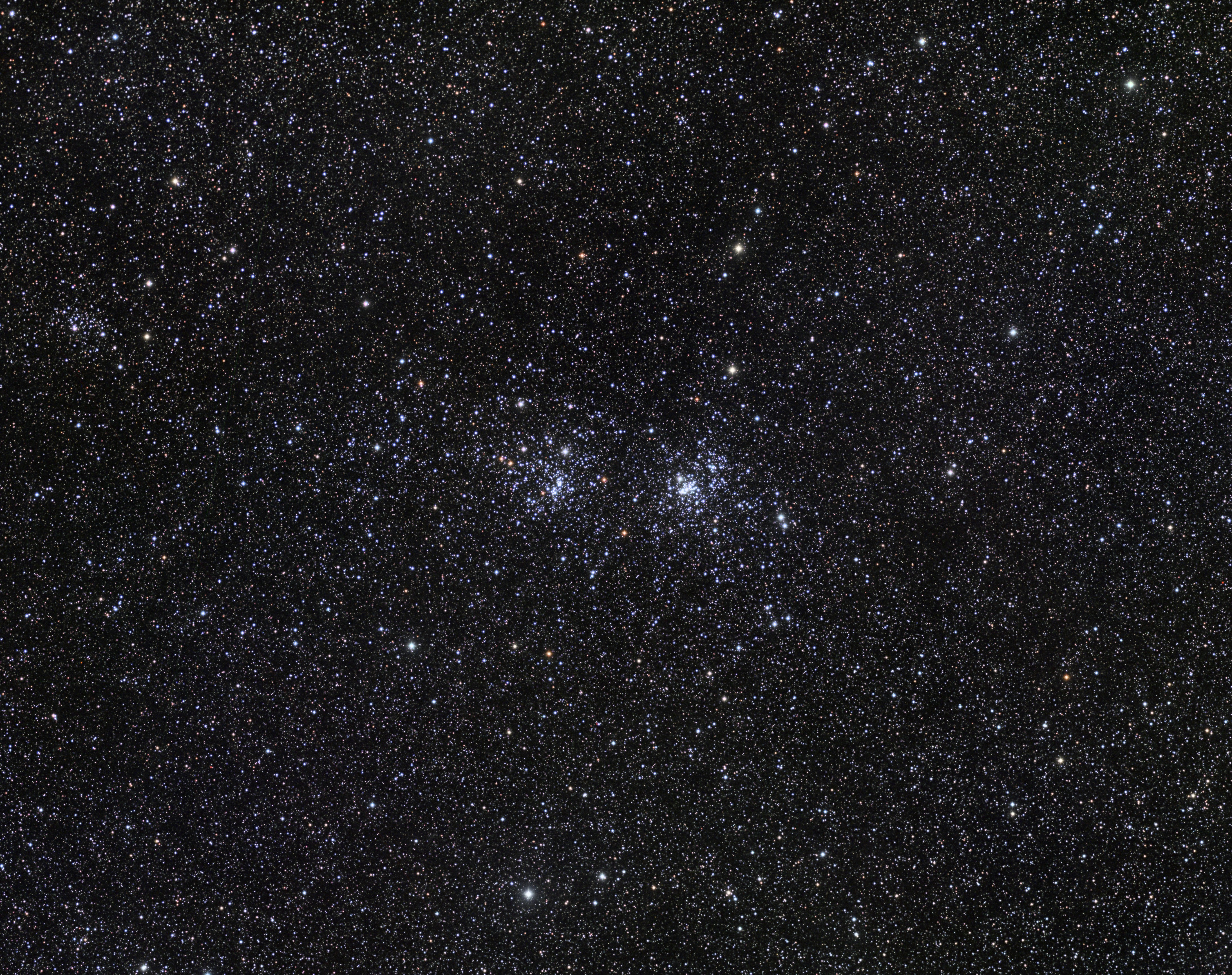
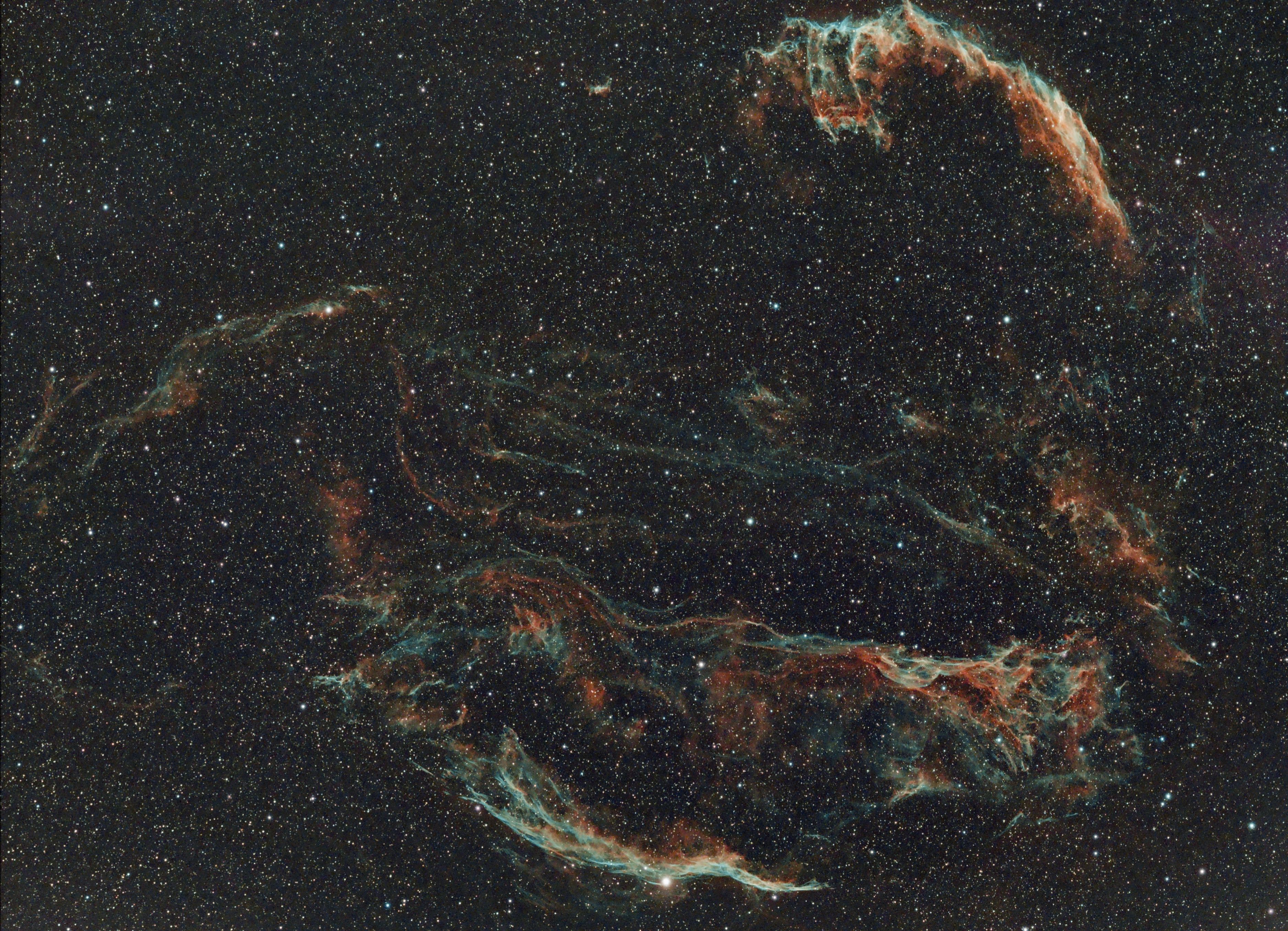
Orion Nebula (M42), Double Cluster, Andromeda Galaxy (M31), Veil Nebula, Pleiades (M45)…
Orion Nebula (M42)Comes alive
Orion Nebula (M42)
The wings and Trapezium sit whole inside a dark, wide field at mid power.
Double ClusterComes alive
Double Cluster
Both clusters frame together with room to spare, stars sharp to the edge.
Andromeda Galaxy (M31)Excellent
Andromeda Galaxy (M31)
Core and dust lane with M32 and M110 in the same generous field.
Veil NebulaComes alive
Veil Nebula
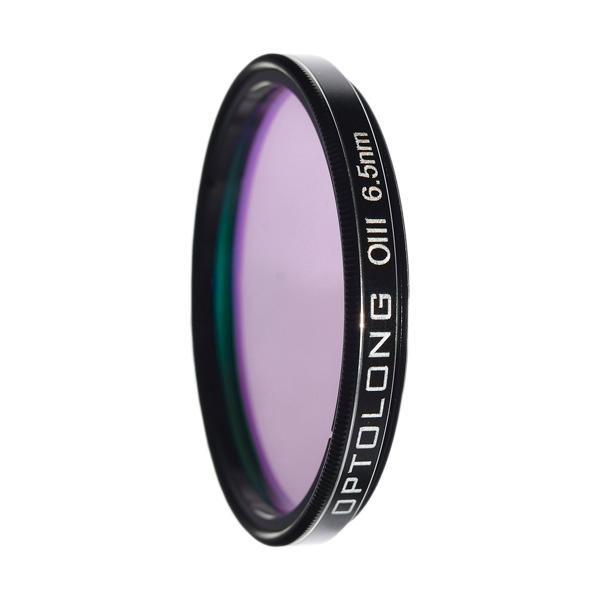
With an OIII filter the wide field traces long arcs of the supernova remnant in one view.
Pleiades (M45)Excellent
Pleiades (M45)
The whole cluster floats in black with the brighter members showing color.
Excellent
Rosette Nebula
Large and faint; the wide field plus a narrowband filter reveals the full ring.
05Role in a collection

Where it sits in your eyepiece case.

Where it sits across 3 focal lengths

A good eyepiece collection isn’t a pile of glass — it’s two or three focal lengths that hand off from wide to tight. This is the anchor at the bottom of the ladder: the one you find and frame with. You buy it once, and it stays your low-power eyepiece for life.

32 mm
Low power · wide field
Find, frame and sweep. Your widest true field and the lowest useful magnification — the eyepiece you reach for first.
Veil Nebula · Pleiades · Milky Way star clouds
13 mmThis one
Medium power · the workhorse
Where most deep-sky objects look their best — galaxies, globulars and planetary nebulae at a comfortable scale.
M13 · Ring Nebula · most galaxies
7 mm
High power · detail
Planets, the Moon at the terminator, tight double stars and the smallest planetary nebulae. Steady-air nights only.
Jupiter · Saturn · lunar craters
06Build around it

What it pairs with.

The telescope · Pair it · Filter it
The telescope
What it goes into
Fast Dobsonian or apo refractor
An 8- to 12-inch Dob or a short apo makes the most of the wide field.
Paracorr (fast Newtonians)
On f/5 and faster Newtonians a coma corrector cleans up the field edge.
Pair it
What extends its range
Ethos 8mm
Steps up to high power for planetary nebulae and galaxy cores.
Ethos 21mm or Nagler 31mm
Drops to low power for the largest objects and rich-field sweeping.
07The Polaris Score

How it scores, and why.

93/100
93/ 100
Ethos 13mm

Judged as an immersive deep-sky eyepiece it does the hard thing almost perfectly: the 100-degree field stays sharp and contrasty nearly to the edge, even in fast scopes. It gives up ground only on comfort and portability, which is precisely the trade a hyperwide asks you to make.

Optical quality
95
Immersion
100
Comfort
75
Value
80

Polaris weighs how well the eyepiece does the job it was designed for — optics, immersion, comfort and value — never list price or brand.

08Who it's for

An honest fit check.

Deep-sky observers who value the sense of floating among the stars above any other quality…
Buy it if you
✓Deep-sky observers who value the sense of floating among the stars above any other quality, and want it at a useful mid power.
✓Owners of fast Dobsonians and refractors who want a wide, sharp field and will add a coma corrector on fast Newtonians.
✓Anyone who has looked through a 100-degree eyepiece and simply cannot go back to a narrower field.
✓Observers building a small premium kit who want one mid-power eyepiece that does deep sky brilliantly.
Look elsewhere if you
!Planetary and lunar specialists: at 13mm this is mid power, and a shorter Ethos or a Delos serves the planets better.
!Eyeglass wearers who must keep glasses on: 15mm of eye relief behind a huge eye lens is workable but tight at 100 degrees.
!Grab-and-go and travel observers: it is large and heavy, and it needs a 2-inch focuser.
!Budget-minded buyers, for whom an 82-degree Nagler or a good 68-degree eyepiece delivers most of the experience for far less.
09The numbers

Full specifications.

5 measured and stated values
Optical
Focal Length13mm
Apparent Field100°
Comfort & handling
Eye Relief15mm
Fit & build
Barrel Size2"
Editor’s Take

Look through an Ethos once and every 60-degree eyepiece afterward feels like peering down a tube. The 13mm sits in the deep-sky sweet spot, high enough to darken the background and pull out detail, wide enough that the object seems to float in front of you rather than sit in a porthole.

— The Skynocular verdict
10Alternatives

For a different goal, start here.

3 alternatives, each mapped to the goal it wins at
Wider true field

Ethos 17mm

Lower power and an even larger true field for the biggest objects, at the cost of magnification.

Higher power

Ethos 8mm

The same 100-degree immersion pushed toward planetary nebulae, globulars and galaxy detail.
Lighter and cheaper

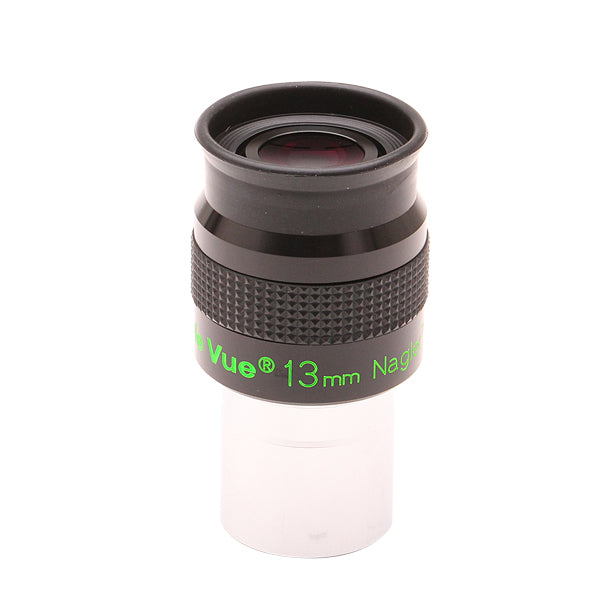
Nagler 13mm Type 6

82 degrees instead of 100, much lighter and less expensive, for most of the experience.

→