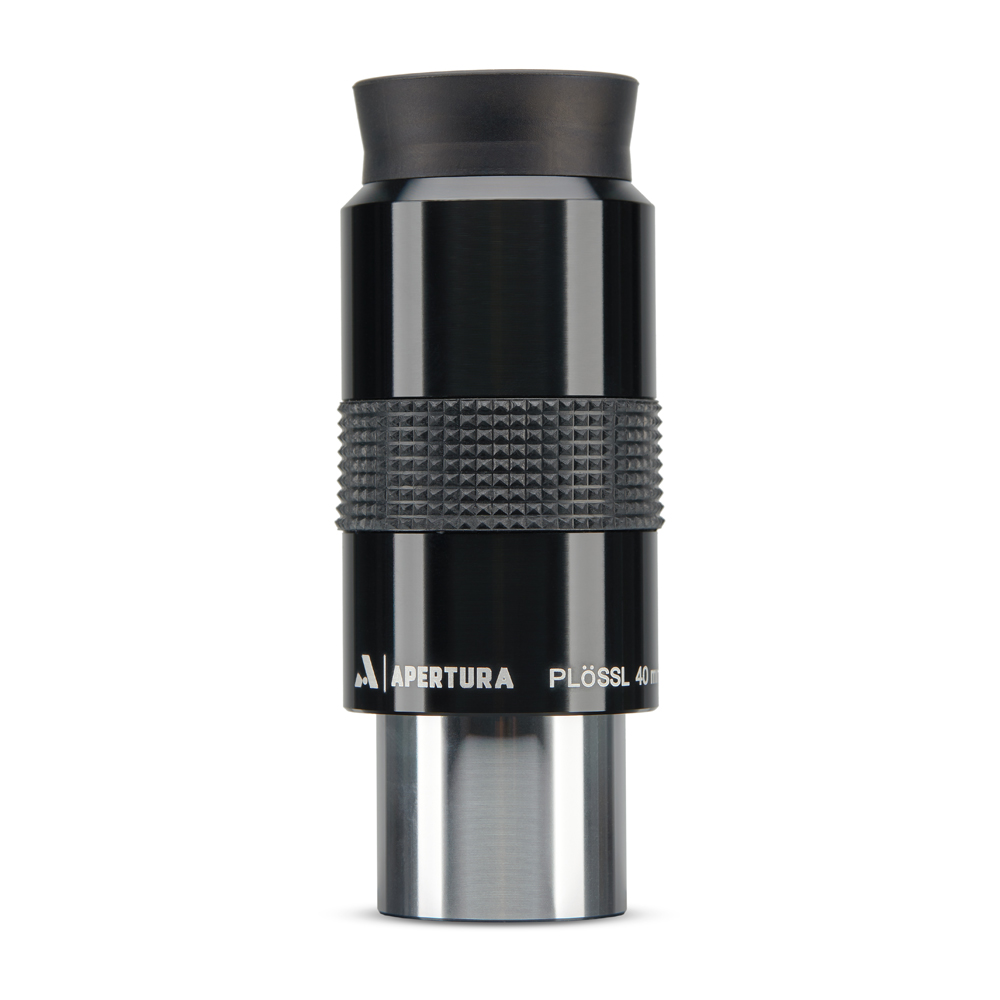
Apertura Plössl 40mm — image 1
Apertura

Apertura Plössl 40mm

A 40mm Apertura Plössl: a wide-field, low-power eyepiece for the biggest objects and rich star fields, from an honest, sharp 52-degree Plössl at the lowest sensible price.

74/ 100
Polaris Score
Optical quality · Immersion · Comfort · Value
See the breakdown ↓
What it's for
Low power · wide fieldHigh power · narrow field

Low power · wide field. At 40mm this is a wide-field, low-power eyepiece for the biggest objects and rich star fields; it is not the eyepiece for high-power planetary detail.

Apparent Field
45°
Barrel Size
1.25"
Eye Relief
28mm
Focal Length
40mm
From$34.95

Lowest in 90 daysLowest ever tracked

Price tracked by PolarisObserved 20 timesTracking since Mar 2026

Try in simulator →
Where to buy

Verified yesterday · prices tracked daily

The spacewalk

You don’t look at a field.
You look into the sky.

Every number on the spec sheet matters less than one feeling: how much sky wraps around your eye. Widen the apparent field and watch the black edge of the eyepiece slip away.

45° apparent field

At 45°, you are aware of the field edge, like looking down a short, comfortable tube.
Try this eyepiece on your own scope in the Simulator →
01What it's good at

What it's best at — and the trade-offs.

Cheap enough to own several and cover a whole range of magnifications.
Best at
✓Cheap enough to own several and cover a whole range of magnifications.
✓Light and unfussy in any focuser.
✓At 40mm it lands squarely in low power · wide field territory, exactly where wide star fields and large objects belong.
Trade-offs
!Very short eye relief below about 10mm, which is genuinely uncomfortable.
!A 52-degree field is narrow by modern standards.
!Simple coatings and build; this is a value tool, not a showpiece.
02In your telescope

One eyepiece. A different job in every scope.

12× in a small refractor, 51× in a long SCT

An eyepiece has no magnification of its own — the telescope decides. The same eyepiece becomes 12× and 3.8° of sky in a little refractor, or 51× and a tight frame in a long SCT. Here’s what it does across common scopes.

Small apo refractor
480 mm · f/5.5
Magnification
12×
True field
3.8°
Exit pupil
7.3 mm
12× across a 3.8° field at a 7.3mm exit pupil, a bright, low-power sweep for framing the largest objects.
8-inch Dobsonian
1200 mm · f/6
Magnification
30×
True field
1.5°
Exit pupil
6.7 mm
30× across a 1.5° field at a 6.7mm exit pupil, a bright, low-power sweep for framing the largest objects.
12-inch Dobsonian
1500 mm · f/5
Magnification
38×
True field
1.2°
Exit pupil
8.0 mm
38× across a 1.2° field at a 8mm exit pupil, a bright, low-power sweep for framing the largest objects.
8-inch SCT
2032 mm · f/10
Magnification
51×
True field
53′
Exit pupil
4.0 mm
51× across a 53′ field at a 4mm exit pupil, right in the deep-sky sweet spot, bright and easy on the eye.
Exit pupil is how wide the beam of light leaving the eyepiece is. Around 5–6 mm is bright and immersive under dark skies; push much past 6 mm and you waste light, and under light pollution a smaller exit pupil shows more contrast.
03In plain English

The numbers, in plain English.

40mm FL · 45° AFOV · 1.25"
Focal lengthLow power
40 mm
Divided into your telescope this yields 12x in a small refractor, 30x in an eight inch Dobsonian and 51x in an eight inch Schmidt-Cassegrain. These are finding and framing powers rather than detail powers, which is what you want for locating a target and for the large open clusters that will not fit at anything shorter.
Apparent fieldTraditional
45°
Forty five degrees is narrower than the fifty two of the shorter Plossls in this range, and that is not a cost saving. A 1.25 inch barrel can only pass so much field, so at this focal length the design has to give up apparent field to fit through it. The view feels tighter than the rest of the family.
Eye reliefComfortable
28 mm
Eye relief is how far behind the lens your eye can sit and still see the whole field. At 28 millimetres this is comfortable with or without spectacles, which is the quiet advantage of a long focal length Plossl: the simple design gives generous eye relief for free where a complex wide-field has to engineer it.
Optical designSimple and sharp
4-element Plössl
Four elements in two cemented pairs, which is the arrangement that has defined this eyepiece type since the 1860s. It is sharp on axis, colour neutral and cheap to make well. What it does not do is hold the field flat: in a telescope faster than about f/6 the outer fifth of the view softens visibly, which is the difference between this and the flat-field designs that cost three times as much.
BarrelAt the field-stop limit
1.25 inch
The barrel is the limit here, not the glass. A 1.25 inch tube can only pass a field stop of about 27 millimetres, and at this focal length the design is already against that ceiling. That means a longer Plossl in this barrel shows no more sky than a 32 mm does, and going wider genuinely requires a 2 inch eyepiece.
04What comes alive

The targets this eyepiece was born for.
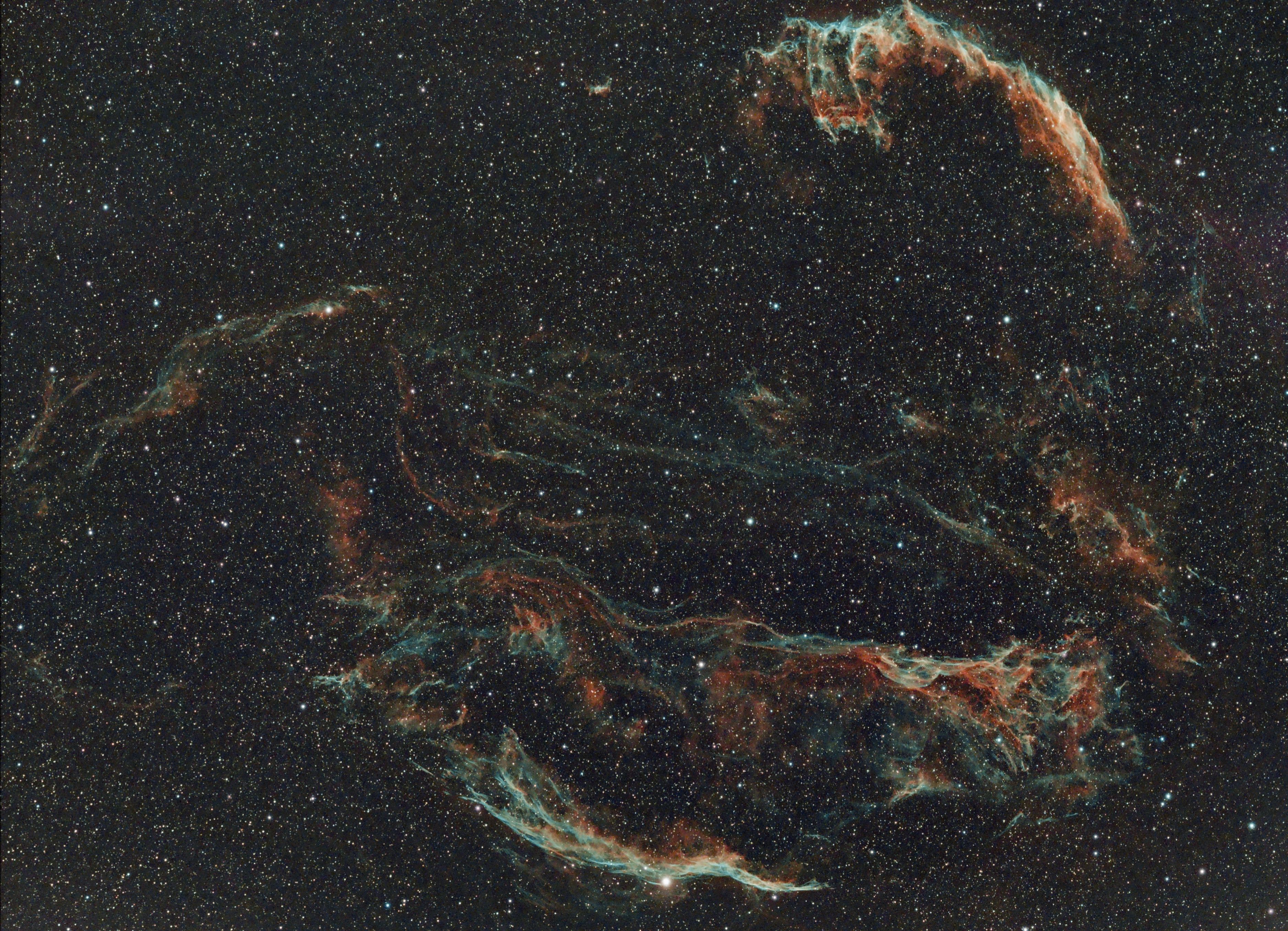
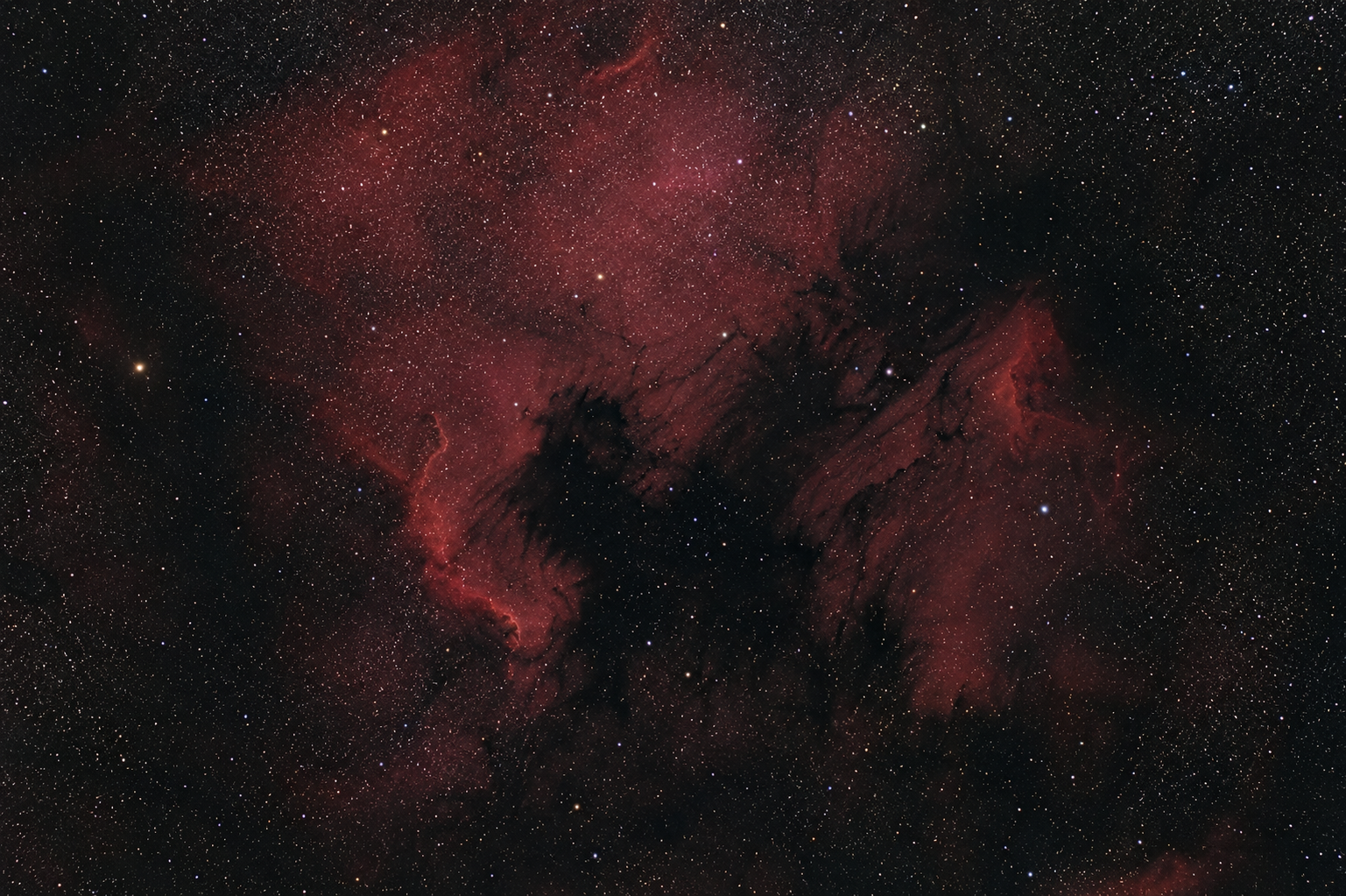
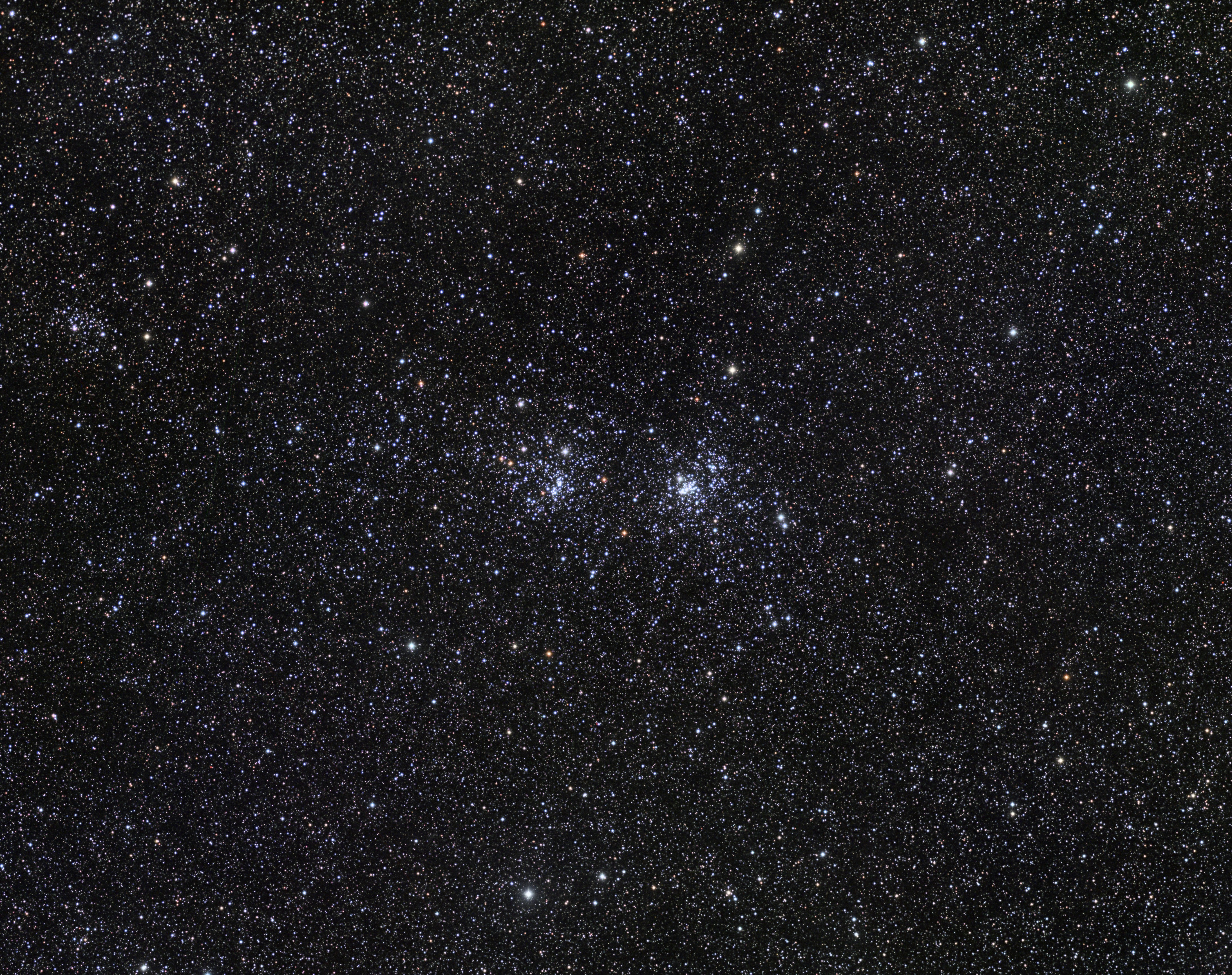
The Veil Nebula, The North America Nebula, The Pleiades (M45), Milky Way star clouds, The…
The Veil NebulaComes alive
The Veil Nebula
With an OIII filter the lacework wraps across the field.
The North America NebulaExcellent
The North America Nebula
A wide, faint target that only fits at long focal length.
The Pleiades (M45)Comes alive
The Pleiades (M45)
The full cluster framed with room around every star.
Excellent
Milky Way star clouds
Sweeping the summer Milky Way at its richest.
The Andromeda Galaxy (M31)Excellent
The Andromeda Galaxy (M31)
The full span of the galaxy and its dust lanes.
The Double ClusterComes alive
The Double Cluster
Both clusters with a generous star field between them.
05Role in a collection

Where it sits in your eyepiece case.

Where it sits across 3 focal lengths

A good eyepiece collection isn’t a pile of glass — it’s two or three focal lengths that hand off from wide to tight. This is the anchor at the bottom of the ladder: the one you find and frame with. You buy it once, and it stays your low-power eyepiece for life.

40 mmThis one
Low power · wide field
Find, frame and sweep. Your widest true field and the lowest useful magnification, the eyepiece you reach for first.
Veil Nebula · Pleiades · Milky Way star clouds
13 mm
Medium power · the workhorse
Where most deep-sky objects look their best, galaxies, globulars and planetary nebulae at a comfortable scale.
M13 · Ring Nebula · most galaxies
7 mm
High power · detail
Planets, the Moon at the terminator, tight double stars and the smallest planetary nebulae. Steady-air nights only.
Jupiter · Saturn · lunar craters
06Build around it

What it pairs with.

The telescope · Pair it · Filter it
The telescope
What it goes into
Any 1.25-inch focuser
Fits essentially every telescope made.
Fast, short scopes love this field
A fast Newtonian or refractor turns this focal length into a rich, wide sweep.
Pair it
What extends its range
A high-power eyepiece (~24mm)
Locate and frame with this one, then swap to high power for planets and small objects.
Filter it
What transforms the view
A UHC or OIII nebula filter
At low power this eyepiece frames big emission nebulae; a narrowband filter makes the Veil and North America jump out.
07The Polaris Score

How it scores, and why.

74/100
74/ 100
Apertura Plössl 40mm

Judged as a wide-field, low-power eyepiece for the biggest objects and rich star fields, it earns its score on classic four-element plössl optics: crisp and high-contrast on-axis. The comfortable eye relief lifts it further. A wide field is what this focal length is for, and it delivers.

Optical quality
70
Immersion
56
Comfort
94
Value
88

Polaris weighs how well the eyepiece does the job it was designed for — optics, immersion, comfort and value — never list price or brand.

08Who it's for

An honest fit check.

Observers who want a wide-field, low-power eyepiece for the biggest objects and rich star…
Buy it if you
✓Observers who want a wide-field, low-power eyepiece for the biggest objects and rich star fields.
✓Anyone who observes in eyeglasses; the eye relief here is long enough to see the whole field.
✓Observers who value on-axis contrast over a sprawling field.
Look elsewhere if you
!Anyone who has looked through a wide-field eyepiece and cannot go back to a 52-degree tunnel.
!Grab-and-go observers watching every gram, since this is not the lightest option.
!Planetary specialists who want the last ounce of high-power contrast from an orthoscopic.
09The numbers

Full specifications.

4 measured and stated values
Optical
Focal Length40mm
Apparent Field45°
Comfort & handling
Eye Relief28mm
Fit & build
Barrel Size1.25"
Editor’s Take

Sweep it across a rich star field and the reason to own this focal length is obvious in a second. That is what the Plössl is for.

— The Skynocular verdict
10Alternatives

For a different goal, start here.

3 alternatives, each mapped to the goal it wins at
Wider, lower power

Apertura Plössl 64mm

The same optics with more true field, for framing larger objects and finding your way around.

More magnification

Apertura Plössl 24mm

The same line at higher power, for planets and the smallest deep-sky detail.
Cross-shop

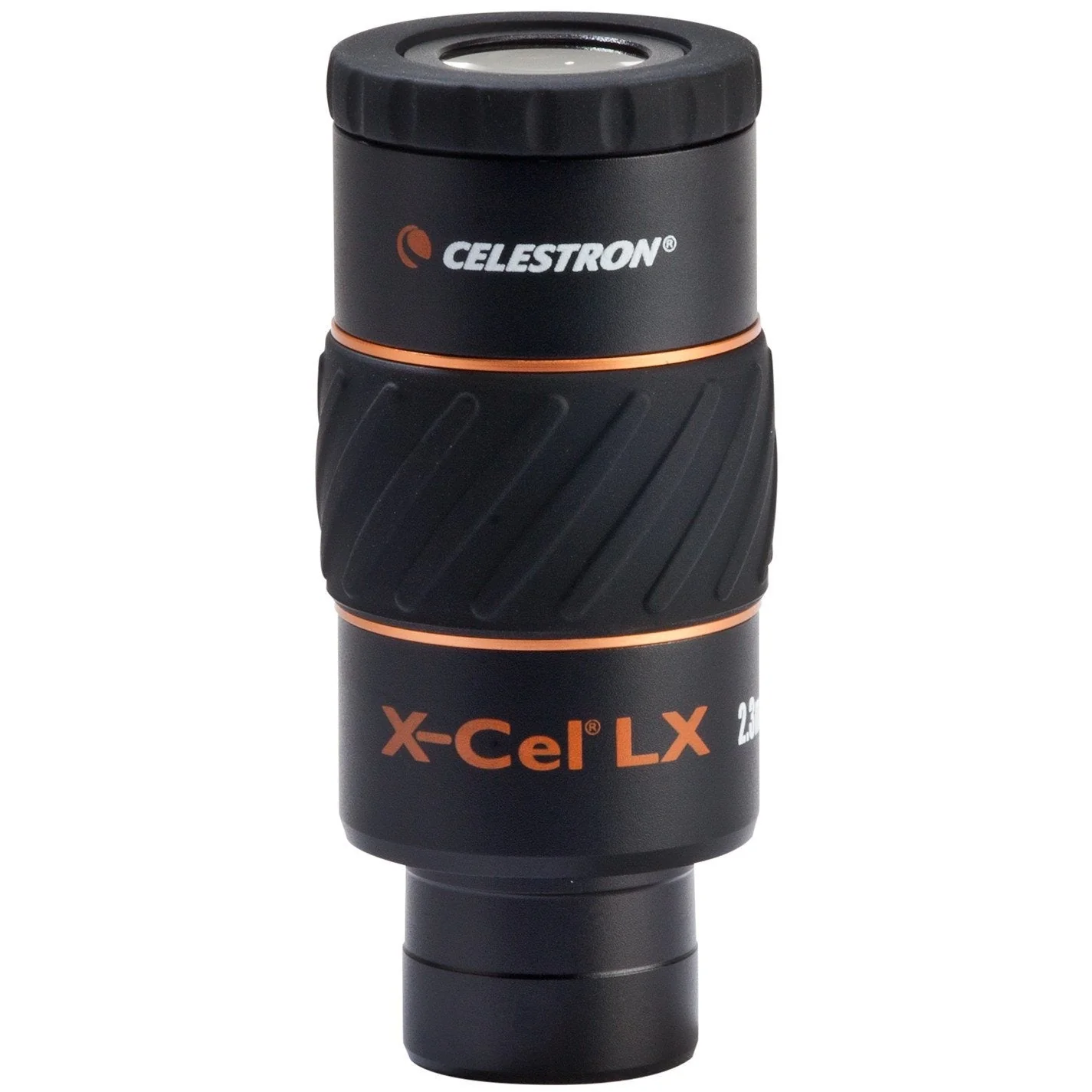
Celestron X-Cel LX

A natural alternative at a nearby price point, if you want to compare field and feel before committing.

→