Apertura
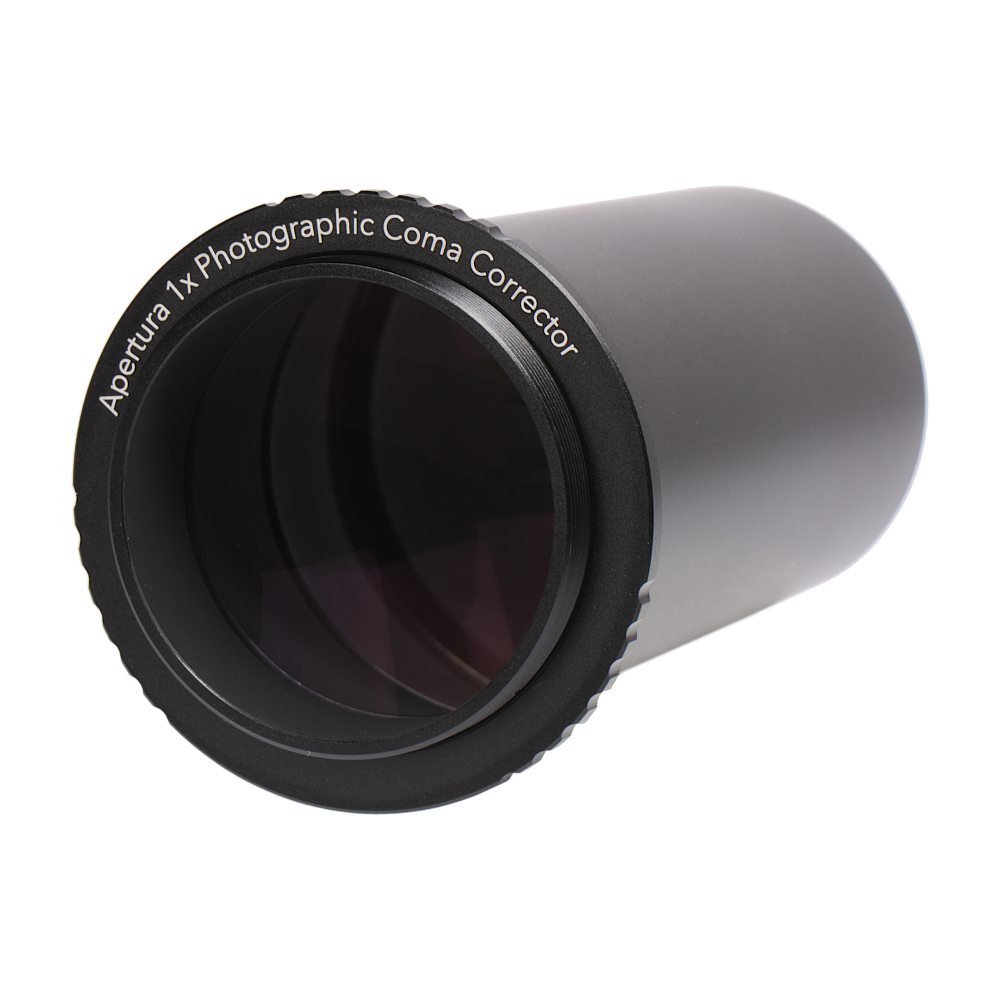
Apertura 1x Photographic Coma Corrector
2" · 1x · for fast Newtonians
Cleans up the flared, comet-shaped stars at the edge of a fast Newtonian so the whole field is pinpoint, essential for imaging.
86/ 100
Polaris Score
#2 of 5 coma correctors we recommend
From$269.95
Where to buy
Affiliate link — we earn a commission, you pay the same. We rank on fit, not payout.
01Will it fit my setupCompatibility.
What this accessory works with — check the fit before you check the price.
01Will it fit my setup
Compatibility.
What this accessory works with — check the fit before you check the price.
What this accessory works with — check the fit before you check the price.
Fast Newtonianf/4–f/52" focuserDSLRASI / cooled cameraVisual + imaging
Note✕Needs correct back-focus spacing✕Not for refractors / SCTs
02The numbersWhat These Numbers Mean
4 numbers in plain English · full specifications
02The numbers
What These Numbers Mean
4 numbers in plain English · full specifications
4 numbers in plain English · full specifications
Magnification factorNo change
1x
It corrects the field without altering focal length or focal ratio, so your framing and exposure times stay exactly as they were. Correctors that also reduce change the image scale, which means recalculating your field of view; this one does not.
What it fixesNewtonian
Coma at fast focal ratios
A parabolic mirror focuses stars away from the centre into small comet shapes, and the effect worsens as the focal ratio gets faster. At f/4 to f/5 it is obvious in the corners of any camera frame, and this is the piece of glass that removes it.
Back focusCritical
55 mm
The sensor must sit 55 mm behind the corrector, the same standard most flatteners use. A few millimetres out and the corners go from comatic to elongated in the other direction, so measure your spacers rather than estimating.
Who needs itSelective
Imaging Newtonians
Essential on a fast imaging Newtonian and useful visually at f/5 or faster with wide-field eyepieces. On a refractor it does nothing, because refractors do not produce coma; those need a field flattener instead.
Optical
TypeComa corrector · 1x
Magnification1.0x (no focal change)
Best forf/4 – f/5 Newtonians
ElementsMulti-element, multi-coated
Back-focusFixed working distance
Fit & build
Barrel2" nosepiece
Camera sideM48 / T-thread
BodyBlackened aluminium
UseVisual & photographic
03Before you buyGood to know.
The honest caveats — the things that save you a return, a bad first night, or a second purchase you didn't need.
03Before you buy
Good to know.
The honest caveats — the things that save you a return, a bad first night, or a second purchase you didn't need.
The honest caveats — the things that save you a return, a bad first night, or a second purchase you didn't need.
Back-focus spacing is everything.
A coma corrector only works at its designed distance from the sensor. Get the spacer stack right (usually ~55 mm to the chip) or the correction falls apart at the edges.
Remove it for visual if you like.
It helps visually too, but it is not required, many observers only fit it for imaging and pull it for casual viewing.
It corrects coma, not field curvature from other scopes.
This is a Newtonian tool. A refractor’s edge softness needs a field flattener instead, different problem, different lens.
86/ 100
Apertura 1x Photographic Coma Corrector
2" · 1x · for fast Newtonians · $269.95
Cleans up the flared, comet-shaped stars at the edge of a fast Newtonian so the whole field is pinpoint, essential for imaging.