Telrad
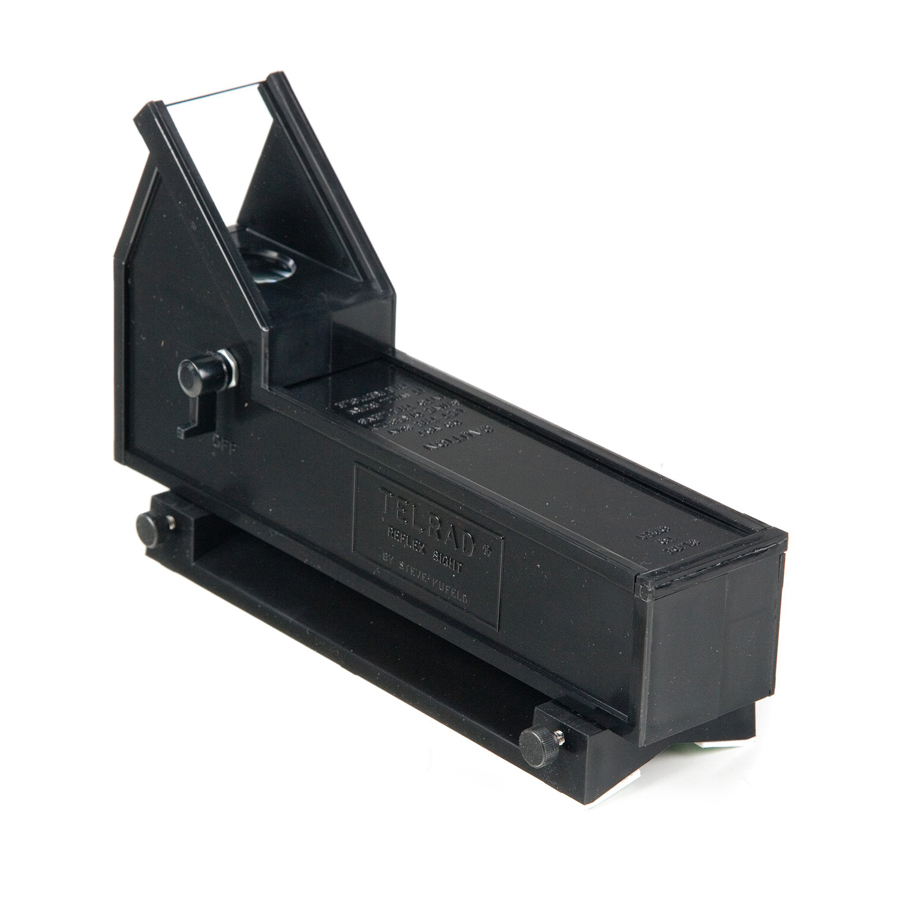
Telrad Reflex Sight Finder
Zero-power · 3-ring reticle
Projects three glowing target rings onto the sky so you can point the scope at exactly the right spot by eye, the fastest way to find anything.
90/ 100
Polaris Score
#1 of 8 finders we recommend
From$54.95
Where to buy
Affiliate link — we earn a commission, you pay the same. We rank on fit, not payout.
01Will it fit my setupCompatibility.
What this accessory works with — check the fit before you check the price.
01Will it fit my setup
Compatibility.
What this accessory works with — check the fit before you check the price.
What this accessory works with — check the fit before you check the price.
Any telescopeDobsonianNewtonianRefractorSCTManual star-hoppingIts own base
Note✕Adds some bulk✕Not magnified, pair with a finderscope for faint hops
02The numbersWhat These Numbers Mean
5 numbers in plain English · full specifications
02The numbers
What These Numbers Mean
5 numbers in plain English · full specifications
5 numbers in plain English · full specifications
MagnificationNone, deliberately
1x
This is the specification people misread as a shortcoming. A Telrad does not magnify at all, which is exactly the point: you look through a window at the real sky, at the real scale, with both eyes open. A magnifying finder shows you a small inverted patch you then have to mentally match against a chart, and that translation step is what makes star hopping hard for beginners.
ReticleThe whole idea
Three rings, 0.5°, 2°, 4°
The rings are projected onto the sky at fixed angular sizes, and those sizes are chosen to match how star charts work. The half degree circle is the size of the Moon, and the four degree circle is roughly a binocular field. Once you can see those distances against real stars, a chart stops being an abstraction and becomes a set of measurements you can step off directly.
ApertureZero light gathering
None, a window
There is no objective lens, so the Telrad shows you only the stars your naked eye already sees, typically to about magnitude five in a suburban sky. That is a real limit under light pollution and it is not what the device is for. It gets you to the right patch of sky; the telescope's own low power eyepiece does the rest.
MountingConsider the space
Adhesive base, removable unit
The base sticks to the tube and the sight slides off it, which means one telescope can keep the base permanently while the sight travels between several. What catches people out is the footprint: the base is about 130 millimetres long, so a short tube or a small Maksutov may not have a flat enough run of surface to take it.
PowerLong life
One 3 V lithium cell
The reticle is an illuminated projection, so it needs power, and a brightness dial lets you dim it until the rings are just visible against the sky. Turned down properly a cell lasts a season or more. Turned up it destroys your dark adaptation, which is the single most common way people make a Telrad work against them.
Optical
Magnification1x (zero power)
Reticle3 rings · 0.5° / 2° / 4°
BrightnessAdjustable dial
WindowTilted glass combiner
Physical
MountingAdhesive base + dovetail
Power2× AAA
Extra basesAvailable, share across scopes
Weight~300 g
03Before you buyGood to know.
The honest caveats — the things that save you a return, a bad first night, or a second purchase you didn't need.
03Before you buy
Good to know.
The honest caveats — the things that save you a return, a bad first night, or a second purchase you didn't need.
The honest caveats — the things that save you a return, a bad first night, or a second purchase you didn't need.
The rings match your star atlas.
That 0.5° / 2° / 4° pattern is drawn on Telrad-ready charts, so you literally overlay the printed circle onto the real sky. This is the whole trick.
Buy a second base, not a second Telrad.
The finder pops off its adhesive base in a second, stick a spare base on each scope and move one Telrad between them.
Turn the brightness down.
Under dark skies the reticle should be barely visible, just bright enough to see against the faintest stars, or it will swamp them.
90/ 100
Telrad Reflex Sight Finder
Zero-power · 3-ring reticle · $54.95
Projects three glowing target rings onto the sky so you can point the scope at exactly the right spot by eye, the fastest way to find anything.